Oat Milk vs. Almond Milk: Which Is Healthier?
Discover the nutritional showdown between oat milk and almond milk to find the best plant-based choice for your health and diet.
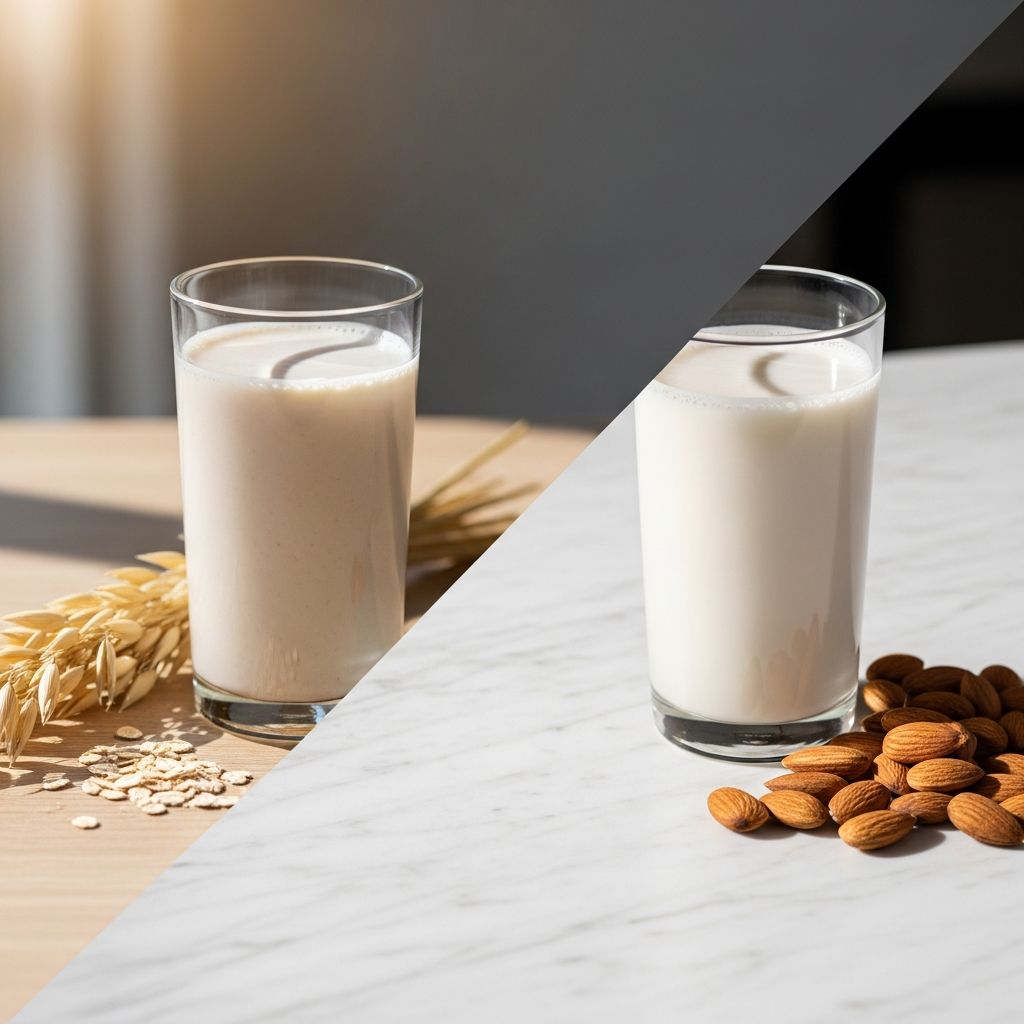
Plant-based milks have surged in popularity as dairy alternatives, with oat milk and almond milk leading the pack. Both offer creamy textures and versatility in coffee, smoothies, and recipes, but which one comes out on top for health? This comparison dives into their nutrition, taste, sustainability, and more to help you decide.
What Is Oat Milk?
Oat milk is made by blending oats with water, then straining the mixture to create a smooth, creamy liquid. It’s naturally sweet due to oats’ starch content and often fortified with vitamins like B12, calcium, and vitamin D. Oat milk stands out for its higher fiber from beta-glucan, a soluble fiber linked to heart health by lowering cholesterol.
- Key ingredients: Oats, water, sometimes enzymes for breakdown, and fortifiers.
- Texture: Thick and frothy, ideal for lattes and baking.
- Flavor profile: Mildly sweet, oat-like taste.
What Is Almond Milk?
Almond milk is produced by blending almonds with water and straining out the pulp. It’s lighter in calories and often fortified with calcium, vitamin D, and B12. Derived from nuts, it provides heart-healthy monounsaturated fats but lower protein and fiber compared to oat milk.
- Key ingredients: Almonds, water, emulsifiers like lecithin, and fortifiers.
- Texture: Thin and watery, great for smoothies and cereals.
- Flavor profile: Subtly nutty and neutral.
Nutrition Comparison: Oat Milk vs. Almond Milk
Nutritional profiles vary by brand and fortification, but unsweetened versions provide a clear baseline. Oat milk generally offers more carbs, protein, and fiber, while almond milk is lower in calories and carbs, appealing for weight management or low-carb diets.
| Oat Milk (1 cup, 240mL, unsweetened) | Almond Milk (1 cup, 240mL, unsweetened) | Cow’s Milk (2%, 1 cup, for reference) | |
|---|---|---|---|
| Calories | 79-130 | 30-59 | 122 |
| Protein | 3-4g | 1g | 8g |
| Carbs | 14-24g | 1-8g | 12g |
| Fat | 1.5-2.5g | 2-4g | 5g |
| Fiber | 2g | 1g | 0g |
| Iron (% DV) | 6% | 2% | 0% |
| Calcium (% DV, fortified) | 1-25% | 15-45% | 30% |
| Sodium (% DV) | 5% | <1% | 7% |
Data averaged from multiple sources; always check labels as values fluctuate.
Health Benefits of Oat Milk
Oat milk shines in fiber content, particularly beta-glucan, which binds to cholesterol in the gut, reducing LDL levels and supporting cardiovascular health. A cup provides about 2g of fiber, aiding digestion and blood sugar control. It’s richer in iron (6% DV) and often fortified with B vitamins for energy metabolism. Ideal for those seeking a filling, nutrient-dense option without nut allergens.
- Heart health: Beta-glucan lowers cholesterol.
- Digestion: Soluble fiber promotes gut regularity.
- Nutrient boost: Fortified versions supply B12, crucial for vegans.
Health Benefits of Almond Milk
Almond milk’s low calorie count (as low as 30 per cup) makes it excellent for weight loss. It contains vitamin E, an antioxidant protecting cells from damage, and healthy fats that support heart health without saturated fats or cholesterol. Lower carbs benefit keto or diabetic diets, though protein is minimal.
Related Stories



- Weight management: Fewer calories and carbs.
- Antioxidants: Vitamin E fights inflammation.
- Bone health: High calcium fortification.
Potential Downsides
Oat Milk Downsides
Higher carbs (up to 24g per cup) may spike blood sugar, less ideal for diabetics. Contains gluten unless certified gluten-free, and protein is still low compared to dairy (half of cow’s milk).
Almond Milk Downsides
Very low protein (1g) limits its role as a complete swap for dairy. Not suitable for nut allergies, and its water-intensive production raises sustainability concerns. Oxalates in almonds may hinder calcium absorption for some.
Taste and Texture Test
Oat milk’s creamy, sweet profile excels in frothy drinks like cappuccinos and baking, mimicking dairy closely. Almond milk’s thinner, nutty taste suits savory dishes, smoothies, and cold cereals but may separate in hot beverages.
- Oat milk: Best for coffee, oatmeal, pancakes.
- Almond milk: Ideal for smoothies, cereal, sauces.
Cost and Availability
Almond milk is widely available and often cheaper ($2-4 per carton), while oat milk prices range $3-5 due to rising demand. Both found in most grocery stores; opt for shelf-stable for convenience.
Sustainability and Environmental Impact
Almond milk requires massive water—1.1 gallons per almond, straining resources in California’s drought areas. Oat milk uses less water and land, with oats being a hardy crop, making it more eco-friendly overall.
- Water use: Oat milk far lower.
- Land and emissions: Oats more efficient.
Which Is Healthier?
Neither is universally “healthier”—it depends on your needs. Choose oat milk for fiber, creaminess, and sustainability if you tolerate gluten and carbs. Pick almond milk for low calories, low carbs, and nutty flavor if avoiding nuts isn’t an issue. Both beat sugary versions; prioritize unsweetened, fortified options. For protein, supplement with other sources as both lag behind dairy.
Frequently Asked Questions (FAQs)
Is oat milk or almond milk better for weight loss?
Almond milk, with fewer calories (30-59 vs. 79-130), supports weight loss better, especially on low-carb plans.
Which has more protein: oat milk or almond milk?
Oat milk (3-4g) edges out almond milk (1g), but both are lower than cow’s milk (8g).
Is oat milk good for cholesterol?
Yes, beta-glucan fiber helps lower LDL cholesterol.
Can I use almond milk if I have nut allergies?
No, almond milk is unsafe for tree nut allergies; opt for oat milk.
Which is better for the environment?
Oat milk, due to lower water and land use compared to almond milk.
Is oat milk keto-friendly?
No, high carbs (14-24g) make it unsuitable for keto; almond milk is better.
Bottom Line
Both oat and almond milk are solid dairy-free choices when unsweetened and fortified. Tailor your pick to priorities: fiber and sustainability (oat) or calories and low carbs (almond). Consult a dietitian for personalized advice.
References
- Oat Milk vs. Almond Milk: Which is Better for You? — Dietitian Live. 2023. https://dietitianlive.com/blog/oat-milk-vs-almond-milk-which-is-better-for-you/
- Oat Milk vs. Almond Milk: Which Is Better? — Healthline. 2023-10-12. https://www.healthline.com/nutrition/oat-milk-vs-almond-milk
- Oat Milk vs Almond Milk: A Nutritional Showdown — PharmEasy. 2024. https://pharmeasy.in/blog/oat-milk-vs-almond-milk-a-nutritional-showdown/
Similar Articles








Read full bio of Sneha Tete