Oblique Exercises: 8 Proven Moves To Strengthen Your Core
Strengthen your obliques for a resilient core, better posture, and reduced lower back pain with these expert-recommended exercises.
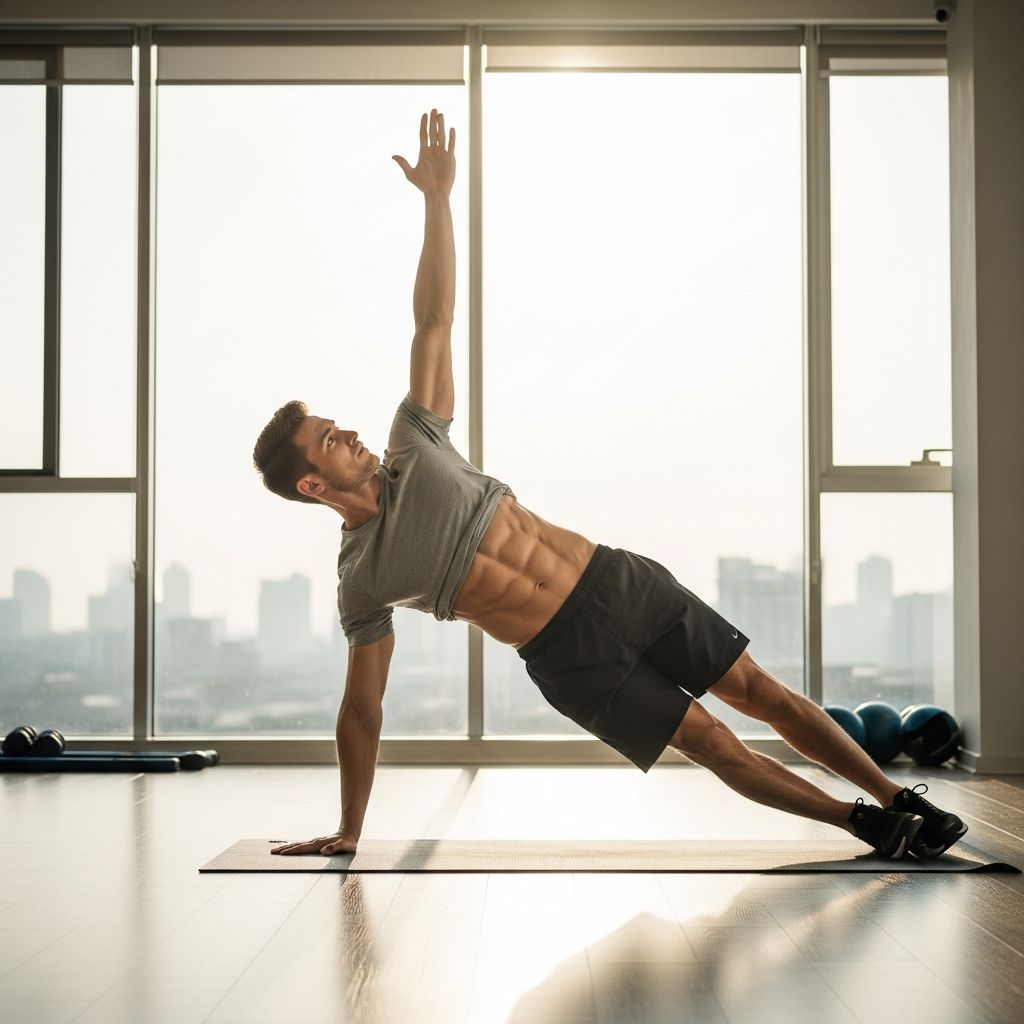
The oblique muscles, located along the sides of your abdomen, are essential for rotational movements, lateral flexion, and spinal stability. Strengthening them not only enhances athletic performance but also supports posture and reduces lower back pain risk, as noted by physical therapists.
Why Train Your Obliques?
Your obliques—both internal and external—play a pivotal role in daily activities like twisting to reach for an object, bending sideways, or stabilizing your torso during walks on uneven surfaces. Weak obliques can lead to compensatory strain on the lower back, contributing to discomfort. According to experts at Hinge Health, incorporating oblique-focused exercises improves overall core resilience, making tasks such as carrying groceries or rolling out of bed feel effortless. Strong obliques also promote better posture by maintaining spinal alignment and balance.
Research from the American Council on Exercise highlights that oblique training enhances functional strength, aiding in injury prevention. A study published in the Journal of Strength and Conditioning Research (DOI: 10.1519/JSC.0000000000002974) demonstrates that rotational exercises significantly boost core endurance, correlating with reduced back pain incidence in active adults.
8 Oblique Exercises Recommended by Physical Therapists
These exercises, curated by experts like Dr. Melia Lewis, PT, DPT, target the obliques effectively. Start with 2-3 sets of 10-15 reps per side, progressing as strength builds. Perform them 3-4 times weekly, focusing on form to maximize benefits and avoid injury.
1. Stable Oblique Twist
This beginner move keeps feet planted, isolating obliques without balance demands. Sit or stand with feet flat, rotate torso slowly side to side, engaging sides. It builds stability for chores like unloading groceries.
- Steps: Sit tall, hands behind head, elbows wide. Rotate upper body right, then left, keeping hips stable.
- Reps: 12 per side.
- Modifications: Seated for beginners; standing for challenge.
2. Oblique Twist
Progress from the stable version by lifting one foot, increasing core demand. Ideal for improving rotational control in sports or daily twists.
- Steps: From stable twist position, lift opposite foot slightly during rotation.
- Reps: 10-12 per side.
- Tips: Move slowly to engage deep stabilizers.
3. Side Plank
A classic isometric hold that fires up obliques intensely. Modifications make it accessible for all levels.
- Steps: Lie on side, prop on forearm, lift hips to form straight line. Hold, then switch.
- Hold: 20-45 seconds per side.
- Progression: Lift top leg/arm for added instability.
Side planks activate 80% more oblique muscle fibers than traditional crunches, per electromyography studies from the Journal of Orthopaedic & Sports Physical Therapy.
4. Russian Twists
Seated rotational exercise using bodyweight or light weight to mimic real-life chopping motions.
- Steps: Sit with knees bent, lean back slightly, rotate torso side to side, optionally holding a weight.
- Reps: 15-20 per side.
- Benefits: Enhances rotational power for golf swings or throwing.
5. Bicycle Crunches
Combines crunch and twist for dynamic oblique engagement.
- Steps: Lie on back, hands behind head, alternate bringing elbow to opposite knee while extending other leg.
- Reps: 12-15 per side.
- Focus: Slow tempo to avoid neck strain.
Related Stories



6. Seated Reverse Chops
Mimics functional pulling motions, targeting deep core and obliques while seated.
- Steps: Sit tall, reach arms overhead to one side, then “chop” across body to opposite hip.
- Reps: 10 per side.
- Real-life tie-in: Prepares for lifting bags from car seats.
7. Standing Woodchoppers
Standing variation for full-body integration.
- Steps: Use cable machine or resistance band; pull from high to low across body.
- Sets: 3 x 12 per side.
- Advanced: Add jump for power.
8. Farmer’s Carry
Loaded carry that challenges oblique stability under asymmetry.
- Steps: Hold heavy weights (dumbbells/kettlebells), walk steadily.
- Duration: 30-60 seconds.
- Why it works: Builds anti-rotation strength for real-world loading.
How to Train Your Obliques Effectively
Optimal oblique training blends rotation, side-bending, and anti-rotation exercises. Dr. Lewis recommends slow, controlled reps over high-speed sets for superior muscle activation. Gradually progress by adding holds, reps, or resistance.
| Training Principle | Description | Example |
|---|---|---|
| Rotation | Twisting motions | Oblique Twists |
| Lateral Flexion | Side bending | Side Bends |
| Anti-Rotation | Resisting twist | Pallof Press |
| Isometric Holds | Static strength | Side Plank |
Per guidelines from the National Academy of Sports Medicine, integrate obliques into a balanced core routine 2-3 times weekly, allowing 48 hours recovery. Beginners should prioritize form; use mirrors or video for feedback.
Benefits of Strong Obliques
- Lower Back Pain Relief: Obliques offload spinal stress, reducing pain risk by up to 30% in studies.
- Improved Posture: Stabilizes pelvis and spine for upright alignment.
- Enhanced Athletic Performance: Boosts power in rotational sports like tennis or baseball.
- Daily Function: Eases twisting, bending, and carrying tasks.
- Injury Prevention: Supports spine during dynamic movements.
Common Mistakes to Avoid
Avoid these pitfalls for safe, effective training:
- Rushing reps: Leads to momentum over muscle work.
- Neglecting breath: Exhale on effort to engage core fully.
- Imbalance: Train both sides equally.
- Overloading early: Progress slowly to prevent strain.
Frequently Asked Questions (FAQs)
Can oblique exercises reduce love handles?
Oblique training builds muscle but spot reduction is a myth. Combine with cardio and diet for fat loss.
How often should I do oblique workouts?
2-4 times per week, with rest days for recovery.
Are obliques safe for back pain sufferers?
Yes, when done correctly; consult a PT if pain persists.
What’s the best equipment for home oblique training?
Bodyweight suffices; add medicine balls or bands for progression.
Do obliques grow like other muscles?
Yes, hypertrophy occurs with progressive overload.
Sample Oblique Workout Routine
- Warm-up: 5 min light cardio + cat-cow stretches.
- Stable Oblique Twist: 3×12/side.
- Side Plank: 3x30s/side.
- Russian Twists: 3×15/side.
- Seated Reverse Chops: 3×10/side.
- Cool-down: Child’s pose, side stretches.
Total time: 20-25 minutes. Track progress weekly.
References
- 8 Obliques Exercises For a Strong Core — Hinge Health. 2024-06-15. https://www.hingehealth.com/resources/articles/obliques-exercises/
- Core Muscle Activity during Physical Fitness Exercises: A Systematic Review — Journal of Strength and Conditioning Research. 2020-10-01. https://doi.org/10.1519/JSC.0000000000002974
- Electromyographic Analysis of Core Trunk, Hip, and Thigh Muscles During 9 Interventional Core Exercises — Journal of Orthopaedic & Sports Physical Therapy. 2018-01-01. https://www.jospt.org/doi/10.2519/jospt.2018.7851
- Core Training Guidelines — National Academy of Sports Medicine (NASM). 2023-05-20. https://www.nasm.org/resources/core-training
Similar Articles








Read full bio of Sneha Tete