Occupational Dermatitis Among Construction Workers
Exploring the prevalence, causes, symptoms, and prevention of skin conditions in construction workers due to hazardous exposures.
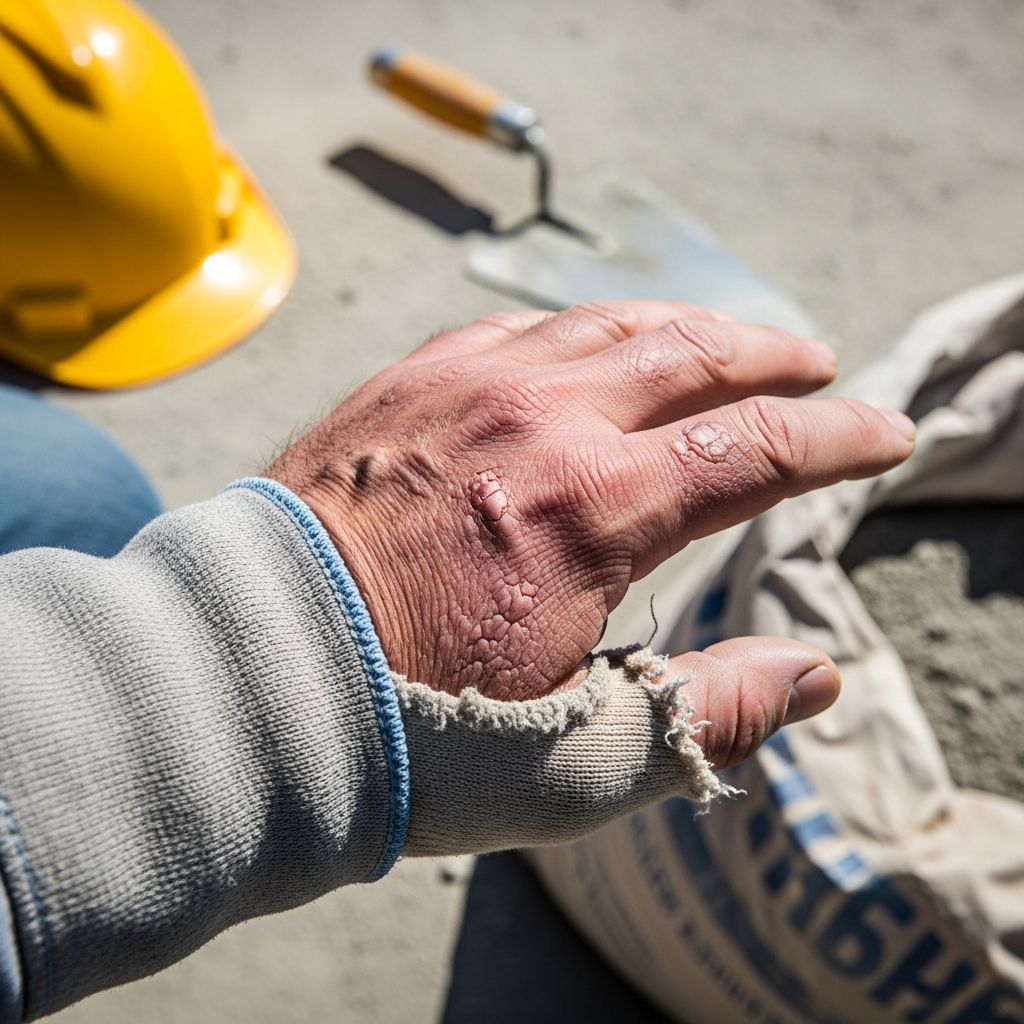
Construction workers face significant risks of developing occupational skin diseases due to frequent exposure to irritants and allergens like wet cement, solvents, epoxy resins, and friction from tools. Contact dermatitis is the most common, affecting up to 47.8% of workers in some studies, alongside friction callosities and infections.
What is occupational dermatitis?
Occupational dermatitis is a skin inflammation caused by workplace exposures, often manifesting as eczema with redness, itching, swelling, blistering, flaking, and cracking, primarily on the hands, forearms, and face. It encompasses irritant contact dermatitis (the most prevalent, from direct chemical damage) and allergic contact dermatitis (an immune-mediated reaction after sensitization).
In construction, about 90% of occupational skin disorders are contact dermatitis, triggered by hazardous chemicals absorbed through the skin or via contaminated surfaces. Without intervention, it can lead to chronic issues forcing job changes.
Who is at risk?
Construction workers handling cement, paints, adhesives, solvents, and machinery are highly susceptible. Masons, bricklayers, and those mixing concrete face elevated risks from alkaline cement components like lime and chromium. Prevalence is higher in males aged 20-35 with over one year of exposure, longer work hours (>10 hours/day), and no personal protective equipment (PPE) use—up to 50% report symptoms.
Individuals with prior eczema, asthma, hay fever, or sensitive skin are more prone, as damaged skin barriers exacerbate irritant effects. A study of 92 sites found 47.8% of unorganized workers had morbid skin conditions.
What causes occupational dermatitis in construction workers?
Irritant contact dermatitis
The majority of cases (over 90%) stem from irritants causing non-immune skin damage. Common culprits include:
- Wet cement and concrete: Alkaline (high pH from lime), causing burns, dryness, fissuring, and cracking upon wetting/drying cycles.
- Solvents and cleaners: Strip skin oils, leading to redness and cracks.
- Paints, adhesives, and tars: Abrasive or chemical irritants.
- Friction and heat: From tools/machinery, sweating, and detergents.
- Water exposure: Repeated wetting/drying flakes and splits skin.
Symptoms appear quickly based on exposure dose, skin condition, and chemical strength.
Allergic contact dermatitis
Less common but severe, this develops after sensitization. Key allergens:
- Chromium (chromates): In cement, sensitizing 4.3% in studies.
- Epoxy resins: In floor coatings/adhesives, notorious sensitizers.
- Rubber accelerators: In gloves/sealants (thiurams, mercaptobenzothiazole).
- Formaldehyde: In plywood, particleboard, insulation.
Allergy can arise after initial exposures, worsened by prior irritant damage.
Clinical features
Skin changes vary by type and exposure:
- Irritant: Red/swollen hands, cracked/itchy skin, rashes, blisters, burns, flaking.
- Allergic: Itchy vesicles, weeping, crusting, hives; may spread.
- Systemic: Wheezing, headaches, nausea if vapors inhaled.
| Skin Condition | Prevalence | Description |
|---|---|---|
| Contact Dermatitis | 4.3% | Redness, itching, pain at contact sites (e.g., cement, gloves). |
| Friction Callosities | 19.6% | Thickened, dry palm skin near knuckles from friction. |
| Dry/Fissured/Scaly Skin | 10.9% | Flaking, splitting from wetting/drying. |
| Infections (e.g., Tinea Cruris) | 2.2% | Fungal/bacterial via damaged skin. |
| Ulcers | Variable | Full-thickness loss on hands/soles. |
Related Stories



Hands are most affected, followed by arms/face/legs.
Diagnosis
Diagnosis involves history (exposure timing, atopy), exam, and patch testing for allergens (e.g., chromium, epoxy). Differentiate from endogenous eczema via work correlation. Biopsies rarely needed.
Prevention
Key strategies reduce incidence:
- PPE: Waterproof gloves (nitrile/vinyl, not rubber if allergic), gauntlets for cement. Change frequently; avoid liners.
- Hygiene: Wash with pH-neutral soap; dry thoroughly; apply unscented moisturizers (e.g., with lanolin alternatives).
- Work practices: Minimize wet work; use pre-hydrated cement (reduces chromium); barrier creams; tool handles to reduce friction.
- Substitution: Low-chromate cements, less sensitizing resins.
- Education: Train on risks; monitor skin daily.
PPE use cuts symptoms to 45.2% vs. 50% without.
Management
- Acute: Remove exposure; cool compresses; topical corticosteroids/emollients.
- Chronic: Specialist referral; allergen avoidance; wet wraps.
- Infections: Antifungals/antibiotics.
Early intervention prevents sensitization.
Case study
John, 25-year-old bricklayer (1 year experience): Hands dried/roughed from cement mixing (irritant dermatitis). Later, itchy vesicles indicated allergy. Improved with glove changes and moisturizers.
Frequently Asked Questions
What are the most common skin problems in construction workers?
Contact dermatitis (irritant > allergic), friction callosities (19.6%), dry/fissured skin (10.9%).
How does wet cement cause dermatitis?
Alkaline lime causes irritant burns; chromium triggers allergies.
Can occupational dermatitis be cured?
Reversible if exposure stops early; chronic cases may persist.
What gloves are best for construction?
Nitrile/vinyl waterproof; avoid rubber if accelerator-allergic.
Is frictional callosity dangerous?
Not usually, but cracked calluses invite infections.
References
- Preventing Occupational Skin Disorders in Construction — LHSFNA. 2023. https://lhsfna.org/preventing-occupational-skin-disorders-in-construction/
- Construction workers | Occupational Dermatology — OCCDERM. 2024. https://www.occderm.asn.au/resources-about-skin-health/construction-workers/
- OCCUPATIONAL SKIN PROBLEMS IN CONSTRUCTION WORKERS — PMC/NCBI (Peer-reviewed). 2011-01-15. https://pmc.ncbi.nlm.nih.gov/articles/PMC3051294/
- Construction Industry: Skin Care At Work — PHASE Associates. 2024. https://phaseassociate.com/blog-post/construction-industry-skin-care/
- Occupational dermatitis among construction workers — DermNet NZ. 2024. https://dermnetnz.org/topics/occupational-dermatitis-among-construction-workers
- Work-related contact dermatitis — HSE (UK Gov). 2025. https://www.hse.gov.uk/cleaning/topics/dermatitis.htm
Similar Articles








Read full bio of medha deb