Ocular Melanoma: Causes, Symptoms, Diagnosis, Treatment Guide
Comprehensive guide to ocular melanoma: symptoms, diagnosis, treatment options, and prognosis for this rare eye cancer.
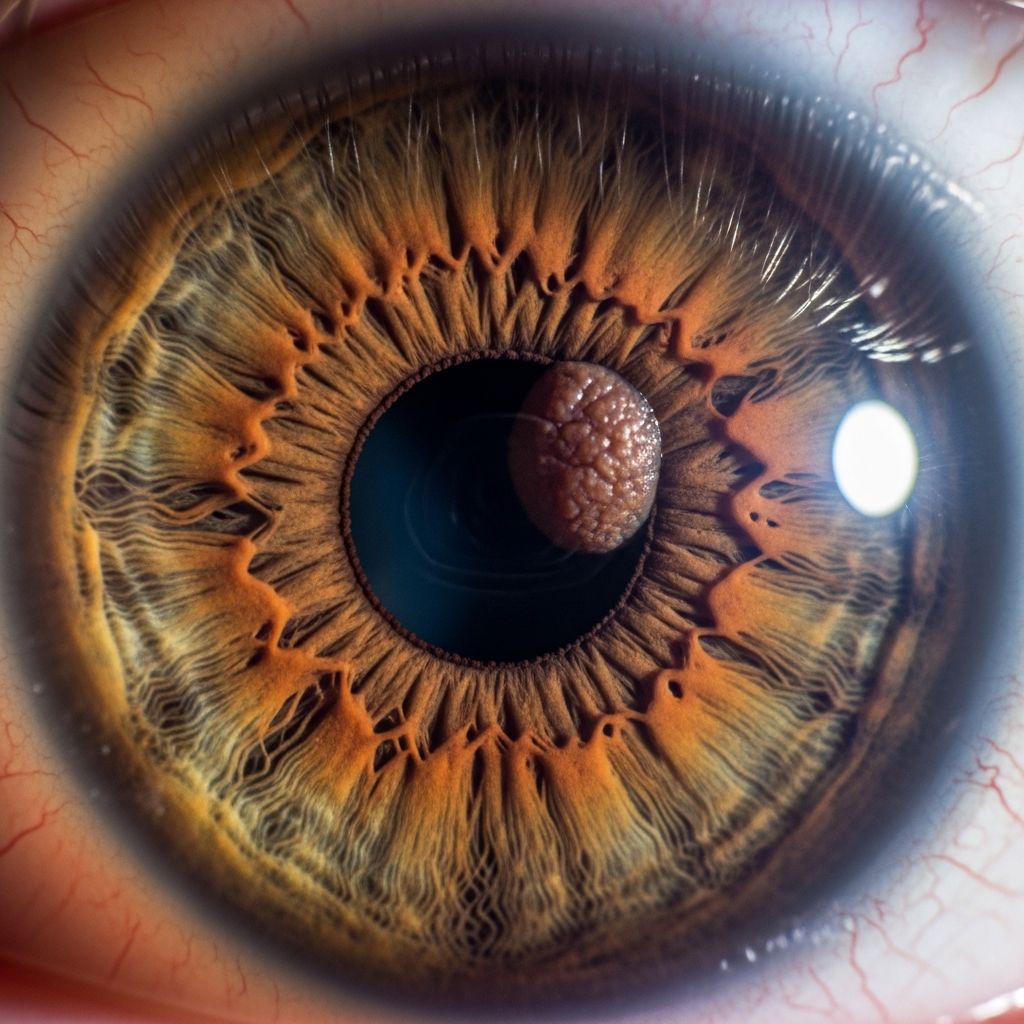
Ocular melanoma, also known as uveal or intraocular melanoma, is a rare but serious form of cancer that originates in the melanocytes, the pigment-producing cells of the eye. Unlike cutaneous melanoma on the skin, ocular melanoma primarily affects the uveal tract, including the choroid, ciliary body, and iris, though it can also occur in the conjunctiva. It accounts for approximately 5% of all melanomas and is the most common primary intraocular malignancy in adults, with an incidence of about 5-6 cases per million people annually. Early detection is crucial as it can spread to distant sites, particularly the liver, impacting prognosis.
What is Ocular Melanoma?
Ocular melanoma develops when melanocytes in the eye undergo malignant transformation. The
uveal tract
—comprising the choroid (90% of cases), ciliary body, and iris—is the most common site, making uveal melanoma the predominant subtype.Conjunctival melanoma
arises from the conjunctiva, the thin membrane covering the white of the eye and inner eyelids, and is less common but more visible. Rarely, it affects the retina or optic disc directly. These tumors are typically pigmented but can be amelanotic (non-pigmented), complicating diagnosis. Genetic mutations, such as those in GNAQ/GNA11 genes, drive most uveal melanomas, distinguishing them from UV-related cutaneous types.Who Gets Ocular Melanoma?
This cancer affects adults primarily, with a peak incidence between ages 50-70. Risk factors include Caucasian ethnicity, fair skin, light eye color (blue/green), and ocular melanocytosis (nevus of Ota). Unlike skin melanoma, UV exposure is not a major factor. Familial cases are rare, but syndromes like BAP1 cancer predisposition increase susceptibility. Men and women are equally affected, though choroidal melanomas show a slight male predominance. Annual global cases exceed 7,000, with higher rates in Northern Europe due to lighter skin pigmentation.
What Causes Ocular Melanoma?
The exact cause remains unclear, but key drivers include somatic mutations in GNAQ (50%), GNA11 (30%), and BAP1 genes, leading to uncontrolled cell growth. Chronic inflammation, genetic predispositions, and possibly environmental factors like welding arc exposure contribute. Unlike cutaneous melanoma, sunlight/UV radiation plays a minimal role, as supported by epidemiological studies. Protective genes like BRCA2 may reduce risk, while host factors such as iris freckles elevate it.
What are the Clinical Features of Ocular Melanoma?
- **Asymptomatic in most cases**: Discovered during routine eye exams.
- **Choroidal/ciliary body melanoma**: Blurred vision, photopsia (flashes), floaters, vision loss, or metamorphopsia (distorted vision).
- **Iris melanoma**: Visible dark spot on iris, pupil distortion, pain if glaucoma develops.
- **Conjunctival melanoma**: Brown/dark patch on sclera, raised nodule, redness, irritation.
Symptoms are often non-specific, mimicking benign conditions like posterior vitreous detachment. Advanced cases may cause glaucoma, retinal detachment, or neovascularization.
How is Ocular Melanoma Diagnosed?
Diagnosis relies on clinical examination rather than biopsy, which is rarely needed. Key steps include:
- **Comprehensive dilated fundus exam** with indirect ophthalmoscopy and slit-lamp biomicroscopy.
- **Imaging**: Fundus photography,
ultrasound
(A/B-scan for tumor dimensions),optical coherence tomography (OCT)
for retinal involvement, fluorescein/indocyanine green angiography. - **Tumor staging**: Based on size (small <10mm base/<3mm height; medium 10-16mm/<10mm; large >16mm/>10mm) and Collaborative Ocular Melanoma Study (COMS) classification.
Genetic biopsy (fine-needle aspiration) during treatment assesses prognosis via monosomy 3 or class 2 gene expression profile. Differential diagnoses: choroidal nevus, hemangioma, metastasis.
Related Stories



What is the Treatment for Ocular Melanoma?
Treatment balances tumor control, vision preservation, and metastasis risk, tailored to size, location, genetics, and patient health. Options include:
Observation (Active Surveillance)
For small, asymptomatic tumors (<2.5mm height) with benign features, regular monitoring every 3-6 months detects growth. Effective for indeterminate nevi transitioning to melanoma.
Radiation Therapy
Primary treatment for medium/large tumors.
- **Plaque Brachytherapy**: Ruthenium-106 or Iodine-125 plaque sutured to sclera for 3-5 days; 95-100% control rate. Biopsy often concurrent.
- **Proton Beam/Gamma Knife**: For peripapillary/base/posterior tumors.
Laser and Phototherapy
- **Transpupillary Thermotherapy (TTT)**: Infrared laser heats tumor; adjunct to radiation.
- **Photodynamic Therapy (PDT)**: Light-activated photosensitizer for small anterior tumors. Painless, repeatable.
Surgery
- **Local Resection/Iridectomy**: For small iris tumors.
- **Vitrectomy**: Rarely for vitreous seeds.
- **Enucleation**: For large/negligible vision tumors or blind painful eyes; gold standard for advanced COMS large tumors.
Metastatic Disease
~50% develop liver mets (median 2-3 years). Treatments: Immunotherapy (e.g., tebentafusp for HLA-A*02:01+), targeted therapy, chemoembolization, resection.
Complications of Treatment
- Radiation: Cataract (50%), retinopathy, neovascular glaucoma, optic neuropathy.
- Laser: Vision loss, retinal damage.
- Surgery: Ptosis, dry eye, metastasis risk unchanged.
- Systemic: Liver failure from mets.
What is the Prognosis for Ocular Melanoma?
Local control >95% with radiation/surgery, but 5-year metastasis-free survival 70-80% for small, drops to 40% for large/monosomy 3 tumors. Liver is primary site (90%). Gene expression class 1: 95% 5-year survival; class 2: 40%. Early detection improves outcomes.
Follow-up for Ocular Melanoma
Lifelong: Eye exams q3-6 months initially, then annually; liver MRI/ultrasound q6-12 months. Monitor for radiation side effects and systemic spread.
Frequently Asked Questions
Q: Is ocular melanoma curable?
A: Local control is excellent (>95%), but metastasis risk persists lifelong; genetic profiling guides prognosis.
Q: Does ocular melanoma hurt?
A: Rarely; usually painless unless advanced with glaucoma.
Q: Can it spread?
A: Yes, primarily to liver; genetic class 2 high-risk.
Q: Is biopsy always needed?
A: No, clinical diagnosis suffices; biopsy for genetics during treatment.
Q: How to prevent?
A: No proven prevention; regular eye exams for at-risk individuals.
References
- Intraocular (Uveal) Melanoma – Patients — American Society of Retina Specialists (ASRS). 2023. https://www.asrs.org/patients/retinal-diseases/40/intraocular-uveal-melanoma
- Eye cancer (ocular melanoma) — Macmillan Cancer Support. 2024-01-15. https://www.macmillan.org.uk/cancer-information-and-support/melanoma/eye-cancer
- Treating Eye Melanoma by Location and Size — American Cancer Society. 2025-06-12. https://www.cancer.org/cancer/types/eye-cancer/treating/uveal-melanoma.html
- Intraocular (Uveal) Melanoma Treatment (PDQ®)–Patient Version — National Cancer Institute (NCI). 2025-11-20. https://www.cancer.gov/types/eye/patient/intraocular-melanoma-treatment-pdq
- Eye melanoma – Diagnosis and treatment — Mayo Clinic. 2025-08-05. https://www.mayoclinic.org/diseases-conditions/eye-melanoma/diagnosis-treatment/drc-20372376
Similar Articles








Read full bio of medha deb