Olfactory Nerve: Overview, Function & Anatomy
Understanding the first cranial nerve: Your gateway to the sense of smell
Understanding the Olfactory Nerve
Your sense of smell is one of the most remarkable and underappreciated sensory abilities. This extraordinary capability is made possible by a small but vital structure in your body: the olfactory nerve, also known as the first cranial nerve (CN I). The olfactory nerve is the shortest sensory nerve in your entire body, originating directly from your brain and extending only a short distance to your nasal cavity. This specialized nerve plays a crucial role in how you perceive and interpret the scents and aromas in your environment, from the aroma of your morning coffee to the fragrance of flowers. Understanding this nerve’s anatomy and function can provide valuable insights into why our sense of smell matters and what happens when problems arise.
What Is the Olfactory Nerve?
The olfactory nerve is the first of twelve cranial nerves and serves as a direct pathway for smell sensation from your nose to your brain. Unlike most other cranial nerves that originate from your brainstem (the lower part of your brain), the olfactory nerve is one of only two cranial nerves that originates directly from your cerebrum, the upper and largest part of your brain. This unique anatomical position makes it distinctive among all cranial nerves.
Your olfactory nerve contains approximately 6 to 10 million olfactory sensory neurons in each nostril, making it an incredibly complex sensory system packed into a relatively small space. These neurons work collectively to detect even the faintest odors and relay that information to your brain for processing. The nerve itself is composed of multiple sensory nerve fibers that bundle together to form this crucial sensory pathway.
Anatomy of the Olfactory Nerve
Location and Structure
The olfactory nerve is located in the upper portion of each nasal cavity, specifically within the olfactory epithelium. The nerve has 20 or more branches within the roof of your nasal cavity, which allows it to detect a wide variety of scents. The olfactory nerve receives its blood supply from the cerebral or olfactory artery, ensuring it has adequate nutrients and oxygen to function properly.
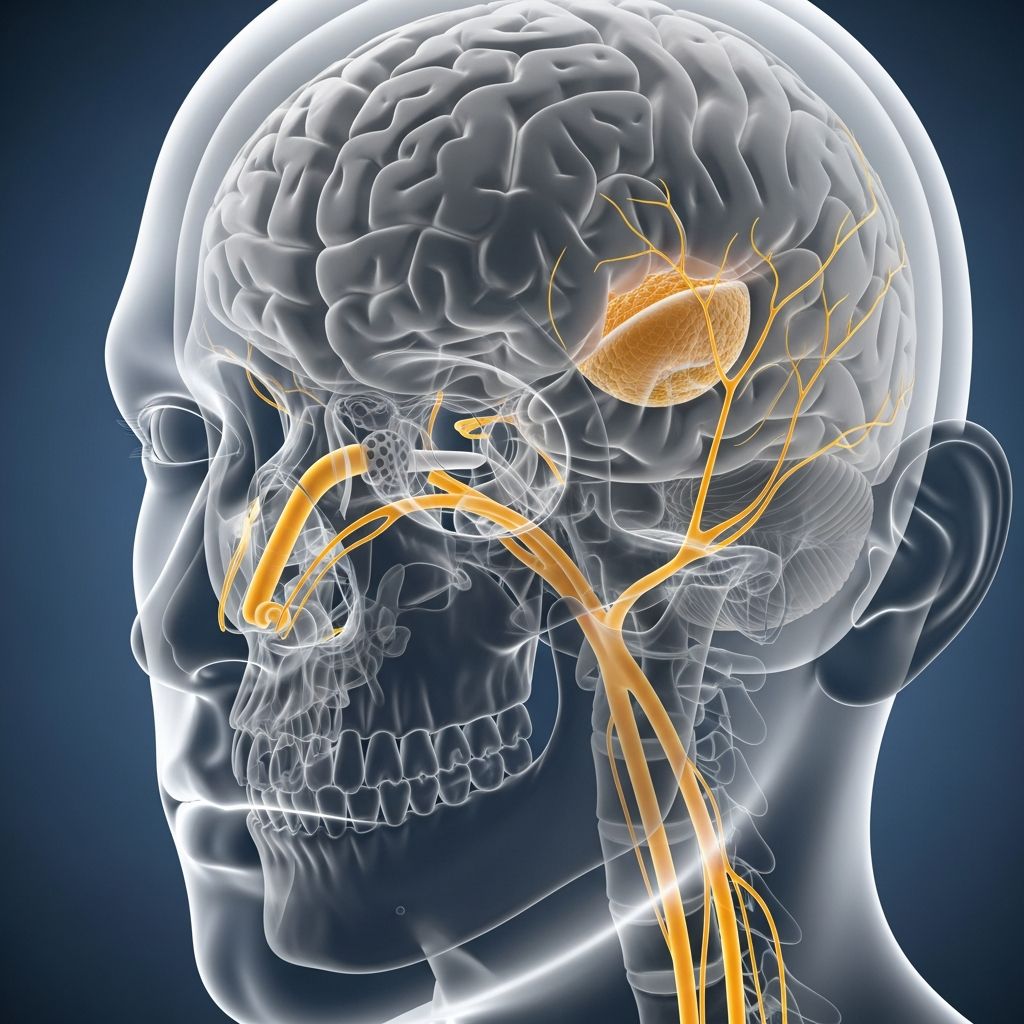
The anatomical pathway of the olfactory nerve begins in the olfactory epithelium and extends upward through the cribriform plate, a thin, spongy bone that is part of the ethmoid bone. This cribriform plate acts as a boundary between your nasal cavity and your brain, allowing the olfactory nerve fibers to pass through while also protecting your brain from direct exposure to the nasal environment. The nerve fibers then travel to the olfactory bulb, located just above the nose in your brain.
The Olfactory Mucosa and Epithelium
The olfactory mucosa is a specialized membrane that lines the upper portion of your nasal cavity and plays a fundamental role in your ability to smell. This membrane contains several different types of cells that work in concert to detect and process odor information. The olfactory epithelium, which is part of this mucosa, contains the olfactory sensory neurons that directly detect smell molecules.
One remarkable characteristic of the olfactory system is that olfactory cells are thought to regenerate approximately every 30 to 60 days. This means that when these specialized cells die or are damaged, they can be replaced with new cells, allowing for potential recovery of smell function after certain types of injury or illness.
How Does the Olfactory Nerve Function?
The Process of Smell Detection
Your olfactory system enables the sense of smell through a sophisticated multi-step process. When you encounter a scent, substances that smell give off tiny aromatic molecules into the air. When you inhale, these odor molecules enter your nose and are transported to the olfactory epithelium in the upper portion of your nasal cavity. There, special cells called olfactory receptors detect these molecules and initiate the process of converting chemical signals into neural signals.
Related Stories



Once the olfactory receptors detect these odor molecules, they relay this crucial information to your brain through the olfactory nerve fibers. These nerve fibers transmit the signal through the cribriform plate to the olfactory bulb in your brain. From the olfactory bulb, information is transmitted to different portions of your brain, allowing you to consciously perceive and interpret the smell.
Connection Between Smell and Taste
One of the most important functions of the olfactory nerve is its role in enabling flavor perception. Many people confuse taste with smell, but they are actually two distinct senses. The olfactory sensory neurons connect your senses of smell and taste through a specialized channel in your throat. When you chew food, aromatic molecules are released and picked up by olfactory neurons through this retronasal channel, creating what we perceive as the flavor of food.
This is why when your nose becomes stuffy from a cold or congestion, you temporarily lose your ability to taste and smell. The blockage prevents odor molecules from reaching the olfactory neurons through the retronasal channel, even though your actual taste buds on your tongue remain functional. In some cases, people may only lose the ability to taste certain flavors, such as sweet or bitter tastes, rather than experiencing a complete loss of taste and smell sensation.
Role in the Nervous System
The olfactory nerve is not only a sensory nerve but also plays a role in your autonomic nervous system, which regulates various body functions automatically. This nerve works in concert with other sensory and motor pathways to coordinate responses to your environment. The olfactory system’s direct connection to your brain also means it can influence emotions, memories, and behaviors—which is why certain smells can trigger vivid memories or strong emotional responses.
Conditions Affecting the Olfactory Nerve
Common Smell Disorders
Several conditions can affect your olfactory nerve and compromise your sense of smell. These conditions range from temporary and reversible to chronic and long-lasting. Understanding these conditions can help you recognize when it’s important to seek medical attention.
Anosmia is the complete loss of smell, meaning you cannot detect any odors at all. While this condition typically occurs later in life, in rare cases a child can be born without a sense of smell. Hyposmia is a reduced sense of smell, where you have difficulty detecting odors that would normally be obvious to others. Parosmia is a distorted sense of smell where your perception of odors changes in ways that can be disturbing—for example, a scent you once enjoyed might now smell unpleasant or even nauseating. Phantosmia occurs when you smell odors that aren’t actually present in your environment, sometimes described as “phantom smells.”
Underlying Medical Conditions
Many systemic and neurological conditions can affect your olfactory nerve and sense of smell:
Neurological Disorders: Parkinson’s disease and Alzheimer’s disease are particularly notable for affecting the olfactory nerve. In fact, early changes in your sense of smell can sometimes be among the first signs of these neurodegenerative conditions. Multiple sclerosis can also affect the olfactory nerve and sense of smell.
Metabolic and Systemic Conditions: Diabetes, obesity, hypertension, and malnutrition can all negatively impact olfactory function. Additionally, COVID-19 has been associated with olfactory nerve dysfunction, with loss of smell being one of the characteristic symptoms of the infection.
Mechanical and Structural Issues: Nasal polyps, tumors, and deviated septums can mechanically block odor molecules from reaching the olfactory receptors. Head trauma and head injuries can damage the delicate olfactory nerves as they travel through the cribriform plate, potentially causing temporary or permanent loss of smell. Even mild head injuries can disrupt these neural pathways.
Symptoms of Olfactory Nerve Problems
Problems with your olfactory nerve can present with various symptoms beyond just a diminished sense of smell. These may include a stuffy or blocked nose, worsening congestion, and pain around your eyes. Some people experience watery eyes or nosebleeds. In more severe cases affecting the olfactory nerve, you might notice facial numbness, tooth numbness, loose teeth, changes in vision, ear pain, or difficulty opening your mouth.
How to Protect Your Olfactory Nerve
While you cannot always prevent certain conditions like cancer or neurodegenerative diseases, there are proactive steps you can take to protect your olfactory nerve and maintain your sense of smell. Avoiding head injuries by using appropriate safety equipment during sports and activities can help protect the delicate olfactory nerves. Maintaining good nasal health by managing allergies and preventing chronic congestion can prevent mechanical blockage of the olfactory system.
Additionally, managing systemic conditions like diabetes, hypertension, and obesity through lifestyle modifications and medical treatment can help preserve olfactory function. Maintaining proper nutrition ensures that your olfactory neurons and supporting tissues receive the nutrients they need to function optimally. Avoiding smoking and exposure to harmful chemicals can also protect the delicate olfactory epithelium.
It’s encouraging to note that olfactory neurons have the capacity to regenerate after certain types of injury, which means that a loss of smell is most likely temporary in many cases. However, recovery can take time, sometimes weeks to months, depending on the nature of the injury or underlying condition.
When to See a Healthcare Provider
It’s important to see your healthcare provider if you notice any significant changes in your sense of smell or taste. Problems with nerves in your brain can be severe and may indicate underlying medical conditions that require prompt attention. Your healthcare provider can help determine whether your loss of smell is temporary or potentially permanent, identify any underlying medical causes, and discuss strategies to keep you safe and healthy even if your sense of smell doesn’t fully return.
Early detection of olfactory nerve problems is particularly important because changes in smell can sometimes be an early indicator of serious conditions like Parkinson’s disease or Alzheimer’s disease, making it valuable to monitor and report these changes to your doctor.
Frequently Asked Questions
Q: Is the olfactory nerve the only nerve involved in smell?
A: While the olfactory nerve is the primary sensory nerve for smell, the trigeminal nerve (fifth cranial nerve) also plays a supporting role. The trigeminal nerve detects tactile pressure, pain, and temperature sensations in the nasal cavity and is responsible for the burning sensation you feel from peppers or ammonia.
Q: Can smell loss be permanent?
A: Smell loss can be either temporary or permanent, depending on the cause. Temporary loss often results from congestion or infection, while permanent loss may result from severe head injury, advanced neurodegenerative disease, or extensive damage to the olfactory epithelium. Your healthcare provider can help determine the likely outcome based on your specific situation.
Q: Why do I lose my sense of taste when I have a cold?
A: When you have a cold and nasal congestion, odor molecules cannot reach your olfactory receptors through the retronasal channel in your throat. Since taste and smell work together to create flavor perception, the blockage results in diminished taste sensation, even though your taste buds themselves are still functioning.
Q: How quickly do olfactory cells regenerate?
A: Olfactory cells are thought to regenerate approximately every 30 to 60 days, making them among the most rapidly regenerating neurons in your body. This regenerative capacity provides hope for recovery following certain types of injury or damage to the olfactory system.
Q: Can COVID-19 cause permanent smell loss?
A: COVID-19 can cause loss of smell, but in most cases, this loss is temporary. Most people recover their sense of smell within weeks to a few months after infection. However, some individuals may experience prolonged or persistent olfactory dysfunction.
References
- Olfactory Nerve: Overview, Function & Anatomy — Cleveland Clinic. 2024. https://my.clevelandclinic.org/health/body/23081-olfactory-nerve
- Olfactory Nerve: What to Know — WebMD. 2024. https://www.webmd.com/brain/olfactory-nerve-what-to-know
- Management of Smell and Taste Problems — Cleveland Clinic Journal of Medicine. April 2002, Vol. 69, No. 4. https://www.ccjm.org/content/ccjom/69/4/329.full.pdf
- Nerves: Types, Function & Anatomy — Cleveland Clinic. 2024. https://my.clevelandclinic.org/health/body/22584-nerves
- Nose: Anatomy, Function & Related Conditions — Cleveland Clinic. 2024. https://my.clevelandclinic.org/health/body/21778-nose
Similar Articles








Read full bio of medha deb