Oliguria: Causes, Symptoms, Diagnosis & Treatment
Understanding oliguria: Learn about reduced urine output, its causes, symptoms, and treatment options.
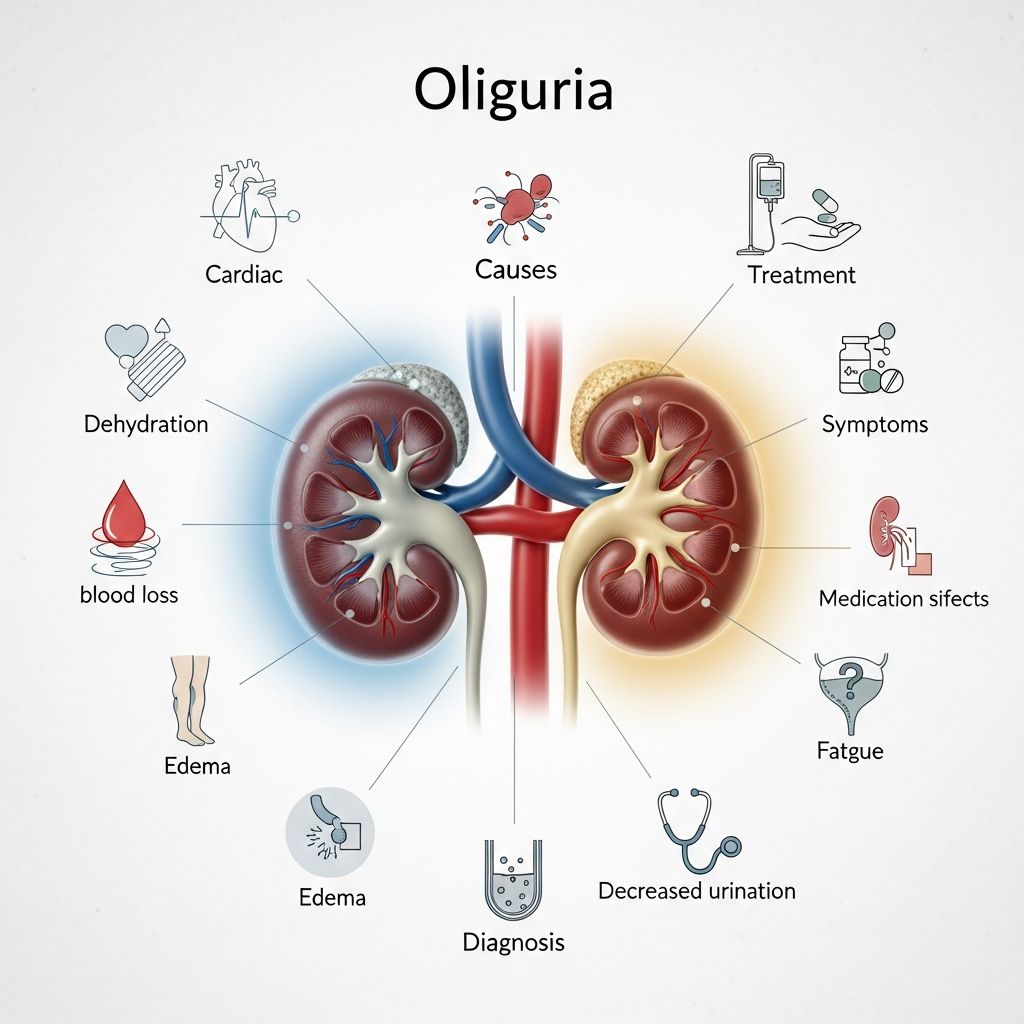
Understanding Oliguria: A Comprehensive Guide
Oliguria is a medical condition characterized by a significant reduction in urine production. Specifically, oliguria is defined as producing less than 500 milliliters of urine in adults over a 24-hour period. This condition represents one of the most important clinical indicators that something may be wrong with your kidneys or urinary system. When your body produces even less urine than oliguria—virtually no urine at all—this is called anuria, which is considered the most severe form of reduced urine output. Understanding oliguria is crucial because it can indicate serious underlying health problems ranging from dehydration to kidney failure.
What Is Oliguria?
Oliguria occurs when your kidneys fail to produce adequate amounts of urine relative to your body’s normal functioning. Under normal circumstances, healthy adults typically produce between 800 to 2,000 milliliters of urine daily, though this can vary based on fluid intake, diet, and individual metabolism. When output falls below 500 milliliters per day, or below 0.5 milliliters per kilogram of body weight per hour, the condition is classified as oliguria.
This reduced output means your kidneys are not filtering waste products and excess fluid from your blood as efficiently as they should be. The condition can develop suddenly (acute oliguria) or gradually over time (chronic oliguria), and the underlying cause determines the appropriate treatment approach.
Causes of Oliguria
Oliguria can result from three main categories of problems: insufficient blood flow to the kidneys, damage to the kidney tissue itself, or obstruction of urine flow through the urinary system.
Decreased Blood Flow to Kidneys (Prerenal Causes)
When your kidneys don’t receive enough blood, they cannot filter waste effectively. Common causes include:
– Dehydration from inadequate fluid intake, excessive sweating, or severe diarrhea and vomiting- Shock from severe blood loss, heart failure, or sepsis- Hemorrhage or acute blood loss- Heart failure or cardiorenal syndrome, where worsening heart function leads to reduced kidney perfusion- Severe burns affecting fluid balance- Liver disease with associated circulatory complications
Kidney Damage (Intrinsic Renal Causes)
Direct injury to kidney tissue can impair filtration ability. These causes include:
– Glomerulonephritis—inflammation of the tiny kidney filters (glomeruli) from various causes including autoimmune diseases, infections, or vasculitis- Acute tubular necrosis from toxins or prolonged low blood pressure- Diabetic kidney disease resulting from high blood sugar levels- Bacterial infections affecting the kidneys- Viral infections such as hepatitis B and C- HIV infection leading to progressive kidney damage- Systemic diseases like lupus affecting kidney function- Drug toxicity from certain medications- Contrast dye-induced nephropathy
Urinary Tract Obstruction (Postrenal Causes)
Blockages preventing urine flow include:
– Kidney stones lodged in the ureter- Enlarged prostate gland, particularly in older men- Tumors affecting the urinary tract- Blood clots in the urinary system- Urinary catheter malfunction or obstruction
Symptoms of Oliguria
The symptoms accompanying oliguria often depend on its underlying cause and severity. Common manifestations include:
– Noticeably decreased frequency of urination or small amounts when you do urinate- Swelling (edema) in the face, hands, feet, or abdomen from fluid retention- Elevated blood pressure from fluid accumulation- Fatigue and weakness- Nausea and vomiting- Muscle cramps- Shortness of breath if fluid accumulates in the lungs- In heart-related oliguria, weight gain and persistent lack of diuretic effectiveness- Confusion or altered mental status in severe cases- Lack of appetite
Related Stories



If oliguria is caused by glomerulonephritis, you may also notice blood in your urine (hematuria), giving it a pink or cola-colored appearance, or foamy urine from excess protein (proteinuria).
When to Seek Medical Attention
You should contact your healthcare provider promptly if you experience signs or symptoms of oliguria. Seek immediate emergency care if you have difficulty breathing, severe chest pain, altered consciousness, or complete cessation of urine output. Early medical evaluation is essential because oliguria can indicate serious conditions requiring urgent treatment.
Diagnosis of Oliguria
Your healthcare provider will conduct a thorough evaluation to determine the cause of reduced urine output and assess kidney function.
Medical History and Physical Examination
Your doctor will ask about your recent fluid intake, medications, illness, and symptoms. They’ll also perform a physical examination checking for signs of dehydration, swelling, high blood pressure, and other relevant findings.
Kidney Function Tests
Laboratory tests are crucial for diagnosis and include:
– Serum creatinine levels to assess kidney filtration ability- Blood urea nitrogen (BUN) measurement- Glomerular filtration rate (GFR) calculation- Electrolyte panels including potassium and sodium- Complete blood count
Urinalysis
Examination of urine samples helps identify:
– Blood cells (hematuria) or white blood cells (pyuria) suggesting infection or inflammation- Protein presence (proteinuria)- Kidney cells or casts- Specific gravity and osmolality
Imaging Studies
Depending on suspected causes, imaging may include:
– Ultrasound of the kidneys and urinary tract to detect obstructions or structural abnormalities- CT or MRI scanning for more detailed evaluation- Doppler ultrasound to assess blood flow to the kidneys
Other Diagnostic Tests
Additional testing may involve kidney biopsy if glomerulonephritis is suspected, specialized blood tests for autoimmune conditions, or echocardiography if heart dysfunction is suspected.
Treatment of Oliguria
Treatment depends entirely on the underlying cause and ranges from simple interventions to complex medical management.
Fluid Management
For dehydration-related oliguria, careful fluid replacement is essential. This may involve oral rehydration for mild cases or intravenous fluids for more severe situations. Your doctor will monitor fluid balance carefully to avoid overload.
Addressing the Underlying Cause
Treatment focuses on resolving the primary problem:
– Removing urinary obstructions through procedures like stent placement or catheterization- Treating infections with appropriate antibiotics or antivirals- Managing heart failure with cardiac medications and monitoring- Controlling blood pressure and blood sugar in diabetic kidney disease- Treating autoimmune conditions with immunosuppressive therapy when appropriate- Adjusting or discontinuing medications causing kidney damage
Medication Management
Your healthcare provider may prescribe:
– Diuretics to promote urine production once underlying problems are addressed- ACE inhibitors or ARBs to protect kidney function- Blood pressure medications- Medications to manage electrolyte imbalances
Dialysis
In severe cases where kidney function is critically impaired, dialysis may be necessary to remove waste and excess fluid from your blood. This temporary measure supports your kidneys while they recover.
Dietary Modifications
Your doctor may recommend:
– Restricted sodium intake to reduce fluid retention- Limited potassium intake if levels are elevated- Adequate but not excessive protein- Careful fluid restriction as advised
Complications of Oliguria
If left untreated, oliguria can lead to serious complications including:
– Accumulation of wastes and toxins in your bloodstream- Dangerous electrolyte imbalances, particularly elevated potassium- Metabolic acidosis- Anemia from reduced red blood cell production- High blood pressure from fluid accumulation- Progression to chronic kidney disease or end-stage renal disease requiring permanent dialysis or transplantation- Cardiovascular complications from fluid overload- Neurological problems from electrolyte disturbances
Prevention of Oliguria
While not all causes are preventable, you can reduce your risk through:
– Maintaining adequate hydration, especially during hot weather or exercise- Managing chronic conditions like diabetes and hypertension effectively- Taking medications exactly as prescribed and discussing concerns with your doctor- Avoiding nephrotoxic substances and unnecessary contrast dye exposure- Maintaining a healthy lifestyle with regular exercise- Getting prompt treatment for infections- Monitoring kidney function regularly if you have risk factors
Frequently Asked Questions About Oliguria
Q: Is oliguria the same as anuria?
A: No. Oliguria is decreased urine output (less than 500 mL daily in adults), while anuria is the most severe form where little to no urine is produced. Anuria represents a more critical condition requiring immediate medical intervention.
Q: How is oliguria different from normal low urine production?
A: Oliguria is pathologically reduced urine output below specific thresholds, indicating kidney or urinary system dysfunction. Normal variation in urine output depends on fluid intake and other factors but typically exceeds 500 mL daily.
Q: Can oliguria resolve on its own?
A: Depending on the cause, oliguria may resolve with appropriate treatment. Oliguria from dehydration typically improves with rehydration, while oliguria from kidney disease may require ongoing management.
Q: What should I do if I notice decreased urination?
A: Contact your healthcare provider promptly. Describe your symptoms, recent fluid intake, medications, and any other concerning symptoms. Seek emergency care if accompanied by severe symptoms like chest pain or difficulty breathing.
Q: Are certain groups more at risk for oliguria?
A: Yes. Older adults are at increased risk due to age-related changes in kidney function and common conditions like prostate enlargement. People with diabetes, heart disease, or autoimmune conditions also have elevated risk.
Q: Can medications cause oliguria?
A: Yes. Certain medications can reduce kidney function or blood flow, including some blood pressure medications, nonsteroidal anti-inflammatory drugs (NSAIDs), and contrast dyes used in imaging studies.
Q: What is the prognosis for someone with oliguria?
A: Prognosis depends on the underlying cause, severity, and how quickly treatment begins. Oliguria from reversible causes like dehydration often resolves completely with treatment, while oliguria from progressive kidney disease may lead to chronic kidney disease requiring long-term management.
References
- Glomerulonephritis – Symptoms and causes — Mayo Clinic. Accessed December 2025. https://www.mayoclinic.org/diseases-conditions/glomerulonephritis/symptoms-causes/syc-20355705
- Acute cardiorenal syndrome: Mechanisms and clinical implications — Cleveland Clinic Journal of Medicine. 2018. https://www.ccjm.org/content/85/3/231
- Anuria: Causes, Symptoms, Diagnosis & Treatment — Cleveland Clinic. Accessed December 2025. https://my.clevelandclinic.org/health/diseases/21890-anuria
- Chapter 8 Renal and Urinary System Alterations — National Center for Biotechnology Information (NCBI). National Institutes of Health. https://www.ncbi.nlm.nih.gov/books/NBK613065/
- What Is Anuria? — Aeroflow Urology. Accessed December 2025. https://aeroflowurology.com/blog/what-is-anuria
- Urination, Composition, Production, Color & Odor — Cleveland Clinic. Accessed December 2025. https://my.clevelandclinic.org/health/body/urine
- Oliguria: What Is It, Causes, Signs and Symptoms, and More — Osmosis. Accessed December 2025. https://www.osmosis.org/answers/oliguria
Similar Articles








Read full bio of Sneha Tete