Olive Oil Vs. Avocado Oil: 5 Key Differences
Discover the key differences between olive oil and avocado oil to choose the best healthy fat for cooking, health benefits, and more.
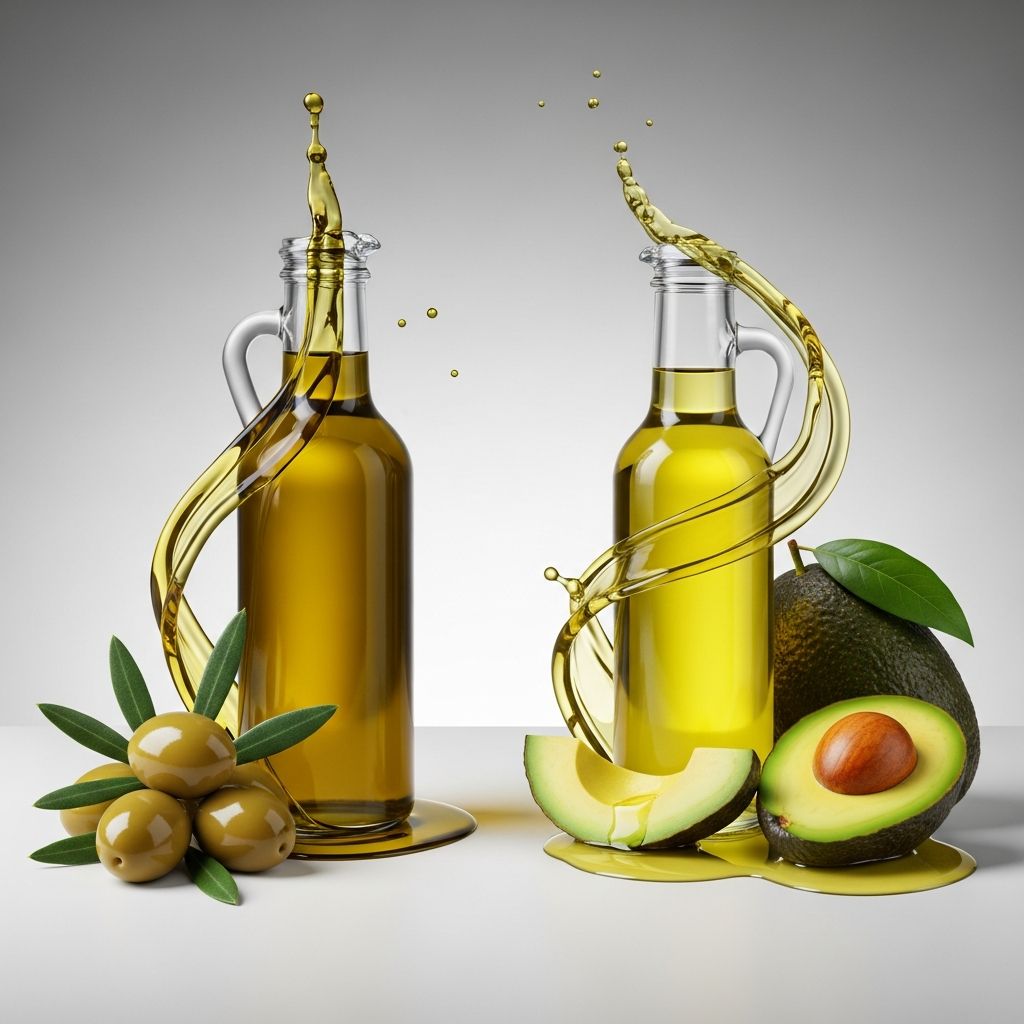
Olive oil and avocado oil are both popular choices for healthy cooking, praised for their high content of
monounsaturated fats
that support heart health. Extracted from olives and avocados respectively, these oils offer unique nutritional profiles, smoke points, and culinary applications. While they share similarities like promoting cholesterol balance and nutrient absorption, differences in antioxidants, heat stability, and flavor make one better suited for certain uses. This article breaks down their comparison across key categories to help you decide which to stock in your pantry.Nutritional Comparison
Both oils are calorie-dense, providing about 120 calories and 14 grams of fat per tablespoon, primarily from
oleic acid
, a monounsaturated fat linked to reduced inflammation and blood pressure. Their fatty acid profiles are nearly identical: low in saturated fats (around 2 grams), moderate polyunsaturated fats (avocado slightly higher at 2g vs. 1.5g in olive), and dominant monounsaturated fats (70-80%).Key distinctions lie in micronutrients and bioactive compounds:
- Vitamin E: Avocado oil offers 23% DV per tablespoon, while extra virgin olive oil (EVOO) provides 33% DV, aiding antioxidant protection.
- Polyphenols: EVOO excels with 100-800+ mg/kg of these antioxidants, including oleocanthal, absent or minimal in avocado oil.
- Phytosterols and Vitamin K: Avocado oil is richer, supporting cholesterol blocking and skin health.
- Lutein: Both contain this eye and skin-protective carotenoid.
| Olive Oil (EVOO, 1 tbsp) | Avocado Oil (1 tbsp) | |
|---|---|---|
| Calories | 120 | 120 |
| Total Fat | 14g | 14g |
| Monounsaturated Fat | 10g | 10g |
| Polyunsaturated Fat | 1.5g | 2g |
| Vitamin E (% DV) | 33% | 23% |
Nutritionally, they are comparable, but EVOO’s polyphenols give it an edge in antioxidant power.
Smoke Point and Best Uses for Cooking
The
smoke point
—temperature at which oil breaks down and produces harmful compounds—is crucial for cooking. Avocado oil’s higher smoke point (refined: 520°F/271°C; unrefined: 480°F/249°C) makes it ideal for high-heat methods like frying, searing, and baking, without losing stability.Olive oil varies: EVOO (375-410°F/190-210°C) suits low-medium heat like sautéing or dressings; refined olive oil reaches 465°F/240°C. Using EVOO for deep-frying risks flavor loss and acrylamide formation.
- Avocado oil best for: Stir-frying, grilling, roasting veggies, high-heat baking.
- Olive oil best for: Dressings, drizzling, low-heat cooking, Mediterranean dishes.
Both enhance carotenoid absorption from salads—avocado oil boosted it significantly in one study, olive oil excels with lycopene from tomatoes.
Health Benefits: Heart Health
Monounsaturated fats in both lower
LDL cholesterol
and triglycerides while raising HDL. The PREDIMED study showed Mediterranean diets with EVOO reduced cardiovascular events by 30%, thanks to polyphenols preventing LDL oxidation. EFSA approves olive polyphenols for blood lipid protection.Avocado oil’s phytosterols block gut cholesterol absorption, supporting heart health, but lacks EVOO’s extensive research and polyphenol benefits.
Verdict: Both benefit hearts, but olive oil has superior, research-backed protection.
Anti-Inflammatory and Antioxidant Effects
EVOO’s
oleocanthal
mimics ibuprofen, inhibiting COX enzymes and lowering C-reactive protein—linked to arthritis relief and that peppery throat burn. Polyphenols combat oxidative stress more potently than avocado oil’s vitamin E and oleic acid.Related Stories



Avocado oil reduces inflammation modestly via oleic acid and vitamin E but misses diverse polyphenols.
Verdict: Olive oil leads in anti-inflammatory power.
Other Health Benefits
- Skin Health: Both promote wound healing, collagen production, and UV protection via lutein and vitamin E. Olive oil treats burns/cuts; avocado oil absorbs quickly for moisturizing.
- Nutrient Boost: Fat content aids fat-soluble vitamin uptake.
- Brain and Longevity: EVOO’s polyphenols may protect against cognitive decline; both support metabolic health.
Which One Should You Buy?
Choose based on use:
Avocado oil
for high-heat cooking and neutral flavor;EVOO
for flavor, drizzling, and maximum health perks. Quality matters—opt for cold-pressed, unrefined versions. Store in cool, dark places. Dietitians recommend both over seed oils, but EVOO for polyphenol punch.Frequently Asked Questions (FAQs)
Is avocado oil better than olive oil for cooking?
Yes, avocado oil’s higher smoke point (up to 520°F) makes it superior for frying and high-heat methods, while olive oil is best for lower heats.
Which has more antioxidants?
Extra virgin olive oil, due to high polyphenols like oleocanthal, outperforming avocado oil’s vitamin E.
Can I use them interchangeably?
Not always—avocado for heat, olive for cold uses. Both are healthy fats.
Is avocado oil good for skin?
Yes, its vitamin E and lutein support hydration, wound healing, and UV protection.
Which is better for heart health?
Olive oil edges out with proven polyphenol benefits, but both lower LDL.
References
- Avocado Oil vs Olive Oil: Which One is Truly Better? — Olivea. 2023. https://www.myolivea.com/blogs/news/avocado-oil-vs-olive-oil
- Is Avocado Oil Healthier than Olive Oil? — Red Stone Olive Oil. 2024. https://redstoneoliveoil.com/blogs/information/evoo-olive-oil-vs-avocado-oil
- Avocado Oil vs. Olive Oil: Is One Healthier? — Healthline. 2024-10-15. https://www.healthline.com/nutrition/avocado-oil-vs-olive-oil
- Avocado vs. Olive Oil? Dr. Gundry Settles the Great Oil Debate! — YouTube (Dr. Gundry). 2023. https://www.youtube.com/watch?v=Linn0zWa0c0
Similar Articles








Read full bio of Sneha Tete