Olive Oil vs Coconut Oil: Which Kitchen Staple Wins?
Discover which oil deserves a permanent place in your kitchen pantry based on nutritional science.
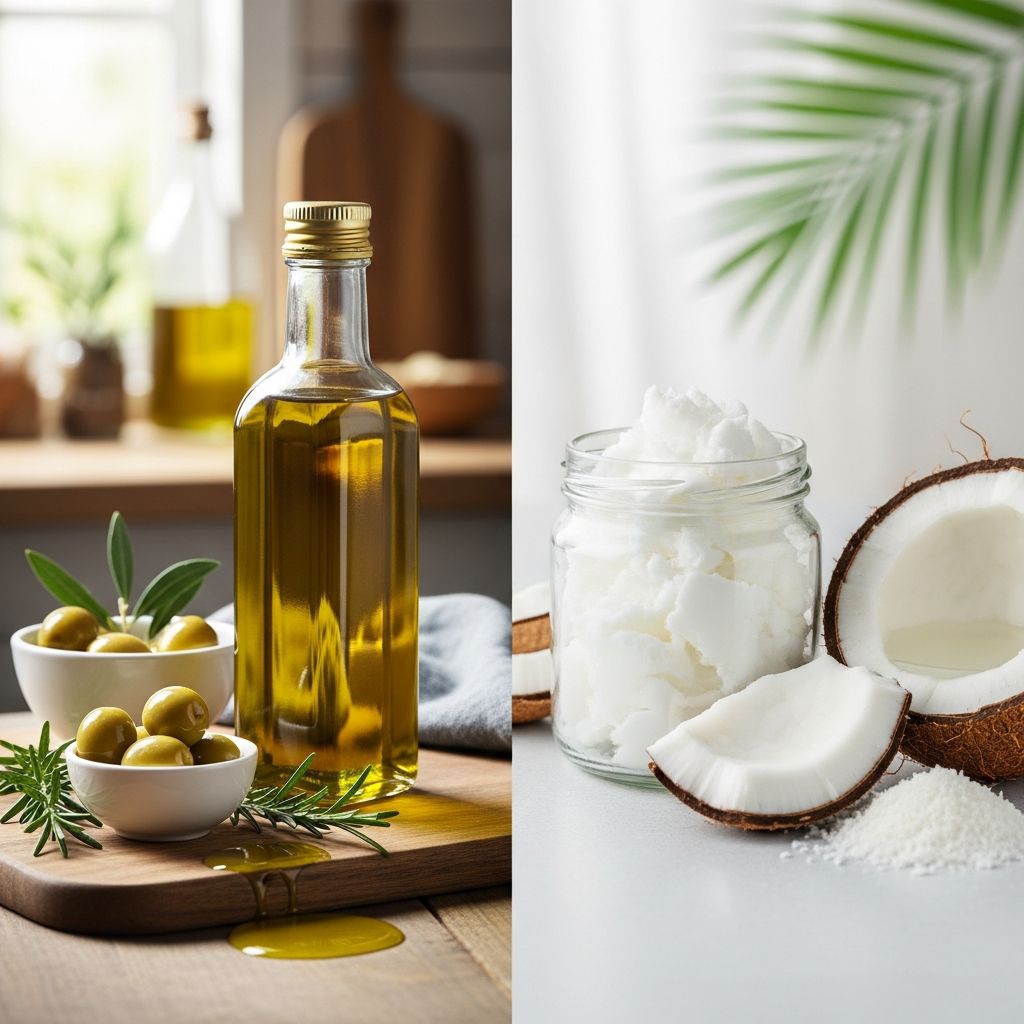
Olive Oil vs. Coconut Oil: Which Is Worthy of Kitchen-Staple Status?
The debate over which cooking oil deserves a permanent place in your kitchen has intensified in recent years. Both olive oil and coconut oil have passionate advocates, each claiming their preferred oil offers superior health benefits. However, when you examine the scientific evidence, the answer becomes clearer. Understanding the nutritional profiles, health implications, and practical cooking applications of these two oils can help you make an informed decision about which—or both—should stock your pantry.
Understanding Coconut Oil Nutrition
Coconut oil has gained considerable attention in health and wellness circles, often promoted as a superfood with remarkable health-boosting properties. However, the scientific reality is more nuanced. Coconut oil is not a single fat but rather a combination of fats, approximately 90 percent of which are saturated. This saturated fat composition is significantly higher than most other commonly used cooking oils.
In recent years, much of the discussion surrounding coconut oil has centered on its status as a medium-chain triglyceride (MCT). Proponents argue that unlike other fats, MCTs are digested in a way that boosts metabolism and promotes weight loss. However, a comprehensive meta-analysis examining 16 studies conducted by researchers at the National University of Singapore and Harvard University revealed that coconut oil showed no fat-reducing benefit and actually significantly increased LDL (“bad”) cholesterol. Like other oils, coconut oil is calorie-dense, with one tablespoon containing approximately 100 calories, and it contains only minimal amounts of antioxidants such as vitamin E. Furthermore, coconut oil has not been convincingly demonstrated to possess strong anti-inflammatory properties.
Exploring Olive Oil Nutrition
Olive oil presents a distinctly different nutritional profile compared to coconut oil. While calorically similar to coconut oil—providing approximately 119 calories per tablespoon—olive oil is predominantly composed of monounsaturated fats, primarily oleic acid. This fundamental difference in fat composition creates significant implications for cardiovascular health. Extensive research has consistently demonstrated that the fats in olive oil are associated with decreased LDL cholesterol levels and stable or increased HDL (“good”) cholesterol levels.
Extra-virgin olive oil, a cornerstone of the widely recommended Mediterranean diet, boasts impressive levels of healthful antioxidants and polyphenols. These compounds provide multiple protective effects: reducing inflammation, improving blood-vessel function, promoting brain health, and lowering the risk of heart disease. The scientific foundation supporting olive oil’s health benefits is substantially more robust than that supporting coconut oil.
Nutritional Comparison: Key Differences
The nutritional comparison between these two oils reveals several important distinctions:
| Factor | Olive Oil | Coconut Oil |
|---|---|---|
| Calories per Tablespoon | ~119 | ~120 |
| Primary Fat Type | Monounsaturated | Saturated (90%) |
| MUFAs per Tablespoon | ~11g | ~0.8g |
| Saturated Fat per Tablespoon | ~1g | ~12g |
| Antioxidants & Polyphenols | High (especially EVOO) | Low |
| LDL Impact | Decreases | Increases |
This table clearly illustrates that olive oil contains more than 10 times the beneficial monounsaturated fats compared to coconut oil. Additionally, a single tablespoon of coconut oil contains 12 grams of saturated fat, representing more than half of the American Heart Association’s recommended daily limit for saturated fat consumption in a 2,000-calorie diet.
Related Stories



Health Implications: Heart Health and Beyond
The most significant health distinction between these oils concerns cardiovascular health. Monounsaturated fats, which are abundant in olive oil, actively lower LDL cholesterol without contributing to LDL oxidation, thereby improving overall heart health. Conversely, the high saturated fat content in coconut oil can elevate cholesterol levels and increase risk factors for heart disease. The American Heart Association’s dietary guidelines recommend that saturated fat consumption should comprise no more than 10 percent of daily caloric intake, making coconut oil problematic for individuals prioritizing heart health.
However, certain populations may find coconut oil beneficial. People with specific neurological conditions such as epilepsy and multiple sclerosis, as well as individuals who struggle with fat digestion—including those with Crohn’s disease, colitis, and irritable bowel syndrome—may tolerate or benefit from coconut oil’s medium-chain triglyceride structure.
Cooking Applications: Temperature and Smoke Points
When selecting an oil for cooking, the smoke point—the temperature at which an oil begins to break down and produce smoke—matters significantly. Coconut oil has a higher smoke point than extra-virgin olive oil, making it technically suitable for higher-temperature cooking. However, regular (refined) olive oil actually has a higher smoke point than extra-virgin olive oil, so keeping both varieties in your kitchen provides flexibility for different cooking methods.
Recent research has found that both oils performed adequately in terms of stability and safety at high temperatures, with olive oil maintaining a slight advantage. For the highest smoke point combined with health benefits, refined avocado oil emerges as a superior alternative to coconut oil.
From a culinary perspective, olive oil enhances the flavors of foods you prepare, while coconut oil tends to alter the flavor profile, making olive oil the more versatile choice for most kitchens.
The Verdict: Which Oil Deserves Kitchen-Staple Status?
The scientific evidence overwhelmingly suggests that olive oil—particularly extra-virgin olive oil—is the superior choice for most people seeking to maintain a healthy kitchen staple. Its monounsaturated fat profile, abundant antioxidants and polyphenols, proven cardiovascular benefits, and culinary versatility make it the clear winner when comparing overall health impact and practical utility.
The decline in coconut oil sales—dropping more than 30 percent over recent years—reflects consumer recognition of these scientific findings. While coconut oil may have specific applications for certain individuals with particular health conditions or dietary restrictions, it is not the universally beneficial superfood it has been marketed to be.
For individuals whose primary concern is heart health, olive oil should unquestionably be the oil of choice. Its proven ability to reduce LDL cholesterol, increase HDL cholesterol, reduce inflammation, and support overall cardiovascular health makes it an evidence-based choice for long-term wellness.
Practical Recommendations for Your Kitchen
Consider these evidence-based strategies for incorporating oils into your cooking routine:
For general cooking and drizzling: Use extra-virgin olive oil for its maximum antioxidant content. This oil works beautifully for salad dressings, finishing dishes, and low-to-medium heat cooking.
For higher-temperature cooking: Keep refined olive oil on hand for sautéing and moderate heat cooking, as it has a higher smoke point than extra-virgin varieties while retaining most health benefits.
For the highest heat: Consider refined avocado oil, which provides a higher smoke point and superior health benefits compared to coconut oil.
For specific health conditions: If you have neurological conditions or fat digestion difficulties, consult with a healthcare provider about whether coconut oil might be appropriate for your situation.
Frequently Asked Questions
Q: Is coconut oil truly a superfood?
A: Despite marketing claims, scientific evidence does not support coconut oil as a superfood. While it contains some beneficial compounds, studies show it increases LDL cholesterol and provides minimal antioxidant benefits compared to other oils like olive oil.
Q: Can I use olive oil for high-temperature cooking?
A: Yes, but use refined olive oil rather than extra-virgin for cooking at higher temperatures. Extra-virgin olive oil is best reserved for drizzling and low-to-medium heat cooking to preserve its beneficial compounds.
Q: How much olive oil should I consume daily?
A: While olive oil is healthier than many alternatives, it is still calorie-dense at approximately 119 calories per tablespoon. Moderate consumption as part of a balanced diet is recommended.
Q: Is there any situation where coconut oil is better than olive oil?
A: Yes, certain individuals with neurological conditions or digestive disorders may benefit from coconut oil’s medium-chain triglycerides. Consult your healthcare provider for personalized recommendations.
Q: What about the polyphenols in coconut oil?
A: While coconut oil does contain some polyphenols, the levels are substantially lower than those found in extra-virgin olive oil, making olive oil the superior choice for antioxidant benefits.
Q: Does the type of olive oil matter?
A: Yes. Extra-virgin olive oil contains the highest levels of beneficial antioxidants and polyphenols. Refined olive oil has fewer of these compounds but a higher smoke point, making it better for cooking at higher temperatures.
References
- Coconut Oil vs. Olive Oil: Which Is Better? — Bottom Line, Inc. 2024. https://www.bottomlineinc.com/health/diet-nutrition/coconut-oil-vs-olive-oil-which-is-better/
- Battle Roy-oil: Round One, Coconut Oil — About Olive Oil. 2024. https://www.aboutoliveoil.org/battle-roy-oil-how-olive-oil-stacks-up-against-coconut-oil
- Dietary Guidelines for Americans — U.S. Department of Agriculture & U.S. Department of Health and Human Services. 2020. https://www.dietaryguidelines.gov
- Monounsaturated Fats and Cardiovascular Health — American Heart Association. 2024. https://www.heart.org
Similar Articles








Read full bio of medha deb