Olopatadine Eye Drops For Hay Fever: Fast Relief Guide
Effective relief from itchy, inflamed eyes caused by hay fever and allergies with olopatadine drops.
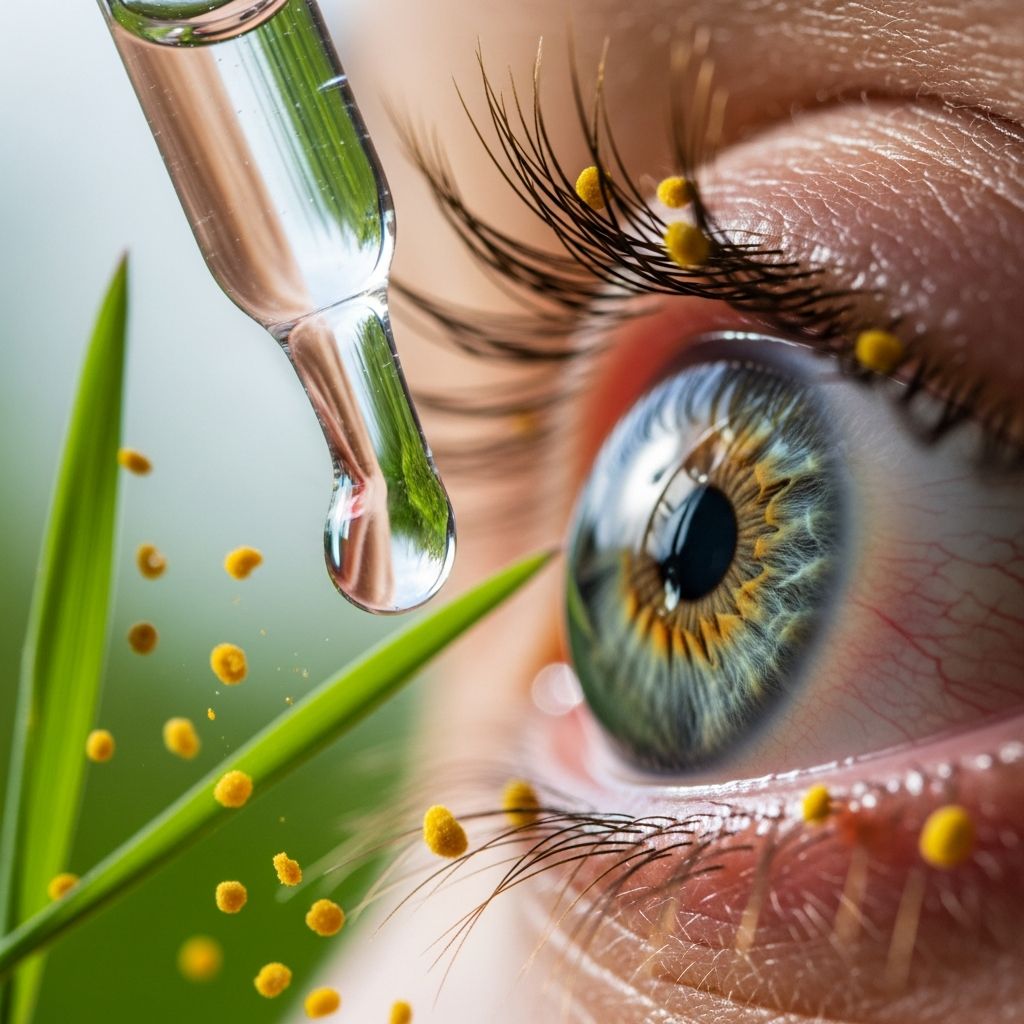
Olopatadine eye drops are a targeted treatment for the uncomfortable eye symptoms associated with hay fever, also known as seasonal allergic conjunctivitis. These drops work by blocking histamine, a key chemical released during allergic reactions that causes itching, redness, and inflammation in the eyes. Commonly prescribed under brand names like Opatanol or available in generic forms, olopatadine provides fast and lasting relief, often within minutes of application, making it a go-to option for allergy sufferers during pollen seasons.
About 20-30% of people with hay fever experience ocular symptoms as their primary complaint, with pollen from grasses, trees, and weeds being common triggers. Olopatadine is particularly effective because it combines antihistamine action with mast cell stabilization, preventing further release of inflammatory mediators. Unlike oral antihistamines, it acts locally in the eye, minimizing systemic side effects.
About olopatadine eye drops
Olopatadine hydrochloride is a selective antihistamine and mast cell stabilizer specifically formulated for ophthalmic use. Available in concentrations such as 0.1%, 0.2%, or 1 mg/ml, it is indicated for the temporary relief of ocular itching due to allergic conjunctivitis. The solution is typically clear and colorless, preserved with benzalkonium chloride to prevent microbial contamination.
Clinical studies demonstrate that olopatadine significantly reduces eye itching compared to placebo, with onset of action as quick as 30 minutes and effects lasting up to 12 hours depending on the formulation. Once-daily options like 0.2% Pataday offer convenience for patients needing prolonged relief, while twice-daily dosing suits milder cases.
Unlike steroid eye drops, olopatadine does not carry risks of increased intraocular pressure or cataracts, making it safer for short-term use in most patients. It is not intended for bacterial, viral, or fungal eye infections, and persistent symptoms warrant medical evaluation.
Before using olopatadine eye drops
Consult your doctor or pharmacist before starting olopatadine, especially if you have a history of eye conditions like glaucoma, dry eye syndrome, or corneal disorders. Disclose all medications, including other eye drops, to avoid interactions. For instance, if using multiple eye preparations, space applications by at least 5 minutes, applying ointments last.
Who can and cannot use olopatadine eye drops
- Adults and children over 3 years: Generally safe and effective for seasonal and perennial allergic conjunctivitis.
- Pregnant or breastfeeding women: Use only if advised by a doctor; limited data exists, but animal studies show no direct harm. Avoid during breastfeeding as it may pass into milk.
- Allergic to olopatadine or ingredients: Do not use if hypersensitive to olopatadine, benzalkonium chloride, or other components.
- Contact lens wearers: Remove soft lenses before use due to preservative absorption; wait 10-15 minutes before reinserting.
Olopatadine is not recommended for children under 3 years without medical supervision, and those with severe corneal damage should be cautious due to rare risks of calcium deposits.
Related Stories



Common questions about olopatadine eye drops
- How and when to use olopatadine eye drops?
- Instill 1 drop into each affected eye twice daily (morning and evening), or once daily for higher concentrations as directed. Wash hands, tilt head back, pull down lower eyelid, and apply without touching the dropper tip to the eye.
- Dosage
- Standard: 1 drop per eye BID. Do not exceed recommended dose; overuse may increase side effects.
- How to use the eye drops
- 1. Shake well if required. 2. Remove contact lenses. 3. Hold dropper above eye, squeeze 1 drop. 4. Close eye for 1-2 minutes, press inner corner to prevent drainage. 5. Repeat for other eye. Discard opened bottle after 4 weeks.
How and when to use olopatadine eye drops
Follow your healthcare provider’s instructions precisely. The typical regimen is one drop in each affected eye twice a day, approximately 12 hours apart. For once-daily formulations (e.g., 0.2% or 0.7%), apply in the morning. Continue for the duration prescribed, usually until allergy season subsides or symptoms resolve.
To administer correctly:
- Wash hands thoroughly with soap and water.
- Shake the bottle gently.
- Tilt your head back and look up.
- Gently pull down the lower eyelid to form a pocket.
- Hold the dropper tip close to the eye without touching it.
- Squeeze to release one drop into the pocket.
- Close your eye and press the inner corner for 1-2 minutes to minimize systemic absorption.
- Repeat for the other eye if needed.
- Replace cap tightly; do not wipe the tip.
Avoid touching the dropper to any surface to prevent contamination, which could lead to serious eye infections.
Important information on storage
Store at room temperature (15-25°C), away from direct sunlight and children. Do not freeze. Discard 4 weeks after first opening or per expiry date. If solution changes color or becomes cloudy, do not use.
Side effects of olopatadine eye drops
Most users tolerate olopatadine well, but side effects can occur. Common ones are mild and transient.
| Side Effect | Frequency | Details |
|---|---|---|
| Eye pain, irritation, dryness, discomfort | Common (up to 1/10) | Mild, resolves quickly |
| Headache, fatigue, dry nose, bad taste | Common | Usually short-lived |
| Blurred vision, keratitis, photophobia | Uncommon (up to 1/100) | Avoid driving if vision affected |
| Dizziness, nausea, rhinitis | Uncommon | Report if persistent |
| Eye swelling, dyspnea, hypersensitivity | Not known | Seek immediate medical help |
Rarely, corneal clouding from calcium buildup may occur in patients with severe epithelial damage. Report any new or worsening symptoms to your doctor. In clinical trials, <5% discontinued due to adverse events.
Serious side effects
- Severe allergic reactions: swelling, shortness of breath, rash.
- Vision changes persisting >24 hours.
- Infection signs: increased discharge, pain.
Reporting: Use systems like Yellow Card (UK) or FDA MedWatch.
How to cope with olopatadine eye drops side effects
| Side Effect | Coping Strategy |
|---|---|
| Eye irritation (dryness, burning) | Blink frequently; use artificial tears 5 min after olopatadine |
| Blurred vision | Wait until clear before driving/operating machinery |
| Headache/fatigue | Rest, hydrate; usually resolves in days |
| Dry nose/bad taste | Normal from drainage; rinse mouth if needed |
If side effects persist or worsen, discontinue and consult a healthcare professional.
Pregnancy and breastfeeding with olopatadine eye drops
Limited human data; animal studies show no teratogenic effects. Use in pregnancy only if benefits outweigh risks (Category B equivalent). It is not recommended during breastfeeding due to potential excretion in milk. Discuss alternatives with your doctor.
Other medicines, food, drink and olopatadine eye drops
No major interactions reported, but inform your doctor of all therapies. Space other eye meds by 5-10 minutes. Benzalkonium chloride may interact with soft lenses.
Analgesics
(Note: Minimal systemic absorption means low interaction risk with oral analgesics, but monitor for additive drowsiness if combined with sedating antihistamines.)
Frequently Asked Questions (FAQs)
Q: Can I wear contact lenses with olopatadine?
A: Remove soft lenses before use; wait 10-15 minutes before reinserting. Not if eyes are red.
Q: How long until olopatadine works?
A: Relief starts in 30 minutes, peaks at 2 hours, lasts 8-12 hours.
Q: Is olopatadine over-the-counter?
A: Some strengths (e.g., Pataday 0.1%-0.2%) are OTC; others prescription.
Q: What if I miss a dose?
A: Apply as soon as remembered; resume schedule. Do not double dose.
Q: Can children use it?
A: Approved for ages 3+; consult pediatrician for younger.
References
- Olopatadine 1 mg/ml Eye drops, Solution (Patient Information Leaflet) — Medicines.org.uk. 2023. https://www.medicines.org.uk/emc/files/pil.10890.pdf
- Olopatadine ophthalmic (Pataday, Patanol) — WebMD. 2024-10-15. https://www.webmd.com/drugs/2/drug-147073/pataday-ophthalmic-eye/details
- Olopatadine Ophthalmic — MedlinePlus (NIH). 2025-01-01. https://medlineplus.gov/druginfo/meds/a602025.html
- Pataday (olopatadine hydrochloride) ophthalmic solution label — FDA. 2010-08-01. https://www.accessdata.fda.gov/drugsatfda_docs/label/2010/021545s013lbl.pdf
- Olopatadine eye drops for hay fever — Patient.info. 2024. https://patient.info/medicine/olopatadine-eye-drops-for-hay-fever-opatanol
- Olopatadine (Ophthalmic) — Memorial Sloan Kettering Cancer Center. 2023. https://www.mskcc.org/cancer-care/patient-education/medications/adult/olopatadine-ophthalmic
Similar Articles








Read full bio of medha deb