Omeprazole: Reducing Stomach Acid and Managing GERD
Complete guide to omeprazole: how it works, uses, dosage, and side effects.
About Omeprazole
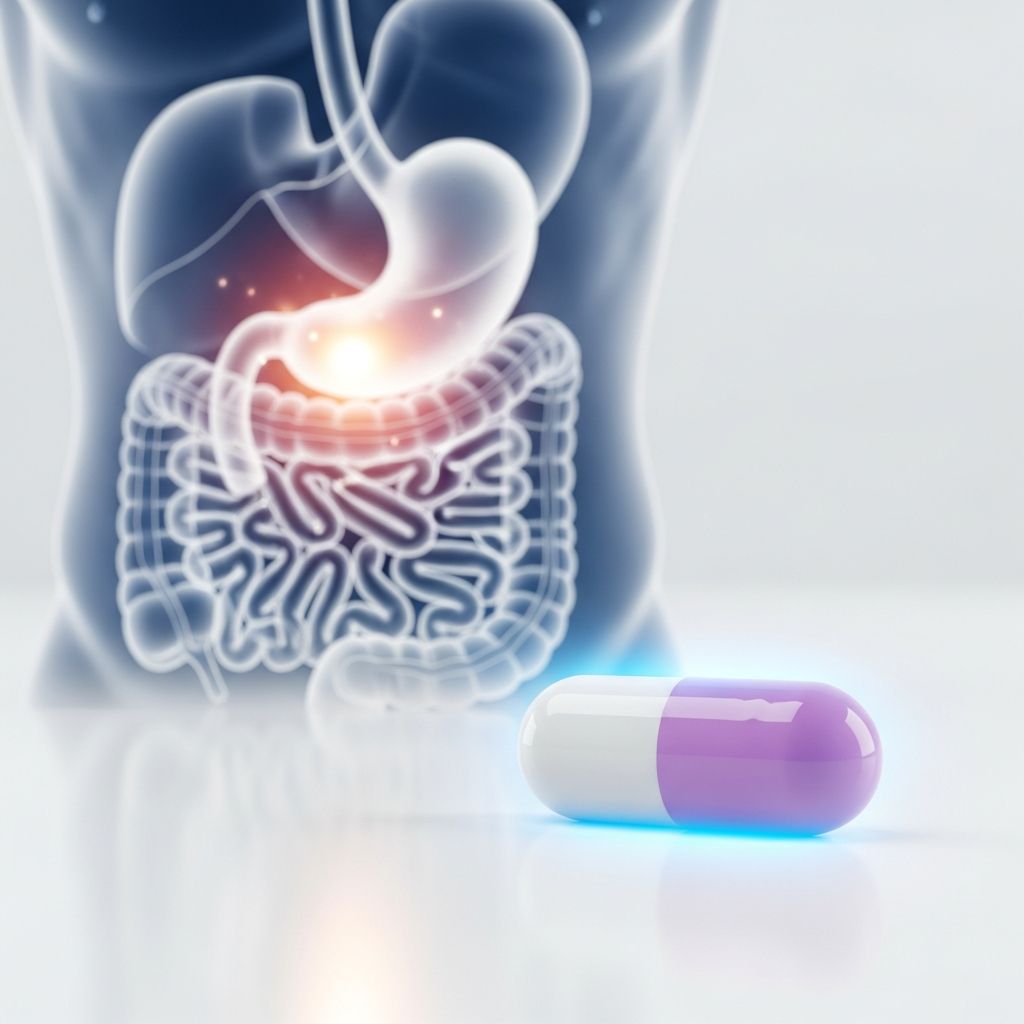
Omeprazole is a prescription medication belonging to a class of drugs called proton pump inhibitors (PPIs). It is used to treat various acid-related digestive conditions by significantly reducing the amount of acid your stomach produces. This medication is sold under several brand names, including Losec, Mezzopram, and Prilosec, and is available in both prescription and over-the-counter formulations depending on the dosage and your location.
The drug has become one of the most commonly prescribed medications worldwide due to its effectiveness in managing chronic acid reflux disease (GERD), peptic ulcer disease, and other gastrointestinal conditions. Understanding how omeprazole works, when to take it, and what side effects to expect can help you use this medication safely and effectively.
How Omeprazole Works
Omeprazole operates through a specific mechanism that targets the source of stomach acid production. The medication is a substituted benzimidazole that works by inhibiting the H+/K+ adenosinetriphosphate pump, commonly known as the proton pump, located in the gastric parietal cells of your stomach lining.
This proton pump is responsible for the final step of gastric acid secretion. By blocking this pump, omeprazole suppresses both basal (resting) and stimulated acid secretion, regardless of what triggers the acid production. The medication binds irreversibly to the H+/K+-ATPase enzyme, forming an inhibitory complex that prevents acid from being secreted into the stomach.
Unlike older medications such as H2-receptor antagonists, which work by blocking signals for acid production, omeprazole acts directly at the final step of acid creation. This makes it significantly more potent at reducing stomach acid. The effectiveness of omeprazole is dose-dependent: a 20 mg dose inhibits basal acid output by approximately 29%, while a 60 mg dose inhibits it by about 98%.
When you first start taking omeprazole, the antisecretory effects increase progressively over the first 3 to 5 days of treatment. This gradual increase occurs because reduced stomach acid decreases the degradation of the drug itself, enhancing its own availability in your system. After about 5 days of consistent use, the medication typically reaches its maximum effectiveness.
Absorption and Metabolism
Omeprazole is supplied as delayed-release capsules containing enteric-coated granules. These granules are designed to protect the medication from being destroyed by stomach acid. The capsule dissolves in the small intestine rather than the stomach, allowing the omeprazole granules to be released and rapidly absorbed once they reach the appropriate pH environment.
The drug has an absolute bioavailability of 30% to 40% following an oral dose of 20 to 40 mg, with peak plasma concentration occurring between 0.5 to 3.5 hours after taking the medication. Peak plasma concentration and the area under the curve increase proportionally with doses up to 40 mg.
Omeprazole has a relatively short half-life of 0.5 to 1 hour in healthy individuals. This means the drug is rapidly eliminated from your body, yet its effects on acid suppression last much longer due to the irreversible binding to the proton pump.
Related Stories



The medication is extensively metabolized by the hepatic cytochrome P450 enzyme system, primarily through the CYP2C19 and CYP3A4 isozymes. The main route of elimination is through urine, where omeprazole metabolites are excreted.
Medical Uses of Omeprazole
Omeprazole is approved for treating several gastrointestinal conditions:
- Gastroesophageal Reflux Disease (GERD): Omeprazole effectively reduces symptoms of chronic heartburn and acid reflux by decreasing acid production
- Peptic Ulcer Disease: The medication promotes healing of duodenal and gastric ulcers more rapidly than older H2-receptor antagonists
- Zollinger-Ellison Syndrome: A rare condition characterized by excessive gastric acid production, which omeprazole effectively controls
- Uncomplicated Heartburn: Short-term use provides relief from occasional acid-related discomfort
- Prevention of Ulcers: In patients taking nonsteroidal anti-inflammatory drugs (NSAIDs), omeprazole helps prevent ulcer formation
Dosage and Administration
The appropriate dose of omeprazole varies depending on the condition being treated and individual patient factors:
- Standard GERD Treatment: Typically 20 mg once daily for 4 to 8 weeks
- Maintenance Therapy: Often 10 to 20 mg once daily to prevent symptom recurrence
- Peptic Ulcer Disease: Usually 20 to 40 mg once daily for 4 to 8 weeks
- Zollinger-Ellison Syndrome: Higher doses of 60 mg or more daily, adjusted based on individual response
It is important to take omeprazole exactly as prescribed by your healthcare provider. The medication should be taken at the same time each day, typically in the morning before breakfast. Swallow the capsule whole without crushing, chewing, or opening it, as this can affect how the medication works.
How Long Does Omeprazole Take to Work?
The timeline for omeprazole’s effectiveness varies depending on your condition and when you start treatment:
- Initial Relief: Some patients experience symptom relief within 24 hours to a few days of starting treatment
- Progressive Improvement: Antisecretory effects increase progressively during the first 3 to 5 days
- Maximum Effectiveness: Full therapeutic effect is typically reached after about 5 days of consistent daily use
- Ulcer Healing: For peptic ulcer disease, healing typically occurs within 4 to 8 weeks of treatment
It is important to continue taking omeprazole even if you feel better, as discontinuing the medication prematurely may allow symptoms to return. Your healthcare provider will determine the appropriate duration of treatment based on your specific condition.
Acid Reduction and Effectiveness
Omeprazole is highly effective at reducing stomach acid production. When taken daily for approximately 5 days, PPIs like omeprazole reduce about 65% of stomach acid production. This reduction is sufficient to allow healing of damaged tissues while still maintaining enough acid to digest food properly.
The medication does not stop all acid production; your stomach retains approximately 35% of its normal acid production, which is necessary for proper digestive function. Single doses of omeprazole demonstrate dose-dependent effects: a 20 mg dose inhibits stimulated acid secretion by 36%, while an 80 mg dose inhibits it by 99%.
For chronic conditions requiring long-term management, omeprazole has demonstrated sustained effectiveness. Clinical trials have shown that chronic therapy with omeprazole for up to 5 years results in continued inhibition of acid secretion and sustained symptomatic relief.
Side Effects and Safety Considerations
Like all medications, omeprazole can cause side effects. Most patients tolerate the medication well, but some may experience adverse reactions:
- Headache (most common side effect)
- Gastrointestinal symptoms including diarrhea, constipation, nausea, and abdominal pain
- Dizziness or vertigo
- Skin reactions or rash
- Muscle pain or weakness
- Increased gastrin levels in the blood (particularly with long-term use)
Long-term use of omeprazole may increase fasting serum gastrin levels to approximately 2 to 5 times pretreatment levels. While this effect is generally reversible upon discontinuation, your healthcare provider should monitor this with prolonged therapy.
Drug Interactions
Omeprazole binds to hepatic cytochrome P450 and inhibits the oxidative metabolism of certain medications. The most clinically significant interaction is with phenytoin (an anticonvulsant), where omeprazole can increase phenytoin levels. If you are taking other medications, inform your healthcare provider, as omeprazole may interact with:
- Antiretroviral medications
- Certain antifungal drugs
- Methotrexate
- Warfarin and other anticoagulants
- Clopidogrel and other antiplatelet agents
Special Populations and Precautions
Hepatic Impairment: For patients with liver disease, the bioavailability of omeprazole increases by approximately 100% compared to those with normal liver function due to decreased first-pass metabolism. The plasma half-life also increases to about 3 hours instead of 0.5 to 1 hour. Dose reduction should be considered for patients with significant hepatic impairment.
Pregnancy and Breastfeeding: Consult your healthcare provider before using omeprazole if you are pregnant, planning to become pregnant, or breastfeeding. Your doctor can assess the benefits and risks specific to your situation.
Long-Term Use: While omeprazole is generally safe for long-term use, prolonged therapy may be associated with increased risk of certain conditions. Regular monitoring by your healthcare provider is recommended for extended treatment periods.
Comparison with Other Acid-Reducing Medications
| Medication Class | Mechanism | Effectiveness | Speed of Action |
|---|---|---|---|
| Proton Pump Inhibitors (Omeprazole) | Blocks final step of acid production | Reduces acid by 65% or more | Maximum effect in 3-5 days |
| H2-Receptor Antagonists | Blocks histamine signals for acid | Reduces acid by approximately 30-50% | Faster initial effect but less potent |
Omeprazole typically provides more effective symptom relief and faster ulcer healing compared to H2-receptor antagonists. However, H2-blockers may be appropriate for mild or occasional acid reflux.
Frequently Asked Questions
Q: Can I take omeprazole with food?
A: Yes, omeprazole can be taken with or without food. However, it is typically recommended to take it 30 to 60 minutes before meals for optimal effectiveness. Swallow the capsule whole without crushing or chewing.
Q: How long can I safely take omeprazole?
A: Short-term treatment typically lasts 4 to 8 weeks. For chronic conditions like GERD, long-term maintenance therapy may be necessary. Clinical studies have demonstrated safe use for up to 5 years, but your healthcare provider should regularly evaluate the need for continued therapy.
Q: What should I do if I miss a dose?
A: Take the missed dose as soon as you remember. However, if it is almost time for your next scheduled dose, skip the missed dose and continue with your regular dosing schedule. Do not double-dose to make up for a missed dose.
Q: Can I stop taking omeprazole abruptly?
A: While omeprazole can generally be stopped without tapering, discuss discontinuation with your healthcare provider. Stopping suddenly may allow acid symptoms to return. Your doctor can advise on the safest way to discontinue the medication.
Q: Are there generic versions of omeprazole available?
A: Yes, omeprazole is available as a generic medication, as well as under brand names such as Losec, Mezzopram, and Prilosec. The generic version is typically more affordable and equally effective as brand-name versions.
Q: Can omeprazole be used for occasional heartburn?
A: While omeprazole is approved for occasional heartburn relief in some formulations, chronic daily use is more common for GERD management. Over-the-counter versions may be appropriate for occasional use, but consult your pharmacist about the best option for your situation.
Q: What are the signs that omeprazole is working?
A: Signs that omeprazole is effectively controlling your symptoms include reduced heartburn, decreased acid reflux episodes, improved digestion, and relief of related discomfort. Full therapeutic benefit typically appears within 3 to 5 days of starting treatment.
References
- Omeprazole – StatPearls — National Institutes of Health (NIH) Bookshelf. Updated 2024. https://www.ncbi.nlm.nih.gov/books/NBK539786/
- Omeprazole: A New Drug for the Treatment of Acid-Peptic Diseases — Cleveland Clinic Journal of Medicine. 1991. https://www.ccjm.org/content/ccjom/58/5/418.full.pdf
- Clinical Pharmacology of Omeprazole — PubMed/National Center for Biotechnology Information. 1990. https://pubmed.ncbi.nlm.nih.gov/2029801/
- Proton Pump Inhibitors (PPIs): What They Are & Side Effects — Cleveland Clinic. Updated 2024. https://my.clevelandclinic.org/health/articles/proton-pump-inhibitors
- How Omeprazole Works: How Long It Takes to Work and More — Healthline. Updated May 2025. https://www.healthline.com/health/drugs/omeprazole-how-it-works
Similar Articles








Read full bio of medha deb