Onycholysis Causes, Diagnosis, And Treatment Guide
Comprehensive guide to onycholysis: causes, symptoms, diagnosis, treatment, and prevention of nail separation from the nail bed.
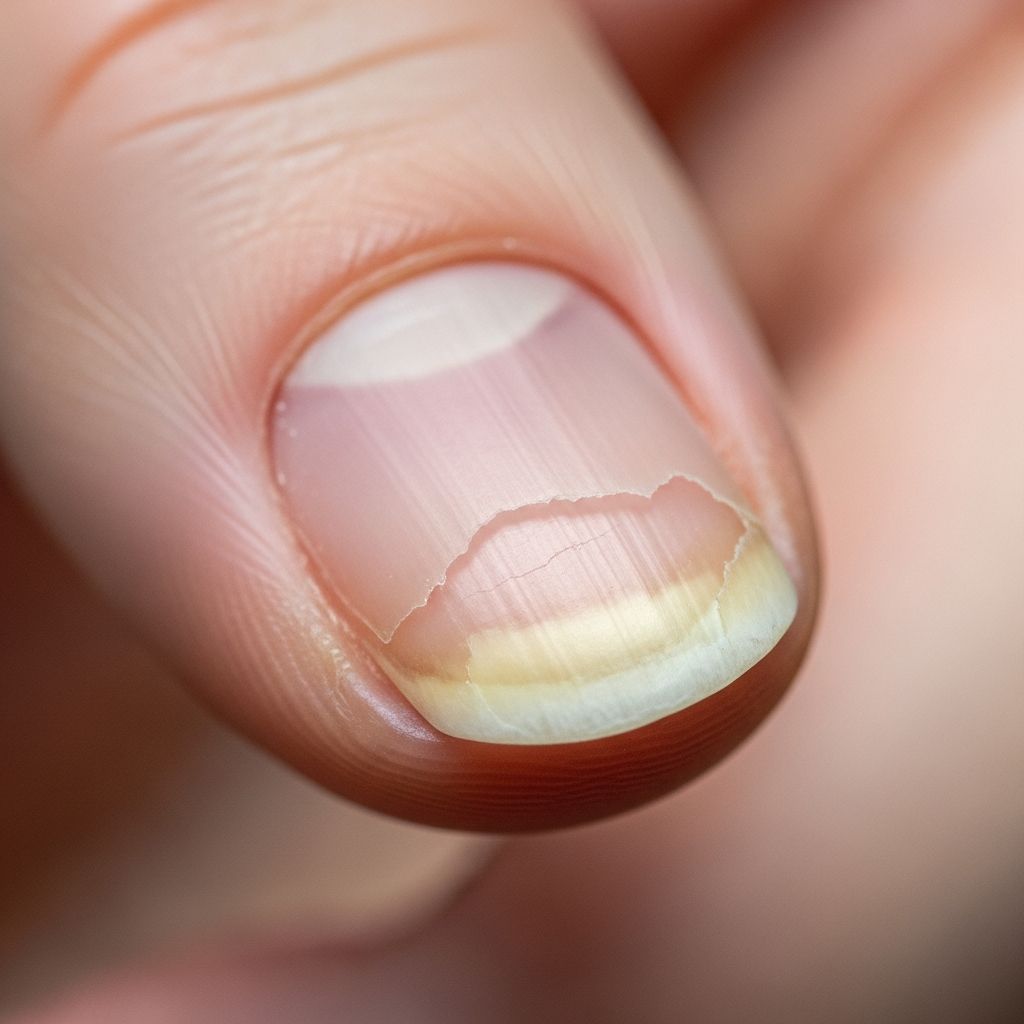
Onycholysis is a common nail disorder characterised by the separation of the nail plate from its underlying nail bed, typically resulting in a well-defined area of white opaque nail. This condition may arise idiopathically or secondary to trauma, skin diseases, infections, tumours, or systemic conditions, with photo-onycholysis linked to photosensitising medications.
Demographics
Onycholysis affects individuals of both sexes, all ages, and races, though it is most frequently observed in adult women. The condition’s prevalence in this demographic may relate to factors such as frequent nail manicures, occupational hand exposure, or hormonal influences, though specific epidemiological data remains limited.
Causes
Onycholysis can be classified as primary (idiopathic) or secondary to various aetiologies. Identifying the underlying cause is essential for targeted management.
Common causes are summarised in the following table:
| Cause Category | Examples |
|---|---|
| Traumatic | Repetitive trauma (e.g., manicures, tight shoes, nail biting), occupational injury |
| Skin disease | Psoriasis (with oil spot sign), eczema, lichen planus |
| Infection | Dermatophytes, yeasts (Candida albicans), Pseudomonas aeruginosa |
| Systemic disease | Endocrine disorders (hypo/hyperthyroidism, diabetes mellitus), iron deficiency anaemia, pregnancy |
| Medication | Photosensitisers (tetracyclines, NSAIDs, psoralens, retinoids), chemotherapy agents |
| Others | Hereditary distal onycholysis, tumours, autoimmune conditions |
Trauma represents the most frequent trigger, often from mechanical stress or chemical irritants weakening nail bed adhesion. Infections thrive in the separated space, exacerbating detachment. Systemic causes like thyroid dysfunction alter nail growth dynamics.
Clinical features
Onycholysis typically involves the distal free edge of the nail, lifting it proximally; lateral or proximal detachment occurs less commonly. It may affect a single nail or multiple fingernails/toenails. Key signs include:
- A sharply demarcated border between attached and detached nail portions
- White opaque discolouration of the detached area due to air beneath the nail
- Oil spot sign: yellowish translucent patch in psoriasis-associated cases
- Secondary discolouration: yellow/green (Candida/Pseudomonas), brown (dermatophytes)
- Nail thickening, crumbling, or subungual hyperkeratosis
- Possible pain, haemorrhage, or odour if infected
The condition is often painless initially but can cause discomfort with pressure or secondary issues. Fingernails grow out in 4-6 months, toenails in 8-12 months, prolonging visible effects.
Complications
Untreated onycholysis predisposes the exposed nail bed to secondary infections, particularly with Candida albicans and Pseudomonas aeruginosa, leading to green nail syndrome. Other risks include:
- Bacterial/fungal superinfections causing pain, pus, swelling
- Cosmetic distress, impacting quality of life for those in public-facing roles
- Chronic pain or nail deformity if persistent
- Progression due to ongoing trauma or untreated underlying disease
Photo-onycholysis may recur with re-exposure to triggers.
Diagnosis
Diagnosis is primarily clinical, based on history and characteristic appearance; the cause is often evident from patient history (e.g., recent manicure, medication). If unclear, investigations include:
- Nail clipping microscopy/culture for infection
- KOH preparation for fungi/yeasts
- Wood lamp examination for Pseudomonas
- Nail biopsy (rarely) for psoriasis/tumours
- Blood tests for systemic causes (thyroid function, glucose, iron studies)
Related Stories



Differentiate from leukonychia (attached white nail), onychomycosis without detachment, or subungual tumours.
Differential diagnoses
Onycholysis must be distinguished from:
- Leukonychia: White nail spots/streaks while firmly attached
- Terry nails: Proximal white opacity with distal pink lunula in liver disease
- Onychomycosis: Fungal infection with thickening/brittleness, not always detached
- Subungual haematoma: Trauma-induced red-brown discolouration
- Nail bed tumours: Persistent solitary lesions
Treatment
Treatment targets the underlying cause while promoting nail regrowth; the detached nail does not reattach and must grow out. General measures:
- Keep nail short; trim detached portion carefully
- Avoid trauma: no manicures, artificial nails, harsh chemicals
- Protect from water/chemicals with cotton gloves under rubber
- Topical antiseptics (e.g., chlorhexidine) to prevent infection
Cause-specific treatments:
| Cause | Treatment |
|---|---|
| Infection | Antifungals (topical/systemic terbinafine, itraconazole); antibiotics for Pseudomonas |
| Psoriasis | Topical steroids, calcipotriol; systemic therapies if severe |
| Trauma | Eliminate irritants; supportive care |
| Systemic | Treat underlying (e.g., thyroid replacement) |
| Photo-onycholysis | Discontinue drug; sun protection |
Home care includes gentle cleaning, moisturising, and avoiding picking. Consult a dermatologist for persistent cases.
Outcome
Prognosis is excellent with cause removal; nails regrow normally in months. Persistence signals ongoing trigger or complication. Recurrence is common without prevention. Monitor for underlying disease progression.
Frequently Asked Questions (FAQs)
What is onycholysis?
Onycholysis is the painless separation of the nail plate from the nail bed, often appearing white and opaque.
Who is most at risk for onycholysis?
Adult women due to manicures and hand exposure, but it affects all ages/sexes.
Is onycholysis fungal?
Not always; fungi can cause or complicate it, identified by yellow thickening and odour.
Can onycholysis be cured at home?
Manage mild cases by trimming, protecting nails, and avoiding irritants, but see a doctor for causes like infection.
How long does onycholysis last?
Fingernails: 4-6 months; toenails: 8-12 months for full regrowth.
Does vitamin deficiency cause onycholysis?
Iron deficiency and niacin (B3) deficiency (pellagra) can contribute.
Is onycholysis serious?
Usually cosmetic, but signals underlying issues; seek care if painful/infected.
References
- Onycholysis – DermNet — DermNet New Zealand. 2023-05-15. https://dermnetnz.org/topics/onycholysis
- Onycholysis: Symptoms, Causes, and Treatment — Healthgrades. 2024-08-20. https://resources.healthgrades.com/right-care/skin-hair-and-nails/onycholysis
- Onycholysis: Causes and Treatments — East Carolina Dermatology. 2024-03-10. https://www.eastcarolinadermatology.com/onycholysis-causes-and-treatments
- Onycholysis – Causes, Symptoms, Diagnosis, and Treatment — Apollo Hospitals. 2024-11-05. https://www.apollohospitals.com/diseases-and-conditions/onycholysis
- Onycholysis: Causes, Symptoms, and Treatments — Healthline. 2024-07-12. https://www.healthline.com/health/onycholysis
Similar Articles








Read full bio of Sneha Tete