Onychophagia: Expert Guide To Stopping Nail Biting
Understanding nail biting: causes, complications, and effective management strategies for this common habit.
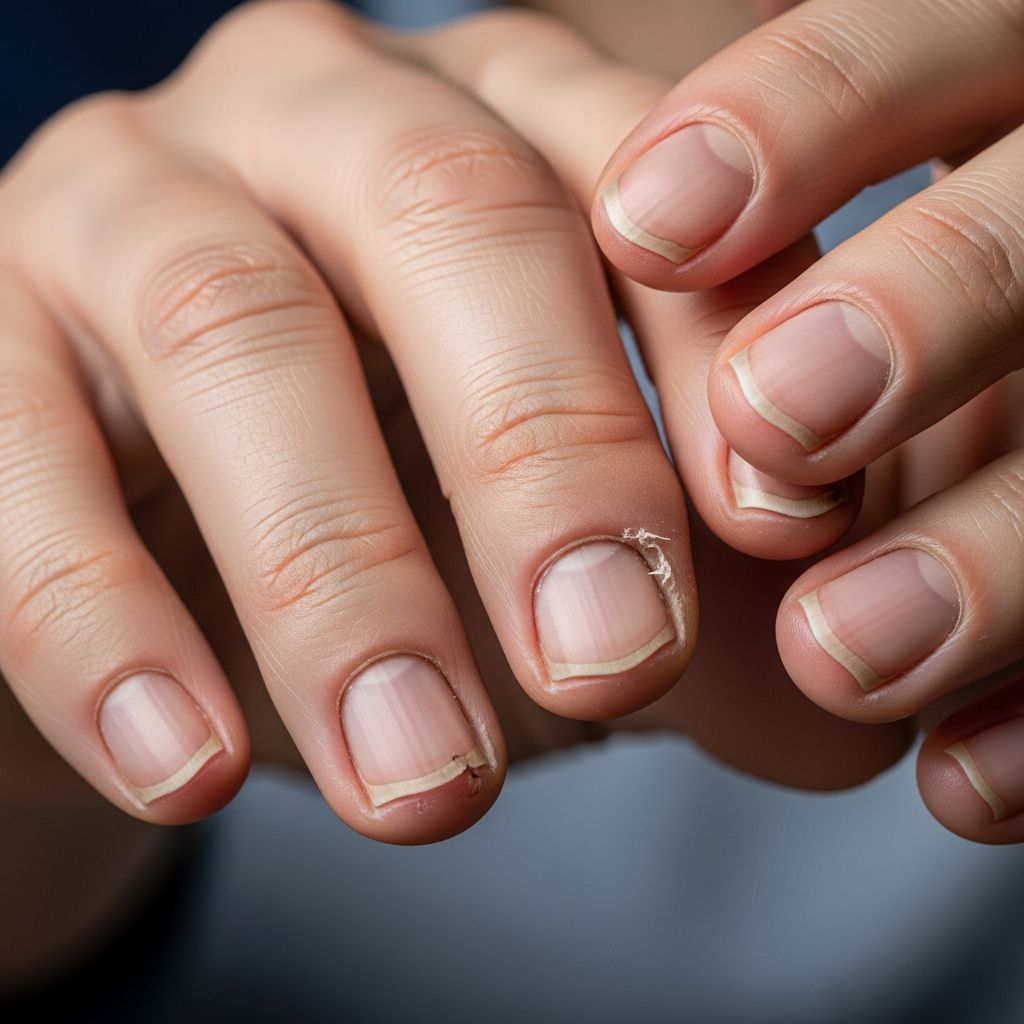
Onychophagia, commonly known as nail biting, is a chronic habit involving the repetitive biting of fingernails or toenails using the teeth. It is classified as a body-focused repetitive behavior (BFRB) disorder and affects individuals across all age groups, often starting in childhood.
Introduction
Onychophagia is the clinical term for fingernail biting, a widespread stress-related or nervous habit observed in both children and adults. This behavior entails biting off the nail plate and, in some cases, the soft tissues of the nail bed and cuticle. It falls under the broader category of onychotillomania, which encompasses various nail manipulation habits, such as picking or habit-tic nail deformity.
The habit is characterized by placing one or more fingers in the mouth and biting the nail with teeth, often unconsciously or as a tension-reducing mechanism. Prevalence estimates indicate it affects 20-30% of the population, with higher rates in children (up to 50%) and persistence into adulthood in about 20% of cases. Unlike transient childhood behaviors, chronic onychophagia can lead to significant physical damage and psychosocial distress.
Who gets onychophagia (demographics)?
Onychophagia typically begins in childhood, around ages 3-6 years, coinciding with the development of fine motor skills and increased awareness of the nails. It is more prevalent in males during childhood but equalizes between genders in adulthood. Genetic predisposition plays a role, as it often runs in families, suggesting heritability.
Individuals under psychological stress, anxiety, or those with other BFRBs (e.g., trichotillomania, skin picking) are at higher risk. It is observed across socioeconomic backgrounds but may be exacerbated in environments with high parental reprimand or bullying. Chronic cases persist lifelong without intervention, with remission periods tied to stress levels.
Related habits
- Onychotillomania: Repetitive picking, pulling, or manicuring of fingernails/toenails, leading to onychoatrophy in severe cases due to nail matrix scarring.
- Perionychotillomania (perionychophagia): Picking and tearing of periungual skin, often initiated by hangnails, creating a vicious cycle.
- Habit-tic nail deformity: Multiple parallel transverse grooves on thumbnails from repetitive picking or rubbing.
- Onycholysis semilunaris: Asymmetric distal onycholysis from vigorous manicuring, common in women.
- Lacquer nail: Nail plate wear from excessive filing with antifungal lacquers.
Psychosocial and physical complications
Physical complications
Chronic trauma from onychophagia damages the nail unit extensively. Nails appear short, uneven, brittle, with ragged cuticles, erythema, and hangnails. Transverse ridges (Beau’s lines), longitudinal melanonychia, macrolunula, and pterygium (matrix scarring) are common.
Acute paronychia is the most frequent complication, progressing to chronic paronychia due to bacterial inoculation from the mouth (e.g., Enterobacter spp., E. coli). Rare sequelae include osteomyelitis and intraosseous epidermoid cysts. Secondary infections arise from higher oral bacterial loads in nail biters.
| Complication | Description | Frequency |
|---|---|---|
| Acute paronychia | Inflammation of nail fold from bacterial entry | Most common |
| Chronic paronychia | Persistent swelling, erythema | Common |
| Melanonychia | Longitudinal brown bands from matrix trauma | Frequent |
| Osteomyelitis | Bone infection | Rare |
Social complications
Socially, onychophagia is stigmatized as immature or indicative of nervousness, leading to bullying in children and negative perceptions in adults (e.g., inattentive, lacking social skills). Visible damage causes embarrassment, shame, and avoidance of hand exposure, impacting self-esteem and relationships.
Related Stories



Patients often hide hands or deny the habit due to poor insight, exacerbating isolation. In professional settings, it may affect perceived competence.
Assessing the impact
Evaluation begins with a thorough history: onset, triggers (stress, boredom), family history, and prior quit attempts. Clinical exam inspects all 20 nails for shortening, paronychia, ridges, hemorrhages, and coexisting BFRBs. Oral exam checks for dental wear or mucosal changes; full skin exam rules out other disorders.
Use standardized tools like the Nail Biting Severity Scale or BFRB checklists to quantify impact. Dermatoscopy reveals wavy lines, oblique hemorrhages, gray discoloration in onychotillomania. Biopsy is rarely needed but shows trauma (hyperkeratosis, entrapped RBCs).
Differential includes psoriasis (oil-drop, proximal discoloration), lichen planus, onychomycosis, and chronic paronychia. History of conscious tension-relief distinguishes BFRBs.
Nail biting and dysmorphia
Onychophagia contributes to body dysmorphic disorder (BDD) traits, where individuals fixate on damaged nails as repulsive, fueling the cycle. Shame from visible deformity leads to dysmorphophobic avoidance. Co-occurrence with anxiety disorders amplifies this.
In severe cases, patients pursue cosmetic interventions (e.g., acrylic nails) futilely, as habit resumes. Addressing underlying dysmorphia via CBT improves outcomes.
Diagnosis
Primarily clinical: history of repetitive biting with characteristic nail changes (short plates, paronychia, ridges). No lab tests required unless infection suspected (culture). Mimics psoriasis, but lacks inflammation; onychotillomania shows picking history.
Treatment
Non-pharmacological
Habit reversal training (HRT): Gold standard behavioral therapy. Involves awareness training (self-monitoring), competing response (fist clenching), and stimulus control (bitter nail polish, gloves). Success rates 50-80%.
Cognitive behavioral therapy (CBT): Addresses triggers, cognitive distortions. Effective for comorbid anxiety.
Physical barriers: Bitter-tasting polishes (e.g., mastic, denatonium benzoate), acrylic nails, bandages. Gloves or mittens for sleep.
Decoy techniques: Chew gum, fidget toys, stress balls to redirect urge.
Pharmacological
- N-acetylcysteine (NAC): 1200-2400mg/day; reduces BFRB urges via glutamate modulation. Evidence from RCTs.
- SSRIs: Fluoxetine 20-60mg for anxiety-comorbid cases.
- Clomipramine: Tricyclic for refractory BFRBs.
Topical: High-potency steroids for paronychia; antifungals if candidal superinfection.
Management ladder
- Psychoeducation and HRT.
- Add barriers/pharmacotherapy if partial response.
- Refer to psychologist/psychiatrist for CBT/NAC.
- Multidisciplinary: dermatologist, dentist, therapist.
Frequently Asked Questions (FAQs)
What causes onychophagia?
Primarily stress, anxiety, boredom; genetic and environmental factors contribute. Not fully understood but linked to BFRBs.
Is nail biting harmful?
Yes, leads to infections, nail dystrophy, dental issues, and social stigma.
How to stop nail biting?
Use HRT, bitter polish, stress management. Seek professional help for chronic cases.
Can children outgrow it?
Many do, but 20% persist; early intervention prevents chronicity.
Does it affect teeth?
Yes, causes wear, fractures, gingival recession.
Clinical images (descriptions)
- Shortened nail plates with erythema and hangnails on multiple fingers.
- Persistent onychophagia in adulthood showing dystrophy.
- Periungual inflammation and pigmentation.
References
- Nail tic disorders: Manifestations, pathogenesis and management — Indian Journal of Dermatology, Venereology and Leprology. 2016. https://ijdvl.com/nail-tic-disorders-manifestations-pathogenesis-and-management/
- Update on Diagnosis and Management of Onychophagia and Onychotillomania — National Library of Medicine (PMC). 2022-03-15. https://pmc.ncbi.nlm.nih.gov/articles/PMC8953487/
- Onychophagia (Nail Biting) — Psychology Today. 2023. https://www.psychologytoday.com/us/conditions/onychophagia-nail-biting
- Onychophagia — DermNet NZ. 2024. https://dermnetnz.org/topics/onychophagia
- Nail Biting (Onychophagia) — Free from BFRB. 2023. https://www.free-from-bfrb.org/nailbiting/
- Onychophagia: A nail-biting conundrum for physicians — PubMed. 2016-07-07. https://pubmed.ncbi.nlm.nih.gov/27387832/
Similar Articles








Read full bio of medha deb