Open Heart Surgery: Procedure Details & Recovery
Complete guide to open-heart surgery: what to expect, how it works, and recovery timeline.
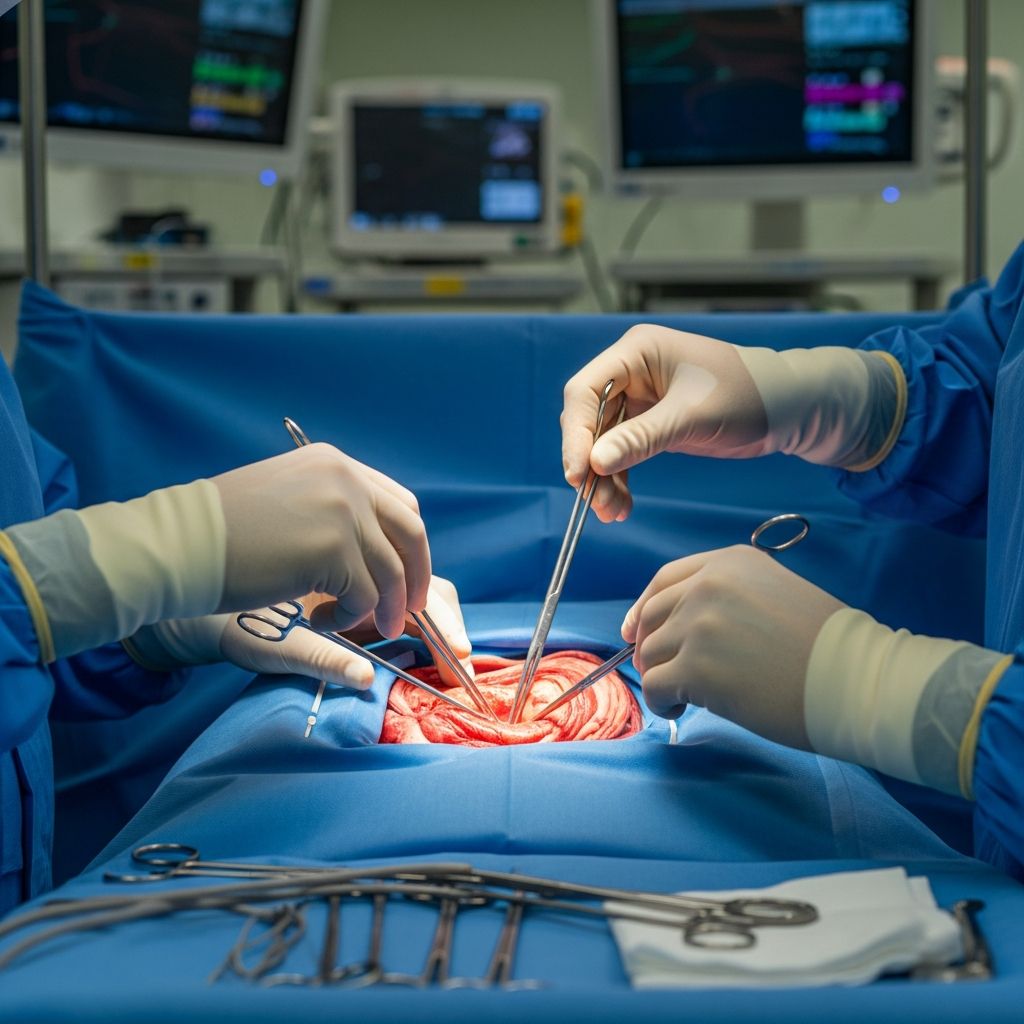
Open-heart surgery is a type of heart surgery that involves opening your chest wall so a surgeon can reach your heart more easily. It’s a way surgeons can directly access your heart and treat the specific heart issue you have. Every year, approximately 2 million people worldwide undergo open-heart surgery, making it one of the most common major surgical procedures performed today.
What is Open-Heart Surgery?
Open-heart surgery is what most people think of when they hear someone say “heart surgery.” During this procedure, surgeons cut through your sternum (breastbone) and spread your ribs to reach your heart. Sometimes, people refer to this process as “cracking your chest.” Your surgeon may recommend an open procedure if you’re strong enough to tolerate it and if the benefits outweigh the risks compared to less invasive alternatives.
To access your heart, the surgical team performs a sternotomy, which involves making a 6- to 8-inch-long incision in the middle of your chest. This direct access allows surgeons to perform complex procedures that cannot be done through smaller incisions. However, if open-heart surgery isn’t right for you, your surgeon can perform many kinds of heart surgery through smaller, less invasive incisions, including small incisions between the ribs on the right side of your chest.
Conditions Treated with Open-Heart Surgery
Open-heart surgery can treat various heart problems and conditions. The most common conditions addressed through open-heart surgery include:
– Heart failure- Arrhythmias (irregular heartbeats)- Aneurysms (weakened blood vessel walls)- Coronary artery disease- Congenital heart defects (issues present at birth)- Heart valve problems requiring repair or replacement
Surgeons need direct access to your heart and surrounding blood vessels for certain procedures. The decision to perform open-heart surgery versus a less invasive technique depends on your specific condition, overall health, and the complexity of the procedure required.
Types of Open-Heart Surgery Procedures
Several procedures may take place during open-heart surgery, depending on your heart condition and treatment needs:
Coronary Artery Bypass Grafting (CABG)
CABG, commonly called bypass surgery, is the most common type of open-heart surgery. During this procedure, surgeons create a detour around blocked coronary arteries by taking a healthy blood vessel from your chest wall, arm, or leg and connecting (grafting) it to your heart. If surgeons use more than one blood vessel, it’s called double (2), triple (3), or quadruple (4) bypass surgery. A harvested blood vessel is attached to the aorta at one end and to the blocked artery, just after the blockage, at the other end.
Heart Transplant
For patients with end-stage heart disease, a heart transplant involves replacing a diseased heart with a healthy heart from a donor. This is one of the most complex open-heart surgery procedures and requires careful matching between donor and recipient.
Related Stories



Valve Replacement and Repair
Open-heart surgery allows surgeons to repair or replace damaged heart valves. Valve replacement surgery may use mechanical valves or biological tissue valves, each with different benefits and considerations.
Congenital Heart Defect Correction
Surgeries to fix issues present at birth often require direct access to the heart. Open-heart surgery allows surgeons to repair structural abnormalities in the heart’s chambers or blood vessels.
Pericardiectomy
When the double-walled, fluid-filled sac around your heart (pericardium) becomes too stiff, it can affect how your heart pumps blood—a condition called constrictive pericarditis. A pericardiectomy removes part or all of your pericardium, also known as “pericardial stripping.”
Mechanical Circulatory Support
For patients with severe heart failure, surgeons may implant a left ventricular assist device (LVAD) that pumps blood from the left chamber of your heart to your aorta. This device provides mechanical circulatory support when the heart cannot pump blood adequately on its own.
Additional Procedures
Sometimes, surgeons place pacemakers or implantable cardioverter defibrillators (ICDs) during open-heart surgery while performing other procedures. They may also perform ablation procedures to treat arrhythmias in the same operative session.
Surgical Methods and Techniques
Surgeons use different methods for operating on your heart. What happens during your surgery depends on the type you’re having and the method your surgeon uses for the operation. Your care team will discuss which method is best for you and explain why that approach is recommended for your specific situation.
Traditional Open-Heart Surgery (Sternotomy)
In traditional open-heart surgery, surgeons make a 6- to 8-inch incision down the middle of your chest. They cut through the sternum and spread the ribcage to access the heart. A provider connects you to a heart-lung bypass machine, so your heart won’t be actively beating during the surgery. The heart-lung bypass machine takes over the function of your heart and lungs, circulating oxygenated blood throughout your body while the surgeon works.
Off-Pump Bypass Surgery (Beating Heart Surgery)
Off-pump bypass surgery, also known as “beating heart” surgery, is similar to traditional open-heart surgery in that it uses a large incision and opens the chest. However, you won’t be connected to a heart-lung bypass machine. Instead, the surgery is performed while your heart continues to beat. Providers can only use this method for CABG surgery, and it’s best for bypassing only one or two coronary arteries. This technique reduces the risks associated with the bypass machine but requires significant surgeon expertise.
Minimally Invasive Heart Surgery (Keyhole Surgery)
Minimally invasive heart surgery, often called “keyhole surgery,” uses smaller incisions to access your heart. Instead of opening the entire chest, surgeons make small incisions between the ribs or on the side of the chest. This approach offers several benefits, including smaller incisions, improved mobility, less post-operative pain, and potentially faster recovery compared to traditional open-heart surgery. Whenever possible, surgeons use minimally invasive techniques, such as keyhole surgery.
Minimally Invasive Direct Coronary Artery Bypass (MIDCAB)
If you have blockage in the left anterior descending coronary artery at the front of your heart, surgeons may recommend MIDCAB. During this surgery, they make small incisions between your ribs to access your heart instead of a large chest incision. This specialized technique combines the benefits of minimally invasive surgery with direct visualization of the surgical site.
Pre-Surgery Preparation
Before open-heart surgery, proper preparation is essential for ensuring the best possible outcome. To prepare for open-heart surgery, you should follow your healthcare provider’s recommendations regarding:
– Medications (which ones to continue or stop before surgery)- Fasting requirements (typically nothing to eat or drink after midnight the night before surgery)- Smoking cessation (if applicable)- Alcohol avoidance- Arranging transportation and post-operative care at home- Understanding the surgical procedure and what to expect- Discussing any allergies or previous adverse reactions to medications
Pre-Surgery Testing and Evaluation
Before open-heart surgery, your healthcare provider will use various diagnostic tests to learn more about how your heart looks and works. These tests help guide your surgical team in building the best treatment plan and choosing the right surgery for you. Common pre-operative evaluations may include:
– Electrocardiogram (EKG) to assess heart rhythm- Echocardiogram to visualize heart structure and function- Coronary angiography to identify blocked arteries- Cardiac stress testing to evaluate heart function during exertion- Blood tests to assess overall health and organ function- Chest X-ray to evaluate lung and heart size- Physical examination by your surgical team
Your care team will use the information gathered from testing and the surgical review to decide if you need surgery and, if you do, determine the kind of surgery you’ll need and when you’ll have it.
The Open-Heart Surgery Procedure
Heart surgery is complex, and surgery steps vary depending on your heart condition and the procedure you’re having. The time it takes for open-heart surgery depends on which procedure you’re having—some surgeries may take six hours or longer. For example, CABG surgery, the most common type, takes about three to six hours.
During the Procedure
In general, during your open-heart surgery, your surgeon will:
– Administer general anesthesia so you’ll be asleep during the entire procedure- Make an incision through your chest wall to access your heart- Connect you to a heart-lung bypass machine (in most cases) to maintain circulation while your heart is being repaired- Perform the necessary surgical repair or intervention on your heart- Close the incision with sutures and staples- Move you to the recovery area for monitoring
You’ll receive anesthesia and be asleep during the procedure. The surgical team will monitor your vital signs, blood oxygen levels, and other important parameters throughout the surgery. Specialized equipment and trained personnel ensure your safety during this complex procedure.
Recovery from Open-Heart Surgery
Immediate Post-operative Recovery
After your heart surgery, a provider will move you to the intensive care unit (ICU). You’ll recover in the ICU for at least one day, where you’ll receive continuous monitoring and care. During this time, you may have various tubes and monitors in place to support your recovery, including:
– A breathing tube (endotracheal tube) connected to a ventilator- Chest tubes to drain fluid around your heart and lungs- An arterial line to monitor blood pressure- A urinary catheter- Intravenous (IV) lines for medications and fluids
You’ll then move to a regular hospital room for continued rest and care. Hospital stays typically last 4 to 6 days, though this varies depending on your procedure and individual recovery.
Long-Term Recovery
Full recovery from open-heart surgery typically takes 6 to 12 weeks. During this period, it’s important to follow your surgeon’s instructions carefully, including:
– Taking prescribed medications as directed- Attending cardiac rehabilitation programs- Gradually increasing physical activity as tolerated- Following dietary recommendations- Avoiding heavy lifting and strenuous activities- Keeping follow-up appointments with your surgical team- Monitoring your incision for signs of infection- Getting adequate rest and sleep
Frequently Asked Questions
Q: How long does open-heart surgery take?
A: The length of open-heart surgery varies based on what the surgeon is fixing. CABG surgery, the most common type, takes about three to six hours. More complex procedures, including heart transplants or multiple valve repairs, may take longer, sometimes exceeding six hours.
Q: Will I feel pain during open-heart surgery?
A: No, you won’t feel pain during the surgery because you’ll be under general anesthesia and asleep throughout the entire procedure. Your surgical team uses specialized monitoring equipment to ensure you remain safely anesthetized.
Q: How long will I stay in the hospital?
A: Most patients stay in the hospital for 4 to 6 days after open-heart surgery. However, this can vary depending on your procedure, overall health, and recovery progress. Your surgical team will determine the appropriate discharge timing for your specific situation.
Q: What are the risks of open-heart surgery?
A: Like all major surgical procedures, open-heart surgery carries certain risks, including infection, bleeding, blood clots, arrhythmias, stroke, and kidney problems. However, for most patients with serious heart conditions, the benefits of surgery outweigh these risks. Your surgeon will discuss specific risks and benefits with you before the procedure.
Q: When can I return to normal activities?
A: Full recovery typically takes 6 to 12 weeks. Most patients can return to light activities within a few weeks, but heavy lifting and strenuous exercise should be avoided until your surgeon gives clearance, usually around 8 to 12 weeks after surgery.
Q: Is open-heart surgery always necessary, or are there alternatives?
A: Not all heart conditions require open-heart surgery. Your surgeon will assess your health to choose the best treatment approach. Sometimes, surgeons can use less invasive techniques for certain procedures. For some cases of coronary artery disease, minimally invasive coronary angioplasty and stent placement may be options. Your surgical team will recommend the most appropriate treatment for your specific condition.
Q: Can I have a second open-heart surgery?
A: Yes, repeat open-heart surgery is possible and sometimes necessary. Experienced cardiac surgery centers often treat conditions requiring second and third surgeries. Your surgeon can discuss whether repeat surgery is appropriate for your situation.
References
- Open Heart Surgery: Procedure Details & Recovery — Cleveland Clinic. 2024. https://my.clevelandclinic.org/health/procedures/21502-open-heart-surgery
- Heart Surgery: Types, Details & Recovery — Cleveland Clinic. 2024. https://my.clevelandclinic.org/health/treatments/17525-heart-surgery
- Coronary Artery Bypass Surgery — Cleveland Clinic Abu Dhabi. 2024. https://www.clevelandclinicabudhabi.ae/en/health-hub/health-resource/treatments-and-procedures/coronary-artery-bypass-surgery
- Get Heart Surgery — Cleveland Clinic. 2024. https://my.clevelandclinic.org/services/heart-surgery
- Private Heart Surgery — Cleveland Clinic London. 2024. https://clevelandcliniclondon.uk/clinical-institutes/heart-vascular-thoracic/heart-surgery
- Cardiac Surgery at the Cleveland Clinic — National Center for Biotechnology Information (NCBI) PubMed. 2017. https://pubmed.ncbi.nlm.nih.gov/28285668/
Similar Articles








Read full bio of medha deb