Open Reduction & Internal Fixation (ORIF): Complete Guide
Understanding ORIF surgery: What it is, how it works, recovery, and outcomes for severe bone fractures.
What Is Open Reduction and Internal Fixation (ORIF)?
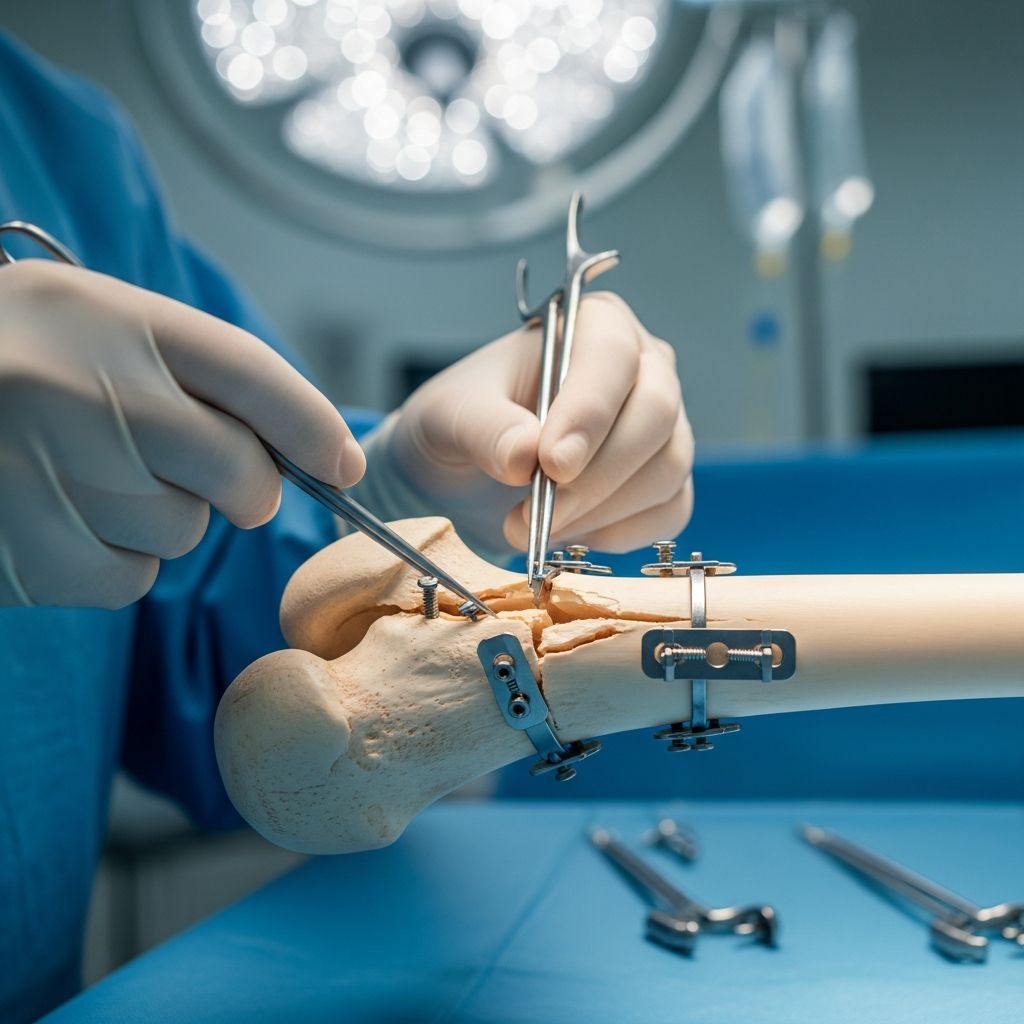
Open reduction and internal fixation (ORIF) is a surgical procedure designed to repair severe bone fractures. During this operation, an orthopedic surgeon realigns broken bone fragments to their correct anatomical position and then secures them in place using metal fasteners. These metal implants hold the bone pieces together, allowing them to heal and grow back together properly. The procedure gets its name from the two key components: the open reduction (surgical realignment of bone fragments) and internal fixation (using metal hardware to keep bones stable).
ORIF is typically performed when bone fractures are too severe to heal with conservative treatment methods such as immobilization alone. The metal implants used in this procedure are usually permanent, though some patients may require a second surgery to remove them once healing is complete.
When Is ORIF Surgery Needed?
ORIF surgery is reserved for severe fractures that cannot heal properly with non-surgical treatment. Your orthopedic surgeon will recommend ORIF when bone fragments are shattered, significantly displaced, or when a fracture involves a joint. The procedure is often performed as emergency surgery following traumatic injuries.
Several factors determine whether you need ORIF surgery, including the severity of the fracture, the type of bone injured, and your overall health status. Complex fractures such as broken femurs, trimalleolar ankle fractures, and wrist fractures like Barton fractures commonly require ORIF to ensure proper healing and restore full function.
Preparing for ORIF Surgery
Preparation for ORIF surgery varies depending on whether the injury is treated in an emergency setting or planned in advance. Your preparation process will depend on several factors related to your injury and overall health status.
Emergency Room Preparation
If you arrive at the emergency room following a traumatic injury, a team of healthcare providers will immediately stabilize you and address life-threatening injuries first. The medical team will treat your injuries in order of severity to ensure your safety and survival.
Diagnostic Imaging
After stabilization, you’ll undergo imaging studies to confirm fractures and assess the extent of injury. Your healthcare provider will order X-rays to confirm any bone fractures. Additional imaging such as MRI (magnetic resonance imaging) or CT scans (computed tomography scans) may be used to identify other injuries and develop a comprehensive surgical plan.
Anesthesia Administration
Before your surgery begins, an anesthesiologist will administer anesthesia to ensure you experience no pain during the procedure. You’ll receive either general anesthesia, which puts you to sleep for the entire surgery, or regional anesthesia, which numbs the area around your broken bone. Additional medications may be provided if you receive regional anesthesia to help you sleep during the procedure.
How ORIF Surgery Is Performed
ORIF surgery involves two main components that work together to repair your broken bone effectively.
The Open Reduction Component
During the open reduction phase, your surgeon makes a surgical incision over the fracture site to gain direct access to the broken bone. The surgeon carefully identifies all bone fragments and repositions them back to their normal anatomical alignment. This direct visualization allows the surgeon to ensure precise realignment of the fracture.
Related Stories



The Internal Fixation Component
Once the bone fragments are properly aligned, the surgeon secures them in place using metal hardware. This internal fixation holds the bone pieces together during the healing process. The specific type of hardware selected depends on the fracture pattern, bone location, and other individual factors.
Metal Hardware Used
Several types of metal implants are used in ORIF surgery to stabilize bone fragments:
- Plates and screws: Metal plates are placed across the fracture site and secured with screws that penetrate both the plate and the bone fragments
- Screws alone: Sometimes screws alone are sufficient to hold bone fragments together
- Rods and nails: Intramedullary rods or nails are inserted into the center of long bones to provide support
- Wires: Surgical wires may be used to hold smaller bone fragments or provide additional stability
These implants are typically made from stainless steel or titanium because these materials are strong, durable, and biocompatible with human tissue. They can remain in your body permanently, providing ongoing support to your healed bone.
Surgical Duration
ORIF surgery usually takes at least several hours from start to finish. The exact duration depends on factors such as the specific bone that is fractured, the complexity of the fracture pattern, and the severity of the injury. Larger bones, longer bones, or more complex fractures typically require more operative time.
Recovery and Hospital Stay
Your recovery process begins immediately after surgery in the recovery room, where your surgical team will monitor your condition closely.
Immediate Post-Operative Care
After surgery, you’ll be moved to a recovery room where medical staff will monitor you for several hours. During this time, the team will ensure you recover safely from anesthesia without complications. Your vital signs and pain levels will be continuously monitored to detect any issues early.
Hospital Stay Duration
Some patients go home the same day following ORIF surgery, while others require overnight or multi-day hospital stays. Your length of stay depends on several factors, including whether you have additional injuries, your overall health status, and your ability to manage pain and mobility. Your surgeon will inform you when it’s safe to go home and provide detailed discharge instructions.
Post-Operative Pain Management
Pain is expected following ORIF surgery, particularly in the first few weeks of recovery. You’ll experience pain both from the surgical procedure itself and from the healing bone.
Your surgeon will recommend a multimodal pain management approach combining several medication types. This typically includes prescription pain medication, over-the-counter nonsteroidal anti-inflammatory drugs (NSAIDs) if safe for you, and acetaminophen. Your surgeon will provide specific instructions about dosing and frequency for each medication to ensure safe and effective pain control.
Recovery Guidelines and Home Care
Following specific recovery guidelines is essential for optimal healing. Your surgeon will provide a customized recovery plan, but general recommendations include:
Limb Elevation and Ice Therapy
For the first 48 hours following surgery, keep your injured limb elevated above heart level to reduce swelling and promote healing. You can also apply ice packs to the surgical area to further reduce inflammation and discomfort.
Incision Care
Keep your surgical incision clean and follow your surgeon’s specific instructions regarding showering and bandage changes. Proper wound care helps prevent infection and promotes proper healing.
Weight-Bearing Restrictions
Do not put any pressure on your injured limb initially. Use crutches, a wheelchair, or a sling as provided by your surgeon. Avoid using your injured limb even for balance or repositioning during the early recovery phase. Your surgeon will provide specific instructions about when and how to gradually resume using your limb.
Physical Therapy
Rehabilitation and physical therapy are crucial components of recovery. As your bone heals, progressive exercises and therapy help restore strength, range of motion, and function to your injured limb. Your surgeon will recommend a physical therapy program tailored to your specific injury.
Success Rates and Outcomes
ORIF surgery is highly effective for repairing severe bone fractures. Studies consistently demonstrate that ORIF is the best treatment approach for severe fractures that cannot heal with immobilization alone.
Success rates vary depending on which bone is fractured and the specific fracture pattern. Even for complex fractures such as broken femurs, ORIF demonstrates high success rates. Research shows that approximately 75% of patients who undergo ORIF for femoral fractures experience few or no long-term complications. Proper bone alignment during surgery significantly improves the likelihood of correct healing and reduces the risk of future fractures at the same site.
Benefits of ORIF Surgery
ORIF offers several important advantages for treating severe bone fractures:
- Proper bone alignment: The procedure ensures bone fragments are positioned correctly, giving your bone the best chance to heal without long-term complications
- Prevention of re-fracture: Bones that don’t heal properly are much more likely to break again. ORIF significantly reduces this risk
- Restoration of function: By ensuring proper healing, ORIF helps restore normal function and mobility to the injured area
- Faster rehabilitation: Stable fixation allows earlier initiation of physical therapy and rehabilitation exercises
- Reduced complications: Proper surgical repair decreases the likelihood of malunion, nonunion, and other healing complications
Possible Complications of ORIF Surgery
Like all surgical procedures, ORIF carries certain risks and potential complications. Understanding these possibilities helps you make informed decisions about your care.
- Bleeding: Excessive bleeding during or after surgery
- Infection: Bacterial infection of the surgical incision or deeper tissues
- Reaction to anesthesia: Adverse effects from anesthesia medications
- Nerve damage: Injury to nerves near the surgical site, potentially causing numbness or weakness
- Need for additional surgery: If your bone doesn’t heal correctly, you may need revision surgery
- Fat or blood clots: Clots that break off and travel to your lungs (pulmonary embolism)
Your surgeon will discuss these risks with you before surgery and explain the measures taken to minimize complications in your specific situation.
Are ORIF Implants Permanent?
The metal hardware used in ORIF surgery typically remains in place permanently. These implants continue to support your bone even after it has completely healed. In some cases, depending on the bone treated and individual circumstances, a follow-up surgery may be recommended to remove the hardware. Discuss with your surgeon whether hardware removal is anticipated in your situation and what timeline might be appropriate.
Recovery Timeline
The overall recovery time from ORIF surgery varies considerably depending on the bone fractured, fracture severity, and your age and health status. Generally, recovery can take anywhere from three to twelve months. During this period, you’ll progress through phases of healing, from non-weight-bearing to gradual weight-bearing, and eventually to full functional recovery with physical therapy support.
Frequently Asked Questions About ORIF Surgery
Q: What is the difference between ORIF and closed reduction?
A: Open reduction (ORIF) involves a surgical incision to visualize and directly manipulate bone fragments, while closed reduction is a non-surgical procedure where your doctor manipulates bones back into place without making an incision. ORIF is used for more severe or complex fractures.
Q: How painful is ORIF surgery?
A: You can expect to feel pain for the first few weeks after surgery, both from the surgical procedure itself and as your bone begins to heal. Your surgeon will provide a comprehensive pain management plan combining prescription and over-the-counter medications to keep you comfortable.
Q: Will I need physical therapy after ORIF?
A: Yes, physical therapy is an essential component of recovery following ORIF surgery. Therapy helps restore strength, range of motion, and function to your injured limb. Your surgeon will recommend a customized therapy program based on your specific injury.
Q: When can I return to normal activities?
A: The timeline for returning to normal activities depends on the bone fractured and your individual healing progress. Most patients gradually increase activity over several months, following their surgeon’s specific guidelines. Full recovery typically takes three to twelve months.
Q: Do ORIF implants need to be removed?
A: ORIF implants typically remain permanently in your body. However, in some cases, your surgeon may recommend removal surgery once healing is complete. Discuss this possibility with your surgeon based on your specific injury and circumstances.
Q: What warning signs should I watch for after ORIF surgery?
A: Contact your surgeon immediately if you experience severe pain not controlled by medications, signs of infection (fever, redness, warmth, drainage from the incision), increased swelling, difficulty moving your limb, numbness or tingling, or any other concerning symptoms.
Conclusion
Open reduction and internal fixation (ORIF) is one of the most effective surgical approaches for treating severe bone fractures that cannot heal with conservative treatment alone. By ensuring proper alignment of bone fragments and stabilizing them with metal hardware, ORIF gives your bone the best chance to heal correctly and restore normal function. While surgery may seem intimidating, understanding what to expect during preparation, the procedure itself, and recovery can help ease your concerns. Work closely with your orthopedic surgeon, follow post-operative instructions carefully, and commit to your rehabilitation program for the best possible outcome. Don’t hesitate to ask your surgeon questions about any aspect of your care—they’re here to guide you through your complete recovery journey.
References
- Open Reduction and Internal Fixation (ORIF): What It Is — Cleveland Clinic. 2024. https://my.clevelandclinic.org/health/procedures/open-reduction-and-internal-fixation-orif
- ORIF Surgery: When It’s Needed and How It’s Done — WebMD. 2023. https://www.webmd.com/a-to-z-guides/what-is-orif-surgery
- Bone Fracture Repair: Procedure, Preparation, and Risks — Healthline. 2023. https://www.healthline.com/health/bone-fracture-repair
Similar Articles








Read full bio of medha deb