Opsonization: Immune System Tagging and Pathogen Elimination
Understanding how your immune system tags pathogens for destruction through opsonization.
What Is Opsonization?
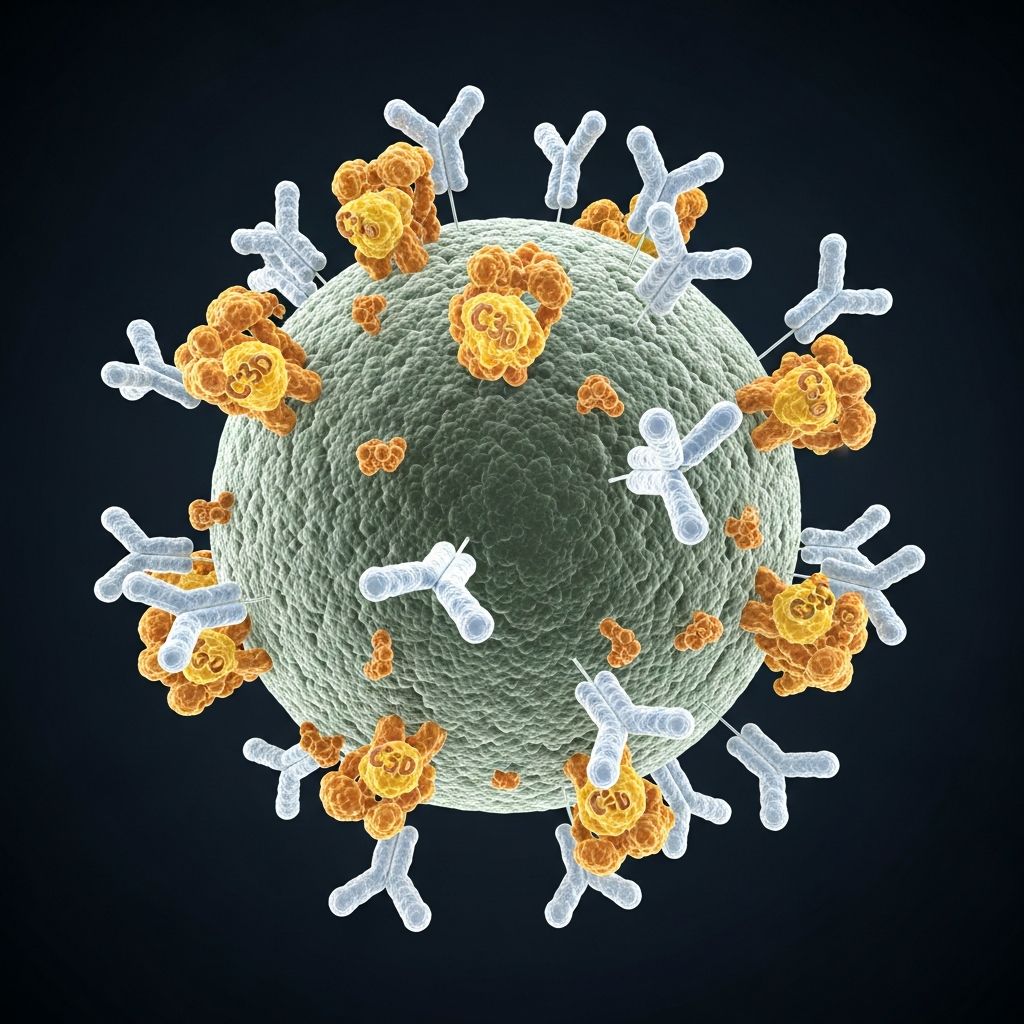
Opsonization is a fundamental immune process in which specific molecules coat the surface of pathogens, making them more recognizable and easier for immune cells to identify and destroy. The term “opsonization” comes from the Greek word “opson,” which means “to prepare for eating.” This accurately describes the process: immune system components essentially prepare harmful invaders for elimination by white blood cells.
When you encounter a bacterium, virus, or other harmful pathogen, your immune system needs an efficient way to recognize it as a threat and coordinate its destruction. Opsonization serves as this critical tagging mechanism, essentially marking the pathogen with molecular labels that signal “destroy me” to immune cells like neutrophils and macrophages. This process dramatically increases the efficiency of immune responses by reducing the time it takes for immune cells to recognize and eliminate threats.
The coating molecules involved in opsonization work by binding to specific receptors on pathogen surfaces while simultaneously exposing regions that immune cells can readily recognize. This dual action makes the immune response faster and more effective, preventing pathogens from establishing infections and causing disease.
Key Players in Opsonization
Antibodies (Immunoglobulins)
Antibodies are specialized proteins produced by B cells and plasma cells in response to pathogen detection. These Y-shaped molecules possess remarkable specificity, meaning each antibody type recognizes particular structures on pathogens called antigens. When an antibody binds to an antigen on a pathogen surface, it creates a molecular tag that immune cells can recognize through specific receptors called Fc receptors. This antibody-mediated opsonization is particularly important because antibodies are highly specific and can be produced rapidly during immune responses.
Different classes of antibodies, including IgG, IgM, and IgA, participate in opsonization with varying degrees of efficiency. IgG antibodies are particularly effective opsonins and represent the most abundant antibody type in the bloodstream. Their ability to bind both to pathogens and to immune cell receptors makes them excellent at facilitating pathogen destruction through opsonization and other immune mechanisms.
Complement System Components
The complement system represents a cascade of proteins in the blood that work together to enhance immune responses. When activated, complement proteins bind directly to pathogen surfaces or work in conjunction with antibodies to create additional tags for immune recognition. The most important complement opsonins include C3b, iC3b, and C4b fragments. These molecules covalently bind to pathogen surfaces, creating multiple recognition sites that immune cells can detect through complement receptors.
The complement system can be activated through three distinct pathways: the classical pathway (initiated by antibody-antigen complexes), the alternative pathway (directly triggered by pathogen surfaces), and the lectin pathway (activated by carbohydrate patterns on pathogens). Each pathway converges on C3 activation, which is considered the central complement component because of its critical role in opsonization. Remarkably, a single C3 molecule can be split into fragments that coat pathogen surfaces, with some estimates suggesting hundreds to thousands of C3b molecules can accumulate on a single pathogen.
How Opsonization Works: The Molecular Mechanism
The opsonization process involves several coordinated steps that enhance immune recognition and response. First, opsonin molecules must recognize and bind to pathogen surfaces. For antibodies, this occurs through antigen-binding sites that recognize specific epitopes (molecular structures) on pathogens. For complement proteins, binding occurs either directly through pathogen-associated molecular patterns or indirectly through antibody-complement interactions.
Related Stories



Once bound, these opsonin molecules undergo conformational changes that expose new molecular regions. These exposed regions serve as “eat me” signals that immune cells recognize through specific receptors. Neutrophils and macrophages possess multiple opsonin receptors on their surfaces, including Fc receptors that recognize antibodies and complement receptors that recognize complement fragments. The clustering of these receptors around an opsonized pathogen triggers immune cell activation and initiates phagocytosis—the process by which immune cells engulf and destroy pathogens.
The efficiency of opsonization depends on several factors. The concentration of available opsonins, the number of opsonin molecules coating the pathogen, and the availability of appropriate receptors on immune cells all influence the effectiveness of this tagging mechanism. Research demonstrates that when adequate opsonization occurs, immune cells can kill pathogens much more rapidly and completely than without opsonization.
The Immune Response Enhanced by Opsonization
When pathogens become opsonized, the downstream immune response becomes dramatically more efficient. Immune cells including neutrophils, macrophages, and dendritic cells can recognize opsonized pathogens through their surface receptors and respond appropriately. This recognition triggers several important immune mechanisms:
Enhanced Recognition: Opsonization dramatically increases the likelihood that immune cells will recognize pathogens. Without opsonization, some pathogens possess camouflaged surfaces that allow them to evade immune recognition. Coating these surfaces with antibodies or complement proteins makes them immediately visible to immune surveillance.
Accelerated Phagocytosis: Once immune cells recognize opsonized pathogens, they rapidly engulf them through phagocytosis. The clustering of opsonin receptors on immune cell surfaces provides powerful activation signals that trigger this engulfment process, leading to faster pathogen destruction.
Immune Cell Activation: The crosslinking of opsonin receptors activates immune cells to produce inflammatory mediators, including cytokines and chemokines. These molecules coordinate broader immune responses by recruiting additional immune cells to sites of infection and priming them for pathogen destruction.
Complement Amplification: When antibodies opsonize pathogens, they often simultaneously activate the complement system. This creates a powerful amplification loop where complement activation generates additional opsonins, which further enhance immune recognition and activate more complement proteins. This cascade effect dramatically magnifies the immune response.
Clinical Significance of Opsonization Defects
Understanding opsonization has important clinical implications. Patients with deficiencies in antibody production or complement components demonstrate increased susceptibility to infections because their immune systems cannot effectively tag and destroy pathogens. Conditions that impair opsonization include immunoglobulin deficiencies, complement deficiencies, and certain genetic disorders affecting immune cell function.
Research into conditions like cystic fibrosis reveals that defective complement opsonization contributes to persistent infections with organisms such as Mycobacterium avium. In these cases, neutrophils cannot effectively kill bacteria even though their killing machinery functions normally. The problem lies in inadequate opsonization—the bacteria cannot be properly tagged for destruction. This demonstrates that effective opsonization is essential for pathogen elimination and that defects in opsonization mechanisms can lead to chronic and recurrent infections.
Additionally, some pathogens have evolved strategies to resist opsonization. Certain bacteria produce capsules or other surface structures that interfere with antibody or complement binding. Other organisms produce proteins that degrade complement components or interfere with opsonin receptor function. Understanding these evasion mechanisms helps researchers develop better vaccines and immunotherapies to enhance opsonization against problematic pathogens.
Opsonization and Disease Prevention
Vaccination represents one of the most important applications of opsonization science. Vaccines work by stimulating the production of antibodies that can effectively opsonize specific pathogens. When vaccinated individuals encounter the pathogen naturally, their immune systems already possess antibodies capable of coating the invader, making it susceptible to rapid destruction. This is why vaccination provides such effective protection against serious infectious diseases.
The effectiveness of vaccines depends partly on their ability to stimulate antibodies that function as excellent opsonins. Some vaccines are designed specifically to generate opsonizing antibodies that can bind to critical pathogen structures and prevent infection establishment. Research continues to identify which antibody responses provide the best opsonization and protection for various pathogens, leading to increasingly effective vaccines.
Frequently Asked Questions
Q: What exactly does opsonization mean?
A: Opsonization is the process by which immune molecules coat the surface of pathogens, marking them for destruction by immune cells. These coating molecules act as tags that make pathogens more recognizable and easier for white blood cells to identify and eliminate.
Q: Which immune molecules act as opsonins?
A: The primary opsonins include antibodies (particularly IgG), and complement system components (especially C3b, iC3b, and C4b). These molecules bind to pathogen surfaces and create recognition signals that immune cells can detect through specific receptors.
Q: How does opsonization improve immune responses?
A: Opsonization enhances immune responses by making pathogens more visible to immune cells, accelerating recognition and destruction. It also triggers immune cell activation and can amplify complement cascade responses, creating a powerful antimicrobial effect.
Q: Can defects in opsonization cause disease?
A: Yes. Deficiencies in antibody production, complement components, or opsonin receptors impair opsonization and increase susceptibility to infections. Certain genetic conditions and diseases can compromise opsonization mechanisms, making individuals more vulnerable to pathogens.
Q: How does vaccination use opsonization?
A: Vaccines stimulate antibody production against specific pathogens. These antibodies function as opsonins when vaccinated individuals encounter the pathogen naturally, enabling rapid immune recognition and destruction of the threat.
Q: Are there pathogens that evade opsonization?
A: Yes. Some pathogens have evolved capsules or surface structures that resist antibody or complement coating. Others produce proteins that degrade complement components or interfere with opsonin receptor signaling, allowing them to evade immune destruction.
References
- Deficient Complement Opsonization Impairs Mycobacterium avium Killing by Neutrophils — American Society for Microbiology. 2023-08-03. https://journals.asm.org/doi/10.1128/spectrum.03279-22
- Immunoglobulin G (IgG): Function, Tests & Disorders — Cleveland Clinic. 2024. https://my.clevelandclinic.org/health/body/igg
- Alternative complement pathway component Factor D contributes to tissue repair — National Center for Biotechnology Information. 2014. https://pmc.ncbi.nlm.nih.gov/articles/PMC4282836/
- The beneficial and pathogenic roles of complement in COVID-19 — Cleveland Clinic Journal of Medicine. 2020-10-27. https://www.ccjm.org/content/early/2020/10/27/ccjm.87a.ccc065
- The Opsonins of Normal and Immune Sera — Oxford Academic, Journal of Immunology. 1943. https://academic.oup.com/jimmunol/article-pdf/43/3/245/62875256/ji0430030245.pdf
Similar Articles








Read full bio of Sneha Tete