Optic Nerve: Anatomy, Function & Eye Health
Understanding the optic nerve: structure, function, and how it powers your vision.
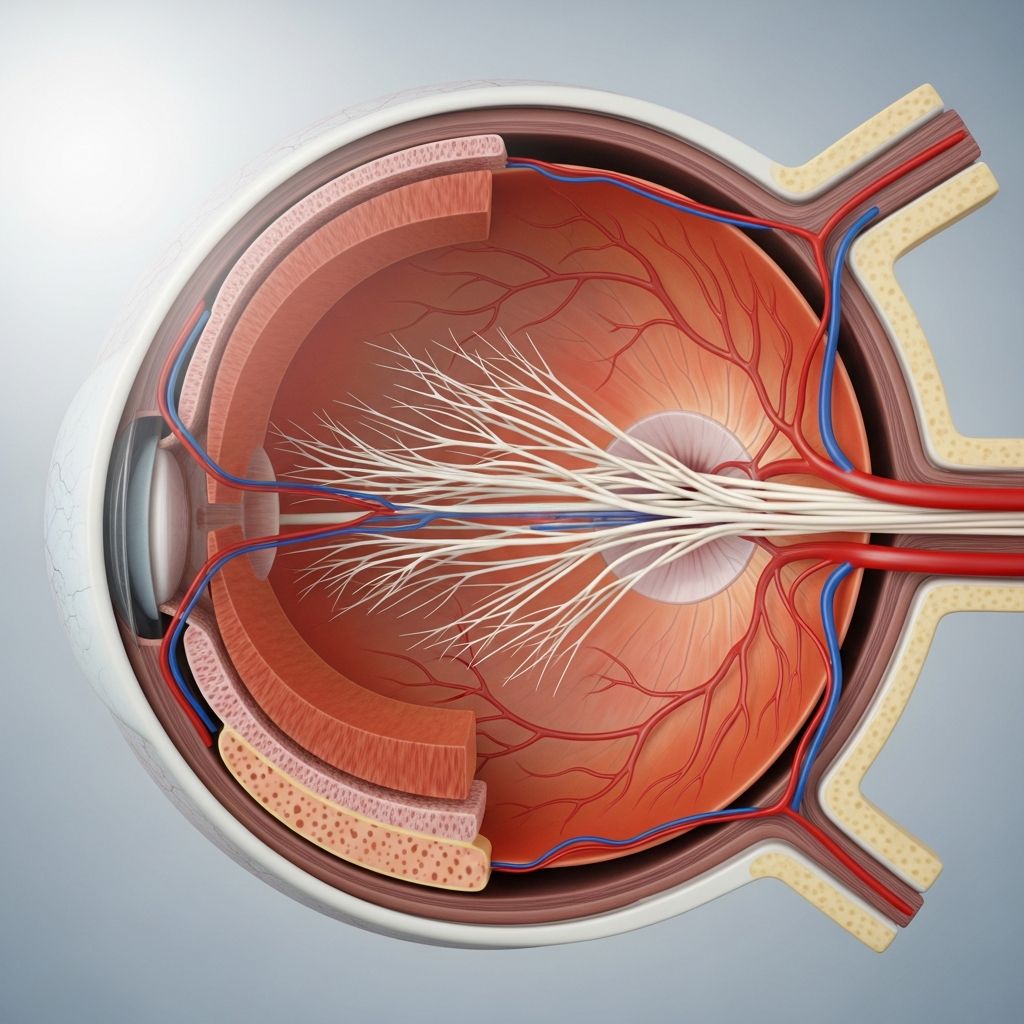
The optic nerve is one of the most important structures in your visual system. This bundle of more than a million nerve fibers connects your eyes to your brain, transmitting the visual information that allows you to see the world around you. Understanding how the optic nerve works and what can affect it is essential for maintaining good eye health and preventing vision loss.
What Is the Optic Nerve?
The optic nerve, also known as the second cranial nerve (CN II), is a specialized nerve that carries visual messages from your eyes to your brain. It serves as the communication cable between your retina—the light-sensitive tissue at the back of your eye—and your brain’s visual processing centers. When light enters your eye, the retina converts it into electrical signals that travel through the optic nerve to your brain, where they are interpreted as images.
Think of the optic nerve as a sophisticated highway of information. Every time you look at something, millions of nerve signals are traveling through this pathway, allowing your brain to process and understand what you’re seeing. Without a healthy optic nerve, even if your eyes are functioning perfectly, vision would be impossible because the visual information couldn’t reach your brain.
Optic Nerve Anatomy and Structure
Composition of the Optic Nerve
The optic nerve is an incredibly complex structure made up of thousands of nerve fibers called myelinated nerve fibers or axons. These axons are extensions of the retinal ganglion cells, which are specialized neurons located in the retina. Each of these nerve fibers plays a role in transmitting visual signals, and together they create a bundle approximately the thickness of a pencil that exits the back of your eye.
Layers of the Optic Nerve
The optic nerve is protected by three distinct layers known as the meningeal layers:
- Pia Mater: The innermost layer that directly adheres to the optic nerve tissue
- Arachnoid: The middle layer that provides additional protection and contains cerebrospinal fluid
- Dura Mater: The outermost and toughest layer that provides structural support
These protective layers are continuous with the meninges that surround your brain and spinal cord, forming a cohesive protective system for your central nervous system.
Key Anatomical Features
The structure of the optic nerve includes several important anatomical landmarks. The optic disc, located at the back of your eye, is where the optic nerve begins its journey. From there, the optic nerve passes through the eye socket and travels toward the brain. Both optic nerves from each eye eventually meet and cross at a structure called the optic chiasm, forming an X-shaped junction beneath your brain. This crossing is crucial because it allows your brain to merge information from both eyes into a single, coherent image.
Location and Pathway
The optic nerve is located at the back of the eye, where it connects to the retina via the optic disc. From this point, the nerve travels backward through the eye socket (orbit) and enters the cranium at the base of your brain. The optic nerve typically measures about half an inch (13.5 millimeters) in diameter and follows a relatively straight path from your eye to your visual cortex.
The positioning of the optic nerve makes it vulnerable to injury from trauma, pressure from surrounding structures, or damage from certain diseases. Its location near important brain structures, blood vessels, and glands means that conditions affecting these nearby tissues can also impact the optic nerve.
Related Stories



How the Optic Nerve Functions
The Vision Process
The function of the optic nerve is to transmit visual information from your eyes to your brain, which then processes this information into the images you perceive. The process begins when light enters your eye through the cornea and lens, eventually reaching the retina at the back of your eye. The retina contains specialized cells called photoreceptors (rods and cones) that convert light into electrical signals.
These electrical signals are then passed to retinal ganglion cells, whose axons form the optic nerve. The optic nerve bundles these millions of signals together and carries them as electrical impulses through the eye socket toward the brain. At the optic chiasm, the nerve fibers partially cross, with information from the right visual field of both eyes traveling to the left side of the brain, and information from the left visual field traveling to the right side.
Role in Visual Perception
The optic nerve is critical to several aspects of your visual perception. It enables you to see fine details and colors, particularly through the macula region of the retina. It also helps create your complete visual field and allows your brain to perceive depth and three-dimensional space. The optic nerve works seamlessly with other cranial nerves and brain systems to coordinate eye movements, focus, and the integration of visual information with other sensory inputs.
Connection Between Eyes and Brain
Yes, the optic nerve plays a crucial role in connecting your eyes to your brain. This connection is not simply a one-way street of information transmission. The brain also sends signals back through the optic nerve to control pupil dilation, adjust lens focusing, and coordinate eye movements. This bidirectional communication is essential for all visual functions and for coordinating your eyes’ movements with the rest of your body.
Optic Nerve vs. Light Sensitivity
An important distinction to understand is that the optic nerve itself is not light-sensitive. The retina is the light-sensitive layer of your eye. The retina detects light and converts it into electrical signals, which the optic nerve then transmits to the brain. The optic nerve’s job is signal transmission, not light detection. This is why the area where the optic nerve connects to the eye (the optic disc) is actually a blind spot in your vision—there are no light-sensitive cells there, only nerve fibers passing through.
Common Optic Nerve Conditions and Diseases
Glaucoma
Glaucoma is one of the most common and serious conditions affecting the optic nerve. It occurs when increased intraocular pressure damages the optic nerve fibers, leading to gradual vision loss. If left untreated, glaucoma can result in permanent blindness. Early detection and treatment are crucial for preserving vision.
Optic Neuritis
Optic neuritis is inflammation of the optic nerve that can cause sudden vision loss, eye pain, and color vision problems. It’s often associated with multiple sclerosis and requires prompt medical attention to prevent permanent vision damage.
Optic Nerve Atrophy
This condition involves the deterioration or wasting of optic nerve fibers, which can result from various causes including glaucoma, optic neuritis, or trauma. Optic nerve atrophy typically leads to irreversible vision loss.
Anterior Ischemic Optic Neuropathy (AION)
AION occurs when blood flow to the optic nerve is reduced, causing sudden vision loss. It can be associated with giant cell arteritis or other vascular conditions.
Can the Optic Nerve Repair Itself?
Unfortunately, the optic nerve cannot repair itself if it has been damaged. Damage to the optic nerve is irreversible because the nerve fibers (axons) in the optic nerve cannot regenerate or heal themselves. This is why prevention and early detection of conditions affecting the optic nerve are so important. Once vision is lost due to optic nerve damage, current medical treatments cannot restore it, though treatments may help slow further deterioration.
Protecting Your Optic Nerve
Regular Eye Examinations
Getting comprehensive eye exams is one of the best ways to protect your optic nerve. Regular exams can detect conditions like glaucoma before significant damage occurs. Adults should have eye exams at least every two years, or more frequently if they have risk factors for eye disease.
Managing Intraocular Pressure
Since elevated intraocular pressure is a major risk factor for glaucoma, managing your eye pressure is essential. This may involve using prescribed eye drops, medications, laser treatment, or surgery, depending on your individual situation.
Healthy Lifestyle Choices
Maintaining overall health supports optic nerve health. This includes eating a diet rich in antioxidants and omega-3 fatty acids, exercising regularly, managing blood pressure and diabetes, not smoking, and protecting your eyes from UV radiation and injury.
Protecting from Trauma
Wear appropriate eye protection during sports, work, or activities that pose a risk of eye injury. Even minor trauma can potentially damage the optic nerve.
The Optic Nerve and Your Overall Vision System
The optic nerve doesn’t function in isolation—it’s part of an integrated visual system. It works with the retina, lens, cornea, and various cranial nerves to create your complete visual experience. The oculomotor nerve, for example, controls eye movements, while the optic nerve transmits the visual information that your brain uses to navigate and interact with your environment. Understanding how all these components work together helps you appreciate the remarkable complexity of human vision.
Frequently Asked Questions
Q: What does the optic nerve do?
A: The optic nerve transmits visual information from the retina to the brain as electrical impulses, enabling you to see and process visual information.
Q: How many nerve fibers are in the optic nerve?
A: The optic nerve contains more than a million nerve fibers that work together to transmit visual messages from the eye to the brain.
Q: Is the optic nerve sensitive to light?
A: No, the optic nerve is not light-sensitive. The retina detects light and converts it into signals that the optic nerve then transmits to the brain.
Q: What is the optic disc?
A: The optic disc is the area at the back of the eye where the optic nerve connects to the retina. It’s also known as the blind spot because it contains no light-sensitive cells.
Q: Can optic nerve damage be reversed?
A: Unfortunately, optic nerve damage is typically irreversible because nerve fibers cannot regenerate. This makes prevention and early detection of conditions like glaucoma essential.
Q: What is the optic chiasm?
A: The optic chiasm is the X-shaped structure where both optic nerves meet and partially cross beneath the brain, allowing visual information from both eyes to be processed together.
Q: How can I protect my optic nerve?
A: Protect your optic nerve through regular eye exams, managing intraocular pressure, maintaining a healthy lifestyle, protecting your eyes from injury and UV radiation, and seeking prompt treatment for eye conditions.
References
- Optic Nerve: Anatomy, Function, and Related Eye Problems — Oscar Wylee. 2024-02-19. https://www.oscarwylee.com.au/glasses/eye/anatomy/optic-nerve
- Optic Chiasm: What It Is, Function & Anatomy — Cleveland Clinic. https://my.clevelandclinic.org/health/body/optic-chiasm
- Anatomy of the Eye — Cleveland Eye Clinic. 2024-02-23. https://clevelandeyeclinic.com/2024/02/23/anatomy-of-the-eye/
- Eyes: How They Work, Anatomy & Common Conditions — Cleveland Clinic. https://my.clevelandclinic.org/health/body/21823-eyes
- Retina of the Eye: What It Is, Function & Anatomy — Cleveland Clinic. https://my.clevelandclinic.org/health/body/22694-retina-eye
- Cranial Nerves: Function, Anatomy & Location — Cleveland Clinic. https://my.clevelandclinic.org/health/body/21998-cranial-nerves
Similar Articles








Read full bio of Sneha Tete