Oral Candidiasis: Diagnosis, Treatment, Prevention Guide
Comprehensive guide to oral thrush: causes, symptoms, diagnosis, and effective treatments for all age groups.
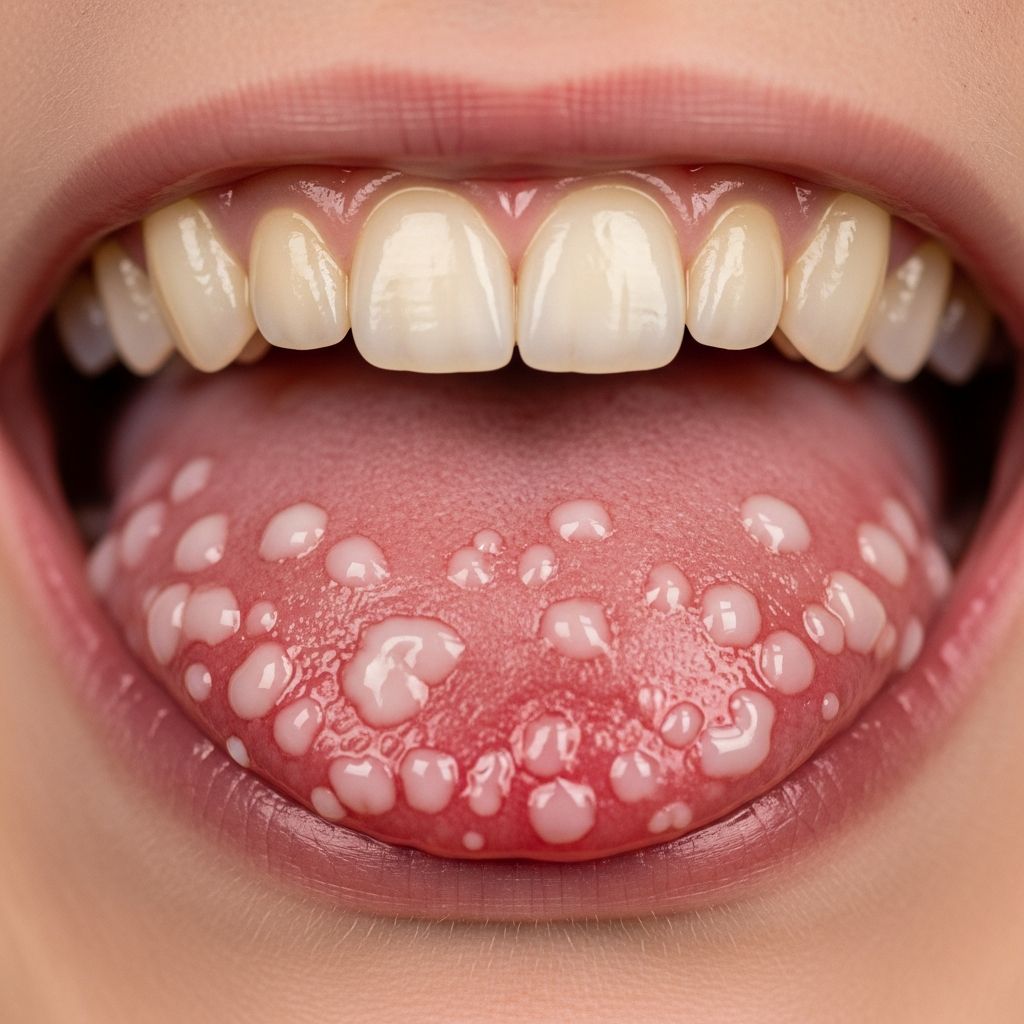
Oral candidiasis, also known as oral thrush, is a common fungal infection of the oral cavity caused primarily by Candida albicans. It manifests as white patches or red lesions and is particularly prevalent in infants, elderly individuals, and those with compromised immunity.
What is oral candidiasis?
Oral candidiasis refers to opportunistic infections of the oral mucosa by yeasts of the genus Candida. While Candida species are normal commensal organisms in the mouth, overgrowth occurs when local or systemic host defenses are disrupted, leading to clinical disease. This condition affects people across all ages but is more common in neonates, denture-wearers, and immunocompromised patients.
Who gets oral candidiasis?
Individuals at highest risk include:
- Neonates and infants, especially during breastfeeding.
- Elderly patients, particularly those with dentures.
- People with dry mouth (xerostomia) from medications, radiation, or Sjögren’s syndrome.
- Immunocompromised hosts: HIV/AIDS, cancer patients on chemotherapy, organ transplant recipients.
- Those using antibiotics, inhaled or systemic corticosteroids, or broad-spectrum antimicrobials.
- Patients with diabetes mellitus, especially if poorly controlled.
- Denture wearers with poor oral hygiene.
Local factors like smoking, poor denture fit, and topical steroid use in the mouth also predispose individuals.
What causes oral candidiasis?
Candida albicans is the most common causative agent (50–90% of cases), followed by C. glabrata, C. tropicalis, C. krusei, and C. parapsilosis. Normally, Candida exists in balance with oral flora, controlled by saliva, immune cells, and competing bacteria. Overgrowth happens due to:
- Immune suppression: Local (e.g., inhaled corticosteroids) or systemic (HIV, malignancy).
- Disruption of oral microbiome: Antibiotics kill protective bacteria.
- High local glucose: Uncontrolled diabetes.
- Reduced saliva: Xerostomia impairs clearance.
- Mechanical factors: Ill-fitting dentures create niches for growth.
In neonates, vertical transmission from maternal vaginal candidiasis occurs during birth or breastfeeding.
What are the clinical features of oral candidiasis?
Symptoms include soreness, burning sensation, altered taste, dysphagia, and angular cheilitis. Signs vary by type:
- Pseudomembranous candidiasis (thrush): Classic white, curd-like plaques on erythematous mucosa (tongue, cheeks, palate). Scrapable, leaving bleeding surface.
- Erythematous candidiasis: Red, atrophic patches, often on tongue dorsum. Common in HIV and antibiotic users.
- Hyperplastic candidiasis: White, adherent plaques on buccal mucosa, non-scrapable. Risk of malignant transformation.
- Angular cheilitis: Cracks at mouth corners, sore and fissured.
- Median rhomboid glossitis: Red, smooth patch midline posterior tongue.
- Linear gingival erythema: Red band on gingivae, seen in HIV.
- Chronic multifocal candidiasis: Multiple persistent lesions.
In denture wearers, lesions appear under the appliance.
Diagnosis of oral candidiasis
Diagnosis is primarily clinical, based on history, risk factors, and characteristic appearance. Scraping reveals pseudomembranes with hyphae on KOH prep (periodic acid-Schiff or GMS stain confirms). Culture identifies species and sensitivities for refractory cases. Biopsy is essential for hyperplastic or persistent lesions to rule out dysplasia or carcinoma. Cytology or swab for PCR aids in atypical presentations.
How is oral candidiasis treated?
Treatment targets Candida eradication, addressing predisposing factors. Mild cases respond to topicals; severe or refractory need systemic therapy.
Topical antifungals (first-line for uncomplicated cases)
- Nystatin suspension (100,000 U/mL): 4–6 mL swish and swallow 4x/day x 7–14 days.
- Clotrimazole troches: 10 mg 5x/day, dissolve slowly.
- Miconazole oral gel: Apply 4x/day (avoid in those prone to GI upset).
- Amphotericin B lozenges: For resistant strains.
Related Stories



Denture wearers: Soak dentures in nystatin or chlorhexidine nightly; leave out overnight.
Systemic antifungals
Indicated for extensive disease, immunosuppression, or failure of topicals:
| Drug | Dose | Duration |
|---|---|---|
| Fluconazole | 100–200 mg/day PO | 7–14 days |
| Itraconazole solution | 200 mg/day | 7–28 days |
| Posaconazole | 400 mg BID | Variable |
| Voriconazole | 200 mg BID | For fluconazole-resistant |
Infants/breastfeeding: Nystatin for infant; fluconazole ± miconazole cream for mother.
Specific types
- Angular cheilitis: Miconazole ± hydrocortisone cream x 2 weeks + correct deficiencies.
- Hyperplastic: Systemic antifungal pre-biopsy; excise if dysplastic.
- Linear gingival erythema: Chlorhexidine rinse + ART optimization.
Adjuncts: Improve hygiene, control diabetes, optimize dentures.
Complications of oral candidiasis
Untreated, it can disseminate in immunocompromised (candidemia), cause chronic pain/nutrition issues, or lead to squamous cell carcinoma from hyperplastic form. Recurrent thrush signals underlying HIV or malignancy.
Prevention of oral candidiasis
- Maintain oral hygiene: Brush, floss, tongue scrape.
- Denture care: Clean daily, remove nightly.
- Manage dry mouth: Sugar-free lozenges, pilocarpine if severe.
- Control diabetes, taper steroids when possible.
- Prophylaxis in high-risk: Nystatin pastille or fluconazole for HIV/CD4<200.
- Breastfeeding mothers: Treat vaginal candidiasis promptly.
Frequently Asked Questions
Q: Is oral candidiasis contagious?
A: Mildly; direct contact can transmit, especially neonate-to-mother or via contaminated dentures. Not person-to-person like cold sores.
Q: How long does oral thrush last without treatment?
A: May persist weeks/months if predisposing factors continue; resolves spontaneously in healthy but risks spread.
Q: Can oral thrush be cured permanently?
A: Yes, by treating cause (e.g., better diabetes control) and antifungals; recurrence common if risks persist.
Q: Is oral thrush a sign of cancer?
A: Usually not, but chronic hyperplastic type requires biopsy for dysplasia risk.
Q: What home remedies help oral thrush?
A: Saltwater rinses, yogurt (probiotics), but not substitutes for antifungals. Consult doctor.
Patient information leaflet
Oral Thrush (Candidiasis)
What is it? Yeast infection causing white patches/soreness in mouth.
Treatment: Antifungal mouthwash/lozenges. Complete course.
Self-care: Good hygiene, clean dentures, avoid irritants.
When to seek help: No improvement in 7–10 days, difficulty swallowing, fever.
References
- Oral Candidiasis – StatPearls — NCBI Bookshelf, NIH. 2023-08-08. https://www.ncbi.nlm.nih.gov/books/NBK545282/
- Oral Thrush — healthdirect.gov.au. 2024. https://www.healthdirect.gov.au/oral-thrush
- Oral Candidiasis – Brigham and Women’s Hospital — BWH. 2023. https://www.brighamandwomens.org/assets/BWH/surgery/oral-medicine-and-dentistry/pdfs/oral-candidiasis-bwh.pdf
- Oral Thrush – Symptoms and Causes — Mayo Clinic. 2024-11-12. https://www.mayoclinic.org/diseases-conditions/oral-thrush/symptoms-causes/syc-20353533
- Oral Thrush (Mouth Thrush) — NHS.uk. 2023-06-15. https://www.nhs.uk/conditions/oral-thrush-mouth-thrush/
Similar Articles








Read full bio of Sneha Tete