Oral Hairy Leukoplakia Pathology: 5 Diagnostic Hallmarks
Comprehensive pathology of oral hairy leukoplakia: clinical features, histopathology, EBV role, and management in immunocompromised patients.
What is oral hairy leukoplakia?
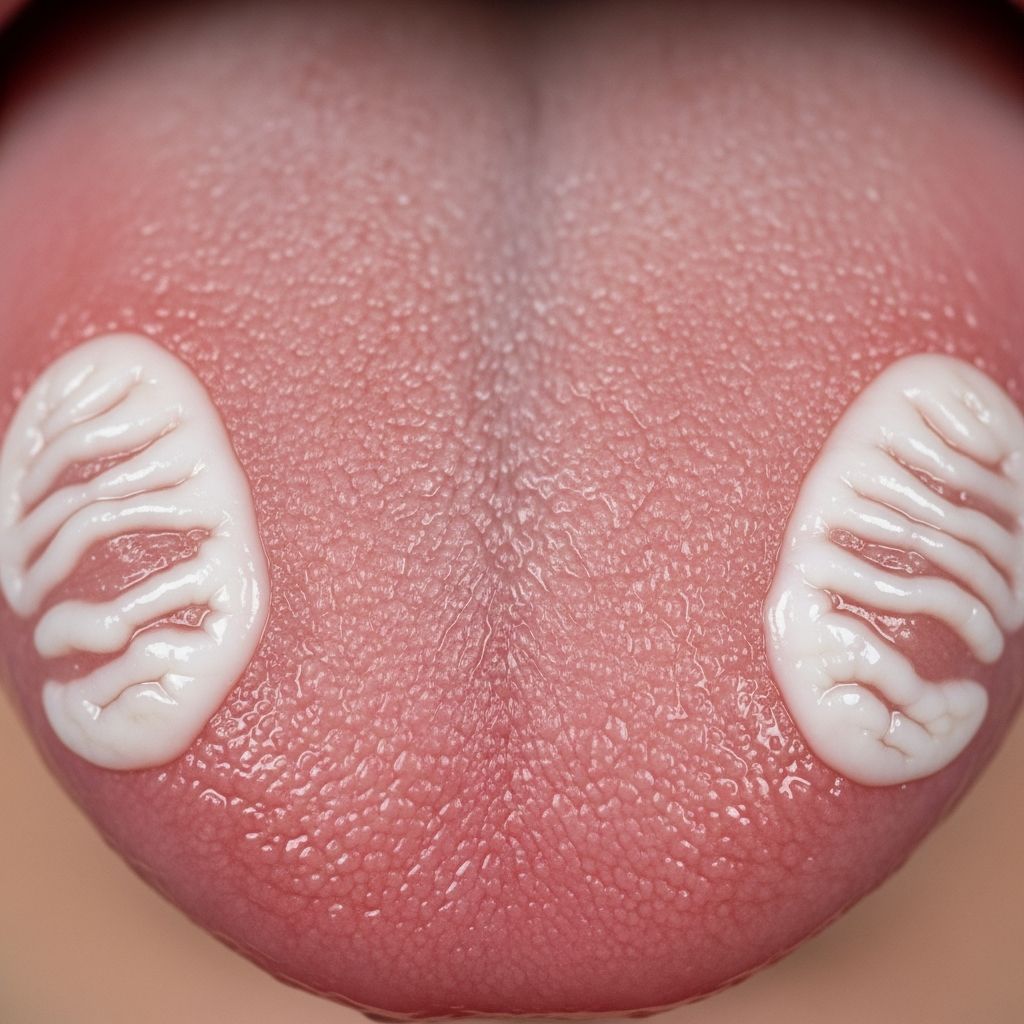
Oral hairy leukoplakia (OHL) is an oral mucosal lesion characterised by white, hyperkeratotic plaques typically located on the lateral tongue borders. It arises due to Epstein-Barr virus (EBV) infection in the context of immunosuppression, most commonly associated with HIV/AIDS but also seen in other immunocompromised states such as organ transplantation or malignancy. The lesion’s ‘hairy’ appearance stems from frond-like projections of hyperparakeratotic epithelium, which cannot be scraped off unlike candidiasis. OHL serves as an important clinical marker of severe immune dysfunction, often preceding AIDS progression.
EBV, a herpesvirus infecting over 90% of adults worldwide, remains latent in B-lymphocytes post-primary infection. In immunosuppressed individuals, lytic replication occurs in squamous epithelial cells, driving the characteristic pathology. First described in 1981 among HIV-positive patients in San Francisco, OHL affects up to 25% of untreated HIV cases and correlates with low CD4 counts (<200 cells/μL).
Clinical features
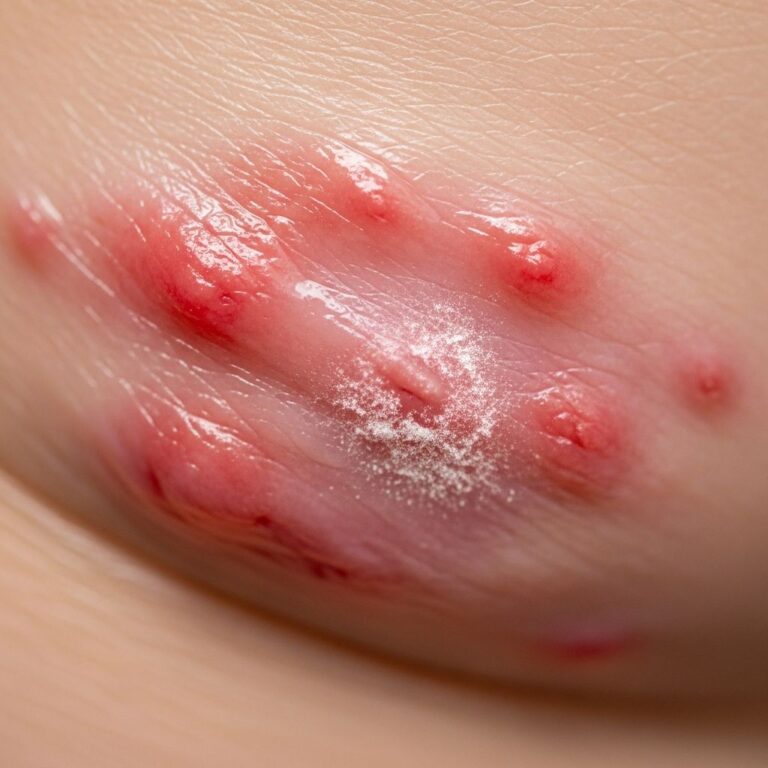
OHL presents as asymptomatic or mildly symptomatic white patches, predominantly on the lateral tongue borders, though it may extend to the dorsum, ventral tongue, buccal mucosa, or gingiva. Lesions appear as corrugated, vertically oriented white plaques with a feathery or ‘hairy’ surface due to filiform projections measuring 1-5 mm in length. They are adherent, non-tender, and non-bleeding, distinguishing them from scrapable pseudomembranes of oral thrush.
- Bilateral involvement is common, though unilateral cases occur.
- Lesions vary from flat, smooth patches to prominently raised, irregular surfaces.
- Size ranges from millimetres to covering most of the tongue laterally.
- Symptoms, when present, include mild pain, dysesthesia, taste alterations, or temperature sensitivity.
- No surrounding erythema or induration; lesions may wax and wane spontaneously.
In HIV patients, OHL often emerges when CD4 counts drop below 100-200 cells/μL, acting as a predictor of AIDS development within months. Similar presentations occur in transplant recipients on immunosuppressants or those with haematological malignancies.
Pathogenesis
The pathogenesis of OHL involves EBV lytic reactivation in oral epithelial cells amid T-cell immunosuppression. Normally latent in B-cells, EBV shifts to productive replication in differentiated keratinocytes, expressing lytic proteins like BZLF1 (ZEBRA) and BMRF1 (EA-D), leading to epithelial hyperplasia. EBV-encoded oncoproteins LMP-1 and BHRF1 (Bcl-2 homolog) promote anti-apoptotic effects and acanthosis, while viral IL-10 dampens local immunity.
Hyperkeratosis results from altered keratin expression (fillagrin suppression), forming the ‘hairy’ projections. Superficial bacterial overgrowth may occur but is secondary. HIV itself does not directly cause OHL; rather, CD8+ T-cell depletion allows unchecked EBV replication. Genetic factors influencing EBV susceptibility (e.g., HLA types) may modulate risk.
Histopathology
Microscopic examination reveals distinctive features confirming OHL diagnosis when combined with EBV detection. Key histopathological hallmarks include:
| Feature | Description |
|---|---|
| Hyperparakeratosis | Thickened parakeratotic layer with projections (‘hairy’ appearance); due to keratin K1/K10 dysregulation. |
| Acanthosis | Marked epithelial thickening with elongated rete ridges; koilocyte-like cells with nuclear changes. |
| Koilocytosis | Cowry shell nuclei, chromatin margination, amphophilic inclusions from EBV replication. |
| Ballooning degeneration | Epidermal cells swell with pale cytoplasm and nuclear moulding. |
| Lack of inflammation | Minimal lymphocytic infiltrate, unlike lichen planus or candidiasis. |
EBV confirmation is essential via in situ hybridization (ISH) for EBER (EBV-encoded small RNAs) in nuclei of upper spinous/granular layers, or immunohistochemistry for viral proteins. PCR detects EBV DNA, but ISH is gold standard. Electron microscopy shows viral particles (herpes-type). These features overlap minimally with other leukoplakias, necessitating virological proof.
Related Stories



Differential diagnosis
- Pseudomembranous candidiasis (thrush): Scrapable white plaques; KOH prep shows yeast.
- Leukoplakia: Tobacco-related, dysplastic potential; no EBV.
- Lichen planus: Wickham striae, inflammation, pain.
- Squamous cell carcinoma: Indurated, ulcerated; biopsy shows atypia.
- Verrucous carcinoma: Exophytic, broad rete ridges.
- HIV gingivitis/stomatitis: Erythematous, bleeding margins.
Definitive differentiation requires biopsy if atypical.
Investigations
Diagnosis is primarily clinical, but biopsy is recommended for:
- Atypical appearance or persistence.
- Failure to respond to antifungals.
- Suspicion of dysplasia/malignancy.
Standard biopsy with H&E staining, followed by:
- EBER-ISH: Detects latent EBV in >90% cases.
- IHC: For BZLF1, LMP1.
- PCR: EBV DNA quantification.
HIV testing (CD4 count, viral load) is mandatory if not known.
Management
Treatment targets underlying immunosuppression; OHL often regresses with immune reconstitution.
| Approach | Details | Efficacy |
|---|---|---|
| Immune reconstitution | ART for HIV (CD4 >200); reduce immunosuppressants. | 80-100% resolution. |
| Topical antivirals | Acyclovir 200mg 5x/day or 400mg 3x/day for 7-14 days. | Partial response; relapses common. |
| Systemic antivirals | Valacyclovir, famciclovir for refractory cases. | 50-70% response. |
| Topical podophyllin | 25% solution weekly (caution: irritant). | Effective but painful. |
| Laser ablation | CO2 laser for cosmetic/large lesions. | Symptomatic relief. |
No role for antifungals alone unless superinfection. Monitor for HIV progression; OHL heralds high AIDS risk.
Frequently asked questions
What causes oral hairy leukoplakia?
EBV replication in oral epithelium under immunosuppression, especially HIV.
Is oral hairy leukoplakia contagious?
No, as EBV is ubiquitous; transmission requires close contact but lesion itself is not directly infectious.
Does oral hairy leukoplakia mean I have AIDS?
Strongly indicative in at-risk individuals; prompts HIV testing.
Can oral hairy leukoplakia be cured?
Resolves with immune recovery; symptomatic treatments available.
Should I worry about cancer risk?
No malignant potential; biopsy rules out dysplasia.
References
- Oral Hairy Leukoplakia — UR Medicine, University of Rochester. 2023. https://www.urmc.rochester.edu/encyclopedia/content?contenttypeid=134&contentid=213
- Hairy Leukoplakia — StatPearls, NCBI Bookshelf. 2023-10-01. https://www.ncbi.nlm.nih.gov/books/NBK554591/
- Oral Hairy Leukoplakia: Clinicopathologic Features, Pathogenesis — Clinical Infectious Diseases, Oxford Academic. 1997-12-01. https://academic.oup.com/cid/article-abstract/25/6/1392/363734
- Oral Viral Lesion (Hairy Leukoplakia) Associated with Acquired Immunodeficiency Syndrome — CDC MMWR. 1985-06-28. https://www.cdc.gov/mmwr/preview/mmwrhtml/00000607.htm
- Leukoplakia — Cleveland Clinic. 2023. https://my.clevelandclinic.org/health/diseases/17655-leukoplakia
Similar Articles








Read full bio of Sneha Tete