Oral Hairy Leukoplakia: Causes, Diagnosis, And Treatment
Understanding oral hairy leukoplakia: EBV-driven white tongue patches in immunocompromised patients, symptoms, diagnosis, and management strategies.
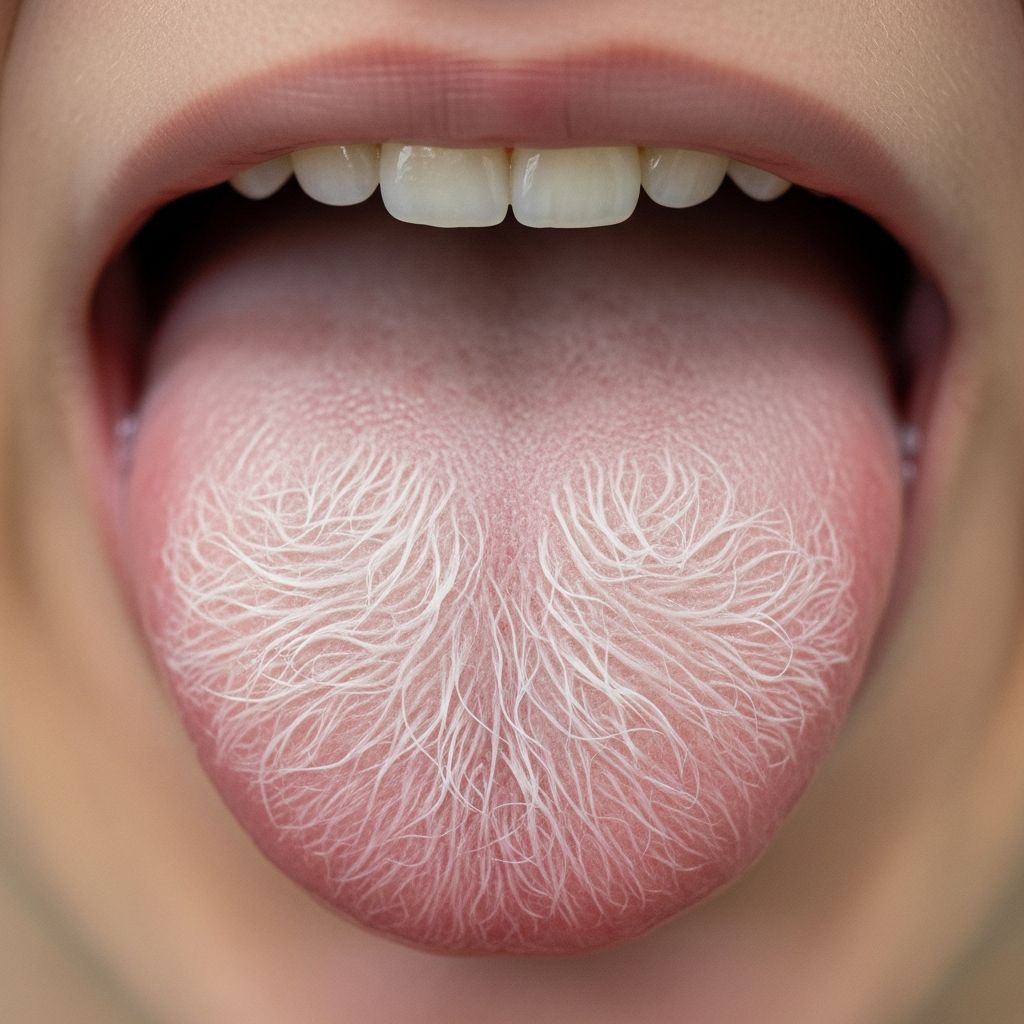
Oral hairy leukoplakia (OHL) is a benign condition characterized by white, corrugated or shaggy plaques primarily on the lateral borders of the tongue, resulting from Epstein-Barr virus (EBV) infection in immunocompromised individuals. First described in HIV-positive patients, it serves as an important clinical marker of immune suppression and requires evaluation of underlying causes rather than isolated treatment of the lesions.
Introduction
Oral hairy leukoplakia represents an opportunistic infection of the oral epithelium by EBV, leading to hyperplastic white patches that cannot be scraped off. These lesions exhibit a distinctive ‘hairy’ or furrowed appearance due to epithelial projections. While typically asymptomatic, OHL can cause mild discomfort or altered taste, and its presence often prompts investigation into immune status, particularly in at-risk populations.
Demographics
OHL predominantly affects immunocompromised adults, with a historical association to HIV-positive homosexual men, though it occurs across all HIV cohorts except infants. Recent case series indicate a predominance in white males aged 50-60 years, even among some immunocompetent individuals. It is frequently the initial manifestation of undiagnosed HIV infection or indicates failure of antiretroviral therapy. Other groups at risk include organ or bone marrow transplant recipients, cancer patients on chemotherapy, those with hematologic malignancies like leukemia, and individuals using immunosuppressive drugs such as systemic or inhaled corticosteroids for conditions like asthma.
In HIV patients, the risk escalates with declining CD4 counts, increasing nearly twofold for every 300-unit drop. Rarely, OHL appears in healthy individuals without evident immunosuppression, highlighting the need for thorough evaluation.
Causes
The primary cause of OHL is active replication of EBV within the tongue epithelium, particularly where Langerhans cells are scarce, impairing local immune surveillance. EBV, a herpesvirus that infects most people lifelong in a latent state, reactivates under immunosuppression, delaying epithelial cell apoptosis and promoting hyperplasia. Intact EBV virions accumulate without genomic integration into host cells, leading to the characteristic lesion morphology.
Predisposing factors include:
- HIV/AIDS: Most common association, often with low CD4 counts.
- Transplantation: Post-organ or bone marrow transplant immunosuppression.
- Malignancies: Leukemia, lymphomas, or other cancers treated with chemotherapy.
- Drug-induced: Corticosteroids (inhaled or systemic), other antirejection drugs.
- Mechanical trauma: Lateral tongue vulnerability facilitates viral entry.
The lateral tongue’s susceptibility to trauma enhances EBV access to prickle cell receptors, compounded by reduced Langerhans cells in immunocompromised hosts.
Clinical Features
OHL manifests as asymptomatic, adherent white plaques on the lateral tongue borders, unilateral or bilateral, ranging from faint streaks to prominent corrugated, shaggy surfaces with hair-like projections. Lesions do not rub off with brushing or scraping, distinguishing them from pseudomembranous candidiasis. Rarely, plaques extend to the ventral tongue, floor of mouth, or oropharynx, but spare keratinized mucosa like gingiva or hard palate.
Symptoms, when present, include mild pain, dysesthesia, temperature sensitivity alterations, taste disturbances, or cosmetic concerns. Lesions may wax and wane spontaneously. Physical exam reveals non-tender, irregular ‘feathery’ or folded white patches, often continuous or patchy along tongue margins, without induration or ulceration suggesting malignancy.
Related Stories



Complications
OHL itself is benign and non-malignant, with no progression to squamous cell carcinoma. However, secondary bacterial superinfection of hyperkeratotic surfaces can occur. The chief complication is its role as a harbinger of severe immunosuppression; untreated underlying HIV may lead to AIDS progression. Recurrent lesions post-treatment underscore the need for immune reconstitution. Rarely, extensive involvement causes significant discomfort impacting nutrition or speech.
Diagnosis
Diagnosis is primarily clinical, based on characteristic appearance in at-risk patients. Confirmation involves biopsy showing acanthosis, hyperparakeratosis, koilocyte-like cells, and EBV-positive epithelial cells via in situ hybridization (EBER-1 probe). Histopathology reveals:
- Hyperparakeratosis with ‘hairy’ projections.
- Acanthosis and ballooning degeneration.
- EBV-laden nuclei in upper spinous layers.
- Absent dysplasia.
Cytology or PCR detects EBV DNA. EBV serology confirms prior exposure but not active replication.
Differential Diagnoses
| Condition | Key Distinguishing Features |
|---|---|
| Candidiasis (Thrush) | Wipeable white plaques; responds to antifungals; common in HIV. |
| Leukoplakia (Tobacco-related) | Homogeneous, scrapable; risk of dysplasia; keratinized sites. |
| Lichen Planus | Symmetric Wickham striae; painful; bilateral buccal mucosa. |
| Squamous Cell Carcinoma | Indurated, ulcerated, erythroplakia; biopsy shows atypia. |
| Morsicatio Linguarum | Traumatic, self-induced; history of cheek/tongue biting. |
Biopsy resolves ambiguities, especially to exclude malignancy.
Treatment
Treatment targets symptoms or cosmesis, as OHL often resolves with immune recovery. Primary approach: optimize underlying immunosuppression, e.g., HAART for HIV, reducing viral load and CD4 restoration.
Specific options include:
- Systemic antivirals: High-dose acyclovir (4000 mg/day divided, 7-14 days), valacyclovir, or famciclovir; resolves lesions temporarily but recurs off-therapy.
- Topical: 25% podophyllin resin (cytotoxic, few applications); 0.1% tretinoin gel (2-3x/day until clearance); both prone to recurrence.
- Cryotherapy: Liquid nitrogen for refractory cases.
- Surgical: Rare excision for severe, localized lesions.
No therapy cures OHL; focus on immune boosting prevents relapse.
Outcome
OHL is not curable by direct treatment but may spontaneously regress, especially with HAART initiation. Prognosis ties to underlying immunity; HIV patients achieving viral suppression see lesion resolution. Recurrence signals therapy failure or non-compliance. In non-HIV cases, addressing immunosuppression yields similar outcomes. Long-term monitoring for immune status and oral cancer screening is advised.
Frequently Asked Questions
Q: Is oral hairy leukoplakia cancerous?
A: No, OHL is benign and does not progress to cancer, unlike some leukoplakias; biopsy confirms absence of dysplasia.
Q: Can oral hairy leukoplakia occur in healthy people?
A: Rarely yes, but typically indicates underlying immunosuppression; evaluation is essential.
Q: Does OHL always mean HIV?
A: No, though common in HIV; also seen post-transplant, chemotherapy, or steroids.
Q: How is OHL diagnosed?
A: Clinically by appearance, confirmed by biopsy showing EBV in epithelium.
Q: Will OHL go away on its own?
A: Possibly with immune recovery; antivirals provide symptomatic relief but not cure.
References
- Oral Hairy Leukoplakia — UR Medicine, University of Rochester. 2023. https://www.urmc.rochester.edu/encyclopedia/content?contenttypeid=134&contentid=213
- Oral hairy leukoplakia — DermNet NZ. 2021-08. https://dermnetnz.org/topics/oral-hairy-leukoplakia
- Hairy Leukoplakia — StatPearls, NCBI Bookshelf. 2023. https://www.ncbi.nlm.nih.gov/books/NBK554591/
- Leukoplakia – Symptoms and causes — Mayo Clinic. 2023. https://www.mayoclinic.org/diseases-conditions/leukoplakia/symptoms-causes/syc-20354405
Similar Articles








Read full bio of medha deb