Oral Lichen Planus Essential Guide To Diagnosis And Care
Comprehensive guide to oral lichen planus: symptoms, diagnosis, treatment, and management of this chronic inflammatory condition.
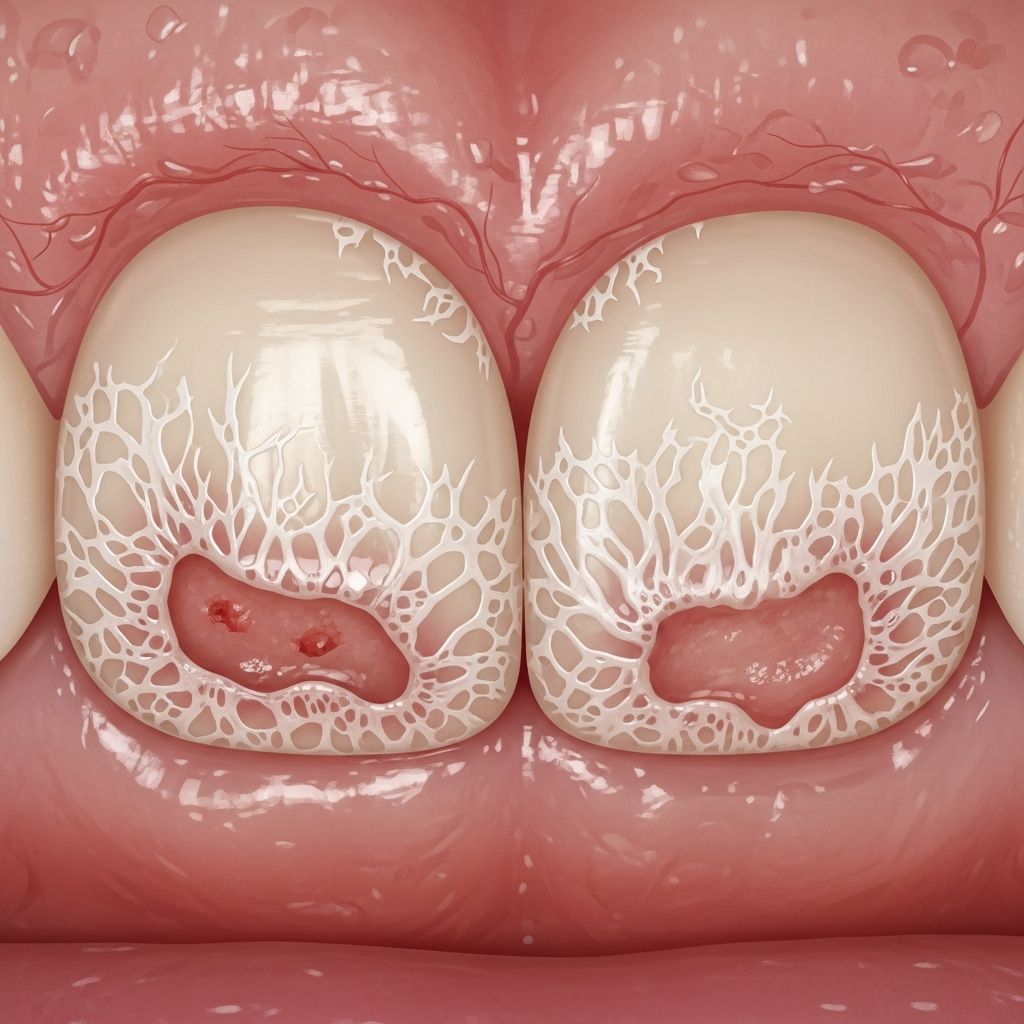
Oral lichen planus (OLP) is a chronic, T-cell-mediated autoimmune inflammatory condition primarily affecting the oral mucous membranes, characterized by white lacy striae, erosions, and plaques.
What is oral lichen planus?
Oral lichen planus represents the mucosal counterpart of cutaneous lichen planus, occurring in 0.5 6 2.0% of the general population, predominantly in middle-aged adults with a female predominance (ratio 1.4 51.6:1). It manifests as a cell-mediated immune response targeting basal keratinocytes, leading to various clinical patterns including reticular, erosive, atrophic, plaque-like, and papular forms. While generally benign, erosive variants cause significant discomfort, and longstanding cases carry a small risk of malignant transformation to squamous cell carcinoma, estimated at 0.5 6 2%.
Who gets oral lichen planus?
OLP affects individuals aged 30 560 years most commonly, with women comprising 60 6 70% of cases. Risk factors include genetic predisposition (HLA-DR1 association), stress, medications (NSAIDs, antihypertensives), dental materials, and hepatitis C infection in certain populations. It may coexist with cutaneous, genital, or nail lichen planus in 10 560% of patients.
What causes oral lichen planus?
The precise etiology remains unknown, but OLP involves a T-cell-mediated autoimmune attack on basal epithelial cells, triggered by antigenic changes in keratinocytes. Contributing factors include:
- Genetic susceptibility (HLA associations)
- Autoimmunity with cytotoxic CD8+ T-cells
- Stress and psychosomatic influences
- Medications (e.g., beta-blockers, gold salts)
- Viral infections (hepatitis C, HPV)
- Dental trauma or allergens
Unlike lichen simplex chronicus, no single causative agent is identified.
What are the clinical features of oral lichen planus?
OLP exhibits polymorphous presentations, with the
reticular
form being most common (70 6 80%), featuringWickham striae
6fine, white, lace-like networks on buccal mucosa, tongue, gingiva, and palate.Clinical variants:
- Reticular: Asymptomatic white striae, radiating from central erosion (buccal mucosa > tongue > gingiva).
- Erosive/ulcerative: Painful red erosions/ulcers with peripheral striae; exacerbated by spicy/acidic foods.
- Atrophic/erythematous: Shiny red patches with white borders; gingival involvement causes desquamative gingivitis.
- Plaque-like: Homogeneous white plaques mimicking leukoplakia, often on dorsum tongue.
- Bullous: Rare vesicles/bullae rupturing to erosions (buccal mucosa, tongue).
- Papular: Tiny white papules coalescing to reticular pattern.
Symptoms range from asymptomatic to severe burning pain, sensitivity to hot/cold/spicy foods, and gingival bleeding.
Diagnosis of oral lichen planus
Diagnosis combines clinical and histopathological criteria, with biopsy essential for atypical or erosive cases to exclude dysplasia.
Clinical diagnostic criteria (WHO):
- Bilateral, symmetric lesions
- Lace-like network of white lines (Wickham striae)
- Erosive/atrophic/plaque forms require coexisting reticular lesions
Histopathological criteria:
- Hyperkeratosis/parakeratosis
- Saw-tooth rete ridges
- Basal cell liquefaction degeneration (Civatte bodies)
- Band-like lymphocytic infiltrate at epithelium-connective tissue interface
- Absence of dysplasia
Direct immunofluorescence shows fibrinogen deposition at basement membrane and IgM in colloid bodies.
Differential diagnosis of oral lichen planus
| Condition | Key Distinguishing Features |
|---|---|
| Leukoplakia | Homogeneous white patch/plaque; tobacco association; dysplasia risk; no striae |
| Candidiasis | Removable white plaques; positive culture/KOH; responds to antifungals |
| Pemphigus vulgaris | Intraepithelial acantholysis; Nikolsky sign; positive immunofluorescence |
| Mucous membrane pemphigoid | Subepithelial blisters; gingival emphasis; linear IgG/C3 immunofluorescence |
| GvHD | Post-transplant; diffuse mucositis; systemic involvement |
| Lupus erythematosus | Systemic symptoms; interface dermatitis; lupus band |
| Secondary syphilis | Serologic positivity; generalized mucocutaneous lesions |
Related Stories



OLP lesions must not localize to tobacco sites, dental restorations, or correlate with new medications.
Investigations for oral lichen planus
- Incisional biopsy: Gold standard for confirmation and dysplasia exclusion
- Vital tissue staining: Toluidine blue for suspicious areas
- Cytology: Limited utility
- Laboratory tests: Rule out hepatitis C, autoimmune markers if indicated
What is the treatment for oral lichen planus?
No curative therapy exists; management targets symptom relief, lesion suppression, and complication prevention.
First-line topical therapies:
- Corticosteroids: Clobetasol 0.05% gel/ointment (most effective); betamethasone, fluocinonide; apply 2 6 3x/day post-meals
- Calcineurin inhibitors: Tacrolimus 0.1% ointment, pimecrolimus cream (steroid-sparing)
Second-line agents:
- Retinoids: Isotretinoin gel
- Immunosuppressants: Topical cyclosporine
- Alopecia areata treatments: Intralesional triamcinolone
Systemic therapy (severe/refractory):
- Prednisone (0.5 6 1 mg/kg), hydroxychloroquine, methotrexate, cyclosporine
Adjunctive measures:
- Laser therapy: CO2, Nd:YAG for symptomatic erosions
- Mouth rinses: Dexamethasone, chlorhexidine, benzydamine
- Pain management: Lidocaine viscous, analgesics
- Diet: Avoid irritants (spicy, acidic, alcohol); soft foods
Complications of oral lichen planus
- Pain/dysphagia: Impacts nutrition/quality of life
- Secondary infection: Candidiasis common
- Scarring: Rare, mainly erosive form
- Malignant transformation: 0.5 6 2%; higher in erosive (monitor q6 6 12 months)
Prevention of oral lichen planus
Non-preventable as idiopathic; however, minimize triggers: stress reduction, avoid irritant foods/medications, meticulous oral hygiene, regular dental monitoring.
Timeline and progression of oral lichen planus
Chronic with remissions/exacerbations; reticular form persists indefinitely but asymptomatic; erosive waxes/wanes over years. 50 6 70% resolve spontaneously over 5 6 10 years, but recurrences common.
Patient follow-up for oral lichen planus
Biopsy-proven OLP requires lifelong surveillance:
- Symptomatic: q3 months initially, then q6 months
- Asymptomatic reticular: Annual exam
- Erosive/longstanding: q3 6 6 months with photography/staining for dysplasia
Frequently Asked Questions
Is oral lichen planus contagious?
No, OLP is an autoimmune condition, not infectious.
Can oral lichen planus be cured?
No cure; treatments control symptoms.
Does oral lichen planus cause cancer?
Small risk (0.5 6 2%) of squamous cell carcinoma, mainly erosive type; requires monitoring.
What foods trigger oral lichen planus?
Spicy, acidic (citrus), salty foods, alcohol, caffeine.
Is oral lichen planus linked to other diseases?
May associate with cutaneous lichen planus (10 6 20%), hepatitis C, graft-vs-host disease.
References
- Diagnosis and management of oral lichen planus 6 Review 6 NIH/PMC. 2022-02-14. https://pmc.ncbi.nlm.nih.gov/articles/PMC8859620/
- Oral Lichen Planus Patient Information Leaflet 6 British Society for Oral Medicine. 2019-10. https://bisom.org.uk/wp-content/uploads/2020/02/OLP-PIL-October-2019.pdf
- Oral Lichen Planus 6 Brigham and Women’s Hospital. Accessed 2026. https://www.brighamandwomens.org/assets/BWH/surgery/oral-medicine-and-dentistry/pdfs/oral-lichen-planus-bwh.pdf
- Oral Lichen Planus: Causes and Management Strategies 6 Central Park Dental. Accessed 2026. https://www.centralparkdental.net/cpdo/understanding-oral-lichen-planus-causes-symptoms-and-treatment-with-dr-jiyoung-jung/
- Oral Lichen Planus 6 Manchester University NHS Foundation Trust. 2018-03. https://mft.nhs.uk/app/uploads/sites/3/2018/09/UDH-34.pdf
- Oral lichen planus – Diagnosis and treatment 6 Mayo Clinic. Accessed 2026. https://www.mayoclinic.org/diseases-conditions/oral-lichen-planus/diagnosis-treatment/drc-20350874
Similar Articles








Read full bio of Sneha Tete