Oral Mucocele: Symptoms, Causes & Treatment
Learn about oral mucoceles: harmless mouth cysts that usually resolve independently.
Understanding Oral Mucoceles
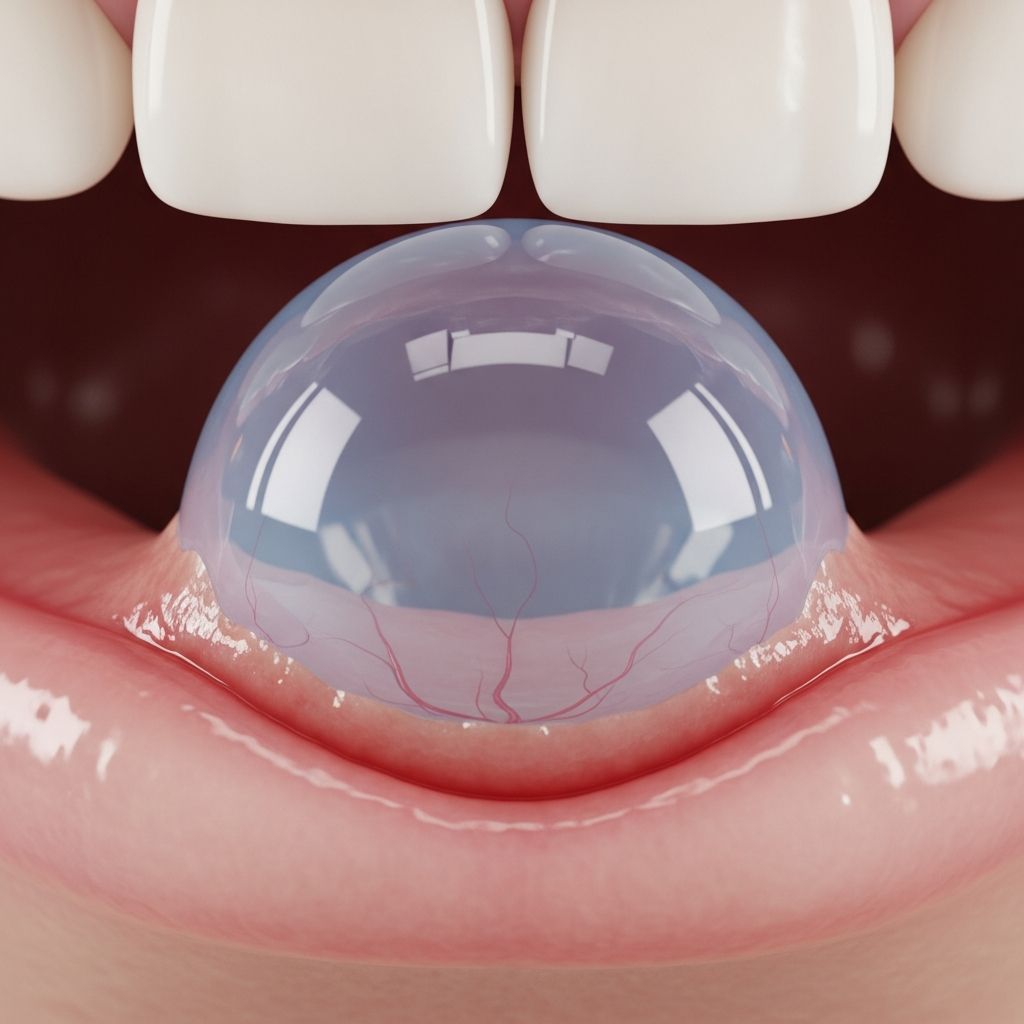
An oral mucocele is a harmless, mucus-filled cyst that develops inside your mouth. These benign lesions typically appear as smooth, round bumps that are usually painless and flesh-colored or clear in appearance. While they may look concerning at first, oral mucoceles are extremely common and, in most cases, resolve on their own without requiring any treatment.
Mucoceles form when a salivary gland duct becomes damaged or blocked, causing saliva to accumulate in the surrounding tissues. This buildup creates the characteristic cyst-like appearance that characterizes the condition. Understanding what an oral mucocele is can help you recognize it early and know when to seek professional care.
Where Oral Mucoceles Develop
Oral mucoceles can appear in various locations within the mouth, though certain areas are more common than others. The most frequently affected sites include:
- Inner surface of the lower lip (the most common location)
- Inside of the cheeks
- Upper lip
- Underside or tip of the tongue
- Floor of the mouth (called a ranula when located here)
These cysts can range significantly in size, from just a few millimeters to as large as three centimeters in diameter. They may appear close to the surface of the oral tissue or develop deeper within the tissue itself, which can affect how noticeable they are and how they’re treated.
Recognizing the Symptoms
Oral mucoceles typically present with distinctive symptoms that make them relatively easy to identify. Understanding these signs can help you determine whether a lesion in your mouth might be a mucocele.
The primary symptoms include a soft, rounded bump that is clear or flesh-colored, often resembling a small blister. Most mucoceles are painless, though they may become sensitive if you accidentally bite or irritate them. The bump typically ranges from the size of a small pea to about the size of a nickel, making them quite noticeable depending on their location.
In most cases, mucoceles don’t cause significant discomfort or functional problems. However, if a mucocele persists for more than a couple of weeks, grows larger, changes in color or texture, or causes difficulty swallowing or breathing, you should seek professional medical evaluation.
Understanding the Causes
Several factors can contribute to the development of oral mucoceles. The underlying cause typically involves damage to or blockage of a salivary gland duct, but the initial injury can occur through various mechanisms.
Common causes include accidental biting of the lip or cheek during eating, talking, or even while sleeping. Repetitive habits such as chronic lip or cheek biting, or chewing on pens or nails, can also damage the salivary ducts. Friction or irritation from orthodontic braces, oral piercings, or poorly fitted dentures frequently contributes to mucocele formation.
Additional causes may include accidental injuries such as facial trauma or burns from hot foods. Some mucoceles result from blockages caused by thick saliva, debris, or inflammation within the duct. Certain medical conditions that affect saliva production, such as Sjögren’s syndrome or chronic dry mouth, can also increase the risk of developing mucoceles.
Related Stories



Types of Oral Mucoceles
Oral mucoceles are classified into two main types based on how they form and their underlying mechanisms.
Extravasation Mucocele
The extravasation mucocele is the most common type, accounting for the majority of cases. This type forms when a salivary duct ruptures, allowing mucus to leak directly into the surrounding soft tissues. Rather than forming a true cyst with an epithelial lining, the mucus spreads into the connective tissue, creating what’s known as a pseudocyst.
Extravasation mucoceles are particularly typical in children and adolescents and are commonly triggered by biting, friction from braces or piercings, or trauma to the area. These mucoceles most often appear on the inner surface of the lower lip but can develop in other oral locations as well.
Retention Mucocele
Retention mucoceles are less common and form through a different mechanism than extravasation types. This type develops when a salivary gland duct becomes obstructed, preventing normal saliva flow. The mucus accumulates within the blocked duct itself rather than leaking into surrounding tissues, causing the duct to expand and form a cyst.
Retention mucoceles are rarely seen in children and adolescents, occurring more frequently in older individuals. They result from obstruction of the duct rather than rupture, making them distinct in both their formation and clinical presentation.
Stages of Mucocele Development
Both types of mucoceles progress through three distinct developmental stages. Understanding this progression can help explain how these lesions change over time.
In the initial phase, mucus spreads from the damaged duct into the connective tissue surrounding it, causing localized swelling. The next stage, known as the resorption phase, involves a foreign body reaction where the body attempts to isolate the leaked mucus. During this stage, a granuloma may form as part of the healing response.
Finally, a pseudocapsule forms around the affected area. Importantly, this capsule lacks an epithelial lining, distinguishing it from a true cyst. This structure helps contain the mucocele but may explain why these lesions sometimes recur if not completely removed during treatment.
Professional Diagnosis
Your healthcare provider can typically diagnose an oral mucocele based on your symptoms and a physical examination of your mouth. In most cases, the distinctive appearance of the lesion is sufficient for diagnosis, and no additional testing is necessary.
However, your dentist or doctor may request further tests to confirm the diagnosis or rule out other conditions. These tests might include imaging studies or, in rare cases, a biopsy to examine tissue samples. Professional diagnosis is particularly important if the lesion appears unusual, persists longer than expected, or if you’re uncertain about what you’re observing.
Treatment Options for Oral Mucoceles
Treatment approaches for oral mucoceles vary depending on the size, location, persistence, and your personal comfort level with the lesion. Importantly, you should not attempt to treat an oral mucocele on your own, as this can cause infection or damage to your oral tissues.
Observation and Watchful Waiting
In most cases, oral mucoceles do not require treatment because the cyst ruptures and resolves on its own. This typically occurs within three to six weeks of initial formation. For small mucoceles that aren’t causing discomfort, a “watch and wait” approach is often the recommended first-line management.
During this period, maintain good oral hygiene and follow these supportive care measures:
- Perform warm saltwater rinses several times daily to reduce inflammation and promote healing
- Avoid spicy, hot, or acidic foods that might irritate the area
- Stay well hydrated to keep saliva flowing normally
- Maintain excellent oral hygiene to prevent secondary infections
- Avoid biting, touching, or poking at the bump to prevent worsening the irritation
Medical Interventions
For mucoceles that persist or cause discomfort, several medical interventions are available. Topical corticosteroids can be applied to reduce inflammation in the affected area. Over-the-counter or prescribed anti-inflammatory medications may help manage pain and discomfort.
Needle aspiration is another option where a fine needle is used to release trapped fluid from the mucocele. While this provides temporary relief, mucoceles treated with aspiration alone often recur since the underlying cause is not addressed.
Minimally Invasive Procedures
For stubborn or recurring mucoceles, minimally invasive techniques offer effective alternatives to traditional surgery with quicker recovery times.
Laser therapy uses a focused beam of light to remove the cyst. This method is quick, causes minimal discomfort, reduces bleeding, promotes faster healing, and significantly lowers the risk of recurrence compared to other techniques.
Cryotherapy involves freezing the cyst with extreme cold and is typically used for smaller mucoceles. This technique destroys the cyst tissue through controlled freezing.
Marsupialization is a procedure where the mucocele is opened and the edges are sutured to create a small permanent opening. This allows continuous drainage and prevents fluid buildup, reducing the chance of the mucocele reforming.
These minimally invasive procedures are usually performed under local anesthesia and offer a quicker recovery compared to full surgical excision.
Surgical Options
For larger, chronic, or frequently recurring mucoceles, surgical removal may be the most effective solution. Surgery is safe, relatively quick, and typically performed under local anesthesia.
Common surgical techniques include cystectomy, which involves complete removal of the mucocele along with its sac or capsule. This technique is typically used when the lesion is well-contained and distinct from surrounding tissues.
Cystostomy creates a permanent opening to allow fluid drainage, particularly useful when the cyst is located close to important anatomical structures that shouldn’t be disturbed.
Complete excision removes both the cyst and the affected salivary gland to prevent future recurrence. This approach is sometimes necessary when the same mucocele repeatedly returns despite previous treatment attempts.
Prevention Strategies
While not all mucoceles can be prevented, certain measures can reduce your risk of developing these lesions or experiencing recurrence after treatment.
Avoid biting or sucking on your lips and cheeks, especially if this is a habit. If you wear braces or dentures, use orthodontic wax and ask your dentist about adjustments to minimize friction and irritation of oral tissues. Maintain excellent oral hygiene to reduce infection risk, particularly important after any mucocele treatment.
Stay well hydrated and avoid excessively spicy or acidic foods that can irritate soft tissues. If you have a history of mucoceles or are prone to accidental oral injuries, be more mindful of these risk factors in your daily activities.
When to Seek Professional Care
While many oral mucoceles resolve without intervention, professional evaluation is recommended if the lesion persists beyond two to three weeks, grows progressively larger, causes pain or difficulty swallowing, changes in appearance or color, or interferes with eating or speaking.
Additionally, seek professional advice if multiple mucoceles develop, if you’re uncertain whether a bump is a mucocele, or if you have concerns about any oral lesion. Early professional diagnosis can help ensure appropriate management and peace of mind.
Frequently Asked Questions
Q: Can I pop or drain an oral mucocele myself?
A: No, attempting to drain or pop a mucocele yourself can cause infection and damage to your oral tissues. Always consult a healthcare professional if you’re concerned about a mucocele.
Q: How long do oral mucoceles typically last?
A: Most oral mucoceles resolve on their own within three to six weeks. However, some may persist longer or require professional treatment if they recur.
Q: Are oral mucoceles contagious?
A: No, oral mucoceles are not contagious. They are benign lesions that form from accumulated saliva and pose no risk to others.
Q: Can children get oral mucoceles?
A: Yes, children and adolescents frequently develop extravasation mucoceles, often due to accidental lip or cheek biting. Professional evaluation is recommended if a mucocele persists in a child.
Q: What’s the difference between a mucocele and a canker sore?
A: Mucoceles are fluid-filled cysts with a smooth, round appearance, while canker sores are painful ulcers with an open center. Mucoceles are typically painless unless irritated.
Q: Will a mucocele return after treatment?
A: Recurrence depends on the treatment method used. Surgical excision that removes the affected salivary gland has the lowest recurrence rate, while needle aspiration alone has higher recurrence rates.
References
- Oral Mucocele – Mucous Cyst: Symptoms, Causes & Treatment — Cleveland Clinic. 2025. https://my.clevelandclinic.org/health/diseases/23406-oral-mucocele
- Mucocele of the Lower Lip and Its Surgical Management — National Center for Biotechnology Information (NCBI/NIH). 2024. https://pmc.ncbi.nlm.nih.gov/articles/PMC11534429/
- How to Identify and Treat an Oral Mucocele Effectively — World of Dentistry. 2025. https://worldofdentistry.org/how-to-identify-an-oral-mucocele-effectively/
- Oral Cavity Mucocele and Different Surgical Treatment Strategies — University of Milan Applied Sciences Research. 2023. https://air.unimi.it/retrieve/47bbc84a-3495-4cea-ab3d-5c91a8f109a9/applsci-13-12327-v2.pdf
- Oral Mucoceles: Symptoms, Causes, Treatment, and Prevention — Rupa Health. 2025. https://www.rupahealth.com/post/oral-mucocele-symptoms-causes-treatment-and-prevention
Similar Articles








Read full bio of medha deb