Oral Psoriasis: Essential Guide To Symptoms & Treatments
Comprehensive guide to oral psoriasis: symptoms, causes, diagnosis, and effective management strategies for intraoral lesions.
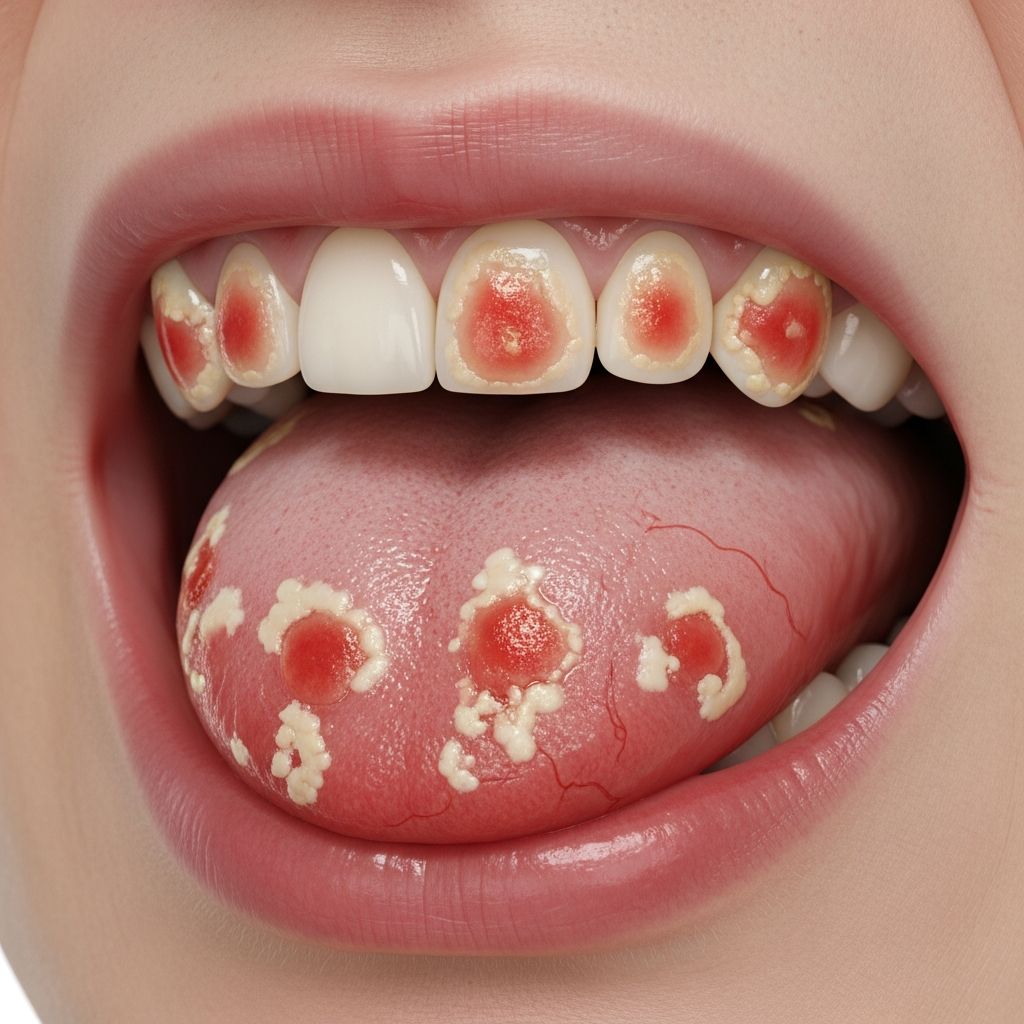
Oral psoriasis, also known as intraoral psoriasis, is a rare manifestation of psoriasis involving the mucous membranes inside the mouth. It affects approximately 1-3% of psoriasis patients worldwide and typically occurs alongside cutaneous forms like pustular or generalised pustular psoriasis.
What is oral psoriasis?
**Oral psoriasis** refers to psoriatic lesions affecting the oral mucosa, including the lips, buccal mucosa, tongue, gingiva, and palate. Unlike common plaque psoriasis on the skin, oral lesions lack thick scales due to the moist environment but present as white plaques, red patches, or erosions. This condition is uncommon, with prevalence estimates under 2% in psoriasis populations, often linked to severe systemic psoriasis variants.
Psoriasis is a chronic T-cell mediated inflammatory disorder driven by genetic and environmental factors, leading to accelerated keratinocyte proliferation. In the oral cavity, the epithelium turns over every 14-21 days, causing lesions to resolve faster than skin plaques.
Who gets oral psoriasis?
Oral psoriasis predominantly affects adults with pre-existing psoriasis, particularly those with
pustular psoriasis
orgeneralised pustular psoriasis (GPP)
. It is rare in children and isolated cases without skin involvement are exceptional.- Prevalence: 0.04-1.6% of all psoriasis cases.
- Risk factors: Severe psoriasis subtypes, HLA-Cw6 positivity, female gender in some cohorts.
- Associations: Often coincides with flares of erythrodermic or pustular psoriasis.
What causes oral psoriasis?
The exact aetiology mirrors cutaneous psoriasis: interplay of genetic predisposition (e.g., PSORS1 locus), immune dysregulation with IL-17/IL-23 axis overactivity, and triggers like stress, infections (Streptococcus), smoking cessation, or medications (lithium, beta-blockers). Oral trauma (Koebner phenomenon) or smoking may exacerbate mucosal involvement.
Histologically, oral lesions show
acanthosis
, elongated rete ridges, parakeratosis, and Munro microabscesses with neutrophilic infiltrates, akin to skin psoriasis but with fewer scales.What are the clinical features of oral psoriasis?
Oral psoriatic lesions vary by site and psoriasis type but commonly include:
- Gingivitis desquamativa: Bright red, peeling gums with white sloughing epithelium, resembling desquamative gingivitis.
- White plaques: Symmetrical, non-scrapable plaques on buccal mucosa, tongue, or palate, sometimes corrugated (‘corrugated tongue’).
- Erosions/ulcers: Shallow, painful ulcers on soft palate or tonsils during pustular flares.
- Pustules: Small sterile pustules on erythematous base in GPP-associated cases.
- Lip involvement: Crusted, fissured lips with scaling.
Symptoms: Burning sensation, sensitivity to spicy foods, halitosis, or discomfort during eating. Lesions may fluctuate with skin disease activity.
How is oral psoriasis diagnosed?
Diagnosis relies on clinical correlation with cutaneous psoriasis history. Key diagnostic features:
| Feature | Description |
|---|---|
| History | Established psoriasis, especially pustular type |
| Appearance | Symmetrical white/red plaques, gingival peeling |
| Site | Buccal mucosa, lateral tongue, attached gingiva |
| Biopsy (if needed) | Psoriasiform hyperplasia, microabscesses |
Incisional biopsy confirms with regular acanthosis, neutrophilic infiltrates, and absent viral inclusions.
What are the complications of oral psoriasis?
Complications are infrequent due to rapid mucosal turnover but include:
- Secondary bacterial/fungal infections from erosions.
- Nutritional deficits from painful eating.
- Dental issues: Periodontal disease mimicry.
- Psychosocial impact from chronic discomfort.
What is the differential diagnosis for oral psoriasis?
Oral psoriasis mimics several conditions:
Related Stories



- Lichen planus: Wickham striae, painful lacy plaques.
- Pemphigus vulgaris: Flaccid bullae, Nikolsky-positive.
- Mucous membrane pemphigoid: Desquamative gingivitis, scarring.
- Candidiasis: Scrapable white plaques.
- Syphilis: Painless chancre (secondary).
- Geographic tongue: Benign migratory glossitis.
- Leukoplakia/erythroplakia: Premalignant white/red patches.
Assessment and investigations for oral psoriasis
- Full psoriasis history and skin exam.
- Vital signs, BSA/PASI scoring if systemic.
- Swabs for infection (Candida, HSV).
- Biopsy with immunofluorescence for vesicles.
- Bloods: FBC, LFTs, CRP if severe.
Treatment of oral psoriasis
Oral lesions often self-resolve within 2-3 weeks due to rapid epithelial turnover. Treat underlying cutaneous psoriasis primarily.
Topical treatments
- Corticosteroids: Clobetasol ointment or triamcinolone gel for plaques/erosions.
- Antiseptic rinses: Chlorhexidine 0.12% to prevent infection.
- Calcineurin inhibitors: Tacrolimus 0.1% ointment (off-label).
- Acitretin: Low-dose oral retinoid for refractory cases.
Systemic treatments
For associated severe psoriasis:
- Methotrexate: 7.5-25mg weekly, first-line for plaque psoriasis.
- Cyclosporine: Short-term for acute flares.
- Biologics: IL-17/IL-23 inhibitors (secukinumab, ixekizumab) effective systemically.
- Apremilast: Oral PDE4 inhibitor for moderate psoriasis.
- Roflumilast: Emerging oral PDE4 inhibitor showing PASI75 in 67% at 24 weeks.
Avoid irritants: Spicy/acidic foods, alcohol-based mouthwashes, tobacco.
What is the outcome for oral psoriasis?
Prognosis is excellent; most lesions resolve spontaneously or with skin treatment. Recurrence parallels cutaneous flares. Monitor for malignant transformation in persistent white plaques (rare).
Frequently Asked Questions
Is oral psoriasis contagious?
No, oral psoriasis is an autoimmune condition, not infectious.
Can oral psoriasis occur without skin psoriasis?
Extremely rare; nearly all cases have concurrent skin involvement.
Does smoking affect oral psoriasis?
Smoking may suppress psoriasis but cessation can trigger flares.
How long do oral psoriasis lesions last?
Typically 2-3 weeks due to fast mucosal turnover.
Are biologics safe for oral psoriasis?
Yes, they treat systemic disease effectively; consult dermatologist.
References
- Oral Psoriasis: Symptoms, Pictures, Causes, and Treatment — Healthline. 2023. https://www.healthline.com/health/psoriasis/oral-psoriasissymptoms-and-picture
- Oral Roflumilast Shows Promise for Moderate to Severe Psoriasis — American Journal of Managed Care (AJMC). 2024-04-01. https://www.ajmc.com/view/oral-roflumilast-shows-promise-for-moderate-to-severe-psoriasis
- Apremilast — DermNet NZ. 2023. https://dermnetnz.org/topics/apremilast
- Oral Psoriasis: Symptoms, Diagnosis, Pictures and Treatment — Health Central. 2023. https://www.healthcentral.com/condition/psoriasis/oral-psoriasis
- Oral Psoriasis — DermNet NZ. 2024. https://dermnetnz.org/topics/oral-psoriasis
- Guidelines for the Management of Psoriasis — DermNet NZ. 2024. https://dermnetnz.org/topics/guidelines-for-the-treatment-of-psoriasis
Similar Articles








Read full bio of Sneha Tete