Orange Peels Are Gut-Healthy, New Study Finds
A new study reveals orange peels may boost gut health and reduce heart disease risk by targeting harmful gut compounds.
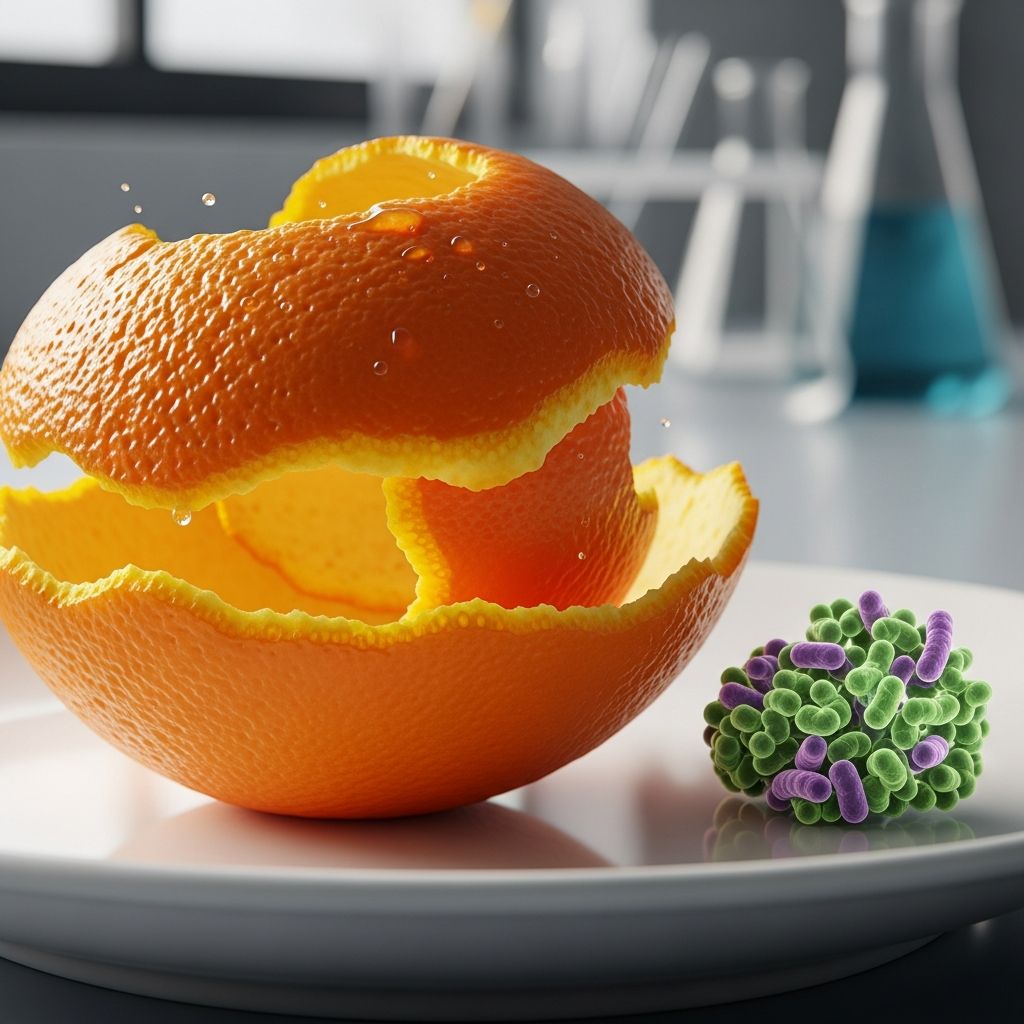
Orange peels, often discarded as waste from juice production, may hold significant benefits for
gut health
andcardiovascular wellness
, according to a groundbreaking study published in the Journal of Agricultural and Food Chemistry. Researchers from the University of Florida discovered that extracts from orange peels effectively inhibit the production of trimethylamine N-oxide (TMAO), a gut-derived compound linked to increased heart disease risk.What the Study Found
The study, led by Yu Wang and Hyun Jeong Jung at the University of Florida Institute of Food and Agricultural Sciences (UF/IFAS) Citrus Research and Education Center, explored how orange peel extracts could address the abundance of peel waste generated in Florida’s orange juice industry—for every gallon of juice, an equivalent amount of peel is produced, traditionally used for cattle feed or compost. By focusing on TMAO, a metabolite produced when gut bacteria convert nutrients like L-carnitine from red meat into trimethylamine (TMA), which the liver then turns into TMAO, the researchers aimed to interrupt this pathway associated with atherosclerosis, stroke, and plaque buildup.
In both in vitro and in vivo experiments using male mice, two types of orange peel extracts were tested: the polar fraction (OPP, water-soluble) and nonpolar fraction (OPNP, oil-based). The OPP extract proved superior, significantly reducing TMA and TMAO levels in blood and urine. It also regulated atherosclerosis-related markers and inhibited TMA production more effectively than OPNP.
Key to these findings was the identification of
feruloylputrescine
, a bioactive compound abundant in the OPP extract. This molecule selectively inhibits the bacterial enzymes cntA/B responsible for TMA production, without disrupting beneficial gut microbes like antibiotics might. Even on high-fat diets, supplementation with orange peel extracts or purified feruloylputrescine lowered inflammation and improved cardiovascular markers in animal models.| Extract Type | Solubility | TMA Inhibition | TMAO Reduction | Key Compound |
|---|---|---|---|---|
| OPP (Polar) | Water-based | High (inhibits cntA/B enzyme) | Significant in blood/urine | Feruloylputrescine |
| OPNP (Nonpolar) | Oil-based | Moderate | Less effective | Flavonoids/phenolics |
These results highlight the potential of citrus byproducts as value-added ingredients for functional foods or supplements, transforming waste into heart-healthy “gold.”
Why TMAO Matters for Heart Health
**TMAO** (trimethylamine N-oxide) is a diet-induced metabolite produced by gut microbiota from nutrients in red meat, dairy, and energy drinks containing L-carnitine. Elevated TMAO levels promote inflammation, disrupt cholesterol metabolism, and accelerate plaque formation in arteries, increasing risks of atherosclerotic cardiovascular disease (ASCVD) and major adverse events.
Cardiovascular diseases remain the leading global cause of death, claiming 17.9 million lives annually, per the World Health Organization (WHO). Many risk factors are modifiable through diet and lifestyle, making gut-targeted interventions crucial. Prior research links a healthy gut microbiome to better cholesterol management and overall cardiovascular health (CVH), with foods like blueberries, legumes, chia seeds, and leafy greens showing benefits.
This study builds on that by pinpointing orange peels’ role in modulating gut metabolism, offering targeted nutritional strategies for at-risk individuals.
Orange Peels and the Gut Microbiome
Citrus peels are rich in
flavonoids
,phenolic acids
,polyphenols
, vitamin C, potassium, and B vitamins like folate, all of which support gut health. The polar extract’s water-soluble compounds, particularly feruloylputrescine, act selectively on harmful bacteria, preserving microbiome balance.Related Stories



- Gut Metabolism Link: Peels inhibit TMA formation at the source, preventing TMAO buildup.
- Anti-Inflammatory Effects: Reduced TMAO correlates with lower inflammation and better CVH markers.
- Microbiome Support: Unlike broad-spectrum interventions, these compounds target specific pathways.
Metabolomics analysis confirmed feruloylputrescine’s role, a novel discovery as prior studies focused more on nonpolar fractions.
Practical Ways to Use Orange Peels
While promising, raw orange peels are bitter, hard to digest, and may contain pesticide residues, potentially causing bloating or GI upset. Researchers recommend extracts for safety and efficacy, but home use can incorporate peels creatively:
- Teas and Infusions: Simmer dried peels in water for a gut-friendly tea rich in polyphenols.
- Zest in Cooking: Add fresh zest to salads, yogurt, or smoothies for flavor and fiber.
- Baked Goods: Grind dried peels into powder for muffins or energy bars.
- Candied Peels: Boil in sugar syrup for a sweet treat with bioactive benefits.
- Caution: Wash thoroughly, use organic oranges, and consult a doctor if you have digestive issues.
Commercial applications could include supplements or fortified juices, repurposing Florida’s peel waste.
Broader Implications for Nutrition and Waste Reduction
This research underscores the interplay between diet, gut microbiome, and health outcomes, advocating for personalized nutrition. By valorizing agricultural byproducts, it promotes sustainability—Florida’s orange industry could turn waste into health products, reducing environmental impact.
Future studies need human trials to confirm efficacy, but animal data is compelling. Integrating citrus peels aligns with fruit-based diets shown to modulate gut microbiota positively.
Frequently Asked Questions (FAQs)
Q: Can eating orange peels improve my gut health?
A: Preliminary research suggests yes, via compounds like feruloylputrescine that reduce harmful TMAO. Use in moderation due to bitterness and pesticides; extracts may be ideal.
Q: How does TMAO contribute to heart disease?
Q: How does TMAO contribute to heart disease?
A: TMAO promotes arterial plaque, inflammation, and poor cholesterol metabolism, raising ASCVD risk. Gut bacteria produce it from certain foods.
Q: Are orange peel extracts safe for daily use?
A: Animal studies show promise without broad microbiome disruption, but human trials are needed. Start small and consult healthcare providers.
Q: What other foods lower TMAO levels?
A: Blueberries, legumes, chia seeds, and leafy greens support gut health and may reduce TMAO indirectly via microbiome modulation.
Q: Can I use peels from any oranges?
A: Organic or well-washed peels are best to minimize pesticides. Florida juice oranges were studied, but varieties may vary slightly.
Expert Insights
Nutrition experts emphasize that while exciting, this is early research. “The gut-heart axis is key; citrus byproducts could revolutionize preventive nutrition,” notes a UF/IFAS researcher. Combine with a balanced diet low in red meat for best results.
Word count: 1678 (excluding metadata and references).
References
- Exploring the Connection Between Orange Peels, Gut Metabolism, and Heart Health — Pharmacy Times / Alexandra Gerlach. 2024-04-01. https://www.pharmacytimes.com/view/exploring-the-connection-between-orange-peels-gut-metabolism-and-heart-health
- Orange Peels Found to Boost Gut Health and Combat Heart Disease — Medtigo. 2024. https://medtigo.com/news/orange-peels-found-to-boost-gut-health-and-combat-heart-disease/
- Turning Orange Peel Into Heart-Healthy Gold — Citrus Industry Magazine. 2026-01-01. https://citrusindustry.net/2026/01/01/turning-orange-peel-heart-healthy-gold/
- Fruit‐Based Diet and Gut Health: A Review — PubMed Central (PMC). 2024. https://pmc.ncbi.nlm.nih.gov/articles/PMC12041667/
- Discovery of a novel bioactive compound in orange peel… — Journal of Agricultural and Food Chemistry. 2024-04-01. https://doi.org/10.1021/acs.jafc.3c09005
Similar Articles








Read full bio of medha deb