Orbital Fractures: A Comprehensive Guide To Diagnosis And Care
Comprehensive guide to recognizing, diagnosing, and managing eye socket fractures for optimal recovery and vision preservation.
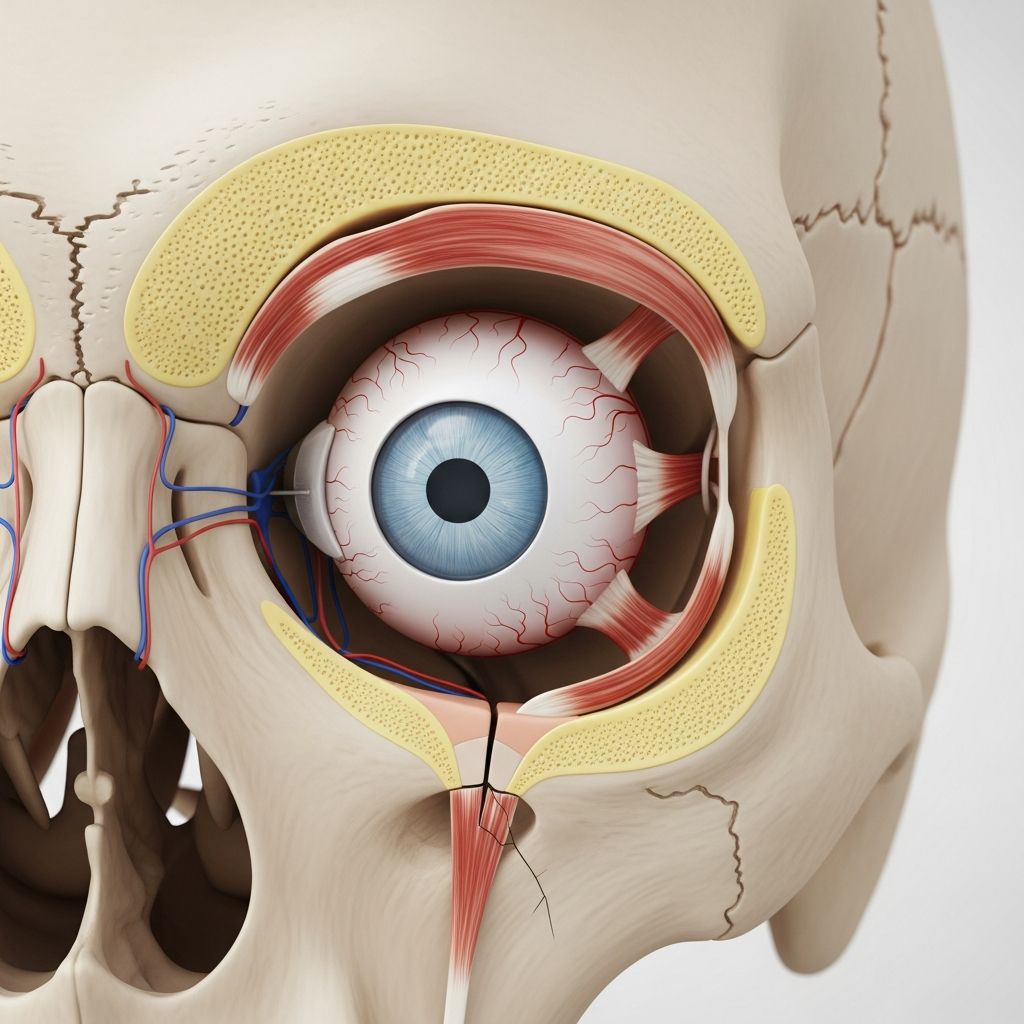
Orbital fractures involve breaks in the bones surrounding the eye socket, often resulting from facial trauma. These injuries require prompt evaluation to prevent complications affecting vision and eye movement.
Understanding the Eye Socket Anatomy
The orbit, or eye socket, consists of seven bones forming a protective cavity for the eyeball, muscles, nerves, and fat. The floor and medial wall are particularly thin, making them prone to fractures from even moderate force.
Key components include:
- Orbital floor: Frequently fractured, potentially trapping eye muscles.
- Medial wall: Thin structure separating the orbit from sinuses.
- Lateral and roof walls: Thicker but can fracture in severe impacts.
When fractured, these bones can displace tissues, leading to functional and cosmetic issues.
Primary Causes of Orbital Fractures
Most orbital fractures stem from blunt trauma to the face. Common scenarios encompass:
- Assaults or punches to the eye area.
- Sports mishaps, such as impacts from balls or collisions.
- Motor vehicle accidents causing dashboard or steering wheel strikes.
- Falls, particularly in older adults or from heights.
Children may experience these from playground accidents or blows during play.
Recognizing Key Symptoms
Symptoms vary by fracture location and severity but often appear immediately after injury. Initial signs include intense pain and rapid swelling, masking other issues.
| Symptom | Description | Potential Cause |
|---|---|---|
| Swelling and bruising | Puffy eyelids, black eye appearance | Tissue trauma and bleeding |
| Double vision (diplopia) | Images misaligned, worse in certain gazes | Muscle entrapment or swelling |
| Numbness | In cheek, upper lip, or forehead | Nerve compression (infraorbital) |
| Restricted eye movement | Limited up/down or side motion | Tissue trapped in fracture |
| Eye position changes | Sunken (enophthalmos) or bulging eye | Volume alteration in orbit |
Additional signs: nosebleeds, crunchy swelling from trapped sinus air, or flattened cheek.
Immediate Risks and Complications
Untreated fractures risk persistent problems. Muscle entrapment causes ongoing diplopia, while large defects lead to a sunken eye appearance over time.
Serious concerns:
- Vision loss from optic nerve pressure or retinal issues.
- Infection if sinuses communicate with orbit.
- Eyelid malposition causing dryness or exposure.
- Chronic numbness or pain.
In rare cases, brain involvement occurs with high-impact trauma.
Diagnostic Evaluation Process
Diagnosis begins with a detailed history of the injury mechanism and symptom onset. Physical exam assesses:
- Visual acuity and pupil response.
- Eye motility in all directions.
- Facial sensation and alignment symmetry.
- Palpation for step-offs or crepitus (air under skin).
CT scans are the gold standard, providing 3D views of bone defects, tissue entrapment, and associated injuries like hemorrhage.
MRI may supplement if soft tissue detail is needed, though less common acutely.
Non-Surgical Management Approaches
Many fractures heal without intervention if stable and without entrapment. Conservative care includes:
- Ice application: 20 minutes on/off to reduce swelling.
- Head elevation: Sleeping propped up to minimize fluid buildup.
- Pain control: Acetaminophen; avoid blood thinners like aspirin.
- Eye protection: Shield from further injury; no nose blowing to prevent air tracking.
- Antibiotics: Prophylactic if sinus involvement suspected.
Follow-up monitors resolution over 1-2 weeks.
Surgical Interventions Explained
Surgery is indicated for:
Related Stories



- Persistent diplopia from entrapment.
- Defects >50% of floor/medial wall.
- Enophthalmos >2mm or worsening asymmetry.
Procedures, often under general anesthesia:
- Fracture reduction and fixation with titanium plates.
- Implant placement (synthetic or autologous) to restore volume.
- Lysis of entrapped tissues.
Timing: Urgent for entrapment; 7-14 days for others to allow swelling subsidence.
Recovery Milestones and Expectations
Healing timelines vary:
- Week 1-2: Swelling/bruising fades; sensation may improve.
- Week 2-4: Eye movement normalizes if no surgery needed.
- Month 1-3: Bone healing; subtle position changes resolve.
- 6 months: Full symmetry and function for most.
Post-op: Nasal packing avoided; sinus precautions; vision rehab if needed.
Preventive Strategies for At-Risk Groups
Athletes should use protective eyewear in contact sports. Drivers benefit from seatbelts and airbags. Elderly individuals can improve home safety to prevent falls.
Frequently Asked Questions
Will all orbital fractures require surgery?
No, only those with entrapment, large defects, or functional deficits. Many heal conservatively.
How long does double vision last?
If from swelling, days to weeks; entrapment needs prompt surgery for resolution.
Can children have orbital fractures?
Yes, though their flexible bones may ‘greenstick’ fracture. Symptoms mirror adults.
Is numbness permanent?
Often temporary, resolving in weeks to months as nerves recover.
When can I resume sports?
After specialist clearance, typically 4-6 weeks, with protective gear.
Long-Term Outlook and Monitoring
Most patients regain normal vision and appearance. Annual check-ups advised for high-risk cases to monitor late enophthalmos or diplopia.
Expand on anatomy: The orbit’s pyramid shape funnels forces strategically, but thin floors crack like eggshells under pressure. In detail, the maxillary bone forms much of the floor, adjacent to maxillary sinus—hence emphysema risk.
Symptom deep dive: Diplopia patterns reveal issues—vertical restriction suggests floor entrapment, horizontal medial wall. Numbness follows V2 trigeminal branch path.
Diagnosis nuances: CT multiplanar reformats quantify defect size; volume analysis predicts enophthalmos. Exam forces gaze to unmask subtle restrictions.
Conservative care evidence: Studies show small (<1cm) non-trapping fractures resolve 90% without surgery.
Surgery techniques: Endoscopic approaches minimize incisions for medial walls. Materials: Porous polyethylene implants favor tissue ingrowth.
Recovery factors: Smoking delays healing; nutrition aids bone repair. Vision therapy post-op accelerates motility.
Complications rarity: Infection <2%, implant extrusion <1% with proper technique.
References
- Orbital Fracture: Symptoms, Treatment & Recovery — A. Rabinovich, Eye Plastics NY. 2023. https://eyeplasticsny.com/orbital-fracture-symptoms-treatment-recovery/
- Signs and Symptoms of Orbital Fractures — Dr. D. Daneshrad, Leading ENT in Torrance. 2023. https://www.drdaneshrad.com/articles/signs-and-symptoms-of-orbital-fractures
- Orbital Fractures — University Hospitals Sussex NHS Foundation Trust (.gov equivalent NHS). 2024. https://www.uhsussex.nhs.uk/resources/orbital-fractures-2/
- Orbital Fractures Fact Sheet — ACI Health NSW (.gov). 2023. https://aci.health.nsw.gov.au/networks/eci/clinical/ed-factsheets/orbital-fractures
- Orbital Fractures: Causes, Symptoms & Treatment — Cleveland Clinic (.edu equivalent non-profit academic). 2024. https://my.clevelandclinic.org/health/diseases/25075-orbital-fractures
Similar Articles








Read full bio of Sneha Tete