Orf Infection: 5 Key Prevention & Treatment Strategies
Zoonotic viral skin infection from sheep and goats: symptoms, diagnosis, treatment, and prevention strategies.
Orf, also known as ecthyma contagiosum or contagious pustular dermatitis, is a zoonotic viral skin infection caused by the orf virus, a member of the Parapoxvirus genus in the Poxviridae family. This double-stranded DNA virus primarily infects young sheep and goats but readily transmits to humans through direct contact, particularly in occupational settings like farming, butchering, or veterinary work. The infection manifests as characteristic skin lesions on the hands, fingers, or forearms, progressing through distinct stages over 4-6 weeks, typically resolving without scarring in immunocompetent individuals. Human cases are most common during lambing seasons when viral loads in affected animals peak around the mouth, nose, teats, and udders. Although self-limiting, orf can lead to complications in vulnerable populations, emphasizing the need for early recognition and preventive measures.
What is orf?
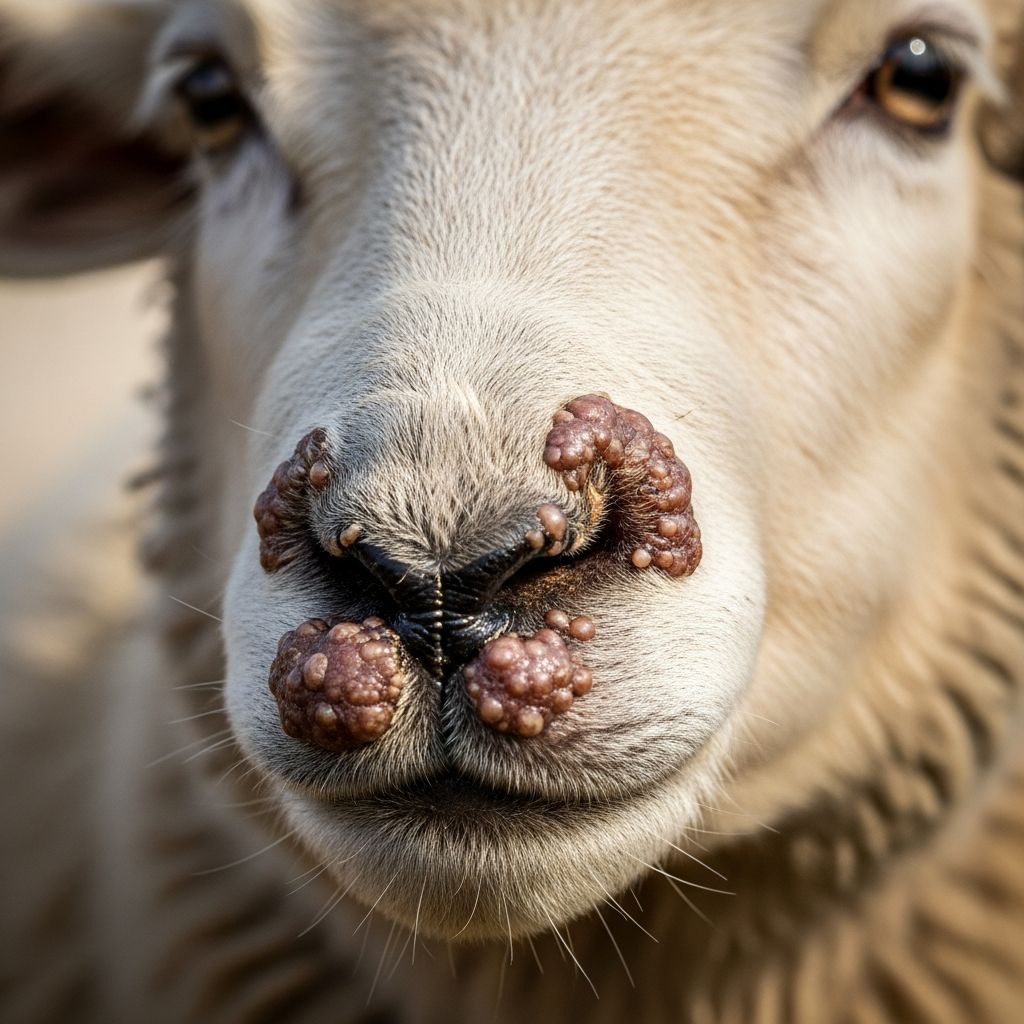
Orf is a highly contagious viral disease endemic to sheep and goat populations worldwide, with humans serving as accidental hosts. In animals, it causes scabby mouth or contagious pustular dermatitis, forming crusty lesions that impair feeding and nursing, leading to weight loss in young lambs and kids. The virus persists in pastures, fences, and sheds, facilitating outbreaks in herds. Human transmission occurs via inoculation of virus-laden material into minor skin abrasions during handling of infected animals or fomites. Unlike true poxviruses like smallpox, parapoxviruses like orf are cylindrical and replicate in the host cell cytoplasm, producing distinctive electron microscopy appearances. Globally, orf is underreported but prevalent in rural communities with livestock contact; incidence peaks in spring lambing periods. Person-to-person spread is exceedingly rare, underscoring its zoonotic nature.
Who gets orf?
Individuals at highest risk include sheep and goat farmers, shepherds, meat processors, veterinarians, and butchers—occupations involving close animal contact. Children and religious practitioners handling sacrificial animals during festivals also report cases. Immunocompromised persons (e.g., HIV/AIDS, transplant recipients) face elevated risks of severe, prolonged, or giant orf lesions mimicking malignancies. Transmission requires skin trauma, such as cuts or abrasions, explaining predominance on dorsal hands and fingers (>90% of cases). Travelers to endemic regions or those visiting petting zoos may acquire it sporadically. No significant gender bias exists, though males predominate due to occupational exposure. Seasonal surges align with lambing/kidding seasons in temperate climates.
What causes orf?
The causative agent is the orf virus (Orf virus), a member of the Parapoxvirus genus. This enveloped, brick-shaped (cylindrical) double-stranded DNA virus measures 260 nm x 160 nm and evades immunity via host protein mimics. Natural reservoirs are sheep and goats, where it induces epithelial hyperplasia and vesicle formation. Zoonotic jump occurs through saliva, scabs, or vesicular fluid contacting abraded human skin. Fomites like feeders or gloves perpetuate transmission. The virus exhibits six replicative stages in lesions: maculopapular, target, acute, regenerative, papillomatous, and regressive. Persistence in the environment for weeks enhances infectivity. Unlike bovine papular stomatitis or milker’s nodules (related parapoxviruses), orf specifically targets ovine/caprine hosts.
What are the clinical features of orf?
After an incubation of 3-14 days (typically 5-7), lesions emerge at inoculation sites.
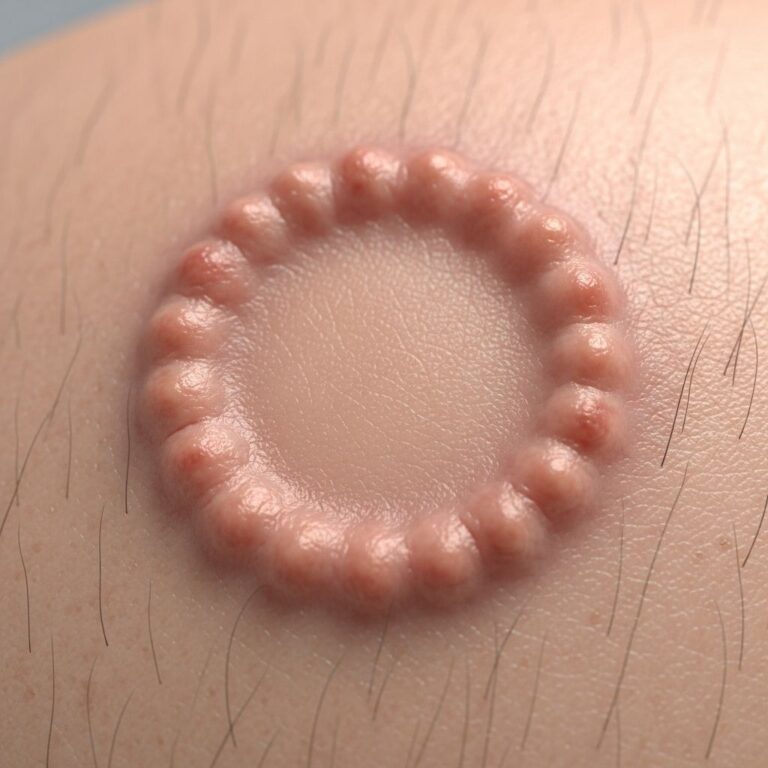
- Initial papule: Firm, red or violaceous, 0.5-1 cm, pruritic or irritable.
- Evolves to target lesion: 2-3 cm nodule with central grey crust, erythematous halo, and necrotic core (1-2 weeks).
- Weeping/acute phase: Blister or pustule exudes serosanguinous fluid; incision reveals firm tissue, not pus.
- Regenerative/papilloma phase: Thick black crust forms; lesion papillomatous, friable.
- Regression: Spontaneous involution over 4-6 weeks, no scarring.
Lesions are solitary or few (1-5), rarely giant (>5 cm in immunocompromised). Systemic symptoms: mild fever, malaise, regional lymphadenopathy, lymphangitis (10-20%). Secondary erythema multiforme (target lesions on acral sites) arises 10-14 days post-infection.
Related Stories



Diagnosis of orf
Diagnosis is clinical in high-risk individuals with classic lesions and exposure history. Confirmation via:
- PCR: Swab/biopsy detects viral DNA (gold standard).
- Electron microscopy: Cylindrical virions.
- Histopathology: Epidermal hyperplasia, ballooning degeneration, lymphohistiocytic infiltrate; negative special stains.
- Viral culture: Rarely needed.
Differential: milker’s nodules, pyogenic granuloma, herpetic whitlow, anthrax, orf vs. bovine papular stomatitis. Biopsy avoids in uncomplicated cases.
Complications
Most resolve uneventfully, but risks include:
- Bacterial superinfection: Cellulitis, osteomyelitis (rare).
- Giant orf: Immunosuppressed; tumefactive, verrucous.
- Erythema multiforme/bullous pemphigoid-like: Autoimmune reactions.
- Lymphangitis/adenitis: Mild, self-resolves.
- Auto-inoculation: Eyelid, genital lesions.
- Scar: Rare, if excised prematurely.
Fatalities exceptional in profound immunosuppression.
Treatment of orf
Supportive; self-limits in 3-6 weeks.
| Management | Details |
|---|---|
| Cover lesion | Prevent spread; occlusive dressing |
| Antibiotics | For secondary infection (e.g., flucloxacillin) |
| Excision | Shave for large/painful lesions; avoid deep debridement |
| Topicals | Imiquimod (anecdotal); cidofovir (severe) |
| Pain | Analgesics; elevation |
Immunosuppressed: monitor closely; surgery last resort. No antivirals routinely.
Prevention of orf
- Wear gloves (nitrile/rubber) during animal handling.
- Hand hygiene: soap/antiseptic post-contact.
- Vaccinate livestock (live attenuated).
- Avoid lesion handling; isolate infected animals.
- Educate workers on risks.
Related topics
- Milker’s nodules
- Parapoxviruses
- Zoonoses
- Erythema multiforme
Frequently asked questions
Q: Is orf contagious between humans?
A: No, person-to-person transmission is virtually nonexistent.
Q: How long does orf last?
A: 4-6 weeks; faster with care.
Q: Can orf scar?
A: Rarely, unless complicated or excised.
Q: Is treatment needed?
A: Supportive only; resolves spontaneously.
Q: Prevention tips?
A: Gloves, hygiene, animal vaccination.
References
- Orf and milkers’ nodules – Viral skin infections — DermNet NZ. 2024. https://dermnetnz.org/cme/viral-infections/orf-and-milkers-nodules
- Orf Viral Infection – StatPearls — NCBI Bookshelf. 2023-10-01. https://www.ncbi.nlm.nih.gov/books/NBK562191/
- Orf – DermNet — DermNet NZ. 2024. https://dermnetnz.org/topics/orf
- Orf on the Farm – EHS Guideline — University of Wisconsin EHS. 2020-08. https://ehs.wisc.edu/wp-content/uploads/sites/1408/2020/08/EHS-ARS-GUI-032-V01.pdf
Similar Articles








Read full bio of medha deb