Orofacial Granulomatosis: Symptoms, Diagnosis & Treatment
Rare granulomatous condition causing persistent lip and facial swelling, often linked to Crohn's disease and allergies.
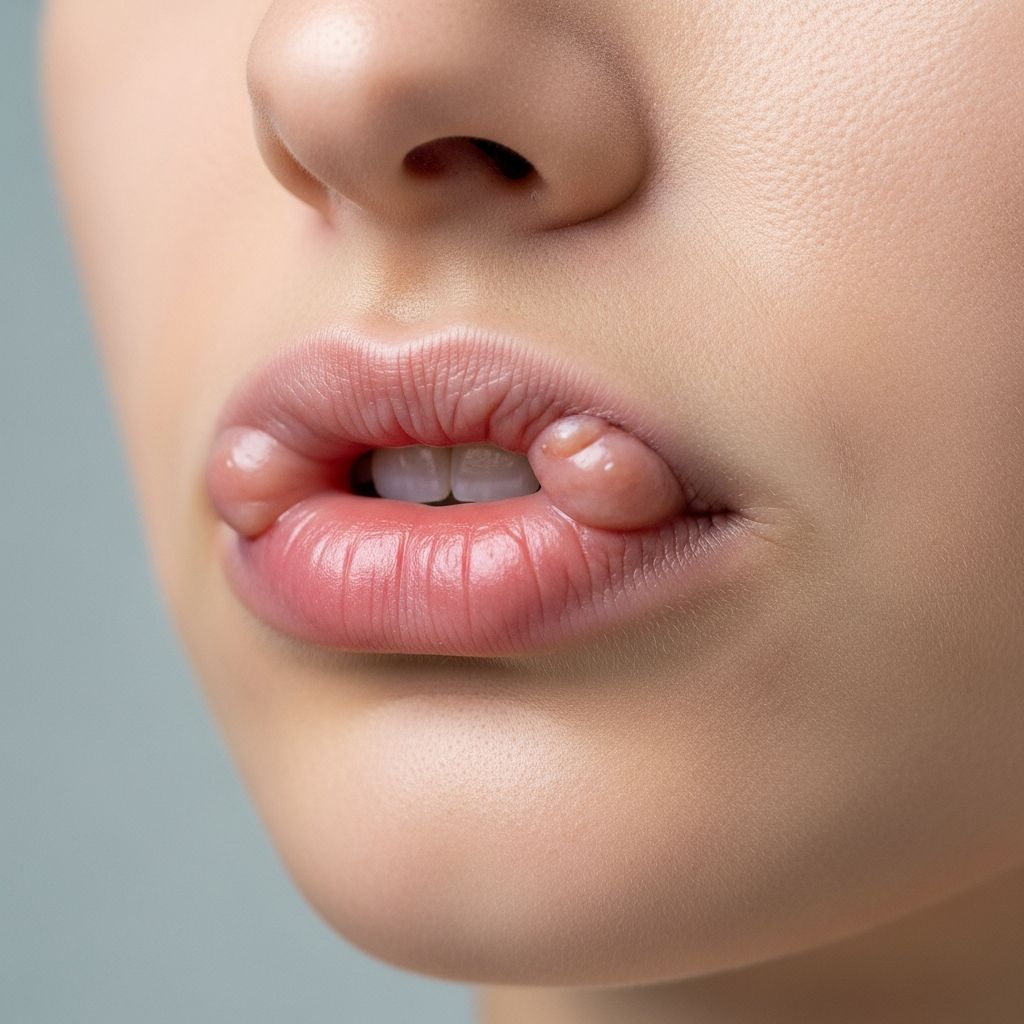
Orofacial granulomatosis (OFG) is a rare condition characterised by granulomatous inflammation affecting the orofacial tissues, leading to persistent swelling primarily of the lips but also the face, cheeks, and gums.
What is orofacial granulomatosis?
**Orofacial granulomatosis** describes the clinical presentation of granulomatous inflammation (ie, clusters of large macrophages) of soft tissues within and around the mouth (orofacial region). It is a rare disorder with a prevalence of approximately 0.08% in the general population, though higher rates have been reported in certain regions like Scotland.
The condition manifests as recurrent or persistent swelling due to non-caseating granulomas that obstruct lymphatic drainage, resulting in lymphoedema. OFG may occur in isolation or as part of systemic diseases such as Crohn’s disease or sarcoidosis. When idiopathic, it is termed idiopathic orofacial granulomatosis.
Who gets orofacial granulomatosis?
OFG typically affects young adults, with onset between 20-40 years, though paediatric cases are reported. There is no strong gender predilection, but some studies note a slight female predominance.
- Common in individuals with Crohn’s disease (up to 25% of OFG patients have intestinal involvement).
- Higher incidence in regions like the UK, particularly Scotland.
- May be triggered by allergies, infections, or genetic factors in susceptible individuals.
What causes orofacial granulomatosis?
The exact cause remains unknown, but several factors contribute:
- Hypersensitivity reactions: Delayed Th1-mediated immune responses to food additives (e.g., benzoates, cinnamon, food colourings) or metals.
- Inflammatory bowel disease association: 10-25% of cases link to Crohn’s disease, suggesting shared granulomatous pathology.
- Infections: Possible role of mycobacteria, yeast, or other microbes, though not consistently proven.
- Genetic predisposition: Familial cases and genetic mutations in innate immunity genes reported.
- Immune dysregulation: Elevated cytokines like IFN-γ, IL-12, TNF-α, and chemokines (RANTES, MIP-1α) indicate Th1 dominance.
Granulomas form in the lamina propria, often adjacent to lymphatic vessels, causing obstruction and persistent oedema.
What are the clinical features of orofacial granulomatosis?
The hallmark is painless, recurrent or persistent swelling of one or both lips (lower lip most common). Initial episodes are soft and transient (weeks to months), progressing to firm, rubbery permanent enlargement.
Symptoms and signs
- Lip swelling (cheilitis): Persistent, non-pitting oedema; may fissure or crack.
- Facial oedema: Cheeks, eyelids, or perioral area.
- Intraoral involvement: Gingival hyperplasia, mucosal tags, nodules, ulcers, cobblestoning.
- Extraoral: Erythema periorale, angular cheilitis.
- Associated features: Oral ulcers (painful with hot/spicy foods), gingival bleeding.
Symptoms worsen with triggers like certain foods; complications include secondary infection or functional impairment (e.g., speech, eating).
Variants
| Variant | Key Features |
|---|---|
| Miescher granulomatous cheilitis | Isolated, recurrent lip swelling without systemic features. |
| Melkersson-Rosenthal syndrome (MRS) | OFG triad: lip swelling + lingua plicata (fissured tongue) + facial palsy (unilateral). |
How is orofacial granulomatosis diagnosed?
Diagnosis is clinical but confirmed by histopathology. Exclusion of mimics (Crohn’s, sarcoid, infection) is essential.
- Clinical assessment: History of recurrent swelling, dietary triggers, GI symptoms.
- Biopsy: Full-thickness incisional biopsy shows non-caseating granulomas (naked/sarcoid-like), oedema, lymphatic dilation. Negative special stains rule out infection.
- Investigations:
- Patch testing for allergens.
- Gastroenterology referral: Colonoscopy/endoscopy if Crohn’s suspected.
- Serum ACE, chest X-ray for sarcoid.
- CBC, CRP, cultures if infection suspected.
Related Stories



Differential includes angioedema, Melkersson-Rosenthal, sarcoidosis, TB, leprosy, Wegener’s.
What is the treatment of orofacial granulomatosis?
No curative treatment exists; management targets symptoms, triggers, and inflammation. Spontaneous remission is rare; relapses common.
Conservative measures
- Dietary modification: Elimination of triggers (cinnamon, benzoates, chocolate, citrus, tomatoes). Cinnamon/benzoate-free diet effective in 30-50%.
- Hygiene: Alcohol-free antiseptic mouthwashes to prevent infection.
Medical therapy
Corticosteroids (first-line):
- Intralesional triamcinolone acetonide (40 mg/mL, 0.1-0.5 mL/site, 2-3 weekly) for localised swelling; highly effective, minimal systemic effects.
- Topical: High-potency creams/ointments, mouthwashes.
- Systemic: Short courses (prednisone 0.5-1 mg/kg) for severe flares; avoid long-term.
Other options:
- Antibiotics: Metronidazole, tetracycline, minocycline for anti-inflammatory effects.
- Immunomodulators: Topical/systemic tacrolimus, pimecrolimus.
- Systemic agents: Hydroxychloroquine, dapsone, sulfasalazine, methotrexate, azathioprine, clofazimine.
- Biologics: Anti-TNF (infliximab) for refractory cases.
Surgical
Cheiloplasty for severe cosmetic deformity after medical control; high recurrence risk.
What is the outcome for orofacial granulomatosis?
Chronic, relapsing course; many achieve remission with trigger avoidance and intralesional steroids. Crohn’s-associated cases may parallel bowel activity. Long-term monitoring for systemic disease essential. Cosmetic and psychological impact significant.
Frequently Asked Questions
Is orofacial granulomatosis the same as Crohn’s disease?
No, but up to 25% of OFG cases associate with Crohn’s; OFG may precede GI symptoms by years.
Can diet cure OFG?
Not a cure, but avoiding triggers like cinnamon/benzoates reduces flares in many.
Does OFG go away on its own?
Rarely; most persist chronically without intervention.
Is biopsy always needed?
Yes, to confirm granulomas and exclude infection/malignancy.
What if steroids don’t work?
Escalate to immunosuppressants or biologics; gastroenterology input if Crohn’s suspected.
References
- Idiopathic Orofacial Granulomatosis – A Diagnostic and Treatment Challenge — Al-Mubarak A, et al. J Clin Diagn Res. 2014-12-01. https://pmc.ncbi.nlm.nih.gov/articles/PMC4290344/
- Orofacial Granulomatosis: Symptoms, Causes, Treatment — Healthline. 2023 (updated). https://www.healthline.com/health/orofacial-granulomatosis
- Orofacial granulomatosis — DermNet NZ. 2024 (updated). https://dermnetnz.org/topics/orofacial-granulomatosis
- Orofacial granulomatosis — Brigham and Women’s Hospital. 2022 (updated). https://www.brighamandwomens.org/assets/BWH/surgery/oral-medicine-and-dentistry/pdfs/orofacial-granulomatosis-bwh.pdf
- What is orofacial granulomatosis? — The Gut Health Doctor. 2023. https://theguthealthdoctor.com/orofacial-granulomatosis
Similar Articles








Read full bio of medha deb