Orthotists and Prosthetists: Restoring Mobility and Function
Expert care professionals who design and fit prosthetic and orthotic devices to restore mobility, independence, and quality of life.
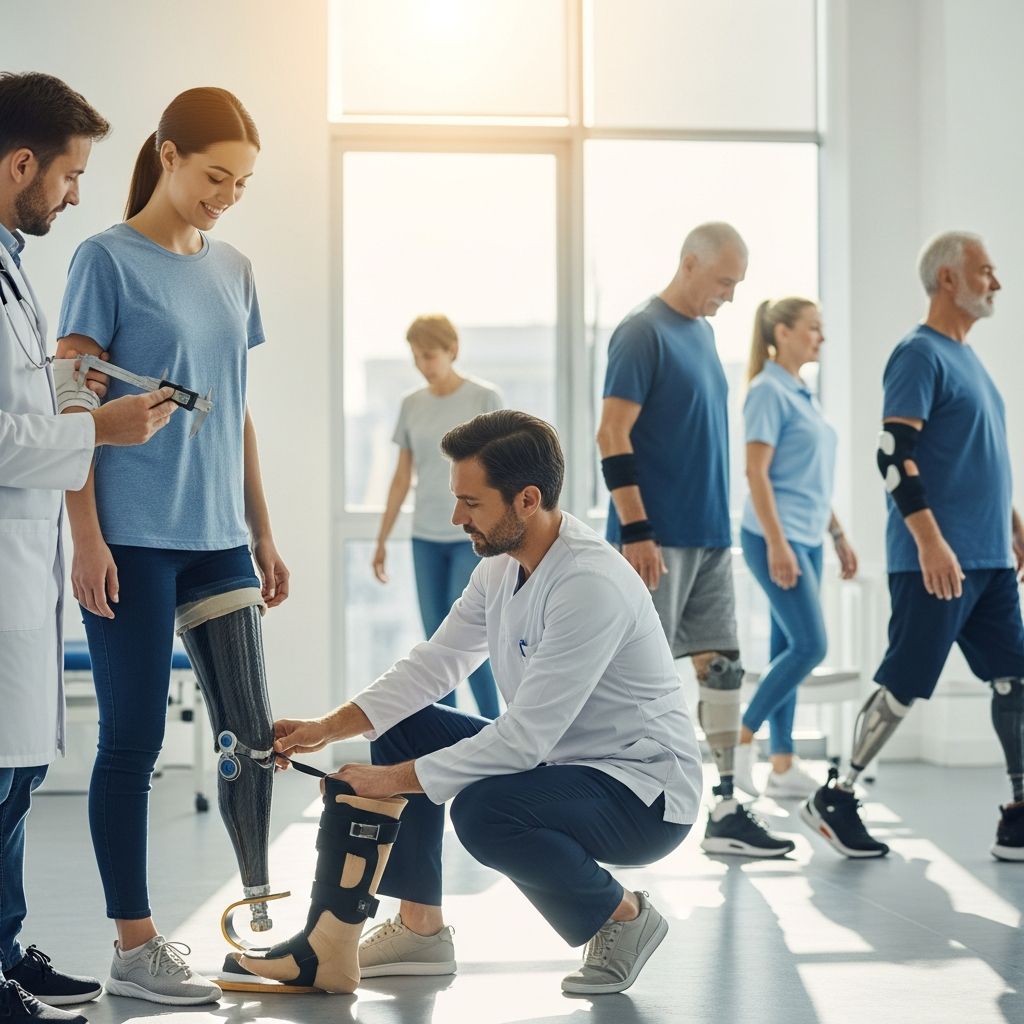
Understanding Orthotists and Prosthetists
Orthotists and prosthetists are highly trained allied healthcare professionals who specialize in designing, fabricating, fitting, and maintaining prosthetic and orthotic devices. These medical professionals work with patients who have lost limbs, sustained injuries, or have conditions affecting their musculoskeletal or neuromuscular systems. According to the International Society for Prosthetics and Orthotics (ISPO), these practitioners use evidence-based practice to provide clinical assessment, prescription, technical design, and fabrication of prosthetic and orthotic devices, enabling patients to participate fully in society with equal opportunities.
The field combines a unique blend of clinical expertise and technical skill, requiring practitioners to assess patients’ needs, design customized solutions, and provide ongoing care and support. Whether working in hospitals, rehabilitation centers, outpatient clinics, or clinical research facilities, orthotists and prosthetists play a vital role in restoring mobility and independence to individuals of all ages.
What is a Prosthetist?
A prosthetist is a healthcare professional who specializes in evaluating patients and designing, measuring, and fitting prostheses—devices that replace absent or deficient limb segments. Prosthetists work exclusively with exoskeletal prostheses, though their scope may include bone-anchored prostheses. Beyond artificial limbs, some prosthetists also provide mastectomy prostheses and restorations for other missing body parts.
The role of a prosthetist typically begins either before or after amputation surgery. In some cases, prosthetists provide pre-operative care for patients anticipating amputation, preparing them psychologically and physically for the procedure. More commonly, patients are referred to a prosthetist after amputation to begin prosthetic treatment and rehabilitation. Prosthetists provide long-term follow-up care and collaborate closely with surgeons, primary care physicians, physiotherapists, occupational therapists, and other members of the multidisciplinary healthcare team.
What is an Orthotist?
An orthotist is a healthcare professional who performs patient evaluations and designs, measures, and fits orthoses—supportive or corrective devices worn externally on the body. Unlike prostheses that replace missing limbs, orthoses are designed to achieve multiple therapeutic goals.
Goals of Orthotic Treatment
Orthotic devices are prescribed to accomplish one or more of the following objectives:
- Control biomechanical alignment of the body
- Correct or accommodate physical deformities
- Protect and support injuries
- Assist in rehabilitation processes
- Reduce pain and discomfort
- Increase mobility and range of motion
- Enhance independence in daily activities
Orthotists work with diverse devices including lower limb orthoses (braces for legs), upper limb orthoses (arm and hand devices), spinal orthoses (back supports), cranial remolding orthoses, protective helmets, and specialized shoes. Orthotic treatment can address both acute conditions requiring short-term support and chronic conditions requiring long-term management.
Conditions Treated by Prosthetists and Orthotists
Prosthetists and orthotists serve patients across all age groups, from infants to elderly individuals, treating a wide spectrum of medical conditions. Their expertise encompasses:
- Children born with congenital limb deficiency or cerebral palsy
- Individuals who have experienced amputation following accidents or trauma
- Patients with muscular weakness following stroke or spinal cord injury
- Patients at risk of contractures (muscle tightening) following burn injuries
- Individuals requiring stabilization following surgical procedures
- Patients managing diabetic foot ulcers and related complications
- Elderly patients who have lost limbs due to vascular disease
- Patients with various neuromuscular and musculoskeletal disorders
The versatility of these professionals enables them to address complex medical presentations, including persons with cerebral palsy, multiple amputations, and spinal cord injuries.
Related Stories



Daily Responsibilities and Work Activities
The daily duties of orthotists and prosthetists vary based on their specialty area and work environment, but typically include several key responsibilities.
Patient Assessment and Evaluation
Prosthetists and orthotists begin by conducting comprehensive patient interviews and assessments to identify unique needs, limitations, and functional goals. They work closely with patients to understand their medical history, lifestyle requirements, and treatment objectives.
Measurement and Casting
These professionals take precise measurements or impressions of patients’ body parts to ensure proper device fit and function. Accurate casting and measurement are essential for creating comfortable, effective prosthetic limbs and orthotic braces that address physiological function and health considerations.
Device Design and Fabrication
Based on physician prescriptions and patient-specific needs, prosthetists and orthotists design and fabricate custom devices. This may involve hand-crafting devices, supervising construction by medical appliance technicians, or selecting appropriate prefabricated components. The fabrication process includes material selection, prototype development, and evaluative wear testing to ensure optimal function and comfort.
Device Fitting and Adjustment
Once fabricated, devices must be carefully fitted to each patient. Prosthetists and orthotists perform structural evaluations, diagnostic fittings, and adjustments to ensure proper alignment, comfort, and function. They test all fabricated limbs and braces for stability and proper alignment, making modifications as necessary.
Patient Training and Education
An essential part of prosthetic and orthotic care involves educating patients on proper device use, maintenance, and care. Prosthetists and orthotists provide gait training for prosthetic users and functional training for both self-care and work-related activities, helping patients maximize their independence and confidence.
Maintenance and Repair Services
Ongoing maintenance and repair of prosthetic and orthotic devices is a regular responsibility. Prosthetists and orthotists service worn devices, make adjustments, and perform repairs to ensure devices continue functioning optimally throughout their lifespan.
Laboratory and Equipment Management
These professionals are responsible for routine setup, calibration, and sterilization of laboratory equipment and materials. They maintain organized workspaces and manage inventory of materials needed for device fabrication.
Comprehensive Treatment and Intervention Planning
Successful prosthetic and orthotic care requires a systematic approach. Following comprehensive assessment, prosthetists and orthotists formulate detailed treatment and intervention plans designed to alleviate limitations, improve function, and enhance overall quality of life.
Treatment Planning Process
The intervention process includes multiple phases:
- Preparatory care to prepare patients physically and mentally
- Material selection appropriate for patient needs and activities
- Fabrication of customized orthoses and prostheses
- Prototype development including evaluative wear periods
- Structural evaluation to ensure device integrity
- Diagnostic fitting to assess comfort and function
- Assessment of intervention outcomes
- Functional exercise and gait training
- Functional training for self-care and work activities
This comprehensive approach ensures that each patient receives individualized care tailored to their specific needs, abilities, and lifestyle demands.
Collaboration Within the Healthcare Team
Prosthetists and orthotists recognize that optimal patient outcomes require coordinated, multidisciplinary care. They work collaboratively with numerous healthcare professionals including surgeons, primary care physicians, physiotherapists, occupational therapists, nurses, caretakers, and other specialists. This team-based approach ensures that prosthetic and orthotic interventions integrate seamlessly with overall medical treatment plans and rehabilitation strategies.
Professional Knowledge and Skills
The field of prosthetics and orthotics has evolved significantly, expanding from a primarily technical focus to a more comprehensive approach within the rehabilitation team. Modern prosthetists and orthotists combine clinical competencies with technical expertise to provide optimal assistive products and services.
Professional responsibilities now encompass patient examination, evaluation, education, and treatment planning. Beyond custom device fabrication, contemporary practitioners also manage modular and prefabricated devices, soft goods, mobility aids, postural supports, wheelchairs, and other assistive products related to prosthetic and orthotic services.
Work Settings and Specializations
Prosthetists and orthotists work in diverse healthcare settings, allowing them to specialize in various patient populations and conditions. Common work environments include:
- Hospitals and acute care facilities
- Rehabilitation centers and long-term care facilities
- Outpatient clinics and private practices
- Clinical research facilities
- Sports medicine centers
Specialty areas within the profession include pediatrics (treating children), geriatrics (treating elderly patients), and sports medicine (treating athletes and active individuals). These specializations require additional expertise in age-specific or activity-specific considerations.
Professional Certification and Education
The field of orthotics and prosthetics is regulated through professional certification standards. The American Board for Certification in Orthotics, Prosthetics & Pedorthics (ABC) provides rigorous certification programs for practitioners. ABC-certified orthotists and prosthetists have demonstrated the education, training, and competency necessary to manage comprehensive patient care.
Professional education and certification ensure that practitioners maintain high standards of clinical practice, stay current with technological advances, and provide evidence-based care that optimizes patient outcomes and quality of life.
Impact on Patient Quality of Life
The ultimate goal of prosthetists and orthotists is to enhance quality of life and optimize function for patients with physical impairments. By providing well-designed, properly fitted devices, these professionals enable patients to:
- Restore mobility and independence in daily activities
- Reduce pain and physical discomfort
- Participate in work, recreation, and social activities
- Maintain psychological well-being and confidence
- Prevent secondary complications and injuries
- Achieve long-term functional goals and life aspirations
Frequently Asked Questions
Q: What is the difference between an orthotist and a prosthetist?
A: Orthotists design and fit orthoses (braces and supportive devices) for patients with musculoskeletal or neuromuscular conditions, while prosthetists design and fit prostheses (artificial limbs) for patients who have lost limbs or body parts. Both professions combine clinical and technical expertise, though they focus on different types of devices and patient needs.
Q: What conditions can be treated with orthotic devices?
A: Orthotic devices can treat numerous conditions including cerebral palsy, stroke-related weakness, spinal cord injuries, arthritis, sports injuries, diabetic foot problems, post-surgical stabilization, and various musculoskeletal deformities. Orthoses work by controlling alignment, supporting injured areas, reducing pain, and increasing mobility.
Q: How long does it take to get a prosthetic limb?
A: The timeline varies depending on the complexity of the case and the customization required. Typically, the process involves initial evaluation, measurement and casting, fabrication (which may include prototype testing), fitting appointments, and training—often spanning several weeks to a few months.
Q: Are prosthetic and orthotic devices covered by insurance?
A: Most insurance plans, including Medicare and Medicaid, cover prosthetic and orthotic devices when medically necessary and prescribed by a physician. Coverage varies based on specific policies, the type of device, and individual patient circumstances. Prosthetists and orthotists can assist with insurance documentation and authorization.
Q: How do I know if I need a prosthetic or orthotic device?
A: If you have experienced amputation, limb loss, or have a condition affecting mobility, strength, or alignment, consult your physician. Your doctor can evaluate your condition and refer you to a prosthetist or orthotist for specialized assessment and recommendations.
Q: What should I expect during my first appointment with a prosthetist or orthotist?
A: Your first appointment typically includes a comprehensive assessment of your medical history, functional goals, and lifestyle needs. The professional will examine you, discuss treatment options, explain the device fabrication process, and answer your questions. Measurements or impressions will be taken to begin custom device design.
References
- Role of Prosthetists and Orthotists in a Rehabilitation Team — Physio-pedia. 2024. https://www.physio-pedia.com/Role_of_Prosthetists_and_Orthotists_in_a_Rehabilitation_Team
- Orthotist and Prosthetist Job Description — Indeed Hire. 2025. https://www.indeed.com/hire/job-description/orthotist-prosthetist
- Our Profession – The Orthotic/Prosthetic Profession — National Commission on Orthotic and Prosthetic Education (NCOPE). 2024. https://ncope.org/index.php/home-page-v2/academic-programs/the-orthotic-prosthetic-profession/
- Orthotist and Prosthetist — EBSCO Research Starters. 2024. https://www.ebsco.com/research-starters/social-sciences-and-humanities/orthotist-and-prosthetist
- Orthotist & Prosthetist – Overview — American Board for Certification in Orthotics, Prosthetics & Pedorthics (ABC). 2024. https://www.abcop.org/individual-certification/get-certified/orthotist-prosthetist/overview
Similar Articles








Read full bio of medha deb