Ossicles: 3 Tiny Bones That Power Your Hearing
Understanding the smallest bones in your body and their role in hearing.
Understanding the Ossicles: The Smallest Bones in Your Body
The ossicles are three tiny bones located in your middle ear that play a critical role in the hearing process. These bones are among the smallest in the human body and work together as a chain to transmit sound vibrations from your eardrum to your inner ear. Understanding the anatomy and function of the ossicles is essential for comprehending how hearing works and recognizing conditions that may affect these delicate structures.
Your middle ear contains a complex system of bones, muscles, nerves, and blood vessels that work in harmony to convert sound waves into signals your brain can interpret. The ossicular chain represents the most efficient system for transmitting sounds from the outer ear to the inner ear, making it fundamental to normal hearing function. When the ossicles are healthy and properly positioned, they allow you to hear a wide range of sounds across different frequencies.
What Are the Ossicles?
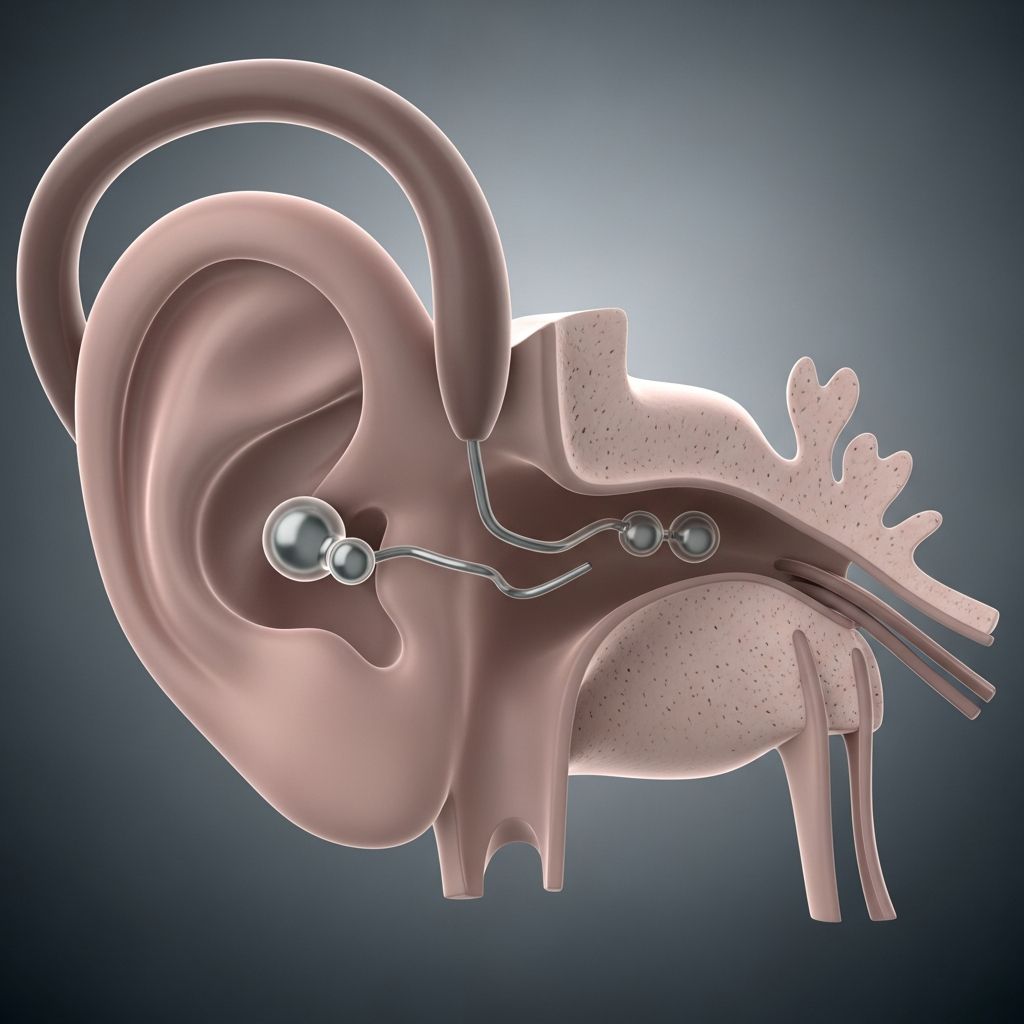
The ossicles are a chain of three interconnected bones suspended in your middle ear by ligaments and muscles. These bones bridge the gap between your tympanic membrane (eardrum) and the oval window, which is the entry point to your inner ear. The ossicular chain is held in position through a sophisticated system of attachments that allows the bones to vibrate freely while remaining stable.
The three bones that make up the ossicular chain are among the 206 to 213 bones in the human body, yet they are disproportionately important for hearing function. Despite their small size, each ossicle has a distinct shape, structure, and function that contributes to effective sound transmission.
The Three Ossicles: Anatomy and Structure
The Malleus (Hammer)
The malleus is the first bone in the ossicular chain, and it is the only ossicle that directly attaches to the tympanic membrane. The name “malleus” comes from its hammer-like shape, though it more closely resembles a club than a traditional hammer. This bone has several distinct anatomical features that are important for its function.
The malleus consists of a head, neck, short process, and handle. The handle of the malleus, also called the manubrium, attaches loosely to the tympanic membrane along the length of its lateral margin, with its tip reaching the umbo. The head of the malleus is the rounded superior portion that lies in the epitympanic recess and articulates with the incus. The malleus’ head connects to the incus and forms the incudomalleolar joint, which is a saddle joint that moves with sounds at minimum frequencies of 2 kHz.
The malleus plays a crucial role in initiating the sound transmission process by transferring vibrations from the eardrum to the rest of the ossicular chain.
The Incus (Anvil)
The incus is the second bone in the ossicular chain and serves as a connecting link between the malleus and the stapes. Despite its name, the incus looks more like a premolar tooth with uneven roots than an actual anvil. This bone is strategically positioned to receive vibrations from the malleus and transfer them to the stapes.
The incus has a body and two processes: a short process and a long process. The body of the incus articulates with the head of the malleus, forming the incudomalleolar joint. The short process extends posteriorly and attaches the incus to the posteromedial wall of the middle ear. The long process extends inferiorly and medially, terminating in a small ovoid process known as the lenticular process, which connects to the stapes and forms the incudostapedial joint.
Related Stories



The incudostapedial joint is a synovial joint with a meniscus, intraarticular fluids, and a capsule that provides typical characteristics of a viscoelastic joint, allowing for smooth transmission of vibrations.
The Stapes (Stirrup)
The stapes is the smallest of the three ossicles and is also the smallest bone in the entire human body. The stapes derives its name from its resemblance to a stirrup, and it is the final bone in the ossicular chain. This bone plays the critical role of transferring mechanical energy to the fluid-filled inner ear by connecting to the oval window.
The stapes consists of a head, neck, two crura (limbs), and a footplate. The head of the stapes articulates with the lenticular process of the incus. The footplate of the stapes fits into the oval window of the inner ear, creating a seal that allows vibrations to be transmitted to the fluid within the inner ear. The stapes is unique among the three ossicles because outer portions of its footplate are derived from mesoderm, whereas the rest of the bone develops from different tissue origins.
Supporting Structures of the Ossicular Chain
Ligaments and Suspension
The ossicular chain is held in its precise position by a sophisticated system of ligaments and tissue attachments. The malleus handle’s connections with the tympanic membrane, the stapes’ annular ligament, and various ligaments of the malleus and incus all work together to maintain the proper alignment and position of the ossicles. These ligaments leave the chain free to vibrate in response to sound waves while preventing excessive movement that could damage the delicate structures.
The ligamentous system is essential for maintaining the mechanical efficiency of sound transmission. Any damage to these ligaments through trauma, infection, or surgical intervention can compromise hearing function.
Muscles of the Middle Ear
The middle ear houses two muscles that are integrated with the bony ossicles and play important protective and regulatory roles in hearing. These muscles work reflexively to dampen excessive vibrations and protect the ear from loud and potentially damaging sounds.
The Tensor Tympani Muscle: This muscle attaches to the malleus at the handle and functions to dampen the tympanic membrane’s vibrations. When the tensor tympani contracts, it moves the malleus medially, tightening the tympanic membrane and protecting the ear from loud and damaging sounds. This contraction is part of the acoustic reflex, an involuntary response to intense sound stimulation.
The Stapedius Muscle: Located posterior to the tympanic membrane, the stapedius attaches to the stapes and moves the bone posteriorly when it contracts. This action restricts the stapes’ mobility and tilts the stapes’ base, reducing the oscillatory range of the bone. The stapedius muscle is innervated by the facial nerve and also participates in the acoustic reflex.
Development and Ossification of the Ossicles
The ossicles undergo endochondral ossification at different times during the fetal period, reflecting the complex developmental timeline of the middle ear. Understanding this developmental process is important for recognizing congenital abnormalities and understanding how the ear matures in utero.
The ossification timeline begins with the incus, which starts to ossify at 16 weeks of gestation. The malleus begins ossification at 16 to 17 weeks, and the stapes begins at 18 weeks. Ossification continues through the fetal period until the 26th week of gestation, when the ossicles are essentially fully formed. This means that by the time of birth, the ossicular chain is already structurally complete and capable of transmitting sound vibrations.
Function: How the Ossicles Work
The primary function of the ossicles is to amplify and transmit sound waves from your eardrum to your inner ear. When sound waves enter the ear canal and strike the tympanic membrane, the entire ossicular chain vibrates in response. This vibration is then transmitted through the oval window to the fluid-filled inner ear, where hair cells called stereocilia transform the mechanical vibrations into electrical signals that the brain can interpret as sound.
The ossicular chain is remarkably efficient at this task. The three-bone system acts as a mechanical amplifier, increasing the force of vibrations before they reach the inner ear. This amplification is crucial for hearing across a wide range of frequencies and intensities.
Anatomical Relationships and Nearby Structures
The ossicles exist within a complex anatomical environment that includes important nerves, blood vessels, and other structures. The chorda tympani nerve travels between the malleus and the incus, though it is not directly involved with the ossicles themselves. However, this nerve is often stretched and damaged during middle ear surgery and can be eroded by cholesteatoma along with the ossicles.
The tympanic branch of the glossopharyngeal nerve (nerve of Jacobson) provides sensory innervation to the middle ear and surrounding tissues. Understanding these anatomical relationships is crucial for surgeons performing middle ear procedures and for clinicians diagnosing conditions affecting the ossicles and nearby structures.
Physiologic Variants and Anatomical Variations
While the ossicular chain typically follows a consistent anatomical pattern, variations in the anatomy have been reported in the literature. The anatomical relationship between the malleus, incus, and stapes must be intact for normal sound conduction, and any deviation from normal anatomy may affect hearing function.
Among the three ossicles, the stapes is known to have the greatest variability and involvement in congenital abnormalities. Stapes variations may arise from shape diversity, ranging from circular to triangular and oval configurations. The stapes may also have developmental and structural variability, including aplasia (complete absence), hypoplasia (underdevelopment), thickening, thinning, and crural fusion.
The incus has the fewest anatomical variations among the three ossicles, making it the most consistently formed bone in the ossicular chain. Understanding these variations is important for diagnosing congenital hearing loss and planning surgical interventions.
Clinical Significance and Associated Conditions
Otosclerosis
Otosclerosis is a significant clinical condition characterized by abnormal bony growth that typically begins in the bony labyrinth and progresses toward the auditory ossicles, particularly the stapes, leading to conductive hearing loss. This condition affects bone remodeling in your middle ear, a normal lifelong process in which existing bone tissue replaces itself with new bone tissue.
In otosclerosis, the tiny bones inside the middle ear (the malleus, incus, and stapes) become hardened and stop vibrating properly. The pathologic process involves new bone formation and vascular proliferation around the ossicles. Hardening of the structures results in loss of their flexibility, preventing the stapes’ footplate from transmitting sound energy to the oval window. This leads to progressive hearing loss and may require surgical intervention to restore hearing function.
Cholesteatoma
Cholesteatoma is an abnormal growth of tissue in the middle ear that can erode the ossicles, including the malleus, incus, and stapes. This condition can damage the chorda tympani nerve and compromise the function of nearby structures. Damage to the ossicles through cholesteatoma may produce significant hearing problems and other symptoms if nearby structures are also involved.
Ossicular Injury and Surgery
Conditions such as otosclerosis, cholesteatoma, and facial nerve palsy may be associated with middle ear ossicular injury or surgery requiring ossicular reconstruction. Damage to the ossicles from any cause may produce hearing problems and other symptoms depending on which structures are affected and the extent of the damage.
The Role of Ossicles in Overall Hearing
The ossicles represent one of the most important components of the hearing system. These three tiny bones work in concert with your eardrum, middle ear muscles, and inner ear structures to convert sound waves into nerve signals your brain can interpret. Without properly functioning ossicles, sound cannot be effectively transmitted to the inner ear, resulting in conductive hearing loss.
The efficiency of the ossicular chain is remarkable. The three-bone system amplifies vibrations and matches the impedance between the air-filled outer ear and the fluid-filled inner ear. This impedance matching is crucial because sound waves lose energy when moving from air to fluid. The ossicular chain overcomes this problem by amplifying the vibrations before they reach the inner ear.
Frequently Asked Questions
Q: What are the three ossicles called?
A: The three ossicles are the malleus (hammer), incus (anvil), and stapes (stirrup). These names describe their approximate shapes and their arrangement in the middle ear.
Q: Why are the ossicles the smallest bones in the body?
A: The ossicles are the smallest bones in the body because they must fit within the middle ear cavity while maintaining the precision necessary for effective sound transmission. Their small size does not diminish their importance in hearing function.
Q: What happens if the ossicles are damaged?
A: If the ossicles are damaged through infection, trauma, or disease such as otosclerosis, sound cannot be effectively transmitted to the inner ear, resulting in conductive hearing loss. Depending on the extent of damage, hearing aids or ossicular reconstruction surgery may be necessary to restore hearing.
Q: How do the muscles attached to the ossicles help hearing?
A: The tensor tympani and stapedius muscles dampen excessive vibrations caused by loud sounds, protecting the inner ear from damage through the acoustic reflex. These muscles contract involuntarily in response to intense sound stimulation.
Q: Can ossicular problems be treated?
A: Yes, depending on the condition, ossicular problems can be treated through medications, hearing aids, or surgical procedures such as ossicular chain reconstruction or stapedectomy. The treatment approach depends on the specific condition and its severity.
Q: What is the most common ossicular problem?
A: Otosclerosis is one of the most common conditions affecting the ossicles, characterized by abnormal bone growth that typically affects the stapes and leads to progressive hearing loss. Congenital stapes fixation is another common problem affecting ossicular function.
Q: When do the ossicles fully develop?
A: The ossicles undergo ossification during fetal development, with ossification continuing until approximately the 26th week of gestation. By the time of birth, the ossicular chain is fully formed and capable of transmitting sound.
References
- Anatomy, Head and Neck, Ear Ossicles — National Center for Biotechnology Information (NCBI). 2024. https://www.ncbi.nlm.nih.gov/books/NBK570549/
- Axial Skeleton: What Bones it Makes Up — Cleveland Clinic. 2024. https://my.clevelandclinic.org/health/body/22344-axial-skeleton
- Human ear – Eardrum, Ossicles, Hearing — Britannica. 2024. https://www.britannica.com/science/ear/Tympanic-membrane-and-middle-ear
- Ear: Anatomy, Facts & Function — Cleveland Clinic. 2024. https://my.clevelandclinic.org/health/body/24048-ear
- Tympanic Membrane (Eardrum): Function & Anatomy — Cleveland Clinic. 2024. https://my.clevelandclinic.org/health/body/24642-tympanic-membrane-eardrum
Similar Articles








Read full bio of medha deb