Osteoarthritis Of The Ankle: Causes, Symptoms, Treatments
Understand ankle osteoarthritis: causes from injuries to wear, symptoms like pain and stiffness, and treatments from therapy to surgery.
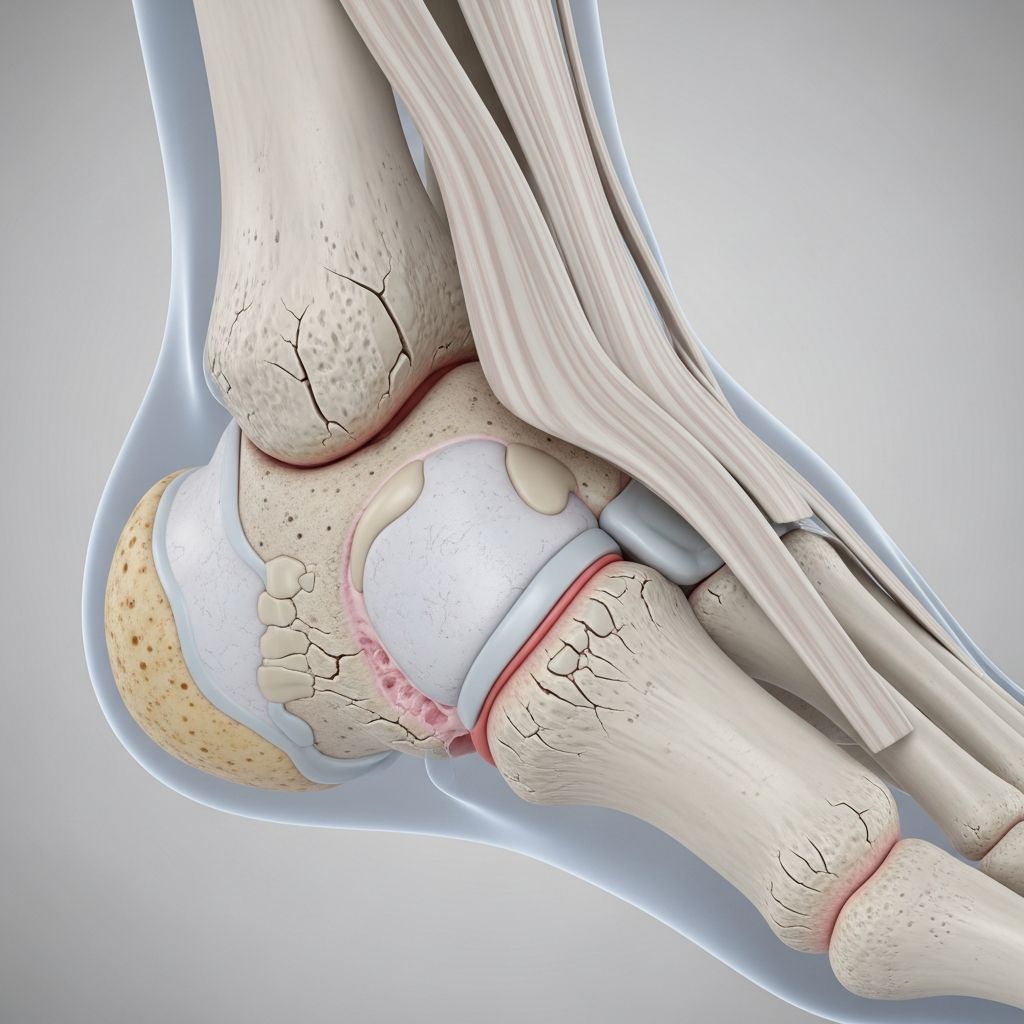
Osteoarthritis (OA) of the ankle is a degenerative joint disease characterized by the breakdown of cartilage in the ankle joint, leading to pain, stiffness, and reduced mobility. Unlike OA in weight-bearing joints like the knee or hip, ankle OA is predominantly post-traumatic, often resulting from injuries such as fractures or ligament tears rather than general aging.
What is Osteoarthritis of the Ankle?
Osteoarthritis of the ankle involves the progressive wear of articular cartilage in the tibiotalar joint, where the tibia meets the talus. This cartilage loss exposes underlying bone, causing friction, inflammation, and bone spur formation (osteophytes). The ankle’s shock-absorbing function diminishes, leading to joint deformity and instability over time. While primary OA from aging is rare in the ankle (less than 10% of cases), secondary OA accounts for 75-80% due to trauma.
The ankle joint comprises the upper ankle (tibiotalar) and lower ankle (subtalar), both susceptible to degeneration. Early stages may be asymptomatic, but advancement results in chronic issues affecting gait and daily activities.
Causes of Ankle Osteoarthritis
Ankle OA primarily stems from post-traumatic events, distinguishing it from other joints. Key causes include:
- Traumatic injuries: Fractures of the malleoli, distal tibia, or talus represent 62% of cases. Supination trauma (ankle sprains) damages ligaments and cartilage, leading to instability if untreated.
- Ligament instability: Chronic tears in the lateral collateral ligament cause 16% of cases, known as ligamentous ankle OA. Repeated sprains erode cartilage over years.
- Other factors: Fractured bones in the upper/lower ankle, repetitive mechanical stress from sports, or improper healing post-injury. Weak muscles, obesity, and poor alignment exacerbate progression.
In younger patients, untreated sports injuries are common triggers. Unlike knee OA, genetic or idiopathic forms are minimal.
Symptoms of Ankle Osteoarthritis
Symptoms correlate with disease stage and intensify with progression. Initial signs are subtle, evolving into debilitating issues:
- Pain: Deep joint pain or pulling sensation, worse with morning startup, activity, or after inactivity. Chronic pain develops later.
- Stiffness and reduced range of motion: Difficulty with heel-to-toe gait, joint inflexibility, and drop-foot posture in advanced stages.
- Swelling and inflammation: Noticeable around the ankle, increasing with use.
- Instability and deformity: Ankle loses natural shape; osteophytes restrict movement. Walking becomes challenging due to pain and weakness.
Pain sensitivity heightens with sleep loss, dehydration, or compensatory patterns. Early intervention prevents escalation.
Diagnosis
Diagnosis begins with clinical evaluation of history, symptoms, and physical exam assessing gait, stability, and range of motion. Imaging confirms OA:
- X-rays: Reveal osteophytes, joint space narrowing, subchondral sclerosis, and free bodies in synovial fluid.
- MRI/CT: For soft tissue damage, cartilage assessment, or subtle fractures in early post-traumatic cases.
Staging uses systems like Kellgren-Lawrence to guide treatment. Differential diagnosis rules out rheumatoid arthritis or gout.
Treatment
Treatment aims to alleviate pain, improve function, and slow progression. No cure exists, but multimodal approaches are effective. Start conservatively for 6 months before considering surgery.
Related Stories



Conservative Treatments
Non-surgical options form the first line:
- Lifestyle modifications: Weight loss reduces joint load; switch to low-impact exercises like swimming.
- Physical therapy: Strengthening peroneal and tibialis muscles, stretching, proprioception training. Cold therapy for inflammation.
- Orthotics and bracing: Arch supports, custom orthotics, ankle-foot orthoses (AFOs) maintain alignment and limit mobility to reduce load.
- Medications: Acetaminophen for pain; topical/oral NSAIDs (e.g., COX-2 inhibitors) for inflammation. Use cautiously due to GI/renal risks.
- Slow-acting drugs: Glucosamine, chondroitin sulfate stimulate hyaluronic acid production.
Injections
Intra-articular therapies provide temporary relief:
- Corticosteroids: Reduce inflammation; short-term use.
- Hyaluronic acid (HA): Lubricates joint; effects last 6-18 months, improving pain and function. Evidence for ankle is emerging but promising.
- PRP or stem cells: Experimental for cartilage regeneration.
Surgical Treatments
For advanced OA failing conservatives:
| Procedure | Indications | Outcomes |
|---|---|---|
| Ankle Arthroscopy | Early OA, loose bodies, mild defects | Debridement, microfracture; delays progression |
| Osteotomy/Realignment | Unaligned joints, varus/valgus deformity | Redistributes load; joint-preserving |
| Ankle Fusion (Arthrodesis) | Moderate-severe OA, low demand patients | Eliminates pain; sacrifices motion but reliable |
| Ankle Replacement (Arthroplasty) | Advanced OA, active patients | Preserves motion; good pain relief, 80-90% 10-year survival |
Joint-preserving surgeries suit younger patients; sacrificing options for end-stage.
Prevention
Prevent progression by addressing risks:
- Treat injuries promptly: Full ligament/bone healing prevents instability.
- Maintain strength: Regular ankle exercises, balance training.
- Weight management and low-impact activity.
- Proper footwear with support.
Living with Ankle Osteoarthritis
Manage daily: Use assistive devices (canes), occupational therapy for adaptations, paced activity. Mental health support combats helplessness. Most maintain function with combined therapies; surgery restores quality of life in severe cases.
Frequently Asked Questions (FAQs)
Q: Is ankle osteoarthritis always caused by injury?
A: No, but 75-80% are post-traumatic; fractures and ligament issues predominate, unlike age-related OA in other joints.
Q: How effective is physical therapy for ankle OA?
A: Highly effective initially; builds support muscles, improves mobility, and reduces pain when combined with bracing.
Q: When is surgery necessary for ankle OA?
A: After 6 months of failed conservative treatment in moderate-severe cases with persistent pain and disability.
Q: Do hyaluronic acid injections work for ankles?
A: Yes, studies show 6-18 months of pain relief and functional improvement, though more research is needed.
Q: Can lifestyle changes reverse ankle OA?
A: No reversal, but weight loss and exercise slow progression and alleviate symptoms significantly.
References
- Osteoarthritis of the ankle – causes, symptoms, and treatment — Bauerfeind Group. 2023. https://www.bauerfeind-group.com/en/health/osteoarthritis-joint-wear/osteoarthritis-of-the-ankle-causes-symptoms-and-treatment
- Osteoarthritis of the Ankle: Symptoms and Treatments — Daniel Dean MD. 2023. https://www.danieldeanmd.com/blog/osteoarthritis-of-the-ankle-symptoms-and-treatments/?bp=41213
- Ankle osteoarthritis: comprehensive review and treatment algorithm — PMC/NCBI (Peer-reviewed). 2022-07-20. https://pmc.ncbi.nlm.nih.gov/articles/PMC9297055/
- Ankle Osteoarthritis — North Florida Bone & Joint Specialists. 2024. https://www.northflboneandjoint.com/conditions/ankle-osteoarthritis
- Foot & Ankle Arthritis: Treatments for Pain & Stiffness — Hospital for Special Surgery (HSS). 2023. https://www.hss.edu/health-library/conditions-and-treatments/list/arthritis-foot-ankle
- Ankle Osteoarthritis — Arthritis Foundation. 2024. https://www.arthritis.org/health-wellness/about-arthritis/understanding-arthritis/osteoarthritis-of-the-ankle
Similar Articles








Read full bio of medha deb