Osteoma Cutis: Complete Guide To Causes, Diagnosis And Treatment
Comprehensive guide to osteoma cutis: causes, symptoms, diagnosis, and treatment of bone formation in the skin.
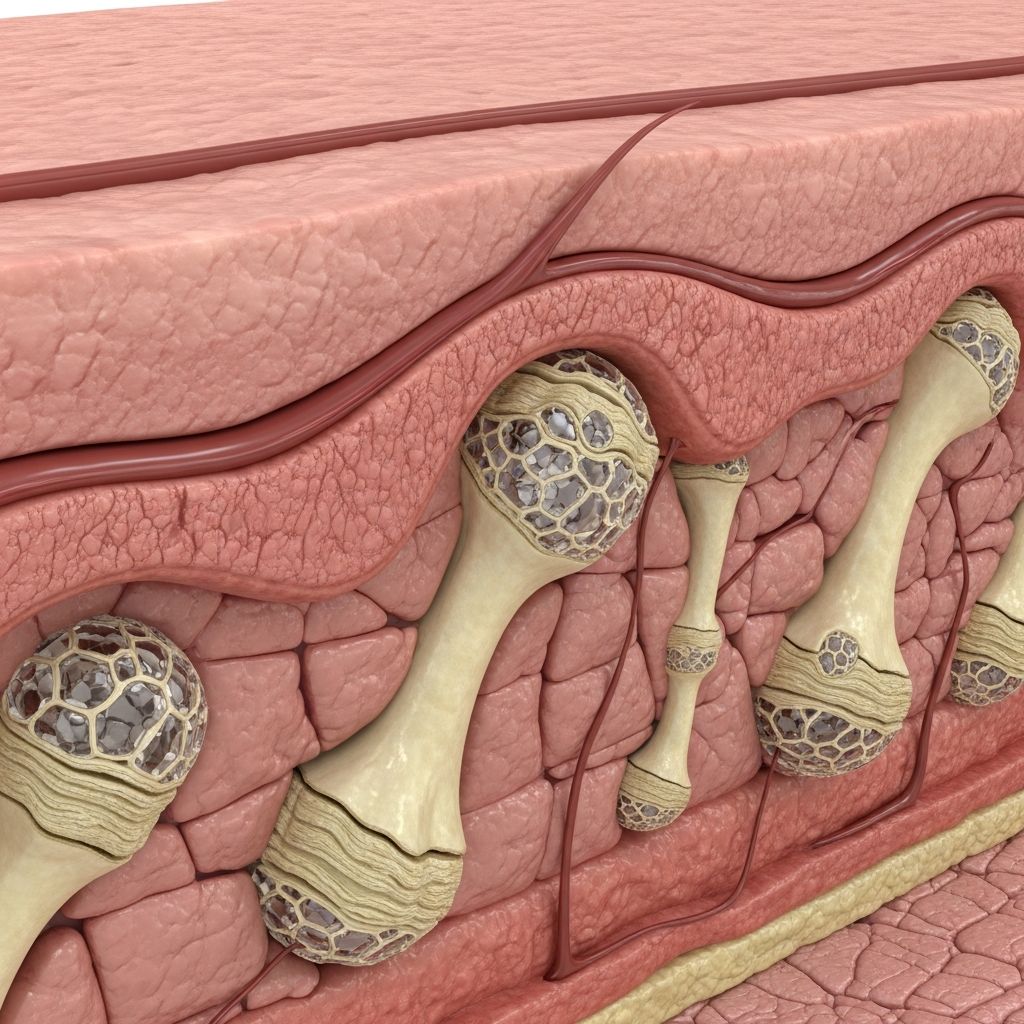
Osteoma cutis, also known as cutaneous ossification, is a rare benign dermatological condition characterized by the formation of true bone tissue within the dermis or subcutaneous layers of the skin. These bony growths typically manifest as firm, painless nodules, most commonly on the face, and can be primary (idiopathic) or secondary to underlying conditions or trauma.
What is osteoma cutis?
Osteoma cutis refers to the development of mature bone structures in the skin without any prior soft tissue lesion in primary cases, or following inflammation, trauma, or acne in secondary cases. It is distinguished from calcinosis cutis, which involves calcium deposits rather than actual bone formation. The condition arises from osteoblastic metaplasia of mesenchymal cells, such as fibroblasts, leading to ectopic ossification. Lesions vary in size from 0.1 to 5 cm and may appear as papules, plaques, nodules, or miliary patterns.
Primary osteoma cutis includes subtypes like progressive osseous heteroplasia (POH), platelike osteoma cutis (POC), and multiple miliary osteoma cutis (MMOC), often linked to genetic factors. Secondary forms are more common and associated with conditions like acne vulgaris, trauma, or systemic diseases.
Who gets osteoma cutis?
Osteoma cutis affects individuals across all ages but shows a predisposition in females, particularly for idiopathic facial forms linked to prior acne. Primary types like POC and POH often present in infancy or childhood, while MMOC typically occurs in middle-aged women. Secondary osteoma cutis can develop at any age following predisposing events such as inflammation or injury.
- Primary: Congenital or early-onset, familial in some cases (e.g., Albright hereditary osteodystrophy).
- Secondary: Post-acne (most common), post-trauma, or associated with syndromes like Gardner syndrome.
What causes osteoma cutis?
The exact etiology remains unclear, but the leading hypothesis involves fibroblast metaplasia into osteoblasts, forming bone via intramembranous ossification without cartilage intermediates. Genetic mutations in GNAS1 gene are implicated in Albright-associated cases.
Secondary causes include:
- Chronic inflammation (e.g., acne scars treated with minocycline, causing blue pigmentation).
- Tissue injury or surgery.
- Associated disorders: Progeria, fibrodysplasia ossificans progressiva, pseudohypoparathyroidism.
No single trigger universally applies, and idiopathic cases lack identifiable precipitants.
What are the clinical features of osteoma cutis?
Lesions are typically asymptomatic, firm, skin-colored to white nodules, predominantly on the face (cheeks, scalp), but can occur elsewhere. They feel hard like bone and grow slowly. Rarely, ulceration releases bony spicules, or lesions cause cosmetic distress, itching, or tenderness.
| Type | Features | Common Sites |
|---|---|---|
| Primary (solitary/multiple) | No preceding lesion; miliary or plaque-like | Face, scalp |
| Secondary (metastatic) | Post-inflammation/trauma | Face (acne sites), limbs |
| MMOC | Multiple tiny nodules | Facial |
Symptoms may include pain if compressing nerves, vision/hearing issues in periorbital/auricular locations, or functional impairment.
Diagnosis of osteoma cutis
Diagnosis combines clinical evaluation, imaging, and histopathology. Physical exam reveals hard subcutaneous nodules. Imaging like X-rays, CT scans, or ultrasound shows radiopaque densities with acoustic shadowing on sonography. Definitive confirmation requires skin biopsy demonstrating bony trabeculae, osteocytes, osteoblasts/osteoclasts, cement lines, and Haversian systems in larger deposits; no cartilage present.
Related Stories



Additional tests:
- Serum calcium, parathyroid hormone, renal function to exclude metabolic issues.
- Genetic testing for syndromic associations.
Differential includes calcinosis cutis (no bone), pilomatricoma, or cysts.
What is the treatment for osteoma cutis?
Treatment is symptomatic or cosmetic, as lesions are benign. Options depend on size, number, location, and symptoms.
- Topical/non-invasive: Tretinoin cream promotes transepidermal elimination of small superficial lesions.
- Surgical/invasive: Excision, curettage, punch biopsy, scalpel incision for complete removal; best cosmetic outcomes.
- Laser/ablative: CO2, Erbium:YAG, Nd:YAG lasers for superficial or multiple lesions.
- Other: Dermabrasion, cryotherapy; bisphosphonates not recommended and may trigger formation.
Address underlying causes (e.g., acne management). Monitoring suffices for asymptomatic cases.
Prevention of osteoma cutis
No specific prevention exists for primary forms. For secondary, prompt treatment of acne/inflammation and avoiding trauma minimize risk. Long-term minocycline use warrants monitoring.
Outlook for osteoma cutis
Prognosis is excellent; lesions are benign and slow-growing. Surgical removal yields good results, though recurrence possible in genetic forms. Cosmetic improvement enhances quality of life.
Frequently Asked Questions
Are osteoma cutis lesions painful?
Most are painless, but large ones may cause discomfort or functional issues.
Can osteoma cutis be cancerous?
No, it is benign; however, biopsy rules out malignancy.
Is treatment always necessary?
No, only if symptomatic or cosmetically bothersome.
Does osteoma cutis affect children?
Yes, primary forms like POH present in infancy.
How is osteoma cutis different from calcinosis?
Osteoma involves true bone; calcinosis is calcium deposits.
References
- Osteoma Cutis: Signs, Causes, and Treatment Options — Medicover Hospitals. 2024. https://www.medicoverhospitals.in/diseases/osteoma-cutis/
- Osteoma cutis — Wikipedia. 2024-01-15. https://en.wikipedia.org/wiki/Osteoma_cutis
- Osteoma Cutis — LVHN Scholarly Works. 2023. https://scholarlyworks.lvhn.org/cgi/viewcontent.cgi?article=1002&context=posters
- Osteoma: Symptoms, Causes, Treatment, and More — Healthgrades. 2024. https://resources.healthgrades.com/right-care/bones-joints-and-muscles/osteoma
- Osteoma Cutis and Calcinosis Cutis: “Similar but Different” — Journal of Clinical and Aesthetic Dermatology (JCAD). 2023. https://jcadonline.com/osteoma-cutis-calcinosis-cutis/
- Osteoma Cutis — StatPearls, NCBI Bookshelf. 2023-07-17. https://www.ncbi.nlm.nih.gov/books/NBK559216/
Similar Articles








Read full bio of Sneha Tete