Osteoporosis: Prevention, Diagnosis, And Treatment Guide
Understand osteoporosis: causes, symptoms, diagnosis, prevention, and effective treatments to protect your bone health.
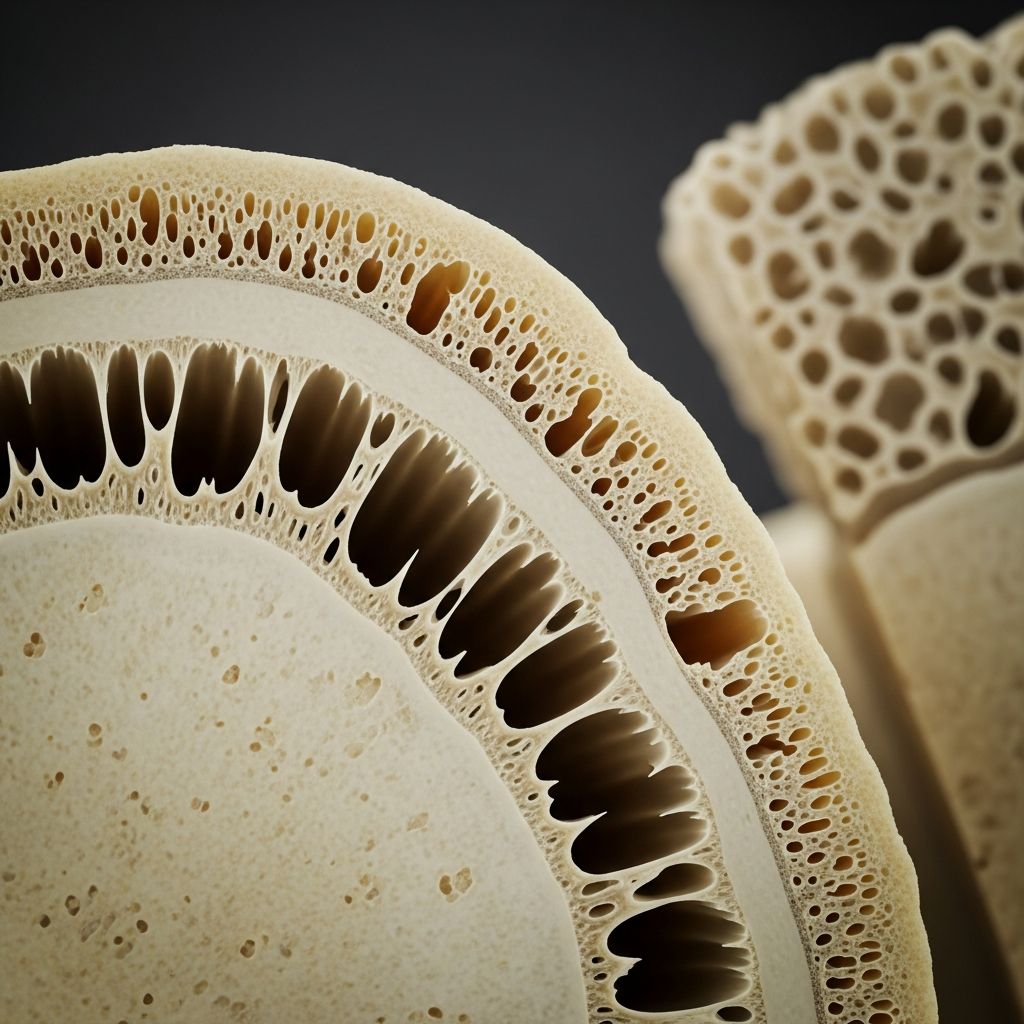
Osteoporosis is a condition where bones lose density and strength, making them more prone to fractures from minor impacts or falls. It often develops silently until a fracture occurs, affecting millions worldwide, particularly postmenopausal women and older adults.
What is osteoporosis?
Osteoporosis, meaning ‘porous bone’, is a progressive disease characterized by reduced bone mineral density (BMD) and deterioration of bone micro-architecture. This leads to fragile bones susceptible to fractures, known as fragility or osteoporotic fractures, which occur from forces that would not typically break healthy bone, such as a minor fall. Bones naturally peak in density during young adulthood around age 30, then gradually lose mass. In osteoporosis, this loss accelerates, creating a higher risk for breaks in the hip, spine, wrist, and shoulder.[10]
The bone remodeling process involves osteoclasts breaking down old bone and osteoblasts forming new bone. In osteoporosis, this balance tips toward excessive breakdown, resulting in net bone loss. Unlike osteopenia, which is milder low bone mass, osteoporosis crosses a diagnostic threshold confirmed by scans.
How common is osteoporosis?
Osteoporosis is highly prevalent, affecting about 2 million women in England and Wales alone, with around 180,000 related fractures annually. Globally, one in three women and one in five men over 50 will suffer a fragility fracture in their lifetime. Postmenopausal women face heightened risk due to estrogen decline, while men over 50 have a 1 in 4 chance of fracture. In the UK, the National Osteoporosis Guideline Group (NOGG) highlights its significant morbidity, mortality, and healthcare burden.
Can anyone get osteoporosis?
While aging increases risk, not everyone develops osteoporosis. Key risk factors include:
- Age over 65 (or 70 for men).
- Family history of osteoporosis or hip fracture.
- Previous fragility fracture as an adult.
- Low body weight (BMI under 22 kg/m²).
- Early menopause (before age 45) or prolonged amenorrhea.
- Long-term steroid use, antiseizure medications, or chemotherapy.
- Smoking or excessive alcohol (more than 4 units daily).
- Poor diet low in calcium/vitamin D or limited sunlight exposure.
- Sedentary lifestyle or conditions limiting mobility, like wheelchair use.
Men are also at risk, often overlooked, with resources like ‘Stronger Bones for Men’ emphasizing exercise, nutrition, and treatment.
Osteoporosis symptoms
Osteoporosis is often called a ‘silent thief’ because it progresses without symptoms until a fracture happens. Common signs include:
- Sudden back pain from vertebral (spine) fractures, causing height loss or kyphosis (dowager’s hump).
- Wrist, hip, or shoulder fractures from minor falls or bumps.
- Gradual height reduction or stooped posture from multiple spinal fractures.[10]
Hip fractures are particularly serious, often requiring surgery and linked to higher mortality in the elderly. Vertebral fractures may cause chronic pain and reduced mobility.
How is osteoporosis diagnosed?
Diagnosis ideally occurs before symptoms via risk assessment tools like FRAX, which calculates 10-year fracture probability using clinical factors and BMD if available. Dual-energy X-ray absorptiometry (DXA or DEXA) scan is the gold standard, measuring BMD at the hip and spine. A T-score of -2.5 or lower confirms osteoporosis; -1 to -2.5 indicates osteopenia.
Screening recommendations:
- Women over 65 or those over 50 with risk factors.
- Men over 70 or with risks like steroid use.
- Post-fracture assessment, especially fragility fractures.
After a fracture, referral for DXA is standard unless the patient is a woman over 75, where treatment may start presumptively due to high prevalence. Blood tests check for secondary causes like hyperthyroidism or vitamin D deficiency.
Related Stories



How to prevent osteoporosis
Prevention focuses on maximizing peak bone mass in youth and minimizing loss later. Essential strategies include:
- Diet: Aim for 1200 mg calcium daily from dairy, leafy greens, fortified foods; 800-1000 IU vitamin D from sunlight, fatty fish, or supplements. NOGG recommends supplements if diet is inadequate.
- Exercise: Weight-bearing (walking, dancing) and resistance training (weights) 30 minutes most days to stimulate bone formation. Balance exercises like tai chi prevent falls.
- Lifestyle: Quit smoking, limit alcohol to under 2-3 units daily, maintain healthy weight.
- Steroid users: Extra calcium/vitamin D, bisphosphonates if long-term.
For high-risk individuals, FRAX guides early intervention.
Osteoporosis treatment
Treatment reduces fracture risk by 30-70% and is lifelong, with reviews every 1-5 years. It combines lifestyle, medications, and fall prevention.
Medication for osteoporosis
Medications target bone remodeling:
- Bisphosphonates (alendronate, risedronate, zoledronate): First-line; slow osteoclasts, reducing bone loss. Weekly oral or annual IV. Side effects: gastrointestinal upset, rare jaw osteonecrosis. Take upright with water, avoid food 30-60 min.
- Denosumab (Prolia): Injection every 6 months; inhibits osteoclasts. Hypocalcemia risk.
- Hormone replacement therapy (HRT): For menopausal women; estrogen preserves bone but has risks.
- Selective estrogen receptor modulators (SERMs) like raloxifene: Bone-protective with less breast cancer risk.
- Parathyroid hormone analogs (teriparatide): Anabolic; stimulate bone formation for severe cases.
- Romosozumab: Dual action for high-risk patients.
| Medication Type | Examples | Dosing | Main Benefit |
|---|---|---|---|
| Bisphosphonates | Alendronate, Zoledronate | Weekly tablet or yearly IV | Reduces vertebral/hip fractures by 40-70% |
| RANKL Inhibitor | Denosumab | 6-month injection | Fracture risk reduction up to 68% |
| Anabolic | Teriparatide | Daily injection (2 years max) | Increases bone formation |
Other measures are also important
Beyond drugs:
- Continue calcium (1200 mg) + vitamin D (800 IU) daily.
- Weight-bearing exercise; avoid high-impact if fractured.
- Fall-proof home: remove rugs, improve lighting, use aids.
- Monitor BMD every 1-2 years; reassess FRAX every 5 years.
Treatment adherence is key; discuss side effects with your doctor for alternatives.
Frequently Asked Questions (FAQs)
Q: Who should get a DXA scan?
A: Women over 65, men over 70, or anyone over 50 with risk factors like prior fracture or steroid use. Post-fracture assessment is routine.
Q: Can exercise reverse osteoporosis?
A: Exercise prevents further loss and improves strength/balance but cannot fully reverse established osteoporosis. Combine with medication.
Q: Are bisphosphonates safe long-term?
A: Generally yes for 3-5 years; then reassess. Rare risks include atypical femur fractures or jaw issues.
Q: Does osteoporosis affect men?
A: Yes, 1 in 5 men over 50 fracture; risks include low testosterone, alcohol, steroids. Prevention mirrors women’s.
Q: How long is osteoporosis treatment?
A: Often years or lifelong, with first-year review and FRAX reassessment every 5 years.
What can I do to help myself?
Empower your bone health:
- Eat calcium-rich foods; supplement if needed.
- Get safe sun exposure or vitamin D.
- Exercise regularly: walk 30 min/day, strength train twice weekly.
- Quit smoking; moderate alcohol.
- Discuss FRAX/DXA with your GP if at risk.
Join support like Bone Health & Osteoporosis Foundation for resources.
References
- Information for patients and the public on the Prevention and Treatment of Osteoporosis — National Osteoporosis Guideline Group (NOGG). 2021. https://www.nogg.org.uk/sites/nogg/download/NOGG-PIL-2021-f.pdf
- Break Free From Osteoporosis Resource Library — Bone Health and Osteoporosis Foundation (BHOF). 2024-05. https://www.bonehealthandosteoporosis.org/patients/bhof-resource-library/
- Osteoporosis Leaflet — Patient.info. Accessed 2026. https://patient.info/bones-joints-muscles/osteoporosis-leaflet
- Bisphosphonates — Patient.info. Accessed 2026. https://patient.info/bones-joints-muscles/osteoporosis-leaflet/bisphosphonates
- Osteoporosis Patient Education Fact Sheet — American Society for Reproductive Medicine. 2023. https://www.reproductivefacts.org/news-and-publications/fact-sheets-and-infographics/osteoporosis/
Similar Articles








Read full bio of medha deb