Osteoporosis Medications: Essential Guide To Treatments
Explore effective treatments for osteoporosis, from bisphosphonates to advanced biologics, to strengthen bones and prevent fractures.
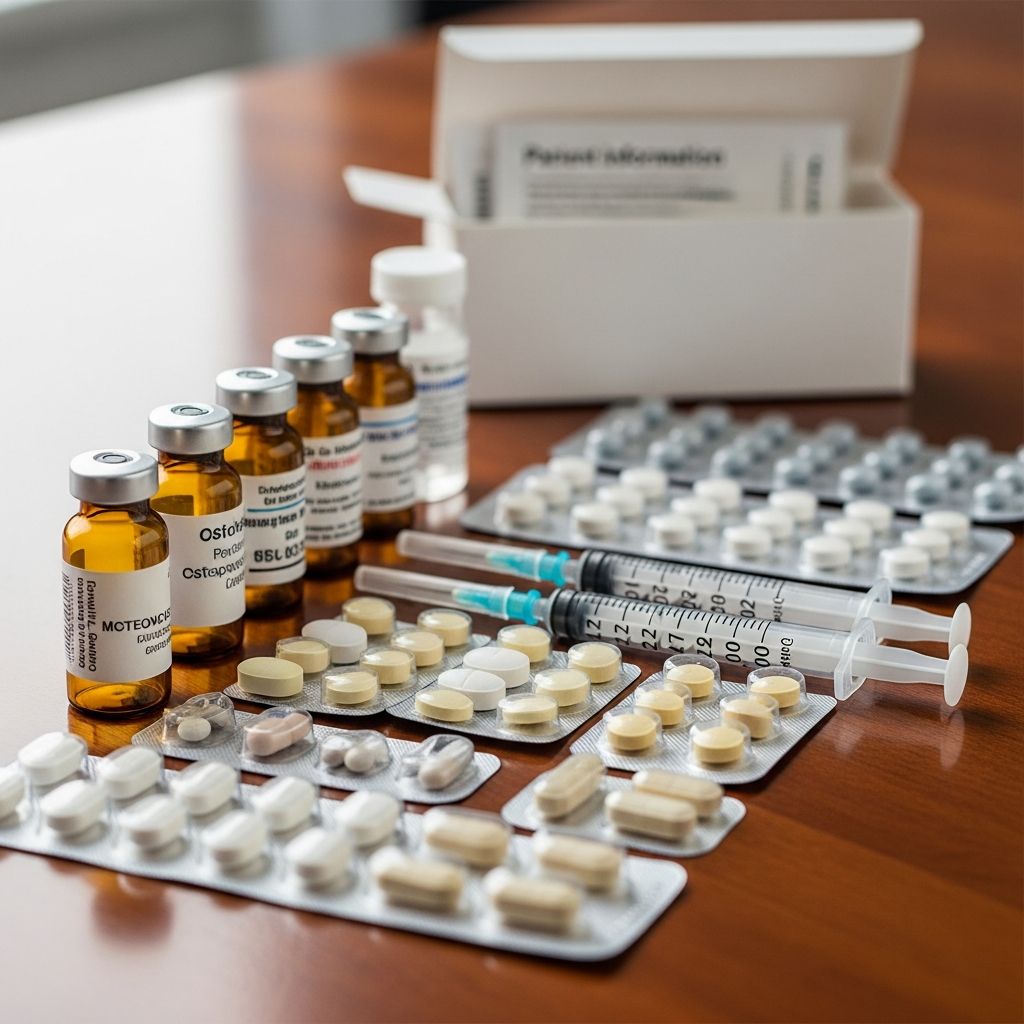
Osteoporosis weakens bones, increasing fracture risk, but various medications can help maintain bone density and prevent breaks. These treatments fall into antiresorptive agents that slow bone loss and anabolic agents that promote new bone formation.
Understanding Bone Loss and Treatment Goals
Bone is living tissue that constantly remodels, but after peak mass around age 30, loss accelerates, especially in postmenopausal women due to estrogen decline. Treatments aim to reduce resorption or stimulate formation, targeting high-risk individuals like those with prior fractures or low T-scores.
Guidelines from organizations like the American Association of Clinical Endocrinologists prioritize therapies based on fracture risk, kidney function, and administration preferences.
Bisphosphonates: Cornerstone of Therapy
Bisphosphonates inhibit osteoclasts, cells that break down bone, and are first-line for most patients. They are affordable, effective, and available orally or intravenously.
- Alendronate (Fosamax): Weekly 70 mg tablet or daily 10 mg; also effervescent (Binosto) or with vitamin D (Fosamax Plus D). Approved for postmenopausal osteoporosis, men, glucocorticoid-induced cases, and Paget’s disease.
- Risedronate (Actonel, Atelvia): 35 mg weekly (immediate-release) or 150 mg monthly (delayed-release). Suitable for broad postmenopausal and glucocorticoid uses.
- Ibandronate (Boniva): 150 mg monthly oral or 3 mg IV every 3 months. Convenient for those avoiding daily dosing.
- Zoledronic acid (Reclast): 5 mg IV yearly for treatment or every 2 years for prevention. Ideal for oral intolerance or high fracture risk.
Patients must take oral bisphosphonates upright with water, fasting for 30-60 minutes to avoid esophageal irritation.
Biologic Options: Denosumab and Beyond
Denosumab (Prolia), a monoclonal antibody, blocks RANKL to reduce bone resorption. Given as 60 mg subcutaneous every 6 months, it’s suitable for those unable to tolerate bisphosphonates.
Romosozumab (Evenity) dual-action: inhibits sclerostin for bone formation while reducing resorption. Monthly 210 mg subcutaneous for 12 months, reserved for very high-risk patients.
Anabolic Agents for Bone Building
These stimulate osteoblasts to grow new bone, used sequentially after antiresorptives, limited to 2 years due to osteosarcoma risk.
- Teriparatide (Forteo): Daily 20 mcg subcutaneous parathyroid hormone analog.
- Abaloparatide (Tymlos): Daily 80 mcg subcutaneous PTHrP analog.
Guidelines favor these over denosumab for very high fracture risk.
Hormone-Related and Other Therapies
For postmenopausal women, options mimicking estrogen effects include:
- Raloxifene (Evista): Daily 60 mg oral SERM; reduces vertebral fractures and breast cancer risk.
- Conjugated estrogens/bazedoxifene (Duavee): Tissue-selective complex for osteoporosis prevention.
- Menopausal hormone therapy (MHT): Estrogen ± progestin; modest bone benefits but cardiovascular risks limit use.
Calcitonin (nasal spray or injection) mildly reduces vertebral fractures but is not first-line.
Comparing Common Medications
The table below summarizes key options, approvals, and dosing:
| Medication | Form/Dose | Key Approvals | Frequency |
|---|---|---|---|
| Alendronate (Fosamax) | Oral tablet/liquid | Postmenopausal, men, glucocorticoids, Paget’s | Weekly |
| Ibandronate (Boniva) | Oral or IV | Postmenopausal | Monthly oral/3 mo IV |
| Zoledronic acid (Reclast) | IV | Postmenopausal, men, glucocorticoids | Yearly |
| Denosumab (Prolia) | Subcutaneous | Postmenopausal, glucocorticoids | 6 months |
| Raloxifene (Evista) | Oral | Postmenopausal | Daily |
| Teriparatide (Forteo) | Subcutaneous | High-risk postmenopausal, men | Daily (max 2 yrs) |
Administration Tips and Adherence
Success depends on proper use. Oral bisphosphonates require empty stomach, full glass of water, and remaining upright. Injections like Prolia need healthcare provider administration. Adherence is crucial; non-compliance doubles fracture risk.
Potential Side Effects and Monitoring
Common issues include gastrointestinal upset for orals, flu-like symptoms for IV bisphosphonates, and hypocalcemia for denosumab. Rare but serious: osteonecrosis of the jaw (ONJ), atypical femoral fractures. Monitor with DEXA scans every 1-2 years; consider drug holidays after 3-5 years for low-risk patients.
- Ensure calcium/vitamin D intake to prevent lows.
- Kidney function key for bisphosphonates (eGFR >30-35 mL/min).
Choosing the Right Treatment
Related Stories



First-line: bisphosphonates for most. Switch to denosumab or IV if GI issues. Anabolics for severe cases. Personalize based on risk (FRAX tool), comorbidities, preferences.
Lifestyle Support for Bone Health
Medications work best with weight-bearing exercise, 1200 mg calcium, 800-2000 IU vitamin D daily, fall prevention, no smoking/excess alcohol.
Frequently Asked Questions
How long to take osteoporosis drugs?
Typically 3-5 years, then reassess for holiday.
Are generics available?
Yes for alendronate, risedronate, ibandronate.
Can men use these?
Yes, alendronate, zoledronic acid, denosumab approved.
What if I miss a dose?
Follow specific instructions; consult provider.
Do they reverse osteoporosis?
They stabilize or increase density, reducing fractures.
Recent Advances and Future Directions
Emerging cathepsin K inhibitors and sclerostin antibodies build on current options. Guidelines evolve with trial data favoring anabolics for high-risk.
References
- Fosamax vs. Prolia vs. Boniva: Which Is Better for You? — GoodRx. 2023. https://www.goodrx.com/conditions/osteoporosis/fosamax-vs-prolia-vs-boniva
- Osteoporosis: A Review of Treatment Options — PMC (Drugs. 2018). 2018-01-13. https://pmc.ncbi.nlm.nih.gov/articles/PMC5768298/
- Osteoporosis Medication and Medication Guidelines — Bone Health and Osteoporosis Foundation. 2024. https://www.bonehealthandosteoporosis.org/patients/treatment/medicationadherence/
- Treatment — International Osteoporosis Foundation. 2023. https://www.osteoporosis.foundation/health-professionals/treatment
Similar Articles








Read full bio of Sneha Tete