Osteoporosis Complete Guide To Symptoms, Treatment & Prevention
Understand osteoporosis: causes, symptoms, risk factors, diagnosis, treatment, and prevention strategies for stronger bones.
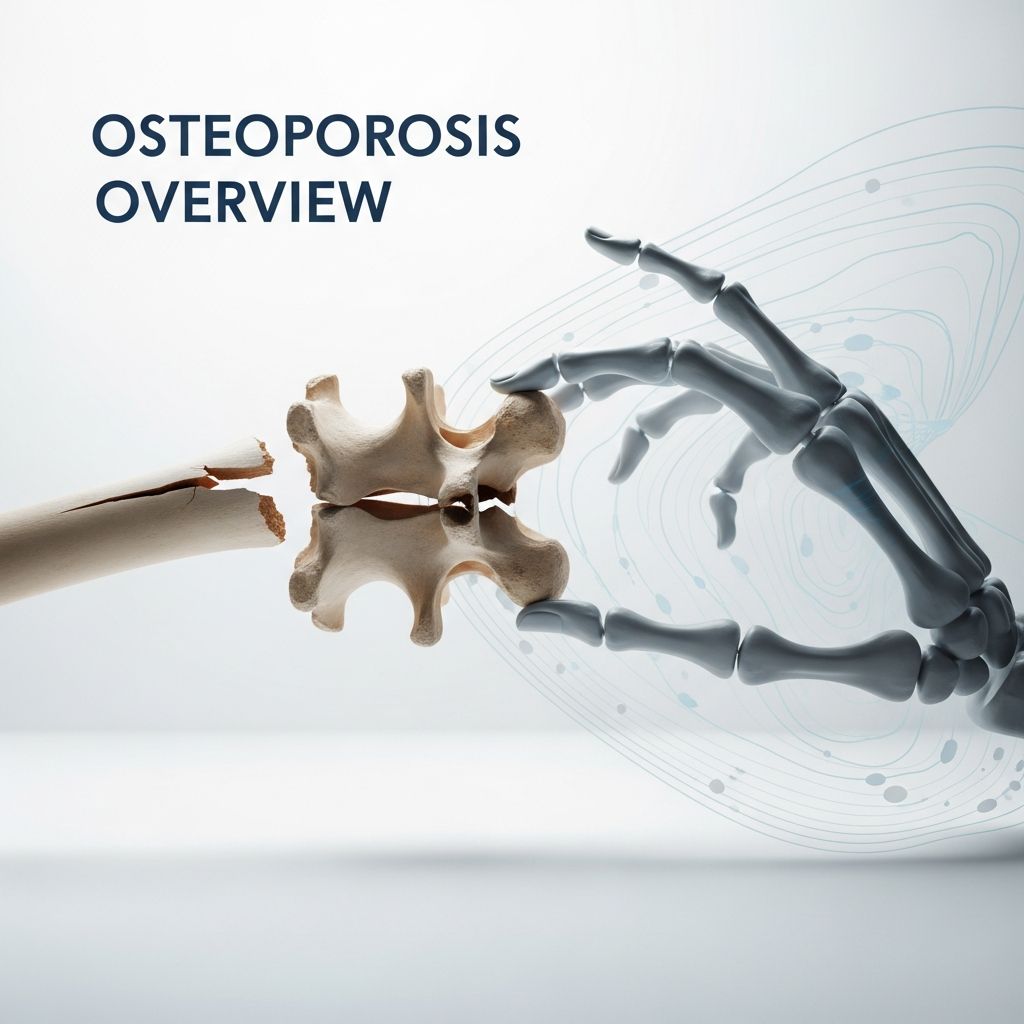
Osteoporosis is a progressive bone disease characterized by decreased bone mineral density and mass, leading to fragile bones and heightened fracture risk.
What Is Osteoporosis?
Osteoporosis, often called the “silent disease,” develops when the body’s natural process of replacing old bone with new becomes imbalanced, resulting in weaker bone structure and strength. Bones lose density over time, making them porous and brittle, similar to a sponge. This condition increases susceptibility to fractures from minor impacts or even everyday activities like bending or coughing.
Unlike other diseases with noticeable early warning signs, osteoporosis typically remains asymptomatic until a fracture occurs. It primarily affects postmenopausal women and older men, but can impact anyone with certain risk factors. In the United States, approximately 1 in 10 people aged 50 and older have osteoporosis, underscoring its prevalence.
Symptoms of Osteoporosis
The hallmark of osteoporosis is its silence—no pain or obvious signs until bones break. Common fracture sites include the hip, spine (vertebrae), and wrist. Symptoms that may emerge include:
- Severe back pain from vertebral fractures.
- Loss of height due to compressed vertebrae.
- Stooped posture (kyphosis or dowager’s hump).
- Fragility fractures from minor falls or stresses like lifting, bending, or sneezing.
These fractures can lead to chronic pain, reduced mobility, and in severe cases, complications like pneumonia or blood clots from prolonged immobility.
Risk Factors for Osteoporosis
Risk factors are divided into non-modifiable (unchangeable) and modifiable ones. Understanding them helps in prevention.
Non-Modifiable Risk Factors
- Sex: Women are at higher risk due to lower peak bone mass and smaller skeletons; men over 70 face increased risk.
- Age: Bone loss accelerates with age as remodeling slows.
- Race/Ethnicity: Highest in non-Hispanic White and Asian women; lower but significant in African American and Hispanic women; more common in non-Hispanic White men.
- Family History: Genetic predisposition if a parent, especially mother, had hip fracture.
- Body Frame: Small, thin-boned frames offer less bone mass to lose.
Modifiable Risk Factors
- Hormone Levels: Low estrogen post-menopause or from amenorrhea; low testosterone in men.
- Diet: Inadequate calcium, vitamin D, or protein; excessive dieting.
- Lifestyle: Sedentary behavior, smoking, excessive alcohol (>2 drinks/day), high caffeine/soda intake.
- Medical Conditions: Rheumatoid arthritis, hyperthyroidism, gastrointestinal disorders, HIV/AIDS, anorexia nervosa.
- Medications: Long-term glucocorticoids, anticonvulsants, proton pump inhibitors, heparin.
| Group | Prevalence | Source |
|---|---|---|
| Adults 50+ | 10% | |
| Postmenopausal Women | Highest Risk | |
| Non-Hispanic White Women | Most Common | |
| Men 70+ | Increasing |
Causes of Osteoporosis
Osteoporosis stems from an imbalance in bone remodeling: osteoclasts (bone-breaking cells) outpace osteoblasts (bone-building cells). Peak bone mass is built by age 30; afterward, loss begins subtly, accelerating post-menopause due to estrogen drop.
Related Stories



Primary osteoporosis relates to aging/hormonal changes; secondary arises from conditions/medications disrupting bone metabolism. Juvenile osteoporosis affects children/teens, often temporarily.
Diagnosis of Osteoporosis
Diagnosis relies on bone mineral density (BMD) testing via DEXA (dual-energy X-ray absorptiometry) scan, measuring T-score: normal (>-1), osteopenia (-2.5 to -1), osteoporosis (≤-2.5). Screening recommended for women 65+, men 70+, or earlier with risks.
Other tests: FRAX tool assesses 10-year fracture risk; vertebral fracture assessment; blood/urine markers for bone turnover.
Treatment for Osteoporosis
No cure exists, but FDA-approved treatments reduce fracture risk by 20-70%. Strategies include:
- Medications: Bisphosphonates (alendronate, risedronate), denosumab, teriparatide (anabolic), romosozumab, hormone therapy (limited).
- Lifestyle: Weight-bearing exercise (walking, dancing), balance training (tai chi).
Treatment decisions factor age, fracture history, BMD.
Prevention of Osteoporosis
Prevention emphasizes building/maintaining bone health:
- Nutrition: 1,200mg calcium/day (dairy, greens, fortified foods), 800-2,000 IU vitamin D.
- Exercise: 30min daily weight-bearing/aerobic + resistance/muscle-strengthening.
- Lifestyle: Quit smoking, limit alcohol, fall-proof home.
- Screening: Early DEXA for at-risk groups.
Healthy People 2030 targets fracture prevention via screening, diet, activity.
Living with Osteoporosis
Manage with tailored plans: medications, nutrition, exercise. Fall prevention crucial—remove rugs, improve lighting, use assistive devices. Support groups like Bone Buddies offer community. Monitor BMD periodically; address pain with PT.
Pregnancy, Breastfeeding, and Bone Health
Pregnancy/breastfeeding demands extra calcium for fetal growth, potentially drawing from maternal stores. Adequate intake (1,000-1,300mg/day) prevents temporary BMD loss, which rebounds post-weaning.
Preventing Another Broken Bone
Post-fracture, evaluate for osteoporosis via DEXA/FRAX. Treat underlying causes; rehab focuses on strength/balance to avoid re-fracture.
Frequently Asked Questions (FAQs)
What is osteoporosis?
A bone disease causing low density and fragility, raising fracture risk.
Who is at risk for osteoporosis?
Postmenopausal women, older adults, those with family history, low BMI, or certain lifestyles/conditions.
How is osteoporosis diagnosed?
Primarily via DEXA scan measuring BMD T-score.
Can osteoporosis be prevented?
Yes, through calcium/vitamin D, exercise, avoiding smoking/alcohol excess.
What treatments slow osteoporosis?
Bisphosphonates, denosumab, anabolics like teriparatide; lifestyle changes.
Is osteoporosis reversible?
Not fully, but treatments improve density and reduce fractures.
(Word count: 1678)
References
- Osteoporosis Causes, Risk Factors, & Symptoms — National Institute of Arthritis and Musculoskeletal and Skin Diseases (NIAMS), NIH. 2023. https://www.niams.nih.gov/health-topics/osteoporosis
- Osteoporosis – Healthy People 2030 — Office of Disease Prevention and Health Promotion (ODPHP), U.S. Department of Health and Human Services. 2024. https://odphp.health.gov/healthypeople/objectives-and-data/browse-objectives/osteoporosis
- Bone Health & Osteoporosis Foundation: Home — Bone Health & Osteoporosis Foundation (BHOF). 2025. https://www.bonehealthandosteoporosis.org
Similar Articles








Read full bio of Sneha Tete