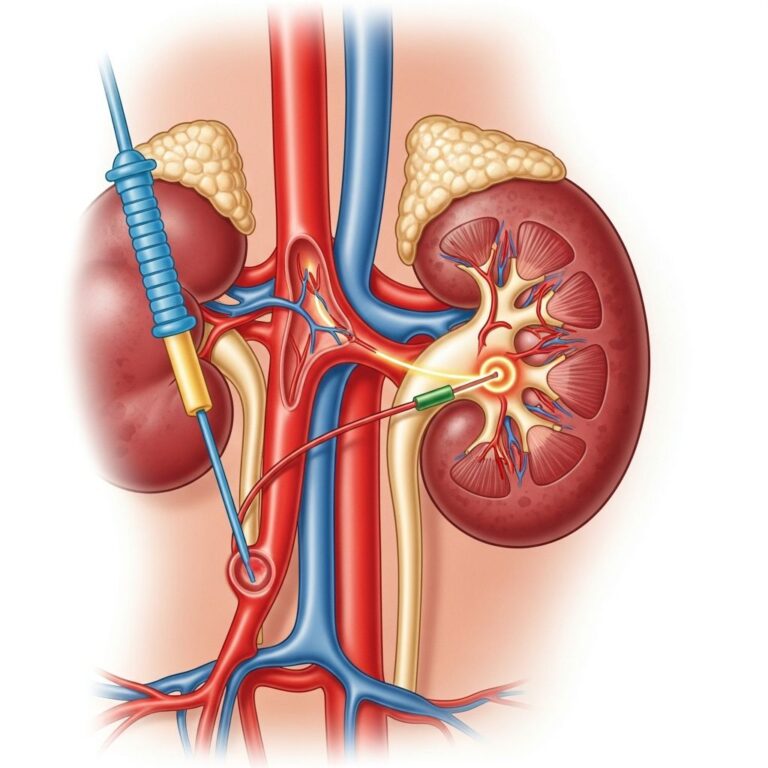
Ostomy: 3 Key Types, Procedure Steps, & Life-Saving Purpose
Comprehensive guide to ostomy surgery: types including colostomy, ileostomy, urostomy, procedures, purposes, and living with a stoma.
An
ostomy
is a surgically created opening (stoma) in the abdomen that diverts stool or urine from the digestive or urinary tract into an external pouch when normal elimination is impaired. This life-saving procedure treats conditions like cancer, inflammatory bowel disease (IBD), injuries, or congenital defects, allowing patients to regain health and lead active lives.What Is an Ostomy?
Ostomy surgery reroutes waste through a
stoma
, a pink or red protrusion on the abdomen resembling the inside of the intestine. The stoma has no nerve endings, so it feels no pain, but output flows continuously into a disposable pouch adhered to the skin. About 1 in 500 Americans lives with an ostomy, proving it’s compatible with normal activities like work, sports, travel, and intimacy.Ostomies are tailored to the affected body part: fecal diversion from the intestines (colostomy or ileostomy) or urine from the urinary tract (urostomy). They can be
temporary
(to allow healing) orpermanent
(if resection is irreversible).Why Is an Ostomy Performed?
Ostomies address impaired waste elimination due to disease, injury, or birth defects. Common reasons include:
- Cancer: Colorectal, bladder, or anal cancers require removal of affected bowel or bladder sections.
- Inflammatory Bowel Disease (IBD): Crohn’s disease or ulcerative colitis, where severe inflammation or fistulas necessitate diversion.
- Diverticulitis: Infected colon pouches (diverticula) leading to perforation or obstruction.
- Injuries/Trauma: Accidents damaging intestines or urinary tract.
- Congenital Defects: Spina bifida or Hirschsprung’s disease impairing bowel function from birth.
- Other: Infections, blockages, or neurogenic bladder from spinal cord injuries.
The goal is to bypass damaged areas, prevent complications like peritonitis, and improve quality of life. Temporary ostomies ‘rest’ the bowel post-surgery.
Types of Ostomies
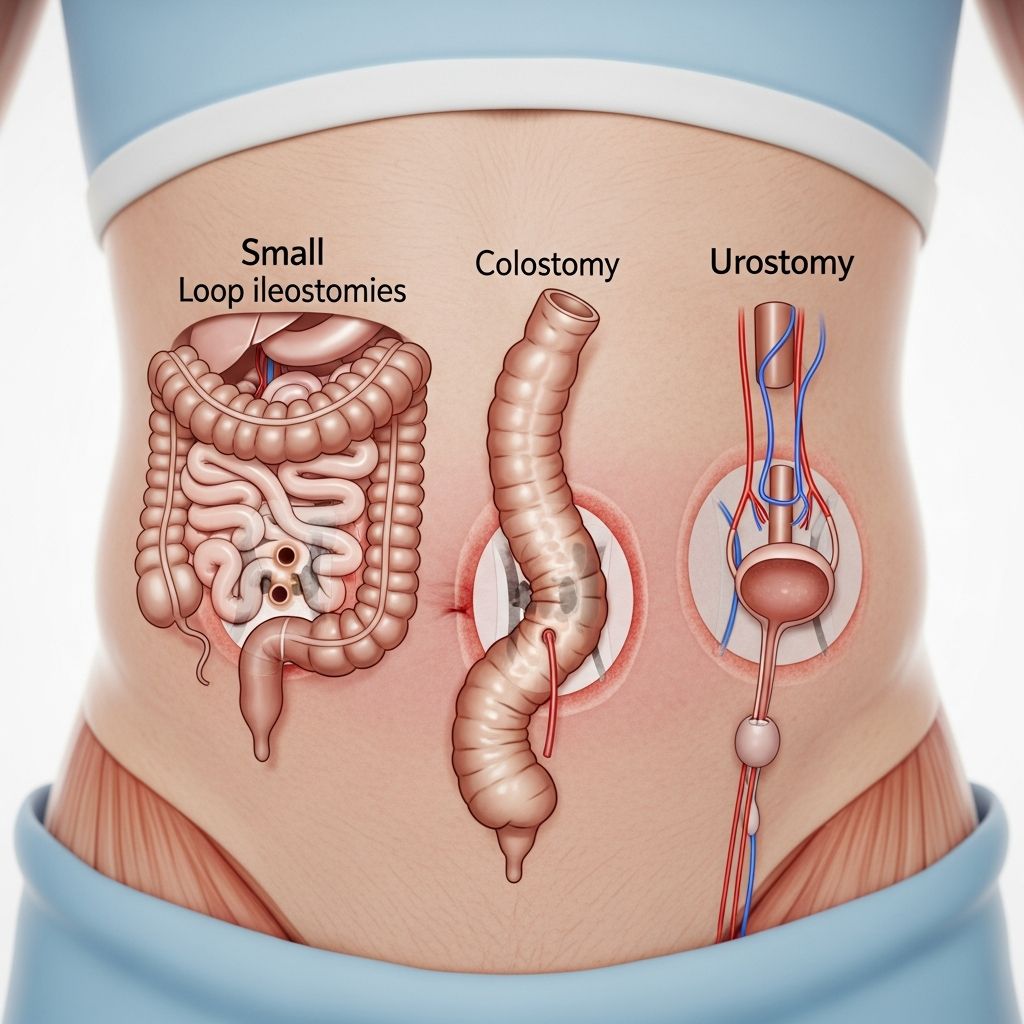
There are three primary ostomy types, differing by the intestinal segment used and output consistency.
Colostomy
A
colostomy
diverts the colon (large intestine) to a stoma, typically on the left abdomen. Output is often formed stool, depending on the colon portion used. Reasons include colorectal cancer, diverticulitis, or IBD. Colostomies can be temporary or permanent.- Ascending Colostomy: From right-side ascending colon; loose, watery output; higher risk of dehydration.
- Transverse (Loop) Colostomy: Mid-abdomen loop with two openings (proximal for output, distal for mucus); often temporary; pasty stool.
- Descending/Sigmoid Colostomy: Left-side; most solid stool, closest to normal bowel movements.
Ileostomy
An
ileostomy
uses the ileum (small intestine end), usually right abdomen. Output is liquid, high in digestive enzymes, requiring skin protection. Common for total colectomy in ulcerative colitis or Crohn’s.- Loop Ileostomy: Temporary, two openings; protects downstream pouches (e.g., J-pouch).
- End Ileostomy: Permanent if colon/rectum removed; continuous output.
Ileostomy patients may need electrolyte adjustments due to fluid loss.
Urostomy
A
urostomy
(ileal conduit) diverts ureters to an ileum segment forming a stoma for continuous urine drainage. Indicated for bladder removal (cystectomy) in cancer or dysfunction. Always permanent; clear urine output, often with mucus.Ostomy Procedure: What to Expect
Pre-surgery, an ostomy nurse marks the stoma site (below waistline, away from scars/folds). Surgery uses general anesthesia; options include open (large incision) or laparoscopic (small ports).
Related Stories



Steps:
- Incision and access to bowel/urinary tract.
- Resection of diseased section.
- Stoma creation: Bowel pulled through abdominal wall, sutured everted.
- Pouch application; possible ileal conduit for urostomy.
Duration: 2-6 hours, often part of larger operations. Hospital stay: 3-10 days.
| Type | Surgery Type | Output | Typical Location |
|---|---|---|---|
| Colostomy | Open/Laparoscopic | Formed to liquid | Left abdomen |
| Ileostomy | Open/Laparoscopic | Liquid | Right abdomen |
| Urostomy | Open | Urine (continuous) | Right/Left abdomen |
Recovery After Ostomy Surgery
Post-op, patients relearn eating: clear liquids to soft foods over weeks. Pain managed with meds; drains removed gradually. Discharge teaching covers pouch changes (every 3-7 days).
- Week 1: Hospital monitoring for output, infection.
- Weeks 2-6: Gradual activity; avoid heavy lifting.
- Long-term: Reversals possible after 3-12 months if temporary.
Complications (5-20%): Stoma retraction, hernia, skin irritation, high output dehydration. Nurse support is crucial.
Living With an Ostomy
Most adapt within months, resuming full lives. Pouches are discreet, odor-free with filters. Diet tweaks: Limit gas-producers for ileostomies.
- Skin Care: Cleanse, use barriers/ powders.
- Activities: Swim, exercise (protect stoma), travel with supplies.
- Intimacy: Communicate; use covers.
- Reversal: Not always possible; weigh pros/cons.
Ostomy Bags and Supplies
Pouches: One-piece (integrated) or two-piece (flange/wafer). Drainable for liquids, closed for solids. Accessories: pastes, rings for uneven skin.
Frequently Asked Questions (FAQs)
Is ostomy surgery painful?
The stoma itself has no nerves, but surgery recovery involves managed pain.
Can you still work out with an ostomy?
Yes, after 6-8 weeks; support belts help secure pouch.
How often change the ostomy bag?
3-7 days or when leaking; more frequent initially.
Does ostomy smell?
Modern pouches have filters; diet controls odor.
Can ostomies be reversed?
Temporary ones often yes; permanents depend on remaining bowel.
Life expectancy with ostomy?
Normal; millions thrive worldwide.
This guide empowers understanding of ostomies. Consult healthcare providers for personalized advice.
References
- Common Types of Ostomies: Colostomy, Ileostomy, and Urostomy — UC Davis Health. Accessed 2026. https://health.ucdavis.edu/surgery/specialties/colorectal/ostomy/types.html
- What Is an Ostomy? Types, Surgery Overview & Living With an Ostomy — United Ostomy Associations of America. Accessed 2026. https://www.ostomy.org/what-is-an-ostomy/
- The 3 Types of Ostomies — Hollister Incorporated. Accessed 2026. https://www.hollister.com/en/ostomycare/ostomylearningcenter/understandinganostomy/the3typesofostomies
- Ostomy: What It Is, Surgery, What To Expect & Bag Care — Cleveland Clinic. 2023-10-25. https://my.clevelandclinic.org/health/procedures/22496-ostomy
- Ostomy Tips and Tricks — Crohn’s & Colitis Foundation. Accessed 2026. https://www.crohnscolitisfoundation.org/patientsandcaregivers/treatment/surgery/ostomy
Similar Articles








Read full bio of Sneha Tete