Ototoxicity: Symptoms, Causes & Treatment
Understanding ototoxicity: How medications damage your inner ear and affect hearing and balance.
Understanding Ototoxicity
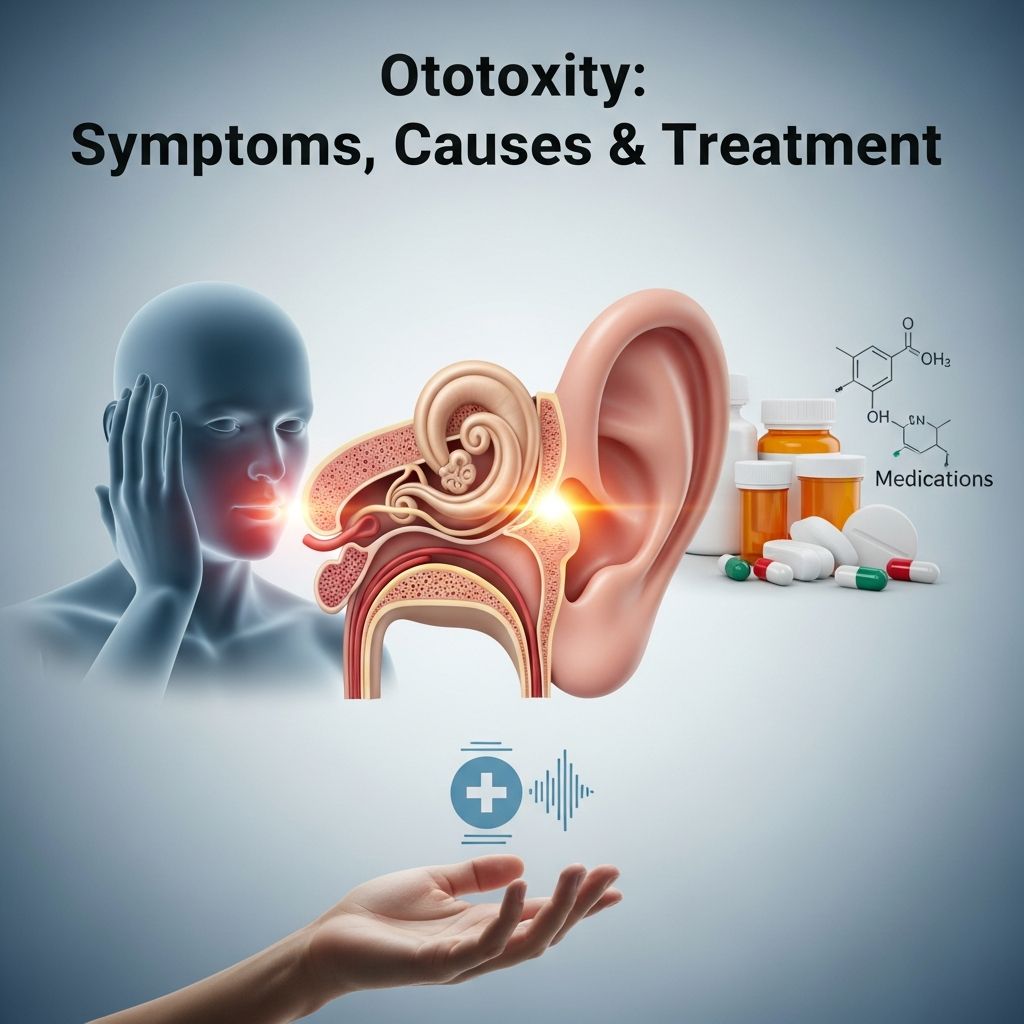
Ototoxicity is a medication side effect involving damage to your inner ear. It can cause symptoms like ringing in your ears, hearing loss, and balance problems. Some medicines used to treat infections and cancer, among other conditions, can damage the sensory cells inside your inner ear that help you hear and keep your balance. Healthcare providers can recommend devices and therapies to help you manage issues resulting from taking an ototoxic medicine.
The term “ototoxicity” comes from “oto,” meaning ear, and “toxicity,” meaning hazardous or poisonous. Certain medications used for various health conditions can damage the inner ear, leading to hearing and balance changes that significantly impact quality of life. Understanding which medications carry this risk is essential for patients and healthcare providers alike.
What Causes Ototoxicity
Healthcare providers consider more than 200 medicines to be ototoxic drugs, or medicines that can potentially damage your inner ear. Some of these medicines require prescriptions, but others don’t. Most of these medicines are essential, and often the benefits of taking the drug (treating cancer, for example) outweigh potential risks.
Different ototoxic medications damage the ear in various ways. Some medications may destroy the tiny hairs deep within your inner ear, while others may damage different parts of your ear structure. Some may cause temporary ringing in your ears, whereas other medications are known to cause permanent damage. Additionally, the ear may become more susceptible to loud noises when taking ototoxic medications, causing more hearing damage than a loud noise would cause if you were not taking the medication.
Common Ototoxic Medications
Aminoglycoside Antibiotics: Aminoglycoside antibiotics treat bacterial infections. Along with chemotherapy drugs, aminoglycosides are the most commonly known ototoxic drugs and are frequently associated with hearing loss.
Chemotherapy Drugs: Chemotherapy drugs treat various types of cancer and include several ototoxic types. Cancer treatment-related ototoxicity is among the adverse events that can have far-reaching consequences and negative impacts on quality of life for cancer patients and survivors of all ages.
Other medications only pose risks at extremely high doses that most people never receive. Despite this, awareness of potential ototoxic effects remains important for both patients and healthcare providers.
Symptoms and Signs of Ototoxicity
You may notice signs of ototoxicity as soon as you start taking the medicine, or symptoms may appear gradually. Ototoxicity can cause symptoms up to five years after you start taking the medicine. Usually, the first sign is hearing noises that others don’t hear, like ringing in your ears (tinnitus). Tinnitus is often the first sign of hearing loss.
Common Symptoms Include:
Symptoms of ototoxicity can vary in type and severity. Commonly reported symptoms include:
- Ringing in your ears (tinnitus)
- Hearing loss, particularly in high-frequency sounds
- Difficulty understanding conversations
- Dizziness or vertigo
- Loss of balance or coordination problems
- Difficulty with spatial orientation
- Sensitivity to loud noises
Related Stories



Symptoms in Young Children
Young children experiencing ototoxicity may have hearing problems that make learning and communicating especially difficult. Symptoms to look out for include developmental delays in speech and language, difficulty concentrating, exhaustion, or behavioral changes. It’s possible that the frustration a child is experiencing relates to a hearing issue rather than behavioral problems. Parents and caregivers should pay attention to signs like trouble concentrating or exhaustion, as symptoms may be harder to spot in young children.
When Symptoms Develop
The timeline for ototoxicity symptoms varies significantly. Ototoxicity can cause side effects as soon as you start taking the medicine and up to five years after you start treatment. Some treatments and medicines cause delayed effects, which is why it’s important to follow any long-term recommendations from your provider about routine hearing exams to monitor your hearing.
Diagnosis of Ototoxicity
You’ll meet with a specialist in hearing and balance disorders, such as an otolaryngologist or audiologist. Depending on your symptoms, they may perform various tests to check your inner ear. If your healthcare provider prescribes an ototoxic drug, they may test your hearing and balance before you start treatment. You may receive periodic tests while you’re taking the medicine.
Diagnostic Tests May Include:
Your provider can monitor your response to the medicine and help you manage symptoms. Diagnostic tests or tests to check your hearing before you start an ototoxic medicine may include:
- Audiometry (hearing tests at various frequencies)
- High-pitch frequency testing
- Word recognition tests
- Balance and vestibular testing
- Baseline hearing assessment before medication begins
- Follow-up testing during medication use
That way, your care team knows immediately if you’re experiencing drug side effects. This proactive monitoring allows healthcare providers to detect changes early and implement interventions before significant damage occurs.
Treatment and Management Options
Inner ear damage that results from ototoxicity is irreversible. While there’s no way to reverse damage once it happens, providers can monitor your condition so that they can provide treatments and support if you’re experiencing symptoms. Stopping an ototoxic medicine doesn’t reverse any damage that’s already happened, but it can prevent further damage.
Managing Ototoxic Medication Side Effects
However, most ototoxic medicines are potentially life-saving, which means that stopping the medicine or making changes isn’t often an option. Your provider can discuss the risks of taking an ototoxic drug with you based on your diagnosis and prescription. Your healthcare provider may recommend various management strategies:
- Hearing aids or other assistive listening devices
- Cochlear implants in severe cases
- Balance therapy and vestibular rehabilitation
- Tinnitus management techniques
- Communication strategies and counseling
- Medication dose adjustment when possible
- Use of hearing protection in loud environments
Long-Term Care Planning
Depending on your condition, your healthcare provider may be able to change your treatment plan, preventing further damage and symptoms. Often, however, stopping the medicine isn’t an option. In those cases, your provider can help you develop a long-term care plan to manage symptoms. This comprehensive approach ensures that patients receive ongoing support and monitoring throughout their treatment journey.
Prevention Strategies
Ototoxicity isn’t always preventable, but catching symptoms early allows your healthcare provider to help you manage symptoms sooner. Your healthcare provider will likely monitor your response to the medicine if you’re taking a drug that’s high-risk for ototoxicity.
Preventive Measures Include:
- Discuss potential risks of any prescribed medication with your healthcare provider
- Undergo baseline hearing tests before starting ototoxic medications
- Attend regular follow-up appointments and hearing exams
- Use hearing protection in loud environments
- Report any changes in hearing or balance immediately
- Keep detailed records of symptoms and when they occur
- Avoid loud noises when possible while taking ototoxic medications
Using hearing protection can be a good habit to begin with. Knowing that taking an ototoxic medication can worsen hearing damage from loud noises, hearing protection can be even more vital. Having something on hand to use at a moment’s notice is ideal, such as loop earplugs or concert earplugs.
Future of Ototoxicity Management
Ototoxicity management comprises the prevention, diagnosis, monitoring, and treatment, including rehabilitation and therapeutic intervention, of individuals who experience hearing loss, tinnitus, or balance and vestibular difficulties following exposures to ototoxic agents, including platinum chemotherapy and cranial radiation. Despite the well-established physical, socioeconomic, and psychological consequences of hearing and balance dysfunction, there are no widely adopted standards for clinical management of cancer treatment-related ototoxicity.
Consensus recommendations and a roadmap are being developed to guide development of effective and feasible ototoxicity management programs. These efforts focus on five strategic areas: beneficiary awareness and empowerment, workforce enhancement, program development, policy and funding, and research and evaluation. The goal is to identify needs and establish a roadmap to guide worldwide adoption of standardized ototoxicity management for improved outcomes for patients and survivors.
Frequently Asked Questions (FAQs)
Q: Can ototoxicity be reversed?
A: No, inner ear damage from ototoxicity is irreversible. However, early detection and management can prevent further damage and help you manage existing symptoms through hearing aids, rehabilitation, and other supportive therapies.
Q: How long does it take for ototoxicity symptoms to appear?
A: Ototoxicity can cause symptoms as soon as you start taking the medication or up to five years after starting treatment. Some medications cause delayed effects, which is why ongoing monitoring and hearing tests are important.
Q: What should I do if I notice hearing changes while taking a medication?
A: Schedule an appointment with your healthcare provider immediately. Do not stop taking your medication without consulting your doctor, as the benefits of the medication may outweigh the risks. Your provider may adjust your dose, change your medication, or implement management strategies.
Q: Are all ototoxic medications equally dangerous?
A: No, medications have differing severity of ototoxic effects. Some medications are known to cause permanent damage, while others may cause temporary damage. Some medications only pose risks at extremely high doses that most people never receive. Your healthcare provider can discuss specific risks based on your diagnosis and prescription.
Q: Can hearing protection help prevent ototoxicity?
A: While hearing protection cannot prevent ototoxicity from medications, it can help protect your ears from additional damage from loud noises. When taking ototoxic medications, your ears may be more susceptible to loud noises, making hearing protection even more important.
Q: What tests are used to detect ototoxicity?
A: Healthcare providers use various tests including audiometry at different frequencies, high-pitch frequency testing, word recognition tests, and balance and vestibular testing. Baseline hearing assessments before medication begins allow providers to compare and detect changes during treatment.
Q: How often should I have my hearing monitored while taking an ototoxic medication?
A: Your healthcare provider will determine the appropriate monitoring schedule based on the medication’s ototoxic potential and your individual risk factors. Regular follow-up appointments and hearing exams ensure early detection of any changes.
Q: Are children more susceptible to ototoxicity?
A: Children can experience ototoxicity, and the effects may be particularly challenging since hearing problems can impact learning and communication development. Caregivers should watch for signs of hearing difficulty and report any concerns to healthcare providers promptly.
References
- Roadmap to a Global Template for Implementation of Ototoxicity Management for Cancer Treatment — National Center for Biotechnology Information (NCBI), PubMed. 2024. https://pubmed.ncbi.nlm.nih.gov/39261989/
- Ototoxicity: Symptoms, Causes & Treatment — Cleveland Clinic. 2025. https://my.clevelandclinic.org/health/diseases/24769-ototoxicity
- Ototoxic Medications and Vestibular Disorders: What You Need to Know — The Vertigo Doctor. 2024. https://thevertigodoctor.com/blog/ototoxic-medications-and-vestibular-disorders-what-you-need-to-know/
- 5 Common Medications That May Damage Your Hearing — UnitedHealthcare Hearing. 2025. https://www.uhchearing.com/resources/articles/article/hearing-health/5-common-medications-may-damage-your-hearing
- Neurocognitive Deficits Prevalent in Patients With Hearing Loss Caused by Cancer Treatment — Cleveland Clinic Consult QD. 2024. https://consultqd.clevelandclinic.org/neurocognitive-deficits-prevalent-in-patients-with-hearing-loss-caused-by-cancer-treatment
Similar Articles








Read full bio of medha deb