Outbreaks And Epidemics: Key Steps To Protect Public Health
Understand the drivers, detection, and control of infectious disease outbreaks and epidemics to protect communities worldwide.
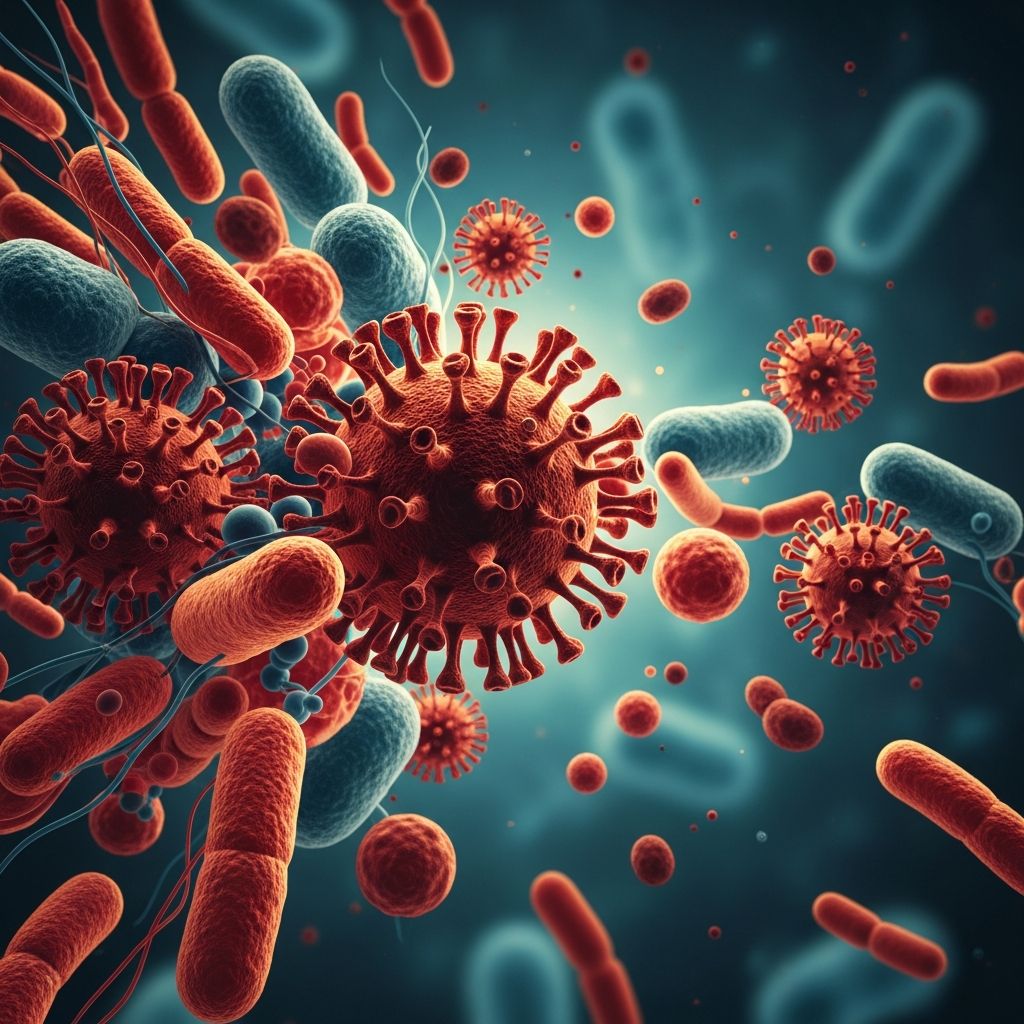
Infectious diseases have shaped human history, with sudden surges in cases challenging healthcare systems and economies. An
outbreak
occurs when the number of disease cases exceeds normal expectations in a specific area or population, while anepidemic
describes widespread occurrence across larger regions, and apandemic
spans continents or the globe. These events arise from complex interactions between pathogens, hosts, and environments, demanding swift public health responses.Defining Key Terms in Disease Spread
Grasping terminology is essential for effective response. Public health authorities define an outbreak as two or more linked cases of the same illness, or when observed cases surpass expected numbers, or even a single case of a high-risk pathogen like diphtheria. Epidemics involve broader geographic spread, and pandemics, like COVID-19, affect multiple countries simultaneously. Endemic diseases maintain a steady presence, such as malaria in certain tropics.
- Outbreak: Localized excess cases, e.g., foodborne illness at a gathering.
- Epidemic: Regional surge beyond baseline.
- Pandemic: Global dissemination.
- Endemic: Constant low-level occurrence.
These distinctions guide resource allocation and interventions.
Biological Drivers of Disease Emergence
Pathogens—viruses, bacteria, fungi, parasites—fuel outbreaks through host jumps, mutations, or new locales. Viruses often drive large-scale events due to rapid replication and mutation rates. Facultative pathogens survive independently, while obligate ones require hosts, amplifying spread potential. Spillover from animals (zoonoses) introduces novel threats, as seen in mpox exported from Africa.
Antimicrobial resistance exacerbates risks, with pathogens evading treatments due to insufficient new antibiotics. Mutant strains in familiar hosts, like drug-resistant bacteria, create persistent challenges.
Environmental Influences on Transmission
Climate, urbanization, and ecological shifts propel outbreaks. Temperature fluctuations boost vector populations like mosquitoes, enhancing pathogen loads. Flooding contaminates water, fostering diarrheal diseases amid poor sanitation. Global trade and migration rapidly disseminate agents; a single MERS case ignited South Korea’s 2015 outbreak.
| Environmental Factor | Impact on Outbreaks | Examples |
|---|---|---|
| Climate Change | Expands vector ranges | Dengue in new areas |
| Urbanization | Increases host density | Cholera in cities |
| Pollution/Water Issues | Facilitates waterborne spread | Diarrhea post-floods |
These factors converge, creating “perfect storms” for emergence.
Human and Social Contributors
Behavioral, socioeconomic, and political elements amplify risks. Malnutrition and comorbidities heighten susceptibility. Conflict disrupts surveillance, as in insecure regions. Inequitable vaccine access and poor supply chains widen disparities. Global asymmetries in tracing and diagnostics hinder control.
Migration due to climate or conflict introduces pathogens to naive populations. Behavioral risks, like unsafe practices, fuel sexually transmitted outbreaks.
Transmission Pathways Explained
Diseases spread via multiple routes, each with unique interventions.
- Person-to-person: Direct contact, droplets (e.g., influenza).
- Vector-borne: Insects like ticks (e.g., Lyme disease).
- Vehicle-borne: Food, water, fomites (e.g., norovirus).
- Airborne: Suspended particles (e.g., tuberculosis).
- Zoonotic: Animal reservoirs (e.g., Ebola).
Related Stories



Unknown etiologies, possibly from toxins or radiation, require epidemiological detective work.
Steps in Outbreak Investigation
Structured probes contain threats. The CDC outlines key phases.
- Prepare: Assemble teams, review data.
- Confirm outbreak: Verify excess cases.
- Define cases: Establish criteria.
- Describe by time/place/person: Spot patterns.
- Develop hypotheses: Identify sources.
- Test hypotheses: Lab, analytic studies.
- Refine/refute: Adjust strategies.
- Implement control: Isolate, vaccinate.
- Report: Share findings.
Speed is critical; early action prevents escalation.
Control and Prevention Strategies
Multilayered approaches mitigate risks.
- Surveillance: Monitor baselines for anomalies.
- Vaccination: Build immunity barriers.
- Hygiene/Sanitation: Block transmission.
- Contact Tracing: Quarantine exposed.
- International Cooperation: Share data, resources.
Addressing root causes like climate resilience and equity is vital for future-proofing.
Historical Lessons from Major Events
Past epidemics inform today. The 1918 influenza killed millions via rapid global spread. SARS (2003) highlighted travel risks. COVID-19 exposed surveillance gaps and vaccine inequities. Ebola outbreaks underscored conflict’s role. These underscore preparedness needs.
Future Challenges and Innovations
Emerging threats include climate-driven vector shifts and antimicrobial voids. Innovations like rapid genomics and AI surveillance promise faster detection. Global pacts, per WHO, aim to fortify systems.
Frequently Asked Questions (FAQs)
What triggers an outbreak?
Pathogen introduction via biology, environment, or human actions exceeding immunity thresholds.
How do outbreaks differ from pandemics?
Outbreaks are local; pandemics global.
Can outbreaks have unknown causes?
Yes, possibly toxins or novel agents; epidemiology uncovers them.
What role does climate play?
It alters vectors and sanitation, boosting transmission.
How to prevent personal risk?
Vaccinate, hygiene, avoid high-risk areas during alerts.
Outbreaks test resilience but yield opportunities for stronger systems through science and collaboration.
References
- What causes outbreaks? – Infectious Disease Emergencies — PubPub. 2023. https://emergencies.pubpub.org/pub/what-causes-outbreaks
- Epidemic, Endemic, Pandemic: What are the Differences? — Columbia University Mailman School of Public Health. 2023-10-12. https://www.publichealth.columbia.edu/news/epidemic-endemic-pandemic-what-are-differences
- Disease outbreaks — World Health Organization. 2024. https://www.who.int/teams/environment-climate-change-and-health/emergencies/disease-outbreaks
- Outbreak Investigations — Georgia Department of Public Health. 2024. https://dph.georgia.gov/epidemiology/acute-disease-epidemiology/outbreak-investigations
- Definition of outbreak — Health Protection Surveillance Centre. 2023. https://www.hpsc.ie/notifiablediseases/casedefinitions/outbreak/
- Section 2: Steps of an Outbreak Investigation — CDC. 2023. https://archive.cdc.gov/www_cdc_gov/csels/dsepd/ss1978/lesson6/section2.html
Similar Articles








Read full bio of Sneha Tete