Ovarian Cancer: Comprehensive Guide To Symptoms, Stages
Comprehensive guide to ovarian cancer: symptoms, causes, diagnosis, treatment, and prevention strategies for early detection and better outcomes.
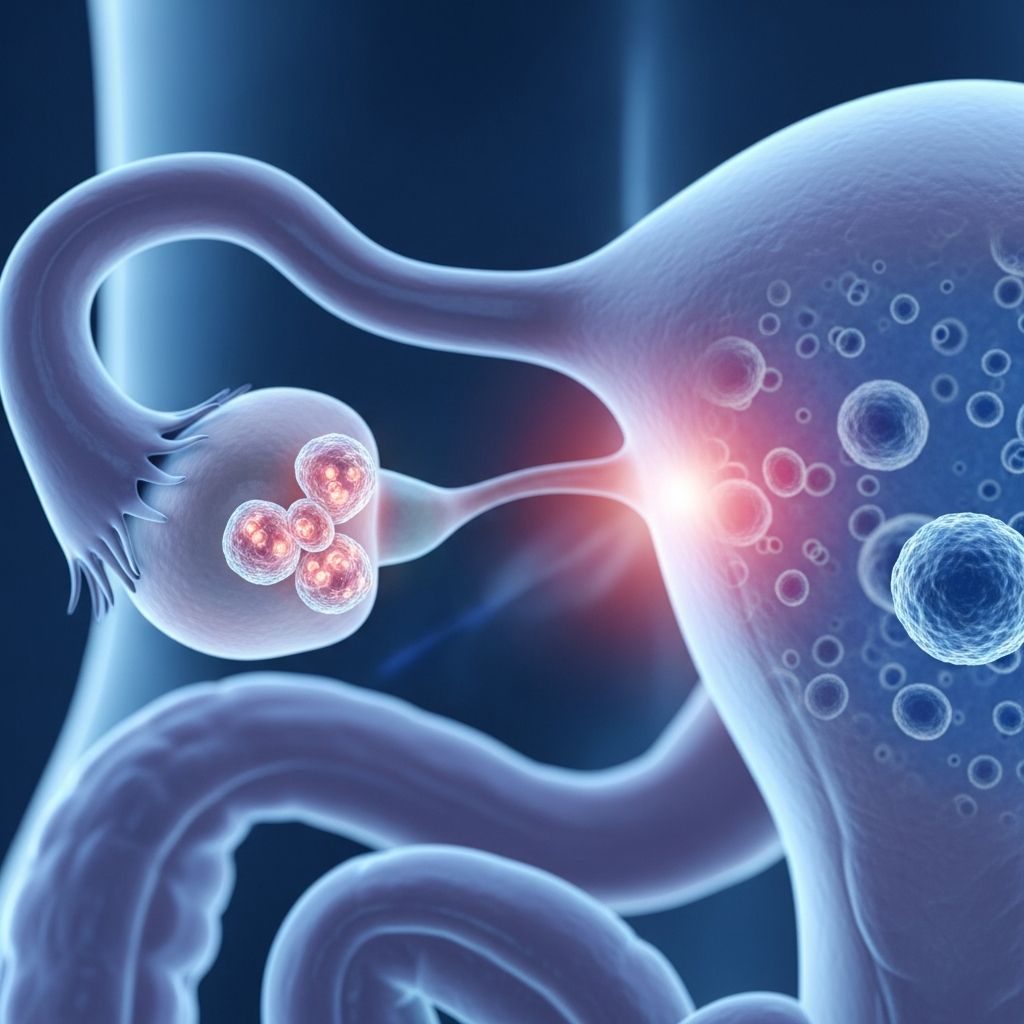
Ovarian cancer begins in the ovaries, the female organs that produce eggs and hormones, and is often diagnosed at an advanced stage due to subtle early symptoms.
What Is Ovarian Cancer?
Ovarian cancer encompasses several diseases originating primarily in the fallopian tubes or ovaries, classified into histological subtypes like high-grade serous carcinoma (HGSC), the most common type accounting for the majority of cases. These subtypes differ in risk factors, cells of origin, molecular profiles, clinical features, and treatments. Epithelial cancers represent about 90% of cases, including serous, endometrioid, clear-cell, and mucinous carcinomas.
Unlike a single entity, ovarian cancer is now often reclassified as ‘ovarian or tubal cancers’ per WHO guidelines, with precursors frequently arising in fallopian tube epithelium. HGSC and high-grade endometrioid carcinomas typically present with peritoneal carcinomatosis, ascites, or pelvic mass at advanced stages and are associated with BRCA and TP53 mutations in about 50% of tumors due to homologous recombination deficiencies.
Types of Ovarian Cancer
- High-Grade Serous Carcinoma (HGSC): Most common, aggressive, often advanced at diagnosis, sensitive to platinum chemotherapy initially but prone to recurrence.
- Low-Grade Serous Carcinoma (LGSC): Less aggressive than HGSC, distinct histology and clinical behavior.
- Endometrioid Carcinoma: Low-grade and high-grade variants; high-grade similar to HGSC.
- Clear-Cell and Mucinous Carcinomas: Rarer epithelial types with unique molecular features.
These distinctions guide targeted therapies, with clinical trials now focusing on specific histologies.
Risk Factors for Ovarian Cancer
Several factors elevate ovarian cancer risk, including genetic mutations and reproductive history.
- Genetic Mutations: BRCA1 and BRCA2 mutations significantly increase risk; carriers may opt for risk-reducing salpingo-oophorectomy.
- Family History: Hereditary syndromes like Lynch syndrome.
- Reproductive Factors: Nulliparity, early menarche, late menopause, and endometriosis.
- Other: Obesity, hormone replacement therapy, and talc use (controversial).
High-risk individuals benefit from preventive surgeries like bilateral salpingo-oophorectomy.
Symptoms of Ovarian Cancer
Symptoms are often vague and mimic gastrointestinal issues, leading to late diagnosis.
- Bloating or increased abdominal size
- Pelvic or abdominal pain
- Difficulty eating or feeling full quickly
- Frequent urination
- Fatigue, back pain, or constipation
Advanced disease may cause ascites (fluid buildup) or bowel obstruction.
How Is Ovarian Cancer Diagnosed?
Diagnosis combines imaging, blood tests, and biopsy; no effective routine screening exists for average-risk women.
- CA-125 Blood Test: Elevated in many cases but not specific; used in screening trials like UKCTOCS.
- Transvaginal Ultrasound: Detects masses; combined with CA-125 in multimodal screening.
- Imaging: CT, MRI, or PET scans for staging.
- Biopsy/Surgery: Definitive diagnosis via tissue sampling during surgery.
Screening trials like PLCO and UKCTOCS showed no mortality benefit, with most cancers diagnosed at stage III/IV (80%).
Ovarian Cancer Stages
Staging uses FIGO system, from I (confined to ovaries) to IV (distant metastasis).
| Stage | Description | 5-Year Survival |
|---|---|---|
| I | Confined to one or both ovaries | 92.1% |
| II | Spread to pelvis | ~70% |
| III | Abdominal spread, lymph nodes | 25% |
| IV | Distant metastasis (liver, lungs) | 25% |
Related Stories



Overall 5-year survival is 45.6%, heavily stage-dependent.
Treatments for Ovarian Cancer
Treatment is multimodal, prioritizing cytoreductive surgery by gynecologic oncologists followed by chemotherapy.
- Surgery: Debulking to remove as much tumor as possible; unilateral for early-stage fertility preservation, bilateral for advanced.
- Chemotherapy: Platinum-based (carboplatin + paclitaxel); intraperitoneal for optimal debulking.
- Targeted Therapies: PARP inhibitors (olaparib) for BRCA-mutated or HRD tumors post-platinum.
- Immunotherapy/Maintenance: Bevacizumab for advanced disease; emerging trials for histotype-specific options.
Tumors are initially platinum-sensitive, but recurrence is common in advanced cases.
Survival Rate and Prognosis
Minimal mortality improvement over the past decade; stage at diagnosis is key.
- Early-stage (I): Excellent prognosis with surgery alone.
- Advanced (III/IV): Recurrence inevitable in most, but PARP inhibitors extend progression-free survival.
Overall survival: 45.6%; varies by subtype (HGSC poorer than LGSC).
Prevention
Primary prevention targets high-risk groups; no proven screening for average risk.
- Risk-Reducing Surgery: Salpingo-oophorectomy for BRCA carriers.
- Opportunistic Salpingectomy: During other procedures to remove fallopian tubes.
- Oral Contraceptives: Reduce risk by 30-50% with long-term use.
- Lifestyle: Pregnancy, breastfeeding lower risk.
Screening with CA-125 + ultrasound detects earlier stages but lacks mortality benefit.
Frequently Asked Questions (FAQs)
Is there a screening test for ovarian cancer?
No routine screening for average-risk women; CA-125 and ultrasound used in trials but do not reduce mortality.
What are the early signs of ovarian cancer?
Bloating, pelvic pain, early satiety; often ignored until advanced.
Can ovarian cancer be cured?
High cure rates in stage I (90%+); advanced disease managed long-term but rarely cured.
Who is at high risk for ovarian cancer?
BRCA1/2 carriers, family history, certain genetic syndromes.
How has treatment improved recently?
PARP inhibitors and targeted therapies extend survival in recurrent disease.
References
- Ovarian cancer — Nature Reviews Disease Primers (PMC). 2020-05-28. https://pmc.ncbi.nlm.nih.gov/articles/PMC7290868/
- What Is Ovarian Cancer? — JAMA Network. 2024-01-02. https://jamanetwork.com/journals/jama/fullarticle/2842319
Similar Articles








Read full bio of Sneha Tete