Ovarian Cysts: Symptoms, Causes, Types, and Treatment
Understand ovarian cysts: common fluid-filled sacs in ovaries that often resolve on their own, but may require monitoring or treatment.
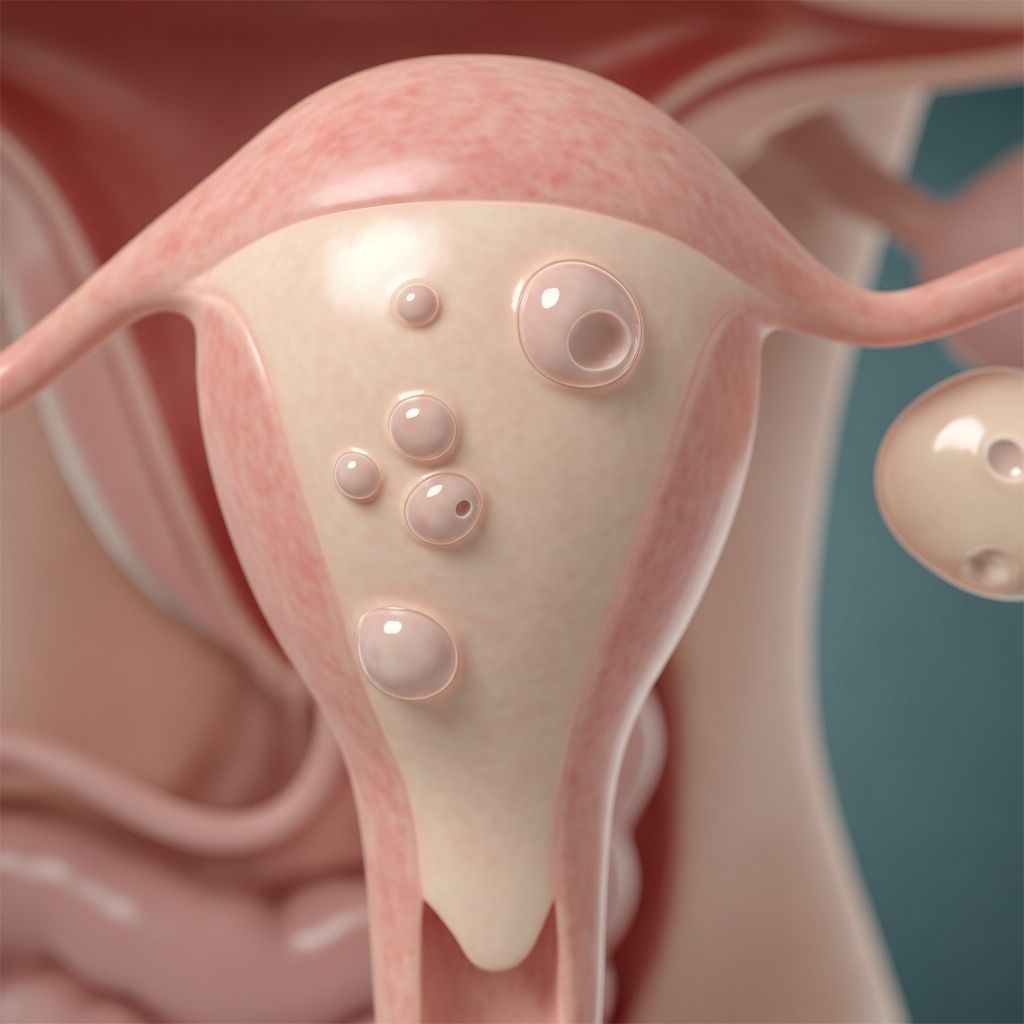
Ovarian cysts are fluid-filled sacs that develop on or inside the ovaries, most commonly during the menstrual cycle. These
functional cysts
are typically benign, resolve spontaneously within a few months, and affect about 10% of women, particularly during childbearing years.What Are Ovarian Cysts?
Ovarian cysts form as part of normal ovarian function, where follicles—small sacs containing developing eggs—grow each menstrual cycle. If a follicle fails to release an egg or fills with fluid post-ovulation, it becomes a cyst. These are usually cherry-sized (1-3 cm) but can grow larger, up to 15-30 cm in rare cases.
Most cysts are harmless and asymptomatic, discovered incidentally during pelvic exams or ultrasounds. They are surrounded by a thin capsule and rarely cancerous, though postmenopausal cysts warrant closer evaluation.
Symptoms of Ovarian Cysts
Many women with ovarian cysts experience no symptoms, especially with small cysts. When symptoms occur, they often relate to cyst size, rupture, or complications like torsion (twisting of the ovary).
- Pelvic pain: Dull, aching pain in the lower abdomen, worsening during menstruation, intercourse, or bowel movements.
- Menstrual irregularities: Heavy, irregular periods, spotting, or abnormal bleeding due to hormone production by some cysts.
- Abdominal bloating: Swelling, pressure, or fullness from large cysts pressing on the bladder or bowel, causing frequent urination or constipation.
- Sudden severe pain: Indicates rupture (burst cyst) or torsion, often with nausea, vomiting, fever, or rapid heartbeat—requires immediate medical attention.
Rarely, cysts cause complications like internal bleeding or interference with ovarian blood supply.
Causes and Types of Ovarian Cysts
Most ovarian cysts (**functional cysts**) arise from menstrual cycle fluctuations in puberty or perimenopause. Less commonly, they stem from conditions like endometriosis or PCOS.
Functional Cysts
- Follicular cysts: Develop when the follicle doesn’t rupture to release the egg, filling with fluid instead. Common and resolve within 1-3 months.
- Corpus luteum cysts: Form after ovulation when the empty follicle seals and accumulates fluid or blood while producing progesterone/estrogen. Usually resolve post-menstruation.
- Theca lutein cysts: Linked to fertility treatments stimulating multiple follicles.
Other Types
- Polycystic ovary syndrome (PCOS): Multiple small cysts due to excess androgens, impairing ovulation.
- Pathological cysts: Dermoid cysts (contain hair/teeth), cystadenomas (mucinous/serous), or endometriomas from endometriosis—may not resolve spontaneously.
| Type | Description | Common In | Resolution |
|---|---|---|---|
| Follicular | Follicle fails to ovulate | Premenopausal women | 1-3 months |
| Corpus Luteum | Post-ovulation fluid/blood | After ovulation | 8-12 weeks |
| PCOS-related | Multiple small cysts | Reproductive age | Chronic management |
| Endometrioma | Endometrial tissue | Endometriosis patients | Surgery often needed |
Fertility drugs increase risk by promoting multiple follicles.
Diagnosis of Ovarian Cysts
Diagnosis begins with a pelvic exam to detect tenderness or masses.
Transvaginal ultrasound
is the gold standard, visualizing cyst size, shape, and contents (simple vs. complex).- Follow-up ultrasound: Recommended in 6-8 weeks for premenopausal women to confirm resolution.
- Additional tests: CA-125 blood test (elevated in cancer, but nonspecific); Doppler ultrasound for blood flow; CT/MRI for complex cases; rarely, diagnostic laparoscopy.
Related Stories



Postmenopausal women or cysts >10 cm, persistent, or complex require urgent evaluation to rule out malignancy.
Treatment Options for Ovarian Cysts
Treatment depends on symptoms, size, type, and patient age. Most resolve without intervention.
Watchful Waiting
For asymptomatic functional cysts <5 cm in premenopausal women: Monitor with serial ultrasounds every 1-3 months. Pain managed with NSAIDs like ibuprofen.
Medications
- Oral contraceptives: Prevent new functional cysts by suppressing ovulation (not for shrinking existing ones).
- Pain relief: NSAIDs for discomfort.
Surgery
Indicated for symptomatic, large (>10 cm), persistent, or suspicious cysts:
- Laparoscopy: Minimally invasive; cystectomy (cyst removal preserving ovary) or oophorectomy if needed.
- Laparotomy: Open surgery for very large/suspicious masses.
Emergent surgery for rupture/torsion.
Complications of Ovarian Cysts
Complications are rare but serious:
- Rupture: Sudden pain; usually self-resolves but may cause hemorrhage.
- Torsion: Twisting cuts blood supply; surgical emergency.
- Malignancy risk: Low for simple cysts; higher for complex/postmenopausal (1-2% risk).
Prevention and Outlook
Prevent recurrent functional cysts with hormonal birth control if not pursuing pregnancy. Regular gynecologic exams aid early detection. Prognosis is excellent: most cysts resolve in 8-12 weeks; cancer risk minimal with simple cysts in cycling women.
When to See a Doctor
- Sudden severe pelvic pain, nausea/vomiting.
- Persistent bloating, urinary changes, or irregular bleeding.
- Postmenopausal cyst discovery.
Frequently Asked Questions (FAQs)
Do ovarian cysts go away on their own?
Yes, most functional cysts resolve within 1-3 months without treatment.
Can ovarian cysts cause infertility?
Rarely; large cysts or PCOS may disrupt ovulation, but treatment restores fertility.
Are ovarian cysts cancerous?
Most are benign; simple cysts have <1% cancer risk, but complex ones need evaluation.
How are ovarian cysts different from PCOS?
PCOS involves multiple small cysts with hormonal imbalance; isolated cysts are usually functional.
Can ovarian cysts burst?
Yes, causing sudden pain; most heal without issue, but seek care for severe symptoms.
References
- Overview: Ovarian cysts – InformedHealth.org — NCBI Bookshelf. 2023 (updated). https://www.ncbi.nlm.nih.gov/books/NBK539572/
- Ovarian cysts — MedlinePlus Medical Encyclopedia. 2024 (updated). https://medlineplus.gov/ency/article/001504.htm
Similar Articles








Read full bio of medha deb