Overweight Vs. Obese: Key Differences And Health Risks
Understand the key differences between being overweight and obese, including BMI classifications, health risks, and personalized management strategies for better outcomes.
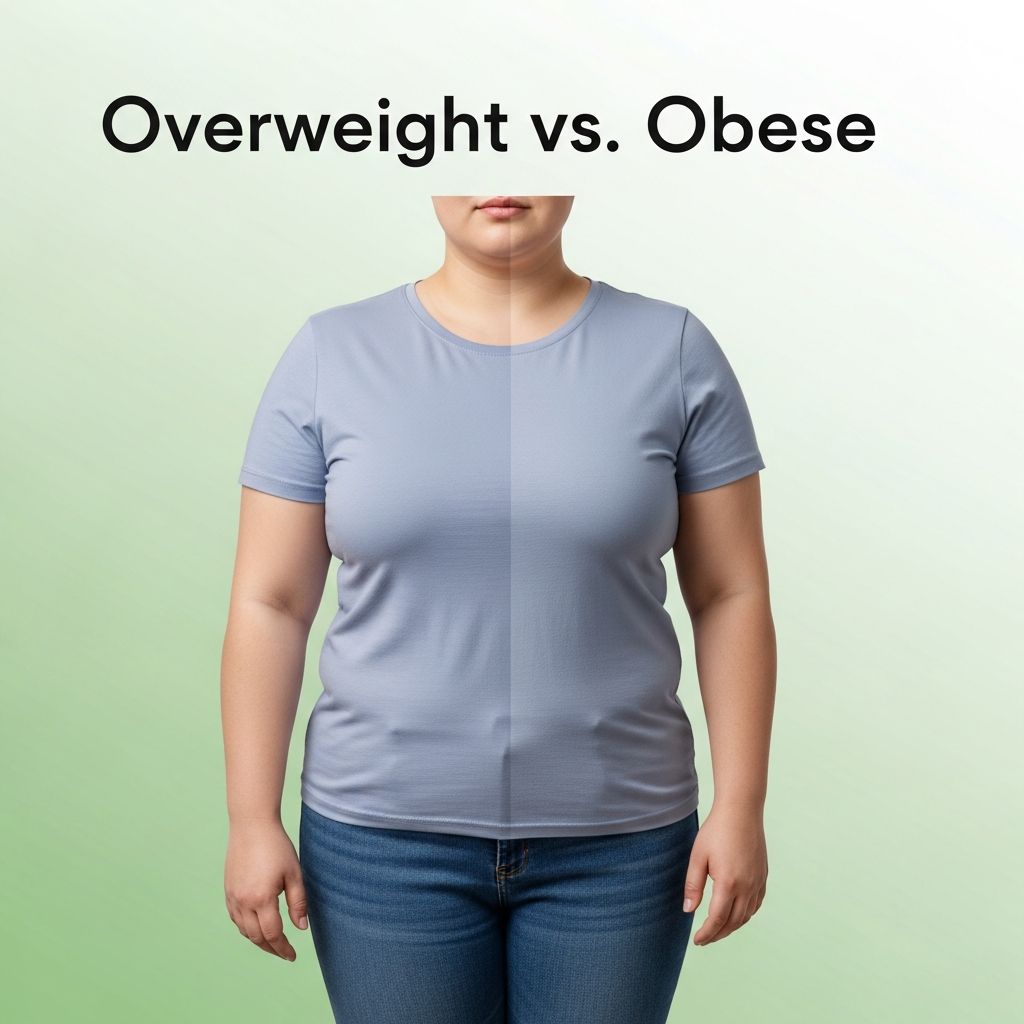
Being overweight and obese are terms often used interchangeably, but they represent distinct categories of excess body weight defined primarily by body mass index (BMI). Overweight is characterized by a BMI of 25 to less than 30, while obesity starts at a BMI of 30 or higher, signaling a chronic condition with elevated health risks.
These classifications help healthcare providers assess risks for conditions like type 2 diabetes, cardiovascular disease, and certain cancers. However, BMI alone doesn’t capture nuances such as body fat distribution or muscle mass, so additional metrics like waist circumference are recommended.
What Does Overweight Mean?
Overweight refers to excess body weight relative to height, typically measured by BMI ranging from 25 to 29.9 for adults. This category indicates a moderate accumulation of body fat that may increase health risks but often responds well to lifestyle interventions.
According to the World Health Organization (WHO), overweight results from an energy imbalance where calorie intake exceeds expenditure, influenced by diet, physical inactivity, and environmental factors. In the U.S., the Centers for Disease Control and Prevention (CDC) notes that overweight individuals face heightened risks for hypertension, dyslipidemia, and stroke compared to those with healthy weight.
- BMI calculation: Weight (kg) / [height (m)]²
- Common in adults due to sedentary lifestyles and processed food consumption
- May not pose immediate mortality risks in otherwise healthy individuals
What Does Obese Mean?
Obesity is a chronic, relapsing disease defined by WHO as excessive fat accumulation that impairs health, with BMI ≥30 for adults. It is subclassified into classes: Class 1 (30-34.9), Class 2 (35-39.9), and Class 3 (≥40, also called severe obesity).
The Cleveland Clinic emphasizes that obesity fundamentally involves too much body fat, raising risks for metabolic changes leading to serious illnesses. Unlike overweight, higher obesity classes correlate strongly with all-cause mortality, particularly BMI ≥35.
| BMI Category | Range (Adults) | Risk Level |
|---|---|---|
| Normal | 18.5-24.9 | Reference |
| Overweight | 25-29.9 | Moderate |
| Obesity Class 1 | 30-34.9 | High |
| Obesity Class 2 | 35-39.9 | Very High |
| Obesity Class 3 | ≥40 | Extremely High |
Note: BMI varies for children based on age- and sex-specific percentiles.
BMI Categories Explained
Body mass index (BMI) is the standard screening tool: an inexpensive measure of weight-for-height that categorizes individuals into groups linked to health outcomes. For adults 20+, overweight is BMI 25-30, obesity ≥30.
WHO stresses BMI as a surrogate for fatness, supplemented by waist circumference to assess abdominal obesity—a key predictor of cardiometabolic risks. Limitations include inaccuracy for athletes (high muscle mass) or older adults (sarcopenia).
BMI for Children and Adolescents
For ages 2-19, BMI uses percentiles from CDC growth charts: overweight 85th-95th percentile, obesity ≥95th. Childhood overweight predicts adult obesity and earlier non-communicable diseases (NCDs).
Health Risks of Being Overweight
Related Stories



Overweight status elevates risks for several conditions, though large studies show no increased all-cause mortality compared to normal weight in healthy individuals.
- Cardiovascular: Hypertension, high cholesterol
- Metabolic: Prediabetes, insulin resistance
- Other: Sleep apnea, osteoarthritis, lower quality of life
In special populations like those with diabetes, overweight BMI >25 significantly raises mortality hazard ratios.
Health Risks of Obesity
Obesity markedly increases disease burden: Class 2+ (BMI ≥35) links to higher death risk via hazard ratios >1.0. CDC lists 10+ conditions, including type 2 diabetes, heart disease, stroke, cancers, and mental health disorders.
- Serious diseases: Gallbladder disease, fatty liver, CKD
- Mental health: Depression, anxiety
- Physical: Body pain, reduced mobility
WHO reports over 1 billion people with obesity globally, driving NCD epidemics.
Overweight vs. Obese: Mortality Risk Comparison
Recent meta-analyses challenge traditional views: a 2.88 million-person review found only BMI ≥35 increases mortality risk; overweight may even be protective in some. Another 5.8 million-person study confirmed no excess death risk for overweight women up to BMI 27.
| Category | Hazard Ratio (Women) | Hazard Ratio (Men) |
|---|---|---|
| Overweight (25-29.9) | ~1.0 (no increase) | Slight increase possible |
| Obesity Class 1 (30-34.9) | Increased ≥30 | Increased |
| Obesity Class 2+ (≥35) | >1.4 | >1.4 |
These findings suggest reevaluating counseling: focus on comorbidities over BMI alone.
Causes of Overweight and Obesity
Primarily an energy imbalance: excess intake from high-calorie diets vs. low activity. Multifactorial contributors include genetics, medications, psychosocial stress, and obesogenic environments (processed foods, urbanization).
- Behavioral: Sedentary lifestyles, poor diet
- Environmental: Food marketing, limited healthy options
- Genetic/Medical: Syndromes, endocrine disorders
Management Strategies: Overweight
For overweight without comorbidities, prioritize prevention: avoid 1-2 lb annual gain via self-monitoring (daily weighing, 10,000 steps). Medium-intensity programs succeed in stabilizing weight.
Management Strategies: Obese
Obesity demands intensive intervention: diet, exercise, behavioral therapy; pharmacotherapy or surgery for Class 2+. Tailor to risk—strong weight loss push for diabetes or BMI ≥35.
| Risk Group | Recommended Intensity |
|---|---|
| Overweight, no comorbidities | Prevention focus |
| Class 1 Obese, healthy | Medium intervention |
| Comorbidities/Diabetes | High: Weight loss target |
| Class 2+ Obesity | Intensive: Medical/surgical |
Prevention Tips
Preventing progression is key: balanced diet, ≥150 min weekly activity, limit sugars/fast food. Early childhood interventions curb lifelong risk.
- Assess BMI/waist routinely
- Counsel on healthy lifestyles
- Monitor NCD risks (glucose, BP)
Frequently Asked Questions (FAQs)
What’s the difference between overweight and obese?
Overweight is BMI 25-29.9; obese is BMI ≥30. Obesity poses higher health risks.
Does being overweight increase mortality risk?
Large studies show no increased all-cause mortality for overweight without comorbidities.
How is obesity treated?
Lifestyle changes first; medications/surgery for severe cases.
Is BMI accurate for everyone?
No—supplement with waist size; inaccurate for muscular builds.
Can children be obese?
Yes, using age/sex percentiles ≥95th.
References
- Overweight versus Obese: Different Risk and Different Management — PMC/NCBI. 2015-06-15. https://pmc.ncbi.nlm.nih.gov/articles/PMC4473617/
- Obesity and overweight — World Health Organization. 2024-03-05. https://www.who.int/news-room/fact-sheets/detail/obesity-and-overweight
- How Overweight and Obesity Impacts Your Health — Centers for Disease Control and Prevention (CDC). 2023-11-08. https://www.cdc.gov/healthy-weight-growth/food-activity/overweight-obesity-impacts-health.html
- Obesity: What It Is, Classes, Symptoms, Causes — Cleveland Clinic. 2023-12-13. https://my.clevelandclinic.org/health/diseases/11209-weight-control-and-obesity
Similar Articles








Read full bio of Sneha Tete