Ozempic And Mounjaro For PCOS: Evidence, Risks, What To Know
Can Ozempic and Mounjaro help manage PCOS symptoms like weight gain and insulin resistance? Experts weigh in on benefits and risks.
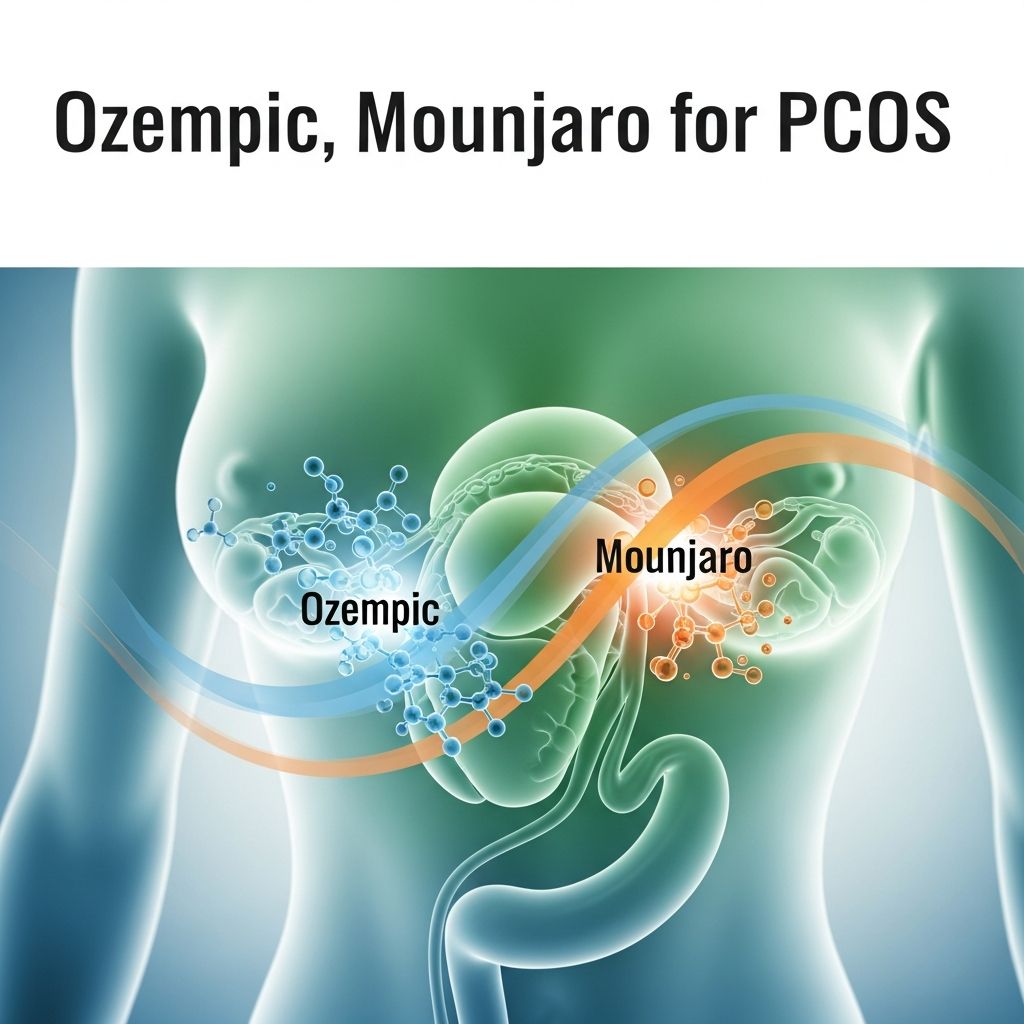
Polycystic ovary syndrome (PCOS) affects up to 10% of women of reproductive age, causing symptoms like irregular periods, excess androgen levels, ovarian cysts, insulin resistance, and significant weight gain that exacerbates the condition. GLP-1 receptor agonists (GLP-1 RAs) such as Ozempic (semaglutide) and Mounjaro (tirzepatide), originally approved for type 2 diabetes and chronic weight management, are increasingly used off-label for PCOS due to their potent effects on appetite suppression, weight loss, and metabolic improvements.
These injectable medications mimic gut hormones to slow gastric emptying, enhance insulin secretion, and reduce glucagon release, leading to substantial weight reduction—often 15-20% of body weight in trials—which can alleviate PCOS hallmarks like hyperandrogenism and menstrual irregularities. However, they are not FDA-approved specifically for PCOS, carry gastrointestinal side effects, and must be discontinued before pregnancy attempts due to potential fetal risks.
What Is Polycystic Ovary Syndrome (PCOS)?
PCOS is a common endocrine disorder characterized by hyperandrogenism (elevated male hormones), ovulatory dysfunction, and polycystic ovarian morphology on ultrasound. It impacts fertility, metabolic health, and quality of life, with 50-70% of affected individuals experiencing obesity and insulin resistance that perpetuate a vicious cycle of hormonal imbalance.
Symptoms include hirsutism (excess hair growth), acne, alopecia, infertility, and increased risks for type 2 diabetes, cardiovascular disease, and endometrial cancer. Diagnosis follows Rotterdam criteria: at least two of three features—oligo/anovulation, clinical/biochemical hyperandrogenism, and polycystic ovaries—after excluding other disorders. Lifestyle interventions remain first-line, but pharmacological options like metformin target insulin resistance; GLP-1 RAs offer a newer avenue by addressing obesity more effectively.
- Prevalence: Affects 5-10% of reproductive-age women globally, with higher rates in certain ethnic groups.
- Metabolic Impact: 70% have insulin resistance, leading to hyperinsulinemia that stimulates ovarian androgen production.
- Fertility Challenges: Anovulation causes infertility in 70-80% of cases without treatment.
What Are Ozempic and Mounjaro?
Ozempic (semaglutide) is a GLP-1 RA administered weekly via subcutaneous injection, FDA-approved for type 2 diabetes (since 2017) and under the brand Wegovy for weight management (2021). It activates GLP-1 receptors in the pancreas, brain, and gut to boost insulin, suppress appetite, and delay gastric emptying.
Mounjaro (tirzepatide), approved in 2022 for diabetes and as Zepbound for obesity, is a dual GLP-1 and GIP (glucose-dependent insulinotropic polypeptide) agonist, showing superior weight loss (up to 22.5% in SURMOUNT-1 trial) compared to semaglutide alone. Both are self-administered pens, titrated from low doses to minimize side effects, with costs around $1,000/month without insurance.
| Drug | Active Ingredient | Primary Mechanism | Avg. Weight Loss | Dosing |
|---|---|---|---|---|
| Ozempic/Wegovy | Semaglutide | GLP-1 RA | 15-17% | Weekly SC injection |
| Mounjaro/Zepbound | Tirzepatide | GLP-1/GIP RA | 20-22% | Weekly SC injection |
How Do GLP-1 Drugs Like Ozempic and Mounjaro Work?
GLP-1 RAs replicate the incretin hormones GLP-1 and GIP, which are released post-meal to regulate glucose homeostasis. Key actions include:
- Glucose-dependent insulin secretion from beta cells.
- Suppression of glucagon from alpha cells, reducing hepatic glucose output.
- Central nervous system effects: reduced hunger via hypothalamic signaling and delayed gastric emptying for prolonged satiety.
- Cardioprotective benefits: lowered blood pressure, improved lipids, and reduced inflammation.
For PCOS, these mechanisms combat insulin resistance (prevalent in 65-80% of cases) by enhancing sensitivity, lowering androgens, and promoting fat loss from visceral depots that fuel hyperinsulinemia. Tirzepatide’s dual agonism may amplify these effects, as GIP improves insulin secretion independently of glucose levels.
Related Stories



Ozempic and Mounjaro for PCOS: The Benefits
Emerging evidence supports GLP-1 RAs for PCOS symptom relief, primarily via weight loss that improves ovulatory function and androgen profiles. A 2023 review highlighted tirzepatide’s potential in managing PCOS through superior glycemic control and body composition changes.
- Weight Loss: Critical for PCOS, as 5-10% reduction restores menses in 50-80% of cases; GLP-1s achieve 15%+ loss, outperforming lifestyle alone.
- Insulin Sensitivity: Reduces hyperinsulinemia, lowering ovarian theca cell androgen synthesis.
- Menstrual Regularity: Weight loss normalizes cycles; clinical trials show improved ovulation rates.
- Hormonal Balance: Decreases free testosterone and SHBG increases; inflammation markers (CRP) drop.
- Comorbidities: Lowers NAFLD, CVD risk factors prevalent in PCOS.
Small trials (e.g., University of Colorado ongoing research) indicate direct metabolic impacts beyond weight loss, including androgen modulation.
What the Research Says on GLP-1s for PCOS
While large RCTs are limited, observational data and pilot studies are promising. A PMC review (2023) on tirzepatide noted improvements in BMI, HOMA-IR, and menstrual frequency in PCOS cohorts. Diabetes Sisters reports clinical trials showing reduced insulin resistance and androgens.
Illume Fertility (2024) details how semaglutide aids IR, weight, cycles, and CVD/NAFLD risk. Aspect Health cites University of Colorado studies exploring hormonal effects. Women’s Health (2024) notes higher weight loss rates in PCOS patients on GLP-1s. However, most evidence is from diabetes/obesity trials with PCOS subgroups; dedicated PCOS trials are needed.
Side Effects and Risks of Ozempic and Mounjaro
Common GI issues affect 20-40%: nausea (44%), vomiting (24%), diarrhea (30%), constipation. Dose titration mitigates these. Serious risks include acute pancreatitis (0.2%), gallbladder disease (2%), and gastroparesis. Thyroid C-cell tumors in rodents prompted boxed warnings, but human risk is unclear—no confirmed thyroid cancer causation.
Mental health concerns: A 2022 study linked semaglutide to higher eating disorder risks in predisposed individuals. Weight regain occurs upon discontinuation (2/3 of loss in STEP 1 trial). PCOS-specific: no long-term fertility data; animal studies show fetal harm.
Important Considerations Before Starting
- Pregnancy: Discontinue 1-2 months prior (Ozempic: 2 months, Mounjaro: 1 month); not safe during conception.
- Off-Label Use: Requires specialist oversight (endocrinologist, OB-GYN); monitor A1c, lipids, hormones.
- Cost/Access: $900-1,300/month; shortages persist for diabetes patients.
- Lifestyle Integration: Combine with diet/exercise for sustained results; muscle loss risk with rapid weight reduction.
- Alternatives: Metformin, OCPs, spironolactone, inositol; bariatric surgery for severe obesity.
Who Should Avoid Ozempic or Mounjaro for PCOS?
Contraindicated in personal/family history of medullary thyroid carcinoma, MEN2, severe GI disease, or pregnancy/breastfeeding. Caution in eating disorders, pancreatitis history, or retinopathy. Not for type 1 diabetes or short-duration use without commitment to long-term therapy.
Frequently Asked Questions (FAQs)
Can Ozempic or Mounjaro cure PCOS?
No, PCOS has no cure; these drugs manage symptoms like weight and IR but require ongoing use.
Is Ozempic safe for pregnancy with PCOS?
No; stop at least 2 months before trying to conceive due to reproductive toxicity risks in animals.
How much weight can you lose on Mounjaro with PCOS?
Average 15-22% body weight over 72 weeks, potentially higher in insulin-resistant PCOS patients.
Do you regain weight after stopping Ozempic?
Yes, about 2/3 of lost weight returns within a year without lifestyle maintenance.
Are there alternatives to GLP-1s for PCOS weight loss?
Yes: metformin, lifestyle changes, myo-inositol, or surgery; consult a specialist.
The Bottom Line
Ozempic and Mounjaro show strong potential for PCOS management by driving weight loss, improving insulin dynamics, and restoring ovulatory function, backed by mechanistic rationale and preliminary studies. They outperform traditional therapies for obesity but demand careful patient selection, monitoring for side effects, and discontinuation preconception. Always consult an endocrinologist or fertility expert to weigh personalized benefits against risks—lifestyle remains foundational.
References
- Wegovy vs Mounjaro: How GLP-1 Medications Can Help with PCOS — Illume Fertility. 2024-10-04. https://www.illumefertility.com/fertility-blog/wegovy-vs-mounjaro-how-semaglutide-help-with-pcos
- Ozempic for PCOS weight management: Is it effective? — Aspect Health. Accessed 2026. https://www.aspect-health.com/blog/ozempic-for-pcos-weight-management-is-it-effective
- PCOS and weight loss drugs — Care Fertility. Accessed 2026. https://carefertility.com/blog/pcos-and-weight-loss-drugs
- What You Must Know About Taking GLP-1s if you Have PCOS — PCOS Nutrition. Accessed 2026. https://www.pcosnutrition.com/glp-1s/
- Ozempic, Mounjaro & More: What Women with Diabetes Should Know — Diabetes Sisters. Accessed 2026. https://diabetessisters.org/resources/ozempic-mounjaro-more-what-women-with-diabetes-should-know-about-new-weight-loss-medications/
- The Potential Utility of Tirzepatide for the Management of Polycystic Ovary Syndrome — PMC (Peer-reviewed). 2023. https://pmc.ncbi.nlm.nih.gov/articles/PMC10380206/
Similar Articles








Read full bio of Sneha Tete