Pachymetry Test: Measuring Corneal Thickness
Understanding pachymetry: A comprehensive guide to corneal thickness measurement.
What Is Pachymetry?
Pachymetry is a diagnostic eye test that measures the thickness of your cornea, the clear front layer of your eye. The term “pachymetry” comes from the Greek words “pachys” meaning thick and “metry” meaning measurement. This simple, painless test provides valuable information about your corneal thickness, which has important implications for diagnosing and managing various eye conditions.
Your cornea is a crucial part of your eye’s optical system. It works along with your lens to refract (bend) light rays so they focus properly on your retina at the back of your eye, allowing you to see clearly. The thickness of your cornea can vary from person to person, and these variations can affect eye health and susceptibility to certain eye diseases.
Pachymetry is particularly valuable because corneal thickness plays a significant role in assessing your risk for glaucoma, planning refractive surgeries like LASIK, and monitoring various corneal conditions. By measuring this thickness accurately, your eye care specialist can provide better individualized treatment and surgical planning.
Why Your Eye Doctor Might Recommend Pachymetry
Eye care specialists recommend pachymetry for several important reasons related to eye health and treatment planning:
Glaucoma Risk Assessment
One of the primary reasons for pachymetry testing is to evaluate your risk for glaucoma. Corneal thickness is a significant factor in determining glaucoma risk. People with thinner corneas may have an increased risk of developing glaucoma compared to those with thicker corneas. During routine eye exams, your ophthalmologist may measure your corneal thickness as part of comprehensive glaucoma screening, especially if you have elevated eye pressure or other glaucoma risk factors.
Pre-Surgical Planning
If you’re considering refractive surgery such as LASIK or photorefractive keratectomy (PRK), pachymetry is essential. These procedures involve reshaping the cornea using an excimer laser. Your surgeon needs to know your corneal thickness to ensure that enough corneal tissue will remain after the procedure to maintain the structural integrity and health of your eye. The measurement helps determine whether you’re a good candidate for these surgeries and guides the surgical plan.
Monitoring Corneal Health
Pachymetry can help identify and monitor various corneal conditions. Abnormal corneal thickness patterns may indicate conditions such as keratoconus, a progressive eye disease where the cornea gradually thins and becomes cone-shaped. Measuring corneal thickness over time allows your eye doctor to track changes and determine if treatment is needed.
Assessing Corneal Edema
Central corneal thickness measurements are routinely used to monitor corneal edema (swelling) and endothelial function. The endothelium is the inner layer of cells that pump fluid out of the cornea. When the endothelium isn’t functioning properly, fluid accumulates in the cornea, causing it to thicken. Regular pachymetry measurements can help your doctor track whether corneal swelling is improving or worsening with treatment.
Managing Ocular Hypertension
Corneal thickness influences how eye pressure is measured. Patients with thinner corneas may have falsely low pressure readings, while those with thicker corneas may have falsely high readings. Your doctor uses corneal thickness measurements to adjust pressure readings and accurately assess your true eye pressure, which is critical for managing ocular hypertension and glaucoma.
Related Stories



How Pachymetry Works
Pachymetry is a straightforward test that takes only a few minutes to complete. Here’s what you can expect during the procedure:
The Ultrasound Pachymetry Method
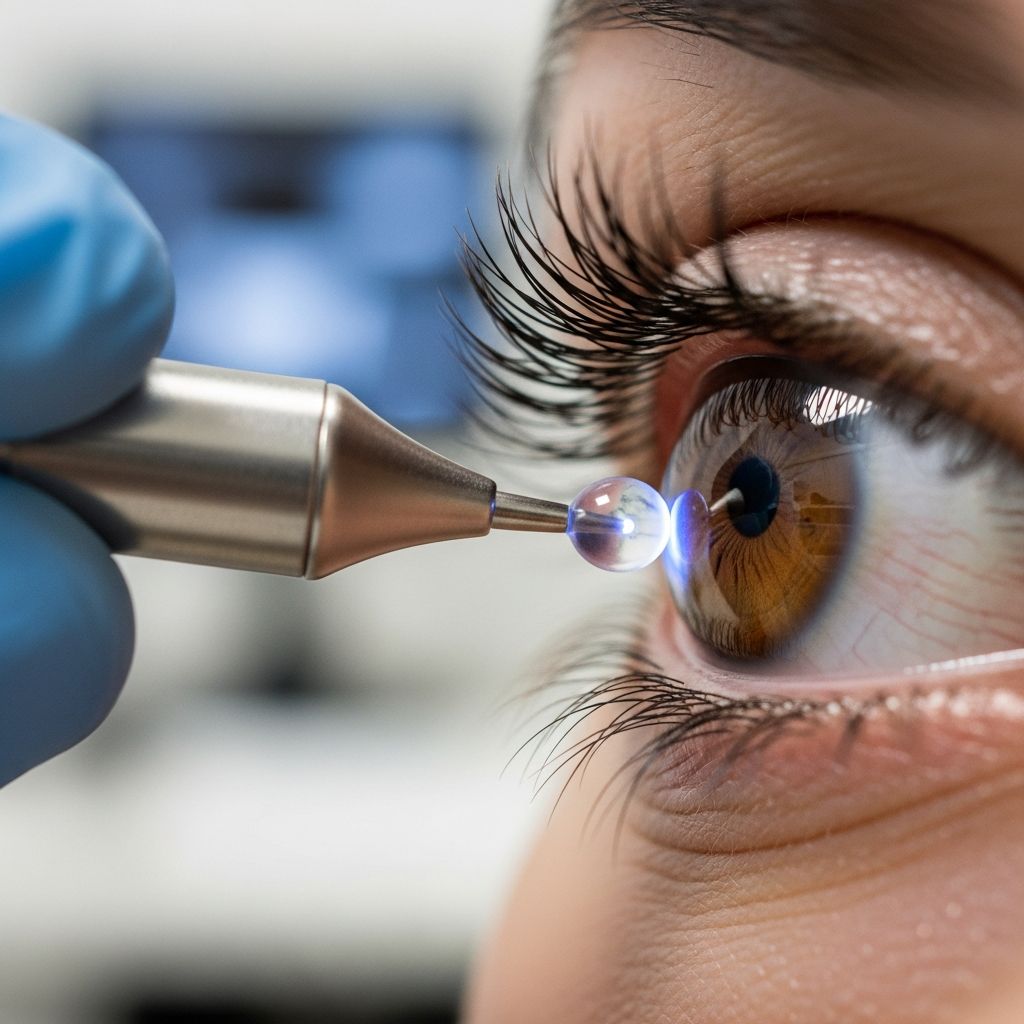
The most common method uses ultrasound technology. Your eye care specialist will first numb your eye with topical anesthetic drops to ensure your comfort. You’ll sit comfortably while your doctor gently touches the surface of your cornea with a small ultrasound probe. The probe emits sound waves that travel through your cornea and bounce back, allowing the machine to calculate your corneal thickness in micrometers (μm). The procedure is painless and takes only seconds per measurement.
Optical Coherence Tomography (OCT)
Modern eye care facilities may also use optical coherence tomography to measure corneal thickness. This advanced technology uses light waves instead of sound waves to create detailed cross-sectional images of your cornea. OCT provides highly accurate, non-contact measurements and can create comprehensive thickness maps of your entire cornea rather than just a single point. High-speed OCT systems are equivalent to ultrasound for central corneal thickness measurement and offer additional advantages for detailed corneal analysis.
What to Expect During Your Test
The entire pachymetry test typically takes just a few minutes. You’ll be seated comfortably in the examination chair. Your eye care specialist will instill anesthetic drops into your eye. You may feel slight pressure when the probe touches your cornea, but you should not experience pain. The doctor may take multiple measurements to ensure accuracy, typically averaging three separate readings. After the test, your eyes may feel slightly sensitive for a short period, but this discomfort usually resolves quickly.
Understanding Your Pachymetry Results
Your pachymetry results are presented as a measurement in micrometers. Normal central corneal thickness typically ranges from approximately 500 to 600 micrometers, though there is natural variation among individuals. Here’s what different measurements might indicate:
Average Corneal Thickness
If your measurement falls within the average range, your corneal thickness is normal. This generally indicates lower risk for certain corneal conditions and adequate corneal tissue for refractive surgery if you’re considering it.
Thin Corneas
Corneal thickness below 500 micrometers is considered thin. Thin corneas may indicate increased glaucoma risk and may limit your candidacy for certain refractive surgeries. Your doctor will discuss what this means for your individual eye health and any precautions you should take.
Thick Corneas
Corneal thickness above 600 micrometers is considered thick. While generally not concerning for most eye conditions, very thick corneas are sometimes associated with hyperopia (farsightedness) and may influence refractive surgery planning.
Pachymetric Mapping
When OCT technology is used, your doctor may receive a detailed pachymetric map showing corneal thickness across different zones. This map reveals the central cornea thickness as well as thickness in surrounding areas. Irregular thickness patterns can help identify corneal diseases such as keratoconus or pellucid marginal degeneration, which might not be evident from central thickness measurements alone.
Is Pachymetry Safe?
Pachymetry is an extremely safe diagnostic test with no known risks. The procedure is non-invasive, painless, and requires no recovery time. Since anesthetic eye drops are used, you experience no discomfort during the test. There are no side effects from the ultrasound waves or light used in OCT technology. You can resume your normal activities immediately after the test. The only minor consideration is that your eyes may feel slightly sensitive for a few minutes after the anesthetic drops wear off, but this is temporary and not harmful.
Pachymetry and Other Eye Tests
Pachymetry is often performed as part of a comprehensive eye examination, especially when evaluating for glaucoma or planning refractive surgery. Your eye care specialist may combine pachymetry with other important tests to get a complete picture of your eye health:
Corneal Topography
While pachymetry measures thickness, corneal topography measures the shape and curvature of your cornea. Together, these tests provide detailed information about your corneal health and are essential for refractive surgery planning.
Eye Pressure Testing (Tonometry)
Corneal thickness influences tonometry readings, so pachymetry and pressure testing are often performed together to accurately assess your glaucoma risk.
Gonioscopy
This test examines your eye’s drainage angle. Combined with pachymetry, it helps your doctor comprehensively evaluate your glaucoma risk.
Optic Nerve Imaging
Advanced imaging of your optic nerve combined with pachymetry provides a complete assessment of glaucoma risk and helps your doctor monitor for any changes over time.
Frequently Asked Questions
Q: Does pachymetry hurt?
A: No, pachymetry does not hurt. Your eye is numbed with anesthetic drops before the test, so you should feel no pain. You might feel slight pressure when the probe touches your cornea, but this is not painful.
Q: How long does a pachymetry test take?
A: The test typically takes just a few minutes from start to finish. Most of that time is spent on preparation and ensuring accurate measurements.
Q: Can I wear contact lenses the day of my pachymetry test?
A: It’s best to check with your eye care provider. Some doctors may ask you to remove contact lenses before the test to ensure accurate measurements. Typically, you should remove them at least a few hours before your appointment.
Q: How often do I need pachymetry testing?
A: If you have normal results, you may not need the test repeated frequently. However, if you have glaucoma, are being monitored for corneal conditions, or are undergoing refractive surgery, your doctor will determine the appropriate testing schedule.
Q: What if my corneas are too thin for LASIK?
A: If pachymetry reveals that your corneas are too thin for LASIK, your eye surgeon may discuss alternative refractive surgery options such as PRK, implantable lenses, or other procedures that might be suitable for your situation.
Q: Are ultrasound and OCT pachymetry equally accurate?
A: Both methods are highly accurate for measuring central corneal thickness. OCT offers additional advantages such as non-contact measurement and detailed mapping of the entire cornea, while ultrasound is quick and widely available.
Q: Will anesthetic drops affect my vision afterward?
A: Your vision may be slightly blurry immediately after the anesthetic drops wear off, but this typically resolves within a few minutes. Most people can resume their normal activities right away.
References
- Corneal Pachymetry Mapping with High-speed Optical Coherence Tomography — National Center for Biotechnology Information. 2006. https://www.ncbi.nlm.nih.gov/pmc/articles/PMC1474520/
- Glaucoma Tests: What To Expect & How To Interpret Results — Cleveland Clinic. 2024. https://my.clevelandclinic.org/health/diagnostics/22514-glaucoma-tests
- Corneal Topography: What To Expect & How To Interpret Results — Cleveland Clinic. 2024. https://my.clevelandclinic.org/health/diagnostics/24819-corneal-topography
- Corneal Edema: Causes, Symptoms & Treatment — Cleveland Clinic. 2024. https://my.clevelandclinic.org/health/diseases/25203-corneal-edema
- Ocular Hypertension: Causes, Symptoms & Treatment — Cleveland Clinic. 2024. https://my.clevelandclinic.org/health/diseases/24621-ocular-hypertension
Similar Articles








Read full bio of medha deb