Palm Oil: Nutrition, Benefits, and Risks
Uncover the nutritional profile, health benefits, risks, and sustainability issues of palm oil in your diet.
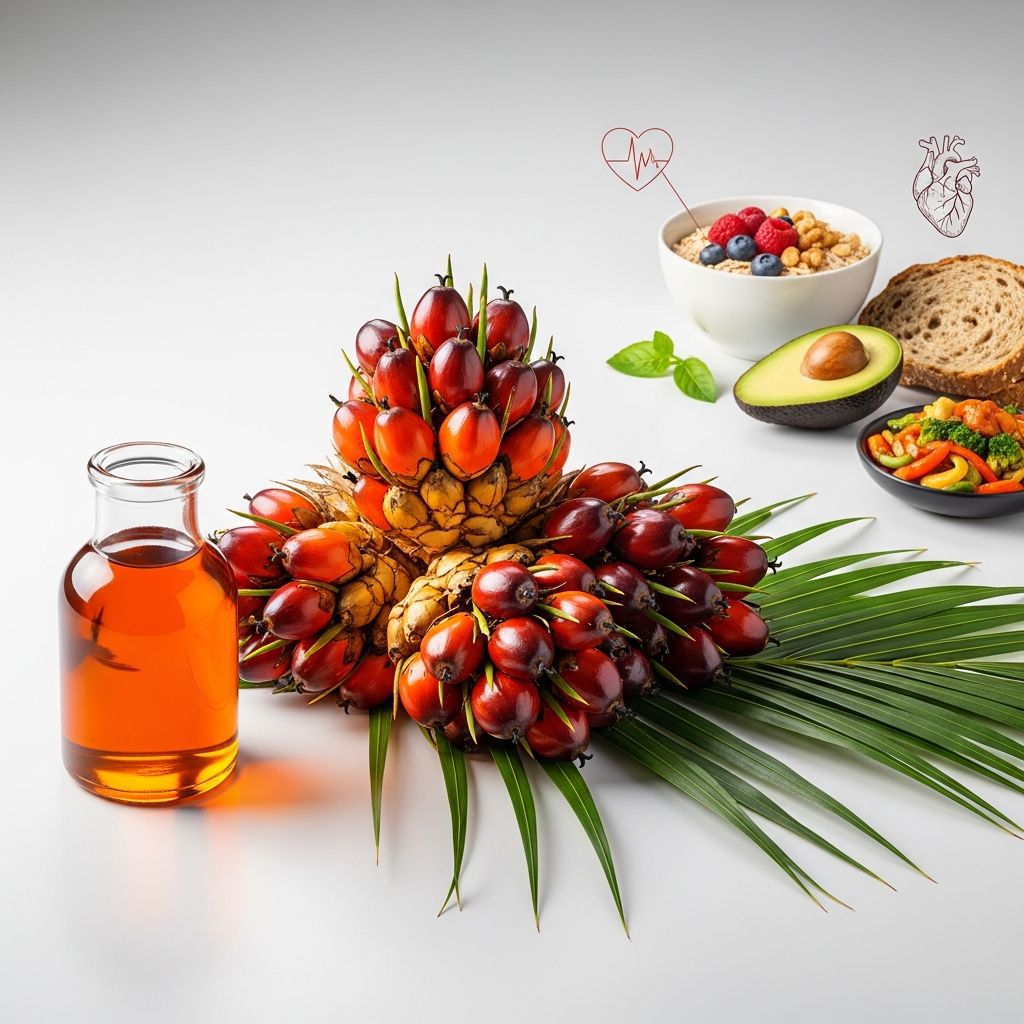
Palm oil, derived from the fruit of oil palm trees, is the most widely produced vegetable oil globally, used in countless processed foods, cosmetics, and biofuels. Despite its ubiquity, it sparks debate over health impacts and environmental sustainability. This article examines its nutritional composition, potential benefits, risks, usage, and more, drawing from scientific evidence.
What Is Palm Oil?
Palm oil is extracted from the fleshy mesocarp of the oil palm fruit (*Elaeis guineensis*), primarily grown in Indonesia and Malaysia. It remains semi-solid at room temperature due to its high saturated fat content, making it ideal for cooking, baking, and manufacturing without hydrogenation, thus avoiding trans fats.
Two main types exist: crude palm oil (reddish from carotenoids) and palm kernel oil (from the seed, compositionally distinct). Red palm oil retains antioxidants like beta-carotene, convertible to vitamin A.
Palm Oil Nutrition Facts
All calories in palm oil come from fat: approximately 50% saturated fatty acids (mainly palmitic acid), 40% monounsaturated (oleic acid), and 10% polyunsaturated. A tablespoon (13.6g) provides 120 calories, 7g saturated fat, no carbs, protein, or cholesterol.
- Saturated fats: Predominantly palmitic acid (44%), similar to animal fats but from plant source, potentially less impactful on cholesterol.
- Vitamin E (tocotrienols): Powerful antioxidants supporting cell protection.
- Carotenoids: In red palm oil, providing provitamin A activity.
Unlike refined versions, unrefined red palm oil preserves these nutrients, offering more health potential.
Potential Health Benefits of Palm Oil
Scientific reviews highlight several benefits, particularly from tocotrienols and carotenoids.
Brain Health
Palm oil’s tocotrienols, a vitamin E form, exhibit neuroprotective effects. Animal and test-tube studies show they protect brain polyunsaturated fats, slow dementia, reduce stroke risk, and inhibit lesion growth.
A 2-year human study with 121 brain lesion patients found twice-daily tocotrienol supplementation stabilized lesions, unlike placebo. A 2020 review of 18 studies confirmed neuroprotective potential against cognitive decline, though more human trials are needed.
Heart Health
Palm oil may protect against heart disease. It attenuates ischemia-reperfusion injury in animal models by reducing oxidative stress via antioxidants.
Human studies show mixed but often positive lipid effects. In Nigerian adults using palm oil exclusively, cholesterol was lower than in Americans. Compared to soybean, peanut oil, or lard, palm oil reduced total cholesterol in normocholesterolemics and improved TC/HDL ratios in hypercholesterolemics.
A meta-analysis of 51 studies found palm oil diets lowered total and LDL cholesterol versus trans fats or lauric/myristic acids. Hybrid palm oil matched olive oil’s 15% LDL drop. Palm olein equated olive oil in lipid effects during crossover trials.
Replacing trans fats boosts HDL, apolipoprotein A-I, and lowers triglycerides. Vegetable palmitic acid raises cholesterol less than animal sources.
Vitamin A Status Improvement
Related Stories



Red palm oil boosts vitamin A in deficient populations via beta-carotene. In cystic fibrosis patients, 2-3 tablespoons daily for 8 weeks raised blood levels.
Other Benefits
Antioxidants like vitamin E and carotenoids theoretically prevent cancer and protect vessels from plaques. Tocotrienols lower LDL by 7-38%.
Does Palm Oil Raise Cholesterol?
Concerns stem from 50% saturated fat, potentially raising LDL. Short-term studies show increases, but long-term (12 weeks) palm oil reduced TC, LDL, and triglycerides versus controls, attributed to antioxidants.
No significant HDL changes; palmitic acid mirrors oleic acid’s effects. In healthy subjects, palm oil matches olive oil without lipid shifts. Not worse than usual fats except superior to trans fats.
Evidence insufficient to deem palm oil a cardiovascular disease cause; triacylglycerol structure poses no risk. Balanced diets mitigate issues.
Palm Oil Uses
- Food: In margarine, shortenings, snacks, chocolate, instant noodles (often unlabeled).
- Cooking: High smoke point suits frying; red palm oil for soups/stews.
- Non-food: Soaps, cosmetics, biofuels.
Its stability avoids hydrogenation, producing trans-fat-free solids.
Downsides and Risks of Palm Oil
High saturated fat may concern heart patients; opt for unsaturated alternatives. Processing can introduce glycidyl esters (potential carcinogens), though mitigation strategies exist.
Calorie-dense; moderation key in balanced diets.
Environmental Concerns
Palm oil production drives 8% global deforestation, habitat loss for orangutans, and biodiversity decline. Peatland drainage boosts CO2 emissions.
Seek RSPO-certified sustainable palm oil to support ethical sourcing.
Is Palm Oil Healthy? The Bottom Line
Palm oil offers benefits like brain protection, heart support (especially vs. trans fats), and vitamin A boost, backed by studies. Its saturated fat warrants moderation, particularly for cholesterol-sensitive individuals. Part of varied diets, it’s neutral-to-beneficial; unrefined red palm oil maximizes nutrients.
Prioritize sustainability to address environmental impacts.
Frequently Asked Questions (FAQs)
Is palm oil bad for your heart?
No, evidence shows it doesn’t increase heart disease risk and may protect via antioxidants, outperforming trans fats.
Does palm oil raise cholesterol?
Short-term may elevate LDL, but long-term studies show reductions in TC, LDL, triglycerides; comparable to olive oil.
Is red palm oil healthier?
Yes, retains carotenoids and vitamin E for added antioxidant benefits and vitamin A conversion.
How to identify palm oil in foods?
Check labels for ‘palm oil,’ ‘palm olein,’ ‘palm kernel oil’; common in processed items.
Is palm oil sustainable?
Not always; choose RSPO-certified to minimize deforestation impact.
References
- Palm oil and the heart: A review — PMC – NIH. 2015-03-26. https://pmc.ncbi.nlm.nih.gov/articles/PMC4365303/
- Palm Oil Processing and Controversies over Its Health Effect — PubMed. 2021-11-04. https://pubmed.ncbi.nlm.nih.gov/34759110/
- Palm Oil: Does It Have Health Benefits? — Healthline. 2023-12-21. https://www.healthline.com/nutrition/palm-oil
Similar Articles








Read full bio of medha deb