Palmoplantar Psoriasis: Causes, Symptoms, and Treatment
Complete guide to palmoplantar psoriasis affecting palms and soles with treatment options.
Palmoplantar Psoriasis: Understanding Psoriasis of the Palms and Soles
Palmoplantar psoriasis is a specific form of psoriasis that primarily affects the palms of the hands and the soles of the feet. This condition manifests as chronic inflammatory skin changes that can be both physically uncomfortable and functionally disabling. Unlike psoriasis in other body locations, palmoplantar psoriasis creates unique challenges because the affected areas are constantly in use for daily activities such as walking, gripping, and manipulating objects. The condition can significantly impact quality of life, affecting both personal comfort and professional capabilities.
Psoriasis may be localized exclusively to the palms and soles or may occur as part of generalized chronic plaque psoriasis. Understanding the distinct characteristics and management strategies for this variant is essential for effective treatment and symptom management. The condition presents with characteristic features that distinguish it from other inflammatory skin disorders affecting the same anatomical areas.
Clinical Presentation and Symptoms
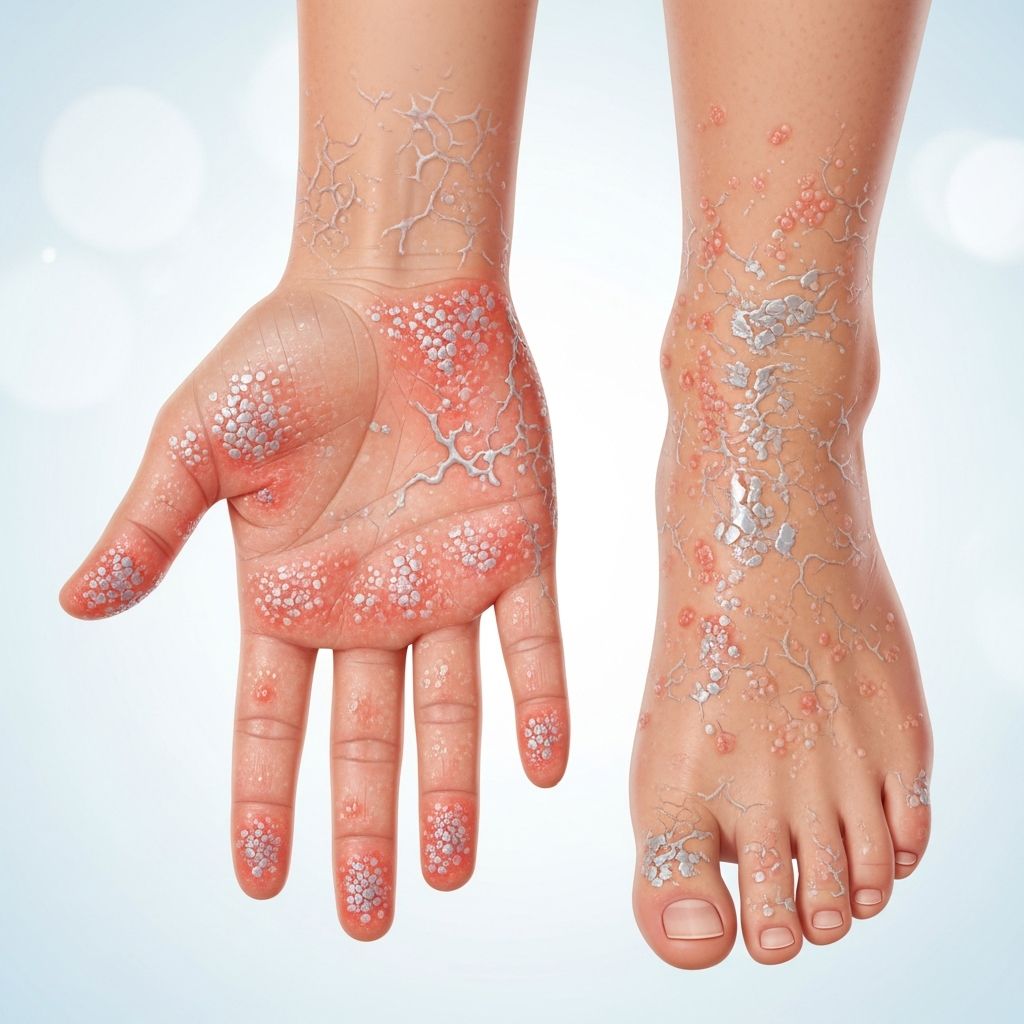
Palms and soles affected by psoriasis tend to be partially or completely red, dry, and thickened, often with deep painful cracks, medically termed fissures. The skin changes typically have a sharp border and are frequently symmetrical, meaning similar lesion distribution appears on both palms and/or both soles. This symmetrical pattern is a hallmark feature that helps distinguish psoriasis from other dermatological conditions affecting the hands and feet.
Individuals with palmoplantar psoriasis commonly experience:
- Well-defined areas of raised, thickened skin
- Scaling and peeling skin surfaces
- Intense itching and burning sensations
- Pain, particularly when walking or performing fine motor tasks
- Cracking and bleeding from fissures
- Symmetrical patterns of lesions on the hands and feet
The severity and extent of symptoms can vary considerably between individuals. Some people experience only mild discomfort and cosmetic concerns, while others suffer from debilitating pain that interferes with occupational activities and daily functioning. A person may not have symptoms continuously; instead, they typically experience periods of remission alternating with flare-ups of increased severity.
Disease Patterns and Subtypes
Two common patterns of palmoplantar psoriasis are observed clinically. The first pattern involves localized psoriasis confined exclusively to the palms and soles without systemic involvement. The second pattern occurs as part of generalized chronic plaque psoriasis, where individuals have psoriatic lesions distributed across multiple body sites in addition to palmoplantar involvement.
It is important to note that palmoplantar pustulosis and the rare condition acrodermatitis continua of Hallopeau (acral pustulosis), characterized by yellow-brown pustules, are no longer formally classified as psoriasis. However, these conditions remain clinically associated with psoriasis. Approximately 10–25% of people with palmoplantar pustulosis also have chronic plaque psoriasis, indicating potential overlap in underlying pathophysiology.
Etiology and Triggering Factors
The precise cause of palmoplantar psoriasis remains incompletely understood, though it clearly involves genetic predisposition and environmental triggers. The tendency to develop psoriasis is inherited, but the specific mechanism causing localization to the palms and soles is unknown. Several factors have been identified as potential triggers for psoriasis onset or exacerbation in susceptible individuals:
- Skin injury: Traumatic injury to the palms or soles may trigger localized psoriasis
- Infection: Bacterial or viral infections can precipitate flare-ups
- Other skin conditions: Pre-existing dermatitis or other inflammatory conditions may trigger psoriasis development
- Psychosocial stress: Emotional stress and psychological factors frequently correlate with psoriasis onset or exacerbation
- Medications: Lithium and certain other medications are particularly associated with triggering psoriasis flares
- Environmental factors: Cold weather exposure and irritant exposure can precipitate symptoms
- Lifestyle factors: Smoking and alcohol consumption may increase disease activity
Understanding individual triggers is crucial for effective disease management. By identifying and avoiding specific triggers, individuals can potentially reduce the frequency and severity of flare-ups.
Differential Diagnosis
Palmoplantar psoriasis can be challenging to differentiate from other inflammatory and infectious conditions affecting the hands and feet. At times, palmar psoriasis can be quite difficult to distinguish from hand dermatitis and other forms of acquired keratoderma. Plantar psoriasis may sometimes appear similar to tinea pedis (fungal foot infection). The presence of psoriatic lesions elsewhere on the body can provide diagnostic confirmation, though isolated palmoplantar involvement occasionally occurs.
The differential diagnosis of palmoplantar psoriasis includes numerous conditions that must be systematically excluded:
- Contact dermatitis and hand eczema
- Fungal infections (tinea pedis, onychomycosis)
- Dyshidrotic eczema
- Keratoderma (acquired and inherited forms)
- Erythema multiforme
- Pityriasis rubra pilaris
- Secondary syphilis
- Pompholyx
Accurate diagnosis typically requires correlation of clinical presentation, distribution pattern, family history, and response to treatment. Dermatological examination for evidence of psoriasis elsewhere on the body strengthens diagnostic certainty.
Treatment Approaches for Palmoplantar Psoriasis
Currently, there is no cure for palmoplantar psoriasis, but various treatment modalities can effectively manage symptoms and improve quality of life. Improvement in general health status can lead to improvement in palmoplantar psoriasis symptoms. Treatment selection depends on disease severity, individual response, and impact on daily functioning.
Topical Treatments
Mild psoriasis of the palms and soles may be treated with topical treatments as first-line therapy. However, topical agents may not work optimally on hands and feet because the skin in these locations is exceptionally thick, presenting a barrier to drug penetration.
- Topical corticosteroids: These remain the go-to treatment for palmoplantar psoriasis, available in varying potencies to match disease severity
- Vitamin D analogs (calcipotriol): While used for other psoriasis types, calcipotriol ointment is not very successful for palmoplantar psoriasis and may cause irritant contact dermatitis on the face if treated areas inadvertently touch facial skin
- Dithranol: Too messy and irritating for routine use on hands and feet
- Calcineurin inhibitors: Help reduce inflammation without thinning the skin
Phototherapy
For many people with palmoplantar psoriasis, phototherapy offers significant relief when topical agents prove insufficient. Light therapy can be particularly effective for hands and feet, making it a valuable treatment option for moderate disease.
Systemic Treatments
Systemic treatments are reserved for more widespread or stubborn cases that do not respond adequately to topical and phototherapeutic approaches. Systemic medications such as cyclosporine and methotrexate can offer substantial relief for moderate to severe disease.
- Apremilast (Otezla): An oral medication that reduces inflammation
- Methotrexate: A conventional immunosuppressive agent effective for generalized psoriasis
- Cyclosporine: Another conventional immunosuppressive option
- Retinoids: Vitamin A derivatives used for stubborn cases
Biologic Medications
Biologics are usually only considered if people do not respond to the above-mentioned treatments. These targeted drugs work on specific parts of the immune system that drive psoriatic inflammation.
- Etanercept (Enbrel)
- Infliximab (Remicade)
- Other TNF-alpha inhibitors and newer biologic agents
Home Care and Lifestyle Management
Complementary home-based strategies can significantly enhance symptom management and skin health. Bathing and soaking practices require careful attention to technique and product selection to avoid exacerbating symptoms.
Bathing and Soaking Recommendations
- Soak the hands and feet in lukewarm water (not hot, which can be irritating)
- Add soothing natural substances such as oatmeal or Dead Sea salt to enhance therapeutic benefit
- Use mild soaps and bath oils that are free from added colors and fragrance to minimize irritation
- Blot the skin dry after soaking with a soft, clean towel to avoid irritation
- Apply moisturizer to damp skin immediately after soaking to trap moisture and prevent drying
Moisture Maintenance
Moisture maintenance is essential for managing symptoms. Keep affected areas well-moisturized by using thick, fragrance-free creams or ointments multiple times daily, especially after bathing while skin is damp. This practice traps moisture and can significantly reduce scaling and itching. The timing of moisturizer application is critical—applying while skin remains damp maximizes the occlusive benefit and improves hydration of the stratum corneum.
Functional Impact and Disability Considerations
Palmoplantar psoriasis can be disabling because it affects the hands or feet, compromising essential daily functions. With proper medical documentation, individuals with significant palmoplantar psoriasis may qualify for social security disability payments, recognizing the profound functional impact this condition can have on vocational and activities of daily living.
The functional limitations imposed by palmoplantar psoriasis extend beyond simple discomfort. Individuals may experience difficulty with fine motor tasks, ambulation, occupational activities, and personal hygiene. The psychological burden of visible skin changes on cosmetically significant areas can contribute to social withdrawal and emotional distress.
Long-Term Prognosis and Management
Palmoplantar psoriasis tends to be a long-term condition with a chronic course. Current medical science offers no cure, but comprehensive treatment can effectively manage symptoms and maintain acceptable quality of life. The unpredictable nature of flare-ups necessitates ongoing vigilance and proactive symptom management strategies.
Successful long-term management typically involves identifying individual triggers, maintaining consistent skincare regimens, and maintaining regular dermatological follow-up. Patients should work collaboratively with healthcare providers to adjust treatment strategies based on disease activity and response to interventions. Early intervention during flare-ups can prevent progression and complications.
Frequently Asked Questions
What is the prevalence of palmoplantar psoriasis?
Approximately 12–15% of people with psoriasis have palmoplantar involvement, making it a relatively common manifestation of psoriatic disease despite affecting a relatively small body surface area.
Can palmoplantar psoriasis be cured?
Currently, there is no cure for palmoplantar psoriasis. However, various treatments and home remedies, such as medications, light therapy, and moisturizers, can effectively manage symptoms and improve quality of life.
Why is palmoplantar psoriasis difficult to treat?
The skin on the palms and soles is exceptionally thick, which creates a significant barrier to topical medication penetration. This anatomical characteristic necessitates stronger topical formulations or alternative treatment modalities such as phototherapy or systemic medications.
How can I prevent flare-ups of palmoplantar psoriasis?
While complete prevention is impossible, identifying and avoiding personal triggers can reduce flare-up frequency. Common measures include stress management, avoiding skin trauma, maintaining healthy lifestyle practices, and continuing prescribed preventive treatments.
Is palmoplantar psoriasis contagious?
No, palmoplantar psoriasis is not contagious. It is an autoimmune inflammatory condition resulting from genetic predisposition and environmental triggers, not infectious agents.
Can I work with palmoplantar psoriasis?
Many individuals with palmoplantar psoriasis continue to work successfully. However, severe cases affecting hands or feet may require occupational accommodation or, in rare cases, may qualify for disability benefits with proper medical documentation.
References
- Palmoplantar psoriasis – DermNet — DermNet (New Zealand Dermatological Society). Accessed 2026. https://dermnetnz.org/topics/psoriasis-of-the-palms-and-soles
- Palmoplantar Psoriasis: Causes, Symptoms, Risks, Treatment — Medical News Today. 2023. https://www.medicalnewstoday.com/articles/314742
- Psoriasis on Hands & Feet: Causes and Treatment Options — WebMD. Updated 2024. https://www.webmd.com/skin-problems-and-treatments/psoriasis/hands-feet
- Psoriasis on Hands & Feet (Palmoplantar Psoriasis): Causes & Treatment — Cleveland Clinic. Updated 2025. https://my.clevelandclinic.org/health/diseases/25027-psoriasis-on-the-hands-and-feet-palmoplantar-psoriasis
- Psoriasis on Feet: Guide to Symptoms, Causes, and Treatments — Metro Boston Cosmetic and Plastic Surgery. 2024. https://metrobostoncp.com/blogs/psoriasis-on-feet/
- Psoriasis Symptoms, Causes, & Risk Factors — National Institute of Arthritis and Musculoskeletal and Skin Diseases (NIAMS), National Institutes of Health. Updated 2024. https://www.niams.nih.gov/health-topics/psoriasis
Similar Articles






Read full bio of Sneha Tete