Palmoplantar Pustulosis: Causes, Treatment, And Prevention
Chronic sterile pustular skin disorder affecting palms and soles: causes, symptoms, diagnosis, and management strategies.
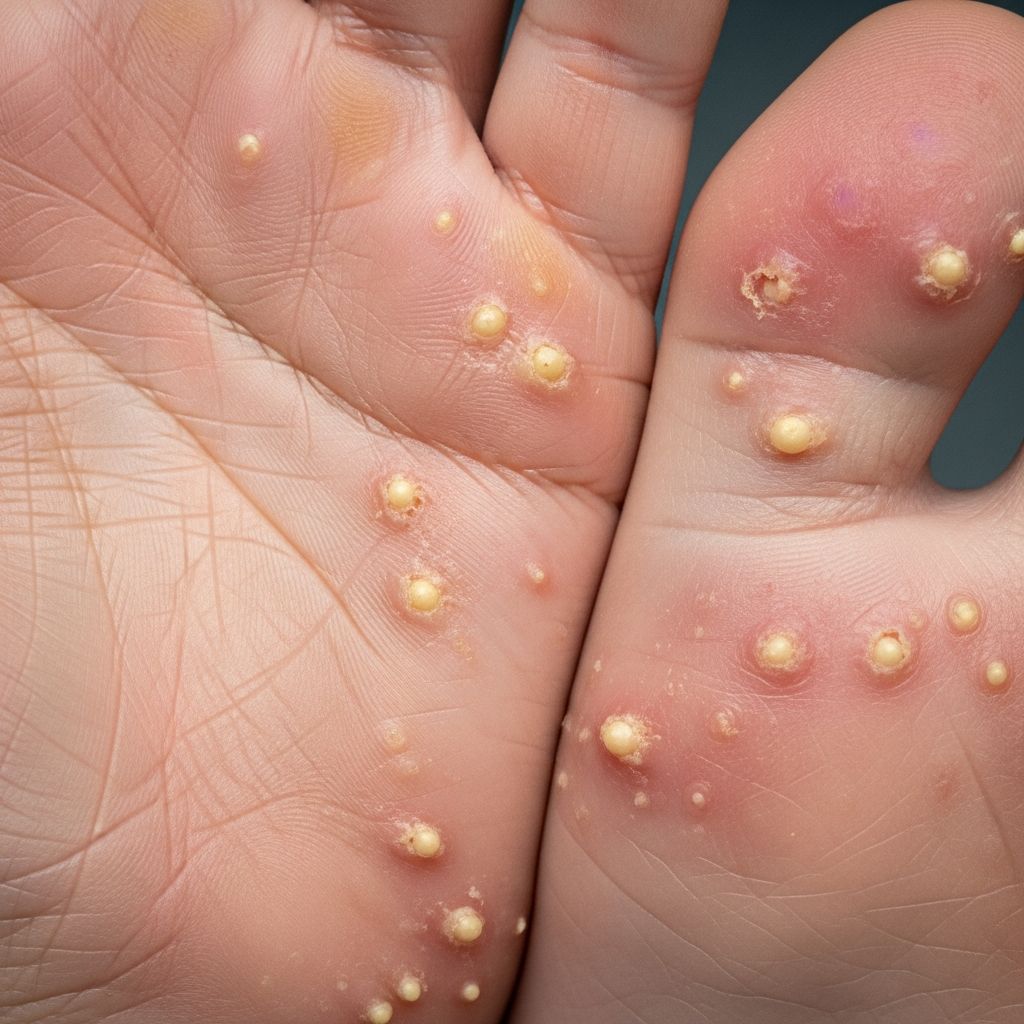
Palmoplantar pustulosis (PPP), also known as localised pustular psoriasis, is a benign, chronic, and often relapsing sterile pustular dermatosis primarily affecting the palms and soles. It manifests as recurrent crops of small, yellow-white pustules on a red, inflamed background, leading to scaly plaques, painful cracks, itching, pain, and burning sensations that impair daily activities.
What is Palmoplantar Pustulosis?
Palmoplantar pustulosis is a rare, recurrent inflammatory skin disorder characterised by sterile blisters filled with yellow turbid liquid (pustules) on the palms of the hands and/or soles of the feet. These pustules are non-infectious and typically affect adults, particularly females aged 40-69, with a strong association to smoking. Unlike contagious conditions, PPP cannot spread to others and is considered an autoimmune or autoinflammatory disorder related to psoriasis vulgaris, though distinct in its localisation.
The condition involves inflammation of the intraepidermal eccrine sweat ducts (acrosyringium), leading to pustule formation and potential duct elimination. It is more prevalent in smokers (65-90% of cases), with pustules forming due to nicotine-induced inflammation in sweat glands. PPP may coexist with plaque psoriasis, psoriatic arthritis, or nail involvement, and family history of psoriasis is reported in 10-42% of patients.
Who Gets Palmoplantar Pustulosis?
PPP predominantly affects adults with a mean onset age of 40-58 years, more commonly women. It is rare in children and has a higher incidence among current or former smokers. Genetic predisposition plays a role, with mutations in the IL36RN gene found in about 5% of cases. Individuals with a family history of PPP or psoriasis, or those with autoimmune conditions like celiac disease, thyroid disease, arthritis, or type 1 diabetes, are at increased risk.
- Demographics: Primarily females (40-69 years).
- Risk Factors: Smoking history, psoriasis family history, autoimmune diseases.
What Causes Palmoplantar Pustulosis?
The exact cause of PPP remains unknown, but it arises from a combination of genetic, autoinflammatory, environmental, and immunological factors. Key triggers include:
- Smoking: Strongest association; nicotine activates receptors in sweat glands, causing inflammation.
- Infections: Streptococcal infections, tonsillitis, dental infections, chronic sinusitis, and possibly Chlamydia trachomatis or Helicobacter pylori.
- Allergies: Contact allergies to metals like nickel, chromium, mercury, or fragrances.
- Medications: TNF-alpha inhibitors (e.g., for psoriasis or IBD) can paradoxically trigger PPP.
- Other: Stress, steroids, genetics (IL36RN mutation).
Environmental antigens may promote autoreactivity in genetically predisposed individuals. Tonsillectomy has shown anecdotal benefits in infection-related cases.
What are the Clinical Features of Palmoplantar Pustulosis?
Symptoms begin with red, tender skin on palms and soles, progressing to blisters and pus-filled pustules (white or yellow) in patches. Pustules dry into brown, scaly plaques with deep, painful cracks, causing itchiness, pain, burning, and thickened, dry skin. Crops recur, merging on inflamed backgrounds, impairing walking and hand use.
- Primary Signs: Sterile pustules (1-2 mm), red inflamed base.
- Secondary Features: Scaling, fissuring, hyperkeratosis, nail dystrophy (pitting, onycholysis).
- Severity: Mild (limited pustules) to severe (extensive plaques, disability).
Associated conditions include psoriatic arthritis (up to 20%), SAPHO syndrome (synovitis, acne, pustulosis, hyperostosis, osteitis).
Diagnosis of Palmoplantar Pustulosis
Related Stories



Diagnosis is clinical, based on characteristic recurrent sterile pustules on palms/soles. Differential includes bacterial infections, contact dermatitis, fungal infections, eczema, or generalised pustular psoriasis. Biopsy shows spongiform pustules (Kogoj), acrosyringeal involvement, neutrophilic infiltration.
- Investigations: Swab for infection, patch testing for allergens, tonsil swab, dental X-ray, blood tests (CRP, HLA-B27 for SAPHO).
Treatment of Palmoplantar Pustulosis
No cure exists; management is challenging and tailored, often requiring months to optimise. Cessation of smoking is crucial for improvement.
Topical Therapies
First-line for mild cases:
- Super-potent topical steroids (e.g., clobetasol) under occlusion.
- Vitamin D analogues (calcipotriol).
- Emollients to reduce cracking.
- Coal tar, salicylic acid for hyperkeratosis.
Phototherapy
- NB-UVB, PUVA (psoralen + UVA), excimer laser (effective for palms).
Systemic Therapies
For moderate-severe/refractory cases:
| Category | Examples | Notes |
|---|---|---|
| Oral Retinoids | Acitretin | Reduces pustules; monitor lipids/liver.[10] |
| Immunosuppressants | Methotrexate, Ciclosporin | Fast-acting for severe; monitor kidneys. |
| Biologics | Etanercept, Infliximab (paradoxical risk), IL-17/IL-23 inhibitors | Targeted; for resistant cases. |
Other: Tonsillectomy for recurrent tonsillitis, allergen avoidance.
Prevention of Palmoplantar Pustulosis Flares
- Quit smoking.
- Treat infections promptly (e.g., dental, tonsillar).
- Avoid triggers: metals, stress, certain drugs.
- Regular emollients, occlusion.
Outlook for Palmoplantar Pustulosis
Chronic relapsing course; 20-50% achieve remission with treatment/smoking cessation, but flares common. Disability from pain/cracks affects quality of life; early intervention improves outcomes.
Frequently Asked Questions (FAQs)
Q: Is palmoplantar pustulosis contagious?
A: No, PPP is sterile and non-infectious; it cannot spread to others.
Q: Does quitting smoking help PPP?
A: Yes, strongly recommended as smoking triggers 65-90% of cases; cessation often leads to improvement.
Q: Can PPP be cured?
A: No cure, but manageable with treatments; long-term remission possible.
Q: Is PPP a type of psoriasis?
A: Related but distinct; localised pustular form, often coexists with psoriasis.
Q: What is the best treatment for severe PPP?
A: Combination: topicals, phototherapy, systemic (retinoids, biologics); individualised.
References
- Palmoplantar Pustulosis: Causes, Symptoms, and Treatment — Healthline. 2023. https://www.healthline.com/health/palmoplatar-pustulosis
- Palmoplantar Pustulosis – Symptoms, Causes, Treatment — NORD (rarediseases.org). 2024-01-15. https://rarediseases.org/rare-diseases/palmoplantar-pustulosis/
- Diagnosis, Screening and Treatment of Patients with Palmoplantar Pustulosis — PMC (NCBI). 2020-08-27. https://pmc.ncbi.nlm.nih.gov/articles/PMC7439281/
- Palmoplantar pustulosis — Almirall. 2024. https://www.almirall.com/your-health/your-skin/skin-conditions/rare-skin-diseases/palmoplantar-pustulosis
- Palmoplantar Pustulosis on Hands and Feet — WebMD. 2023-05-10. https://www.webmd.com/skin-problems-and-treatments/psoriasis/palmoplantar-pustulosis
Similar Articles








Read full bio of Sneha Tete