The Digestive Process: Pancreas Role in Digestion
Discover how your pancreas produces enzymes and hormones essential for digestion and blood sugar control.
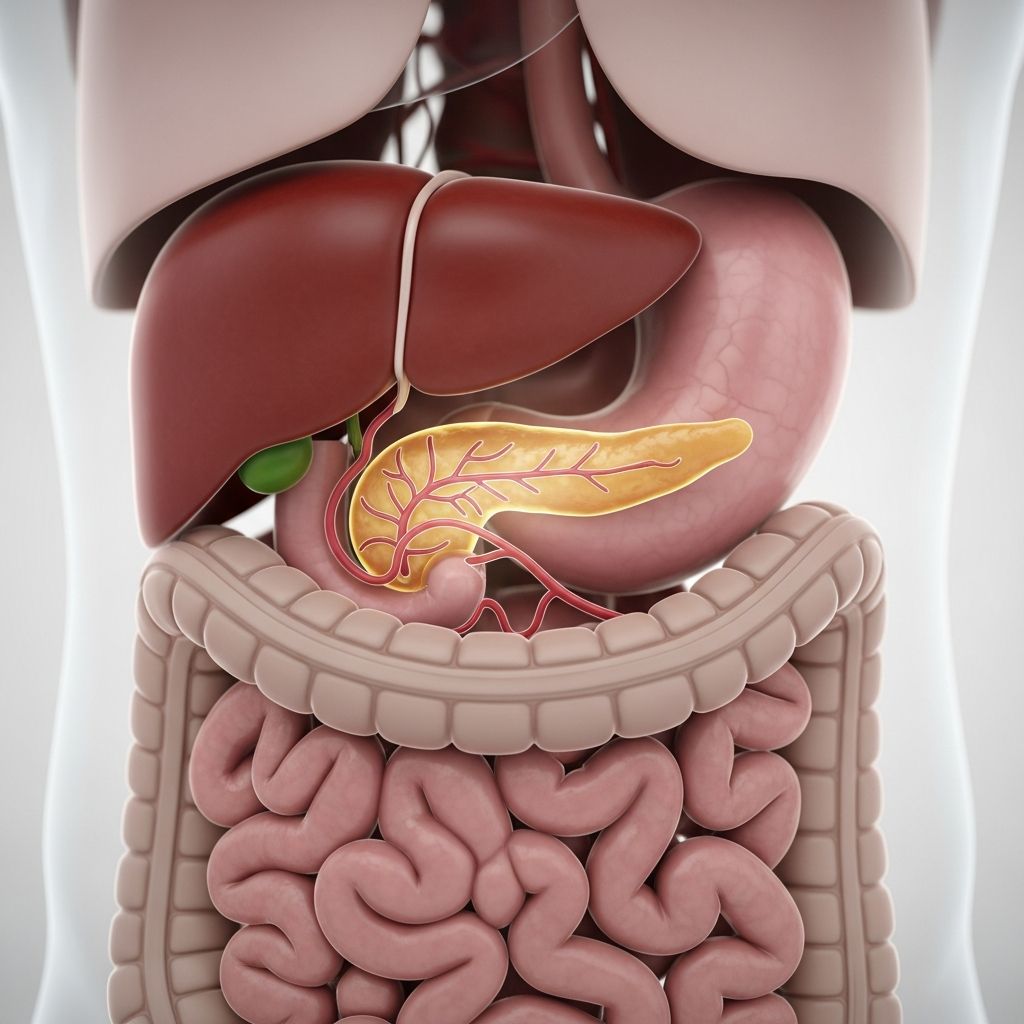
Your pancreas plays a vital role in your digestive system and overall health. Located behind your stomach in the upper portion of your abdomen, this gland is approximately the size of your hand. Despite its modest size, the pancreas performs two essential functions that are fundamental to your body’s ability to process food and maintain metabolic balance. Understanding how your pancreas works can help you appreciate the complexity of your digestive system and recognize the importance of maintaining pancreatic health.
Understanding the Pancreas: Location and Structure
The pancreas is a glandular organ situated deep within your abdominal cavity, tucked behind the stomach. Its strategic position allows it to connect directly to your small intestine through a series of specialized ducts. The pancreas is composed of two distinct types of tissue that work together to support digestion and metabolic regulation. Approximately 99% of pancreatic tissue is dedicated to digestion, while only about 1% is involved in hormone production. This composition reflects the pancreas’s primary role in the digestive process, though both functions are equally critical for your health.
The Dual Functions of the Pancreas
The pancreas operates as both an exocrine gland and an endocrine gland, giving it unique responsibilities within your body. These two distinct functions work in harmony to ensure that food is properly broken down for absorption and that your blood sugar levels remain stable throughout the day.
The Exocrine Pancreas: Enzyme Production for Digestion
The exocrine pancreas is responsible for producing digestive enzymes that are essential for breaking down the food you consume. Each day, your pancreas produces approximately 1 to 4 liters of enzyme-rich digestive juice that flows into your small intestine. This remarkable output demonstrates the pancreas’s commitment to supporting your digestive process. These pancreatic juices are released into a system of ducts that eventually converge into the main pancreatic duct, which then connects to the duodenum, the first part of your small intestine.
The pancreatic enzymes become activated only when they reach the duodenum, which is an important safety mechanism. This delayed activation prevents these powerful protein-digesting enzymes from damaging the pancreas itself or its delicate duct system. The pancreas also produces sodium bicarbonate, an alkaline substance that neutralizes the acidic stomach contents as they enter the small intestine, creating an optimal environment for digestive enzymes to function effectively.
The Endocrine Pancreas: Hormone Production for Blood Sugar Regulation
Beyond its digestive role, the pancreas produces hormones that regulate your blood sugar levels and control your appetite. These hormones include insulin, glucagon, somatostatin, and pancreatic polypeptide. Insulin helps lower blood sugar levels after meals, while glucagon increases blood sugar when it drops too low. These hormones travel through your bloodstream, serving as chemical messengers that coordinate metabolic processes throughout your body.
Pancreatic Enzymes: Breaking Down Your Food
Your pancreas creates several specific enzymes, each designed to break down different components of the food you eat. Understanding these enzymes helps explain how your body transforms complex foods into nutrients that can be absorbed and utilized.
Protease Enzymes: Protein Digestion
Proteases, which include trypsin and chymotrypsin, are powerful enzymes that break down proteins into smaller amino acids that your body can absorb and use for various functions. Beyond digestion, these enzymes play a protective role by helping defend against harmful bacteria and yeast that may enter your digestive tract. When proteins remain undigested, they can sometimes trigger allergic reactions in sensitive individuals.
Related Stories



Amylase: Carbohydrate and Starch Digestion
Amylase is the enzyme responsible for breaking down starches and complex carbohydrates into simpler sugars like glucose, which your body can then use as energy. This conversion is crucial for maintaining steady energy levels throughout the day. If your pancreas doesn’t produce sufficient amylase, undigested carbohydrates can pass through your digestive system too quickly, leading to diarrhea and nutrient malabsorption.
Lipase: Fat Digestion
Lipase works in conjunction with bile from your liver and gallbladder to break down dietary fats into smaller fatty acids and glycerol. This process is essential not only for nutrient absorption but also for the absorption of fat-soluble vitamins such as vitamins A, D, E, and K. Additional lipolytic enzymes like phospholipase and esterase assist in this process.
Additional Enzymes and Protective Substances
Your pancreas also produces other enzymes, including nucleolytic enzymes like ribonuclease and deoxyribonuclease, which break down nucleic acids found in the cells of food. Additionally, the pancreas secretes bicarbonate and other buffering substances that neutralize stomach acid, creating the slightly alkaline environment necessary for pancreatic enzymes to work optimally in the duodenum.
How Pancreatic Juices Reach Your Small Intestine
The delivery system for pancreatic juices is elegantly designed to ensure that digestive enzymes reach your small intestine at precisely the right time. When food enters your stomach and begins to be broken down, your pancreas receives signals to release its juices. These juices travel through a network of ducts, with the main pancreatic duct joining the common bile duct from your liver and gallbladder at a structure called the ampulla of Vater. This junction is located at the entrance to your duodenum, the first segment of your small intestine.
This strategic positioning allows both pancreatic juices and bile to be delivered simultaneously to your small intestine, where they work together to digest fats, carbohydrates, and proteins. The coordination of these digestive juices demonstrates the remarkable efficiency of your body’s digestive system.
Pancreatic Hormones: Beyond Digestion
While enzyme production is the pancreas’s primary role, its hormone production is equally important for overall health. The endocrine portion of your pancreas, consisting of specialized cells called the islets of Langerhans, produces hormones that have systemic effects throughout your body.
Insulin: Lowering Blood Sugar
Insulin is perhaps the most well-known pancreatic hormone. After you eat, your blood sugar levels rise as your digestive system breaks down carbohydrates. Insulin is released in response to elevated blood sugar, signaling cells throughout your body to take up glucose for energy or storage. This hormone is critical for preventing excessively high blood sugar levels, which can damage blood vessels and organs over time.
Glucagon: Raising Blood Sugar
When your blood sugar drops too low, such as between meals or during physical activity, your pancreas releases glucagon. This hormone signals your liver to release stored glucose back into your bloodstream, maintaining stable energy levels and preventing the symptoms of low blood sugar, such as shakiness, sweating, and confusion.
Other Pancreatic Hormones
The pancreas also produces somatostatin, which acts as a regulatory hormone that can slow digestion and nutrient absorption, and pancreatic polypeptide, which influences appetite and digestive secretions. These hormones work together to create a finely balanced system that responds to your body’s nutritional needs.
The Coordination of Digestion: When Everything Works Together
Your pancreas doesn’t work in isolation but rather as part of an integrated digestive system. The process begins when food enters your mouth and continues as it moves through your esophagus to your stomach. In your stomach, food is churned and mixed with stomach acid and digestive enzymes, creating a semi-liquid mixture called chyme.
When this partially digested food enters your small intestine, it stimulates specialized cells in your intestinal lining to release hormones that signal your pancreas to release its digestive juices. Simultaneously, your gallbladder releases bile to help emulsify fats. The combination of pancreatic enzymes, bile, and the intestinal lining’s own digestive secretions creates an optimal environment for nutrient absorption. The majority of nutrient absorption occurs in your small intestine, with the remaining material moving into your large intestine for water absorption and eventual elimination.
Common Pancreatic Disorders
Understanding pancreatic function is important because several disorders can affect this vital organ. Pancreatitis, both acute and chronic forms, involves inflammation of the pancreas that can impair enzyme production and hormone regulation. Pancreatic cancer, though less common than other cancers, is particularly serious because of its location deep within the body, making early detection challenging. Additionally, diabetes mellitus represents a disorder of pancreatic endocrine function, where the pancreas produces insufficient insulin or cells become resistant to insulin’s effects.
Maintaining Pancreatic Health
Because your pancreas is so critical to digestion and metabolism, maintaining its health is essential. Several lifestyle factors can support pancreatic function. Avoiding excessive alcohol consumption is particularly important, as alcohol can trigger pancreatitis. Maintaining a healthy diet rich in whole grains, vegetables, and lean proteins while limiting processed foods and excessive sugar can help prevent pancreatic diseases. Regular physical activity and maintaining a healthy weight also support pancreatic health. Additionally, avoiding smoking and managing stress can reduce your risk of pancreatic disorders.
Frequently Asked Questions
Q: How much digestive juice does the pancreas produce daily?
A: Your pancreas produces approximately 1 to 4 liters of enzyme-rich digestive juice each day, though the exact amount varies depending on your food intake and digestive needs.
Q: Why don’t pancreatic enzymes digest the pancreas itself?
A: Pancreatic enzymes are produced in an inactive form (called zymogens) and only become activated in the duodenum. This protective mechanism prevents these powerful enzymes from damaging the pancreas and its ducts.
Q: What happens if the pancreas doesn’t produce enough enzymes?
A: Insufficient enzyme production can lead to malabsorption, where nutrients aren’t properly absorbed. This can result in diarrhea, weight loss, and nutritional deficiencies. Conditions like pancreatic insufficiency can cause these symptoms.
Q: How do pancreatic hormones affect appetite?
A: Pancreatic hormones like insulin and glucagon regulate blood sugar levels, which directly influence appetite signals. When blood sugar drops, your pancreas releases glucagon and other hormones that stimulate hunger. Conversely, after eating, insulin helps regulate satiety signals.
Q: Can the pancreas repair itself if damaged?
A: The pancreas has limited regenerative capacity compared to other organs. While some pancreatic cells can regenerate, chronic damage from inflammation, disease, or injury can lead to permanent loss of function, making prevention and early treatment crucial.
References
- Pancreas — Better Health Channel. State Government of Victoria, Australia. https://www.betterhealth.vic.gov.au/health/conditionsandtreatments/pancreas
- Pancreas Functions, Location & Disease — Columbia Surgery, Columbia University Department of Surgery. https://columbiasurgery.org/pancreas/pancreas-and-its-functions
- Pancreas—Its Functions, Disorders, and Physiological Impact — National Center for Biotechnology Information (NCBI/PMC), National Institutes of Health. 2022. https://pmc.ncbi.nlm.nih.gov/articles/PMC9005876/
- The Pancreas — Canadian Cancer Society. https://cancer.ca/en/cancer-information/cancer-types/pancreatic/what-is-pancreatic-cancer/the-pancreas
- What Is the Role of Your Pancreas in Digestion? — University of Rochester Medical Center (URMC). https://www.urmc.rochester.edu/encyclopedia/content?contenttypeid=134&contentid=204
- Pancreas: Function, Location, Anatomy & Living Without One — Cleveland Clinic. https://my.clevelandclinic.org/health/body/21743-pancreas
Similar Articles








Read full bio of Sneha Tete