Pancreatic Panniculitis: Signs, Diagnosis, And Treatment Guide
Rare skin condition linked to pancreatic disorders, featuring tender nodules and fat necrosis due to enzyme release.
What is pancreatic panniculitis?
Pancreatic panniculitis is a rare form of
panniculitis
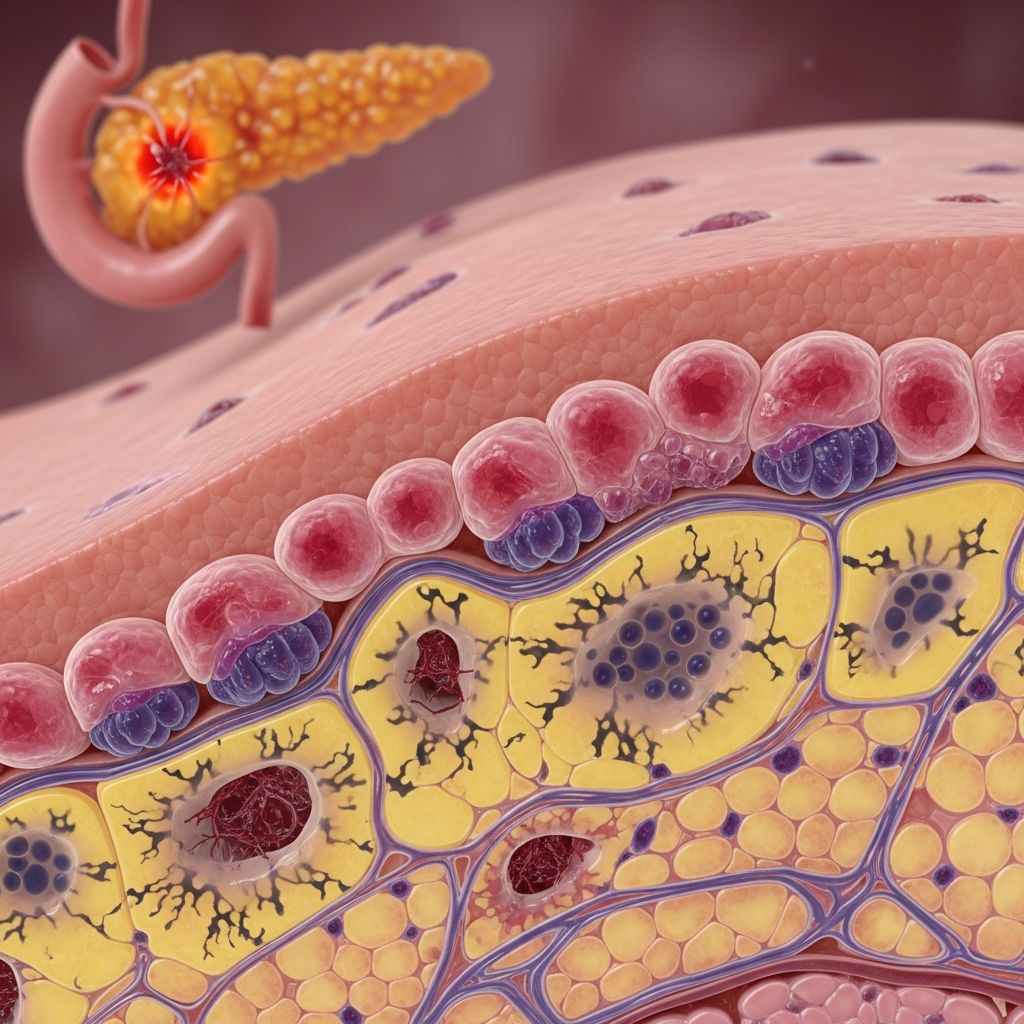
, which is inflammation of the subcutaneous fat layer beneath the skin. It is specifically associated with pancreatic diseases, such as acute or chronic pancreatitis and pancreatic carcinoma. This condition arises from the ectopic release of pancreatic enzymes, primarily lipase, trypsin, and amylase, which trigger enzymatic digestion of subcutaneous adipocytes (fat cells), leading to fat necrosis.Affecting approximately 2–3% of patients with pancreatic disorders, pancreatic panniculitis can manifest before, during, or after the onset of pancreatic pathology. In up to 40% of cases, cutaneous lesions appear as the initial presenting feature, preceding overt pancreatic symptoms by weeks or even months, serving as a critical diagnostic clue. Unlike more common panniculitides like erythema nodosum, pancreatic panniculitis is characterized by its lobular pattern and distinctive histological features.
The subcutaneous nodules are typically tender, erythematous, and predominantly located on the lower extremities, though they may involve other sites. Lesions often evolve through stages: initial inflammation, followed by necrosis, ulceration, and drainage of oily material from liquefied fat. This progression underscores the importance of recognizing pancreatic panniculitis early to investigate underlying pancreatic disease promptly.
Who gets pancreatic panniculitis?
Pancreatic panniculitis occurs in individuals with underlying pancreatic pathology. It is reported in:
- Patients with
acute pancreatitis
, often due to gallstones, alcohol abuse, or hypertriglyceridemia. - Those with
chronic pancreatitis
, including recurrent episodes or complications like pseudocysts. - Individuals with
pancreatic cancer
, particularly acinar cell carcinoma, where skin lesions may signal metastatic disease. - Rarely, non-pancreatic conditions mimicking the histology, termed ‘nonpancreatic pancreatic panniculitis,’ without evident pancreatic enzyme elevation.
Demographically, it affects adults more commonly, with case reports spanning various ages, including elderly patients with comorbidities like cirrhosis or hepatocellular carcinoma. No strong gender predilection is noted, though pancreatic diseases themselves show slight male predominance due to alcohol-related causes.
What causes pancreatic panniculitis?
The precise pathogenesis remains incompletely understood, but the primary mechanism involves the systemic circulation of activated pancreatic enzymes. These lipolytic enzymes—lipase, amylase, phospholipase A, and trypsin—escape from damaged pancreatic acini into the bloodstream, reaching distant subcutaneous fat.
Enzymes induce adipocyte membrane disruption, saponification of triglycerides into glycerol and free fatty acids, and subsequent necrosis. Other implicated factors include:
- Direct endothelial damage to septal vessels, allowing enzyme infiltration into lobules.
- Neutrophilic infiltration amplifying inflammation.
- Association with pancreatic ascites or fistulas in severe cases.
In pancreatic cancer, tumor secretion of enzymes or paraneoplastic phenomena may contribute. Notably, cases post-ERCP or with pancreas divisum highlight iatrogenic or congenital triggers. Elevated serum amylase and lipase correlate with lesion activity, supporting the enzymatic hypothesis.
What are the clinical features of pancreatic panniculitis?
Lesions typically present as multiple, tender, erythematous to violaceous subcutaneous
nodules
(0.5–2 cm), firm on palpation, primarily on thepretibial areas
, ankles, and knees of the lower legs. They may extend to thighs, buttocks, trunk, arms, scalp, or chest, especially in malignancy-associated cases.Related Stories



Evolution includes:
- Initial tender nodules.
- Central softening and ulceration in longstanding lesions.
- Spontaneous drainage of
oily, serosanguinous, or brown fluid
from fat necrosis. - Post-resolution: atrophic scars or hyperpigmentation.
Systemic symptoms like fever, arthralgias (especially ankles/knees from periarticular fat necrosis), abdominal pain, nausea, or weight loss may accompany pancreatic disease. Lesions linked to cancer are more persistent, recurrent, and ulcerated than those from pancreatitis.
How is pancreatic panniculitis diagnosed?
Diagnosis integrates clinical presentation, histopathology, and evidence of pancreatic disease. Key steps include:
- Skin biopsy: Gold standard, revealing predominantly
lobular panniculitis
without vasculitis. Early septal lymphoplasmacytic infiltrate progresses to lobular neutrophilic inflammation. Hallmark:ghost adipocytes
—anucleate, eosinophilic, granular necrotic fat cells with shadowy outlines, often calcified. - Laboratory tests: Elevated serum
amylase
andlipase
(though normal in some cases, especially chronic). - Imaging: Abdominal CT/MRI/US for pancreatitis (edema, pseudocysts) or masses; ERCP if needed.
Differential diagnoses:
| Condition | Key Distinguishers |
|---|---|
| Erythema nodosum | Septal panniculitis, painful nodules on shins, self-limiting, no ghost cells. |
| Neutrophilic dermatoses (e.g., Sweet syndrome) | Dermal neutrophilia, fever, no fat necrosis. |
| Infectious panniculitis | Culture-positive, organisms on biopsy. |
| α1-antitrypsin deficiency panniculitis | Lobular, but no ghost cells; low A1AT levels. |
| Calciphylaxis | Calcification, vasculopathy, ESRD association. |
What is the treatment for pancreatic panniculitis?
Treatment targets the underlying pancreatic condition, as skin lesions often resolve with pancreatic disease control. Supportive measures include:
- Analgesics (NSAIDs, opioids) for pain.
- Wound care for ulcerated lesions.
- Elevating legs to reduce edema.
Specific interventions:
- Acute pancreatitis: IV fluids, NPO, ERCP for gallstones.
- Chronic: Enzyme supplements, octreotide to suppress secretion.
- Cancer: Surgery, chemotherapy.
- Refractory nodules: Intralesional steroids (rarely), dapsone.
Prognosis parallels the pancreatic disease; skin resolution lags behind enzyme normalization.
Frequently asked questions about pancreatic panniculitis
What does pancreatic panniculitis look like?
It appears as tender red-brown nodules on the shins and ankles that may ulcerate and drain oily fluid.
Does pancreatic panniculitis always mean pancreatic cancer?
No, most cases link to pancreatitis; cancer association is less common but lesions are more aggressive.
Can pancreatic panniculitis occur without high amylase/lipase?
Yes, in chronic cases or nonpancreatic mimics, biopsy ghost cells confirm despite normal enzymes.
Is biopsy always needed for diagnosis?
Yes, to identify ghost cells and exclude mimics like infection or vasculitis.
How long do lesions last?
They resolve with pancreatic treatment but may scar; cancer-linked ones persist/recurs.
This comprehensive overview draws from clinical cases and histopathological insights, emphasizing early biopsy and pancreatic evaluation for optimal outcomes. (Word count: 1678)
References
- Panniculitis associated with pancreatic disease – DermNet — DermNet NZ. 2023. https://dermnetnz.org/topics/pancreatic-panniculitis
- Necrotizing Panniculitis as an Uncommon Manifestation of Acute Pancreatitis — European Journal of Case Reports in Internal Medicine. 2020-10-15. https://www.ejcrim.com/index.php/EJCRIM/article/download/540/655
- Pancreatic panniculitis – VisualDx — VisualDx. 2025. https://www.visualdx.com/visualdx/diagnosis/?moduleId=101&diagnosisId=52707
- Nonpancreatic Pancreatic Panniculitis: An Incidental Finding — Journal of Clinical and Aesthetic Dermatology. 2022-01. https://jcadonline.com/nonpancreatic-pancreatic-panniculitis-an-incidental-finding-in-individuals-without-pancreatic-disease/
- Panniculitis: What It Is, Symptoms, Causes & Treatment — Cleveland Clinic. 2024-05-20. https://my.clevelandclinic.org/health/diseases/panniculitis
- Pancreatic Panniculitis – StatPearls — NCBI Bookshelf. 2023-07-17. https://www.ncbi.nlm.nih.gov/books/NBK592380/
Similar Articles








Read full bio of Sneha Tete