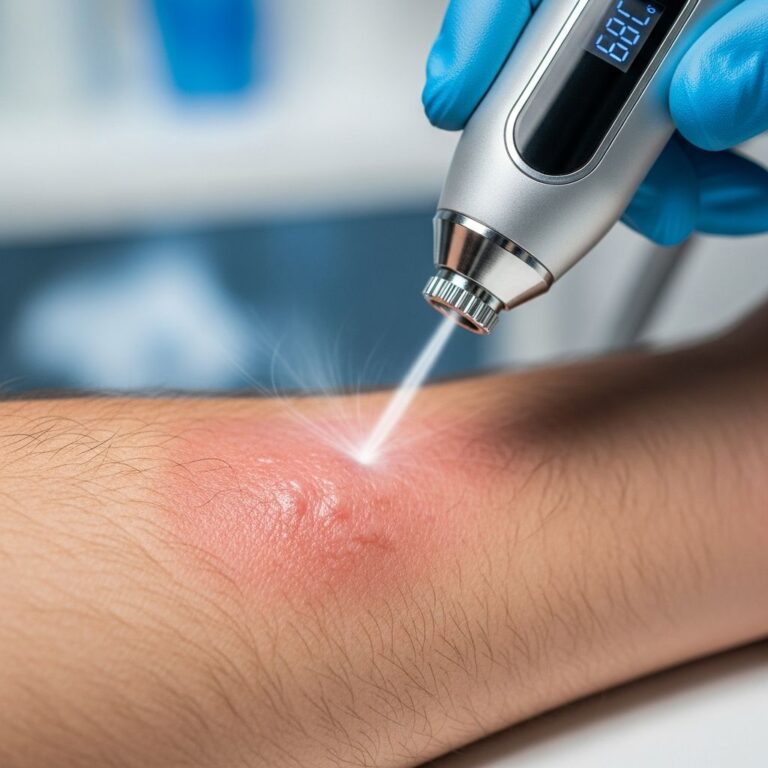
PAPA Syndrome Expert Guide To Symptoms, Causes, And Treatment
Rare autoinflammatory disorder featuring pyogenic arthritis, pyoderma gangrenosum, and severe acne with joint destruction risks.

Author: Dr. Amanda Oakley, Dermatologist, Hamilton, New Zealand. Reviewed: Dr. Janelle J. Riddell, Dermatopathology Fellow, University of Minnesota. February 2025.
What is PAPA syndrome?
PAPA syndrome, an acronym for
pyogenic arthritis, pyoderma gangrenosum and acne
, is a rare genetic autoinflammatory disorder primarily affecting the joints and skin. Also known as PAPGA syndrome (pyogenic arthritis, pyoderma gangrenosum and acne), it features recurrent episodes of sterile, destructive arthritis starting in early childhood, followed by severe cutaneous manifestations around puberty.This autosomal dominant condition arises from mutations in the PSTPIP1 gene on chromosome 15q24-q25.1, leading to dysregulated innate immune responses, excessive interleukin-1β (IL-1β) production, and neutrophil-driven inflammation. Only about 34 cases have been documented worldwide across a handful of families, highlighting its extreme rarity.
Symptoms often flare after minor trauma (pathergy), with potential for joint destruction and permanent skin scarring if untreated. While self-limiting in some, aggressive management is essential to prevent morbidity.
Who gets PAPA syndrome (epidemiology)?
PAPA syndrome is exceptionally rare, with fewer than 50 reported cases globally, primarily from families in the USA, Italy, Netherlands, and New Zealand. It follows an autosomal dominant inheritance pattern, meaning a 50% chance of transmission from an affected parent, though de novo mutations occur.
- Affects both males and females equally.
- Onset of arthritis typically in the first decade of life (mean age ~3 years).
- Skin lesions predominate post-puberty.
- Variable expressivity: not all features manifest in every patient; pyoderma gangrenosum may be absent in some.
Families exhibit incomplete penetrance and phenotypic variability, complicating diagnosis. Adult-onset cases are rarer but feature more skin involvement.
What causes PAPA syndrome?
PAPA syndrome results from heterozygous mutations in the
PSTPIP1
gene (proline-serine-threonine phosphatase-interacting protein 1), encoding a cytoskeletal regulator in hematopoietic cells. Mutant PSTPIP1 disrupts pyrin inflammasome function, causing overproduction of IL-1β and tumor necrosis factor-alpha (TNF-α), which drive neutrophilic inflammation.Key pathogenic mechanisms include:
- Inflammasome hyperactivity: PSTPIP1 mutations enhance ASC-caspase-1 interactions, amplifying IL-1β release.
- Neutrophil dysregulation: Leads to sterile pyogenic infiltrates in joints and skin.
- Pathergy response: Minor trauma triggers flares via heightened innate immunity.
Elevated cytokines in affected tissues confirm autoinflammatory (not autoimmune) etiology, distinguishing PAPA from infections or rheumatologic diseases.
What are the clinical features of PAPA syndrome?
Pyogenic arthritis
The hallmark is recurrent, sterile (culture-negative) arthritis beginning in infancy or early childhood, often affecting large joints like knees, hips, and ankles. Episodes are intensely painful, with fever, swelling, and effusion, lasting weeks to months. Synovial fluid shows neutrophilic predominance without organisms.
- Progressive erosions can cause permanent joint destruction and ankylosis.
- Triggered by trauma, surgery, or stress.
- Biopsies reveal sterile abscesses with neutrophils.
Pyoderma gangrenosum
Appears variably from adolescence, as painful nodules or pustules that ulcerate rapidly with undermined, violaceous edges. Lesions exhibit classic pathergy, arising at trauma sites (e.g., venipuncture, surgery, vaccinations). Poor healing leads to cribriform scarring.
Related Stories



- Locations: extremities, trunk, face.
- Histology: superficial ulceration, dense neutrophilic dermal infiltrate.
- Not always present; seen in ~70-80% of cases.
Acne
Severe nodulocystic acne develops at puberty, resistant to standard therapies, causing deep scarring if unmanaged. Affects face, chest, back; may precede or coincide with pyoderma.
Other features
- Intermittent fever, oral ulcers, keratitis, proteinuria (rare systemic involvement).
- Pathergy in skin and joints.
- Cystic abscesses, panniculitis in some.
Pathology of PAPA syndrome
Synovial biopsies display hyperplastic synovium with neutrophil-rich abscesses, lacking crystals or microbes. Skin biopsies from pyoderma gangrenosum show epidermal ulceration, dermal edema, and dense neutrophilic infiltrates without vasculitis. Acne lesions feature follicular rupture and granulomatous inflammation.
Immunohistochemistry reveals elevated IL-1β and TNF-α in leukocytes, corroborating genetic findings.
How is PAPA syndrome diagnosed?
Diagnosis combines clinical triad (arthritis, pyoderma, acne), family history, and genetic confirmation. Exclusion of infection via cultures is critical.
| Diagnostic Criteria | Features |
|---|---|
| Major | Recurrent sterile pyogenic arthritis (childhood onset) |
| Major | Pyoderma gangrenosum ± pathergy |
| Major | Severe progressive acne ± scarring |
| Supportive | PSTPIP1 mutation |
| Supportive | Neutrophilic infiltrates on biopsy |
| Supportive | Autosomal dominant family history |
Genetic testing (next-generation sequencing) identifies PSTPIP1 variants (e.g., E250Q, A230T). Differential includes infections, IBD-associated arthritis, Behçet’s, other autoinflammatory syndromes (e.g., FMF, TRAPS).
What is the treatment for PAPA syndrome?
No cure exists; management targets inflammation and prevents damage. Multidisciplinary approach (rheumatology, dermatology).
Arthritis
- NSAIDs, corticosteroids for flares.
- IL-1 inhibitors (anakinra, canakinumab) highly effective.
- TNF blockers (adalimumab, infliximab) for refractory cases.
Skin lesions
- Acne: isotretinoin, tetracyclines.
- Pyoderma: topical therapies, systemic immunosuppressants; biologics (TNF/IL-1 inhibitors).
- Wound care to mitigate pathergy.
Surgical interventions risky due to pathergy; use cautiously.
What is the outcome for PAPA syndrome?
Arthritis often improves post-puberty, but joint damage may persist. Skin symptoms can recur lifelong, with scarring. Early biologics improve prognosis, reducing disability. Regular monitoring essential.
Prevention of PAPA syndrome
Genetic counseling for families; preimplantation diagnosis possible. Avoid trauma to minimize flares.
Related autoinflammatory syndromes
- PAID spectrum: PSTPIP1-related (PAPA, PAAND).
- FMF, TRAPS, HIDS: Other monogenic fever syndromes.
- Deficiency of IL-1 receptor antagonist (DIRA): Neonatal onset.
Frequently Asked Questions (FAQs)
Q: Is PAPA syndrome contagious?
A: No, it is a genetic autoinflammatory disorder, not infectious.
Q: Can PAPA syndrome be cured?
A: No cure, but biologics control symptoms effectively.
Q: Does everyone with PAPA get all three features?
A: No, variable expression; pyoderma may be absent.
Q: Is surgery safe for PAPA patients?
A: Risky due to pathergy; new lesions can develop at sites.
Q: How is PAPA diagnosed genetically?
A: Sequencing of PSTPIP1 gene confirms mutations.
References
- Pyogenic Arthritis, Pyoderma Gangrenosum & Acne (PAPA) — NOMID Alliance. 2023. https://www.nomidalliance.org/papa.php
- PAPA syndrome — DermNet NZ. 2024-02-28. https://dermnetnz.org/topics/papa-syndrome
- PAPA syndrome — Orphanet. 2024. https://www.orpha.net/en/disease/detail/69126
- PAPA syndrome clinical spectrum and IL-1β release — PubMed Central (PMC). 2014-05-15. https://pmc.ncbi.nlm.nih.gov/articles/PMC4044204/
- PAPA Syndrome — Merck Manual Professional Edition. 2025. https://www.merckmanuals.com/professional/pediatrics/hereditary-periodic-fever-syndromes/papa-syndrome
- Case Report: Pyogenic Arthritis, Pyoderma Gangrenosum, and Acne — Frontiers in Immunology. 2021-11-11. https://www.frontiersin.org/journals/immunology/articles/10.3389/fimmu.2021.735851/full
Similar Articles








Read full bio of Sneha Tete