Papular Acrodermatitis Of Childhood: What Parents Need To Know
Comprehensive guide to Gianotti-Crosti syndrome: causes, symptoms, diagnosis, and management in children.
What is papular acrodermatitis of childhood?
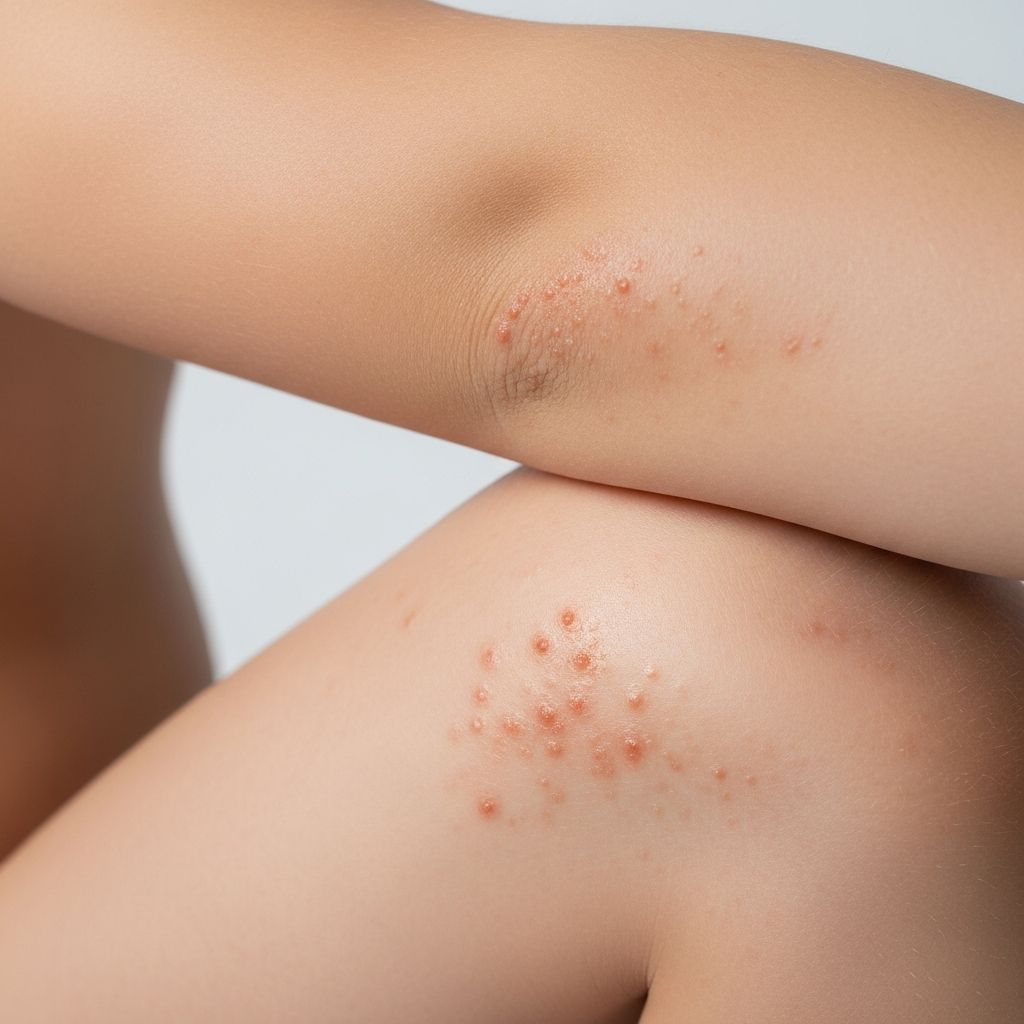
Papular acrodermatitis of childhood, also known as Gianotti-Crosti syndrome (GCS) or infantile papular acrodermatitis, is a benign, self-limiting dermatosis primarily affecting young children. It manifests as a distinctive symmetrical eruption of papules and papulovesicles on the extremities, buttocks, and face, often following a viral infection.
This condition typically occurs in children aged 3 months to 15 years, with peak incidence between 1 and 6 years. It is characterized by a clustering of cases, frequently preceded by an upper respiratory tract infection, and resolves spontaneously within weeks to months without scarring.
Originally described in Italy in association with hepatitis B virus (HBV), widespread HBV vaccination has shifted the most common associations to other viruses like Epstein-Barr virus (EBV) in vaccinated populations.
Who gets papular acrodermatitis of childhood?
Papular acrodermatitis predominantly affects infants and young children, with boys affected slightly more often than girls. It is most prevalent in spring and summer months, possibly due to increased viral circulation during these seasons.
Children with underlying atopic dermatitis may be predisposed, as atopy appears to play a role in susceptibility to papular eruptions following microbial exposures. Clustering of cases suggests communal exposure, such as in daycare settings.
- Age: Primarily 1–6 years, but reported from 3 months to adolescence
- Gender: Slight male predominance
- Risk factors: Recent viral illness, live-virus vaccination, atopy
Causes of papular acrodermatitis of childhood
The rash represents a delayed hypersensitivity reaction to a systemic viral infection or, rarely, vaccination. The exact pathogenesis involves immune-mediated epidermal changes, but the precise trigger varies.
Common viral associations include:
- Epstein-Barr virus (EBV): Most frequent in the United States and vaccinated populations
- Hepatitis B virus (HBV): Original association, now rare due to vaccination
- Cytomegalovirus (CMV)
- Coxsackieviruses and other enteroviruses (e.g., hand-foot-mouth disease)
- Parainfluenza virus
- Respiratory syncytial virus (RSV)
- ECHO viruses
- Rare: Hepatitis A/C, parvovirus B19, HIV
Vaccinations linked to onset include hepatitis A, poliovirus, influenza (live), rotavirus, and others.
Clinical features of papular acrodermatitis of childhood
The eruption evolves over 3–4 days, starting on the thighs and buttocks, spreading to outer arms, and finally the face. It is strikingly symmetrical and acral (favoring extremities).
Lesions are 5–10 mm firm, dull red to purple papules, sometimes vesicular or haemorrhagic, sparing palms, soles, and mucous membranes. The trunk is relatively spared.
- Rash characteristics: Monomorphic, non-follicular papules; may itch mildly
- Distribution: Buttocks, lateral thighs/arms, cheeks; spares trunk centrally
- Systemic symptoms: Low-grade fever, malaise (mild); lymphadenopathy (axillary/inguinal, persistent)
- Other: Hepatomegaly if HBV-related (rare jaundice); bloated abdomen
In cases with EBV or other viruses, a copper-colored firm patch or jaundice may appear if hepatic involvement occurs.
Related Stories



Diagnosis of papular acrodermatitis of childhood
Diagnosis is clinical, based on characteristic morphology, distribution, and history of preceding illness. Biopsy is rarely needed but shows spongiotic dermatitis with parakeratosis.
Laboratory tests (viral serology, PCR) confirm triggers but are not routine unless atypical features suggest HBV or immunodeficiency.
Differential diagnosis
| Condition | Key Distinguishing Features |
|---|---|
| Molluscum contagiosum | Umbilicated pearly papules; trunk involvement; chronic |
| Chickenpox | Centripetal vesicles on erythematous base; pruritic; systemic illness |
| Hand-foot-mouth disease | Oral ulcers, palms/soles; smaller vesicles |
| Infantile papular acrodermatitis (Gianotti-Crosti type) | Identical; historical synonym |
| Lichen planus | Polygonal, Wickham striae; oral lesions; adults |
| Arthropod bites | Random distribution; urticarial; history of exposure |
| Pityriasis lichenoides | Polymorphous; necrotic lesions; recurrent |
Treatment of papular acrodermatitis of childhood
No specific antiviral therapy is required, as the condition is self-limiting (2–3 months resolution). Management is supportive:
- Symptom relief: Calamine lotion, oatmeal baths for itch; oral antihistamines (e.g., hydroxyzine)
- Topical steroids: Low-potency (e.g., hydrocortisone) for severe pruritus; avoid prolonged use
- Monitor: For complications like secondary infection or prolonged course
Avoid unnecessary investigations or treatments; reassure parents of benign course.
What is the outcome for papular acrodermatitis of childhood?
Complete resolution without scarring or long-term sequelae. Lymphadenopathy may persist months. Recurrence is rare.
No increased risk of chronic skin disease, though atopy may predispose to similar reactions.
Prevention of papular acrodermatitis of childhood
No specific prevention beyond standard viral prophylaxis (e.g., HBV vaccination reduces that trigger). Hand hygiene and avoiding ill contacts may limit spread in clusters.
Frequently Asked Questions
Is papular acrodermatitis of childhood contagious?
No, the rash itself is not contagious; it follows a viral infection that may be.
How long does Gianotti-Crosti syndrome last?
Typically 2–11 weeks for rash resolution; nodes longer.
Should I take my child to the doctor for this rash?
Yes, to confirm diagnosis and exclude differentials; most cases managed outpatient.
Can adults get papular acrodermatitis?
Rarely; more common in children under 9, women slightly more in adults.
Does it leave scars?
No, resolves without marks.
References
- Gianotti-Crosti Syndrome — UF Health. 2023. https://ufhealth.org/conditions-and-treatments/gianotti-crosti-syndrome
- What Is Acrodermatitis? Causes, Symptoms, and More — Healthline. 2023. https://www.healthline.com/health/acrodermatitis
- Acrodermatitis — Miriam Lieberman MD FAAD. 2023. https://www.miriamliebermanmd.com/acrodermatitis.php
- Infantile papular acrodermatitis. Gianotti-Crosti syndrome — DermNet NZ. 2024. https://dermnetnz.org/topics/papular-acrodermatitis-of-childhood
- Gianotti-Crosti Syndrome: A Common Childhood Rash — WebMD. 2023. https://www.webmd.com/skin-problems-and-treatments/what-is-gianotti-crosti-syndrome
- A case with Gianotti-Crosti syndrome with a history of atopic dermatitis — Journal of Surgery and Medicine. 2023. https://jsurgmed.com/article/view/7806/6486
Similar Articles








Read full bio of medha deb