Papular Purpuric Gloves and Socks Syndrome
Understanding PPGSS: A viral rash with distinctive hand and foot involvement.
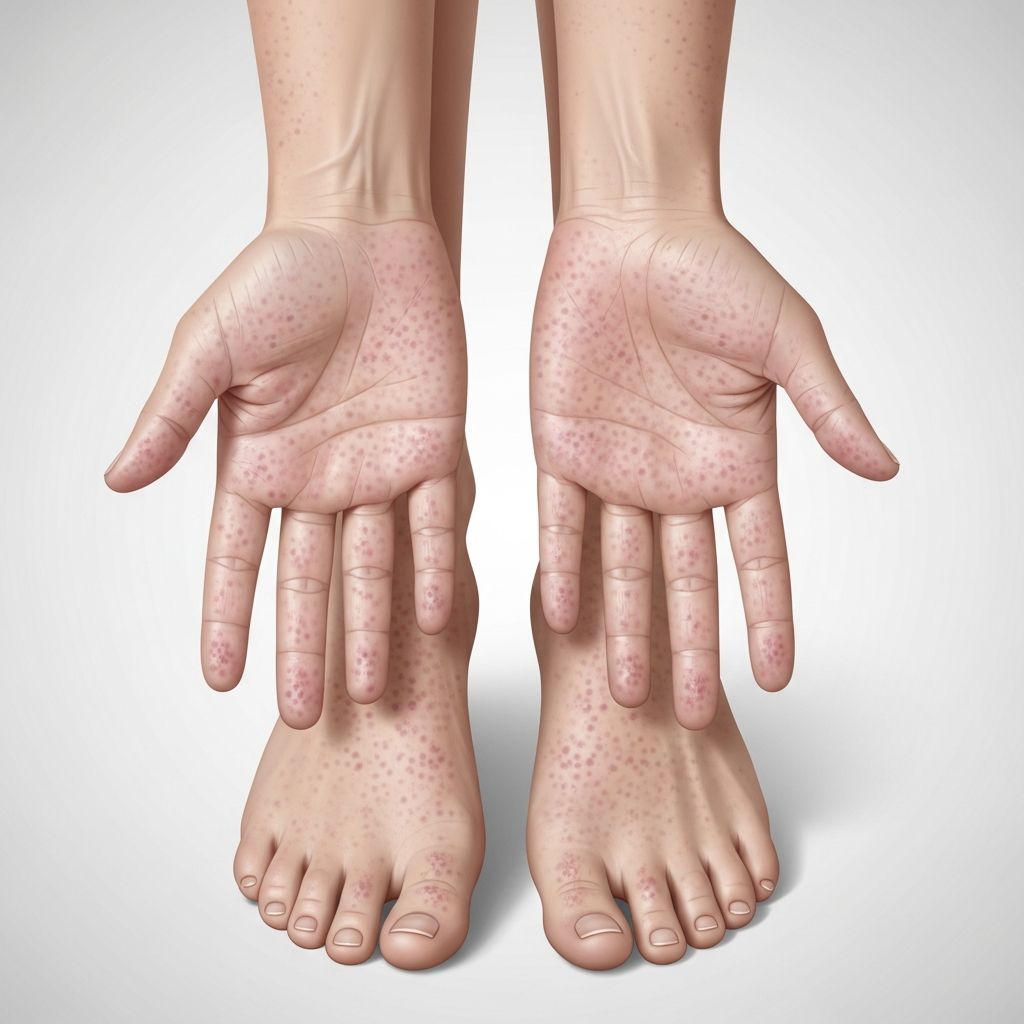
Papular purpuric gloves and socks syndrome (PPGSS) is a distinctive viral rash characterised by painful redness and swelling of the feet and hands. This uncommon dermatosis presents with a characteristic purpuric exanthem that is sharply demarcated at the wrists and ankles, creating an appearance reminiscent of gloves and socks. The condition is typically self-limited and resolves within two weeks, often without specific therapeutic intervention.
What Causes Papular Purpuric Gloves and Socks Syndrome?
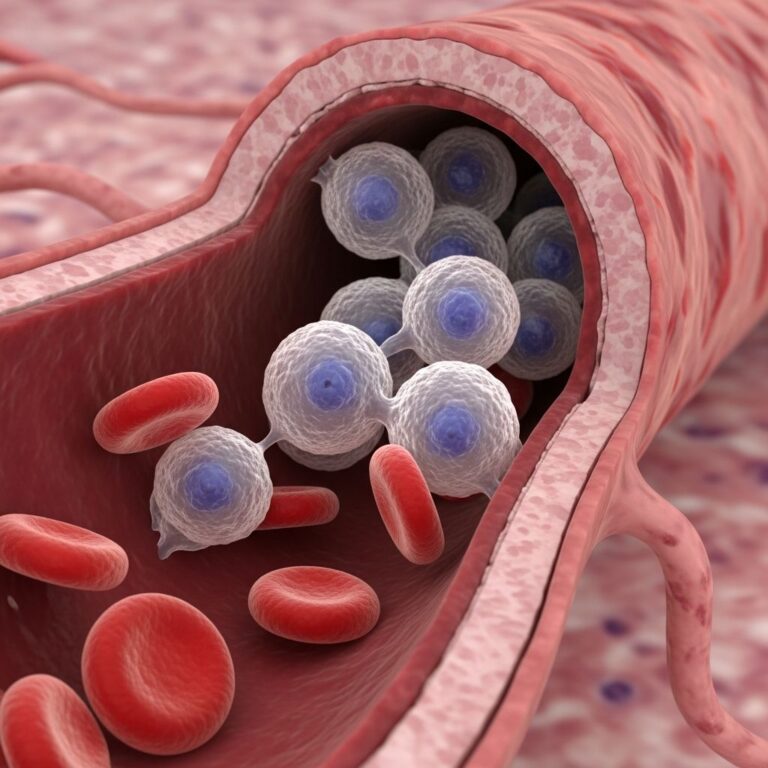
Papular purpuric gloves and socks syndrome is usually caused by an erythrovirus called Parvovirus B19 (EVB19), a single-stranded DNA virus that targets red cells in the bone marrow. This pathogen spreads via respiratory droplets and has an incubation period of 7 610 days. Beyond parvovirus B19, the syndrome has been associated with various other viral infections and pharmaceutical agents:
- Hepatitis B virus
- Human herpesvirus 6
- Cytomegalovirus
- Epstein-Barr virus
- Influenza B virus
- Drugs including trimethoprim/sulfamethoxazole and chemotherapeutic agents
The syndrome has been noted to have a seasonal variation, often occurring during spring and summer months, suggesting an environmental or epidemiological trigger related to viral circulation patterns.
Who Gets Papular Purpuric Gloves and Socks Syndrome?
Papular purpuric gloves and socks syndrome typically occurs in young adults, though cases in older adults and children have been documented. The condition shows no significant gender predilection and affects individuals across various demographic groups. The peak incidence appears to be in individuals aged 20-40 years, though reported cases range from childhood through advanced age.
Clinical Features and Symptoms
The prodromal phase of parvovirus B19 infection causes nonspecific viral symptoms that may include mild fever, headache, and joint pain. Patients may experience malaise and general unwellness before the characteristic rash appears.
Papular purpuric gloves and socks syndrome is rapidly progressive, presenting as symmetrical, painful erythema and oedema of the feet and hands. The condition develops through several characteristic stages:
- Initial phase: Fever followed by erythema (redness) and edema (swelling) of the distal extremities
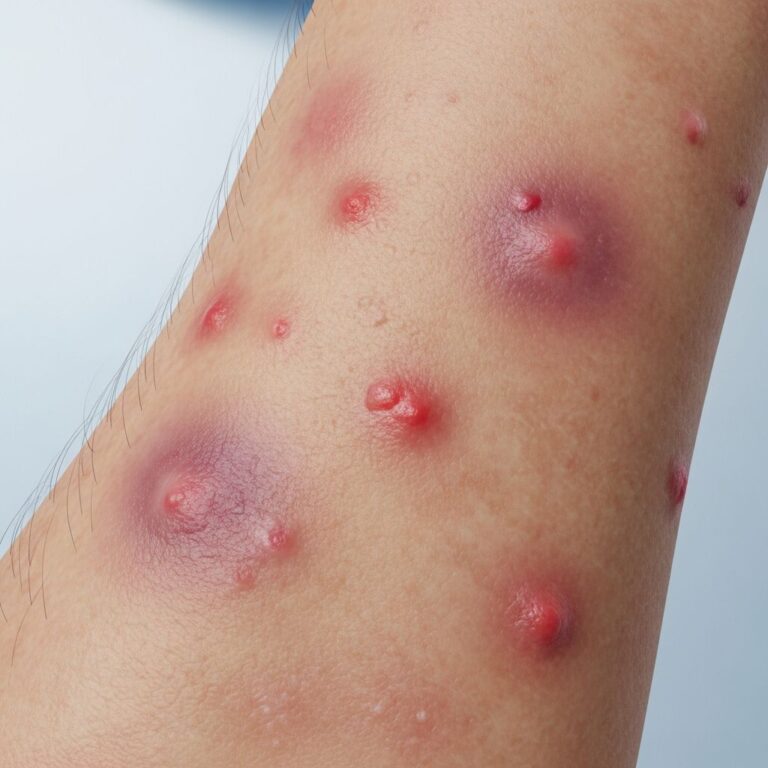
- Progressive phase: Development of erythematopapular and purpuric lesions over several days
- Peak phase: Fully developed purpuric macules and papules with distinctive sharp demarcation at wrists and ankles
- Resolution phase: Gradual fading with plantar and palmar desquamation
The rash is exclusively found on the feet and hands as there is a sharp demarcation between affected and normal skin at the ankles and wrists. Over several days, the initial redness and swelling evolve into a bruise-like purpuric appearance. Patients frequently report pruritus (itching) and pain associated with the lesions and surrounding edema.
Systemic involvement may precede or accompany skin manifestations and includes:
- Fever (present in approximately 52% of cases)
- Fatigue and asthenia (20%)
- Myalgias and muscle pain (16%)
- Anorexia (16%)
- Lymphadenopathy with enlarged lymph nodes (16%)
- Arthralgia and joint pain (12%)
- Respiratory or gastrointestinal symptoms
- Neurological symptoms in some cases
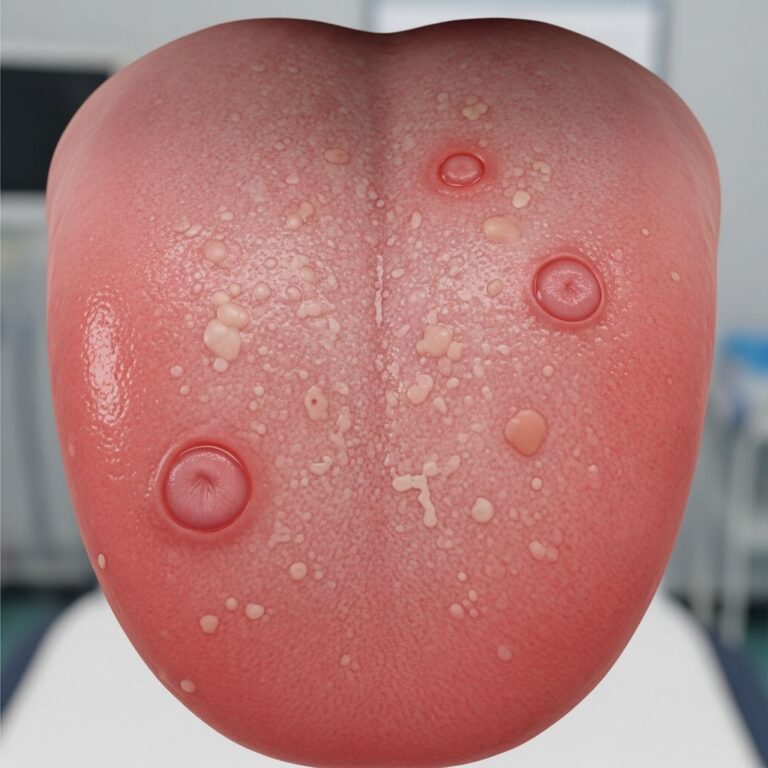
Occasionally, patients may develop additional manifestations including oral ulcers, genital lesions, and erythema over the cheeks, elbows, knees, and groin areas. In some cases, the syndrome may present with exuberant perineal and oropharyngeal involvement, particularly in more severe presentations.
Related Stories



Complications Associated with Papular Purpuric Gloves and Socks Syndrome
While PPGSS is generally self-limited and benign, parvovirus B19 infection can result in complications, particularly in susceptible populations:
- Severe anemia in patients with hemolytic disorders
- Hydrops fetalis in pregnant women
- Chronic arthropathy, particularly in adult females
- Myocarditis
- Encephalitis
- Secondary bacterial infection of affected skin areas
The prognosis for PPGSS itself is excellent, with spontaneous resolution occurring over 7-14 days in the majority of cases. However, monitoring for systemic complications is important, particularly in immunocompromised individuals or pregnant women.
Diagnosis of Papular Purpuric Gloves and Socks Syndrome
Papular purpuric gloves and socks syndrome is a clinical diagnosis based on its characteristic features of a sharp cut-off at the wrists and ankles and rapidly progressive course. The distinctive morphology and distribution pattern are typically sufficient for diagnosis in most cases. However, the viral cause can be confirmed on investigations to support the clinical impression.
Laboratory evaluation may include:
- Serologic testing: Detection of parvovirus B19 IgM and IgG antibodies confirms acute infection
- Full blood count: Performed if the patient appears unwell
- Routine laboratory blood tests: Usually normal, though some patients may have lymphopenia, neutropenia, thrombocytopenia, or mild elevation of transaminase levels and erythrocyte sedimentation rate
- Skin biopsy: May be performed if diagnosis is uncertain; histopathology typically shows superficial perivascular lymphocytic infiltrate with edema and red blood cell extravasation
Differential diagnosis should consider other conditions presenting with acral purpura, including vasculitis, erythema multiforme, and other viral exanthems. However, the characteristic gloves and socks distribution with sharp demarcation at wrists and ankles is highly suggestive of PPGSS.
Treatment Approaches for Papular Purpuric Gloves and Socks Syndrome
The management of PPGSS is largely supportive, as the condition is self-limited and typically resolves spontaneously within two weeks. Most patients do not require specific antiviral therapy.
Supportive care measures include:
- Topical emollients and moisturizers to manage desquamation
- Topical corticosteroids to reduce inflammation and pruritus
- Systemic antihistamines for symptomatic relief of itching
- Analgesics for pain management
- Cool compresses to soothe affected areas
- Elevation of affected limbs to reduce edema
In cases where the underlying cause is identified as a medication reaction (such as trimethoprim/sulfamethoxazole), discontinuation of the causative agent is recommended. For severe systemic manifestations, antiviral therapy or immunomodulatory treatment may be considered, though evidence supporting these approaches in uncomplicated PPGSS is limited.
Outcome and Resolution
The eruption typically clears within 7-14 days, often without leaving any permanent scarring or pigmentation changes. Resolution is usually accompanied by plantar and palmar desquamation, representing the shedding of affected skin layers. Patients should be reassured that the condition is benign and self-resolving, though follow-up may be warranted if systemic symptoms persist or if complications develop.
Long-term sequelae are rare in cases of uncomplicated PPGSS. Most patients experience complete clinical and cosmetic resolution without intervention. However, patients with underlying immunosuppression, hemolytic anemias, or other systemic conditions may require more intensive monitoring and management of the underlying parvovirus B19 infection.
Frequently Asked Questions
Q: Is papular purpuric gloves and socks syndrome contagious?
A: Yes, if caused by parvovirus B19, the underlying viral infection is contagious and spreads via respiratory droplets. However, not all exposed individuals will develop PPGSS. The condition itself represents a specific cutaneous manifestation of viral infection and is not directly transmissible through contact with the rash.
Q: How long does it take for PPGSS to resolve?
A: Most cases resolve spontaneously within 7-14 days, often without specific treatment. Desquamation of the palms and soles typically follows as the final stage of healing.
Q: Can PPGSS recur?
A: Recurrence is uncommon but has been reported in some patients. Once immunity develops to the causative virus, subsequent episodes are unlikely unless a different viral pathogen is responsible.
Q: Should I be concerned about systemic complications?
A: While PPGSS itself is benign, underlying parvovirus B19 infection can cause complications in susceptible populations, including pregnant women and immunocompromised individuals. Medical evaluation is recommended for proper risk assessment.
Q: Can antibiotics treat PPGSS?
A: PPGSS is caused by viral infection and does not respond to antibiotics. Antiviral therapy is not routinely necessary for uncomplicated cases, as the condition is self-limited. Antibiotics may be used if secondary bacterial infection of the affected skin develops.
Q: Are there any long-term effects from PPGSS?
A: Uncomplicated PPGSS typically resolves completely without permanent sequelae. However, the underlying viral infection may cause chronic complications in some patients, particularly regarding joint involvement with parvovirus B19.
References
- Papular purpuric gloves and socks syndrome 6 DermNet. 2024. https://dermnetnz.org/topics/papular-purpuric-gloves-and-socks-syndrome
- Gloves and socks syndrome caused by parvovirus B19 infection 6 UC eScholarship, Bagot M, Revuz J. 2004. https://escholarship.org/uc/item/41s0b467
- A case report of papular-purpuric gloves and socks syndrome 6 International Journal of Case Reports and Images. 2016. https://www.ijcasereportsandimages.com/archive/2016/003-2016-ijcri/CR-10609-03-2016-burmester/ijcri-1060903201609-burmester-full-text.php
- A rare case of papular 6purpuric “gloves and socks” syndrome associated with influenza B virus 6 National Institutes of Health, PubMed Central. 2022. https://pmc.ncbi.nlm.nih.gov/articles/PMC9310727/
- Papular-purpuric “gloves and socks” syndrome 6 PubMed. 2012. https://pubmed.ncbi.nlm.nih.gov/22370576/
- Papular Purpuric Gloves & Socks Syndrome 6 Perri Dermatology. https://perridermatology.com/dr-perris-blog/viruses-papular-purpuric-gloves-and-socks-syndrome/
Similar Articles








Read full bio of Sneha Tete