Paracoccidioidomycosis Pathology: Comprehensive Diagnosis Guide
Comprehensive pathology of paracoccidioidomycosis, a systemic mycosis endemic to Latin America caused by dimorphic Paracoccidioides fungi.
Paracoccidioidomycosis (PCM) is a systemic granulomatous disease caused by the dimorphic fungi Paracoccidioides brasiliensis and Paracoccidioides lutzii, primarily affecting individuals in Latin America or those who have traveled to endemic regions. This mycosis often presents with pulmonary involvement and disseminates to mucocutaneous sites, mimicking other granulomatous conditions.
Introduction
PCM ranks as the most prevalent systemic mycosis in Latin America, with Brazil reporting the highest incidence. The fungus exists in a mycelial form in the environment and converts to yeast-like cells at human body temperature (37°C), facilitating infection via inhalation of propagules that lodge in the alveoli. Endemic areas have expanded with agriculture, correlating with rising cases. Clinical forms include acute/subacute (juvenile) and chronic (adult), influenced by host immunity. Pathologically, it features mixed inflammatory patterns with characteristic ‘pilot wheel’ yeast forms.
Infection latency can span decades, with reactivation in immunocompromised states or during pregnancy. The disease’s chronicity leads to fibrosis, respiratory failure, and secondary complications. Early diagnosis via histopathology and culture is crucial, as untreated cases progress to severe pulmonary hypertension and heart failure.
Causative Organism
Paracoccidioides spp. are thermally dimorphic: mycelial at 25-30°C in soil, transitioning to yeast at 37°C in hosts. Multiple species exist, including P. brasiliensis (predominant) and P. lutzii. Environmental propagules vary by soil pH and humidity, inhaled conidia reaching lungs where they metamorphose. Virulence factors include adhesins binding laminin, fibronectin, and collagen; cell wall glycoproteins; extracellular vesicles; and biofilms shielding against antifungals and immunity. Microbial co-infections with Candida albicans, Mycobacterium tuberculosis, or Klebsiella pneumoniae worsen outcomes.
- Adhesins: Essential for host cell attachment, evading mucociliary clearance.
- Cell wall components: α-1,3-glucan aids evasion; mannoproteins trigger immunity.
- Biofilms: Form on epithelial cells, enhancing persistence.
Clinical Forms
PCM manifests as infection (asymptomatic, positive skin test), acute/subacute (5-20% cases, affects youth, disseminated), or chronic (75-95%, adult males, pulmonary-centric). Acute form shows rapid progression with lymphadenopathy, skin lesions; chronic involves insidious lung, mucosa damage. Severity grades: mild (limited), moderate, severe (disseminated). CNS involvement (up to 80% in some cohorts) features headache, seizures; pregnancy cases risk fetal growth issues. Association with malignancy (e.g., lung cancer) noted, possibly from chronic inflammation.
| Form | Age Group | Main Features | Frequency |
|---|---|---|---|
| Acute/Subacute | Children/Young Adults | Disseminated lesions, lymphadenopathy, skin/mucosa | 5-25% |
| Chronic | Adults >30 years (mostly males) | Pulmonary fibrosis, oral ulcers, >4 months duration | 75-95% |
Histopathology
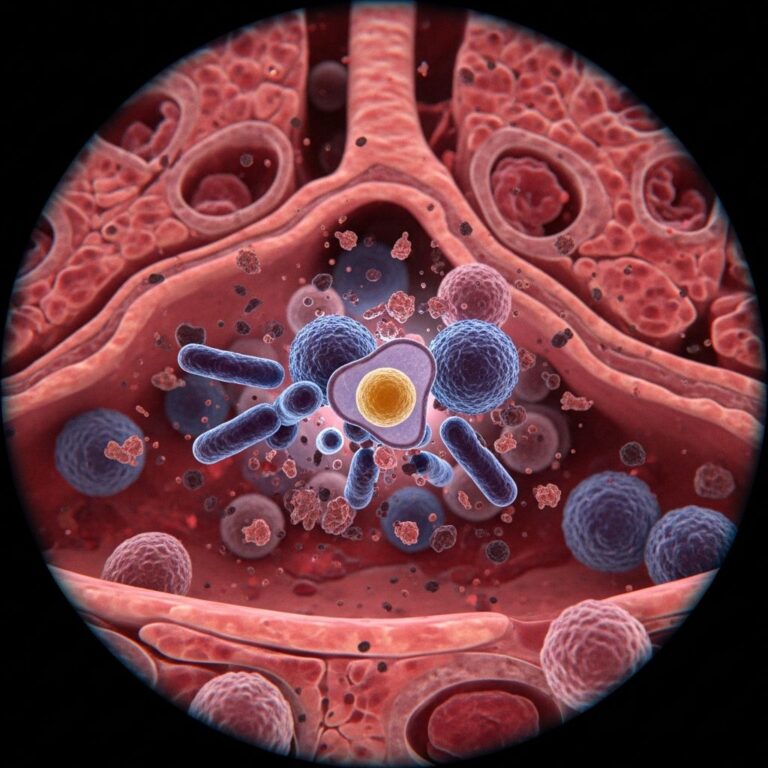
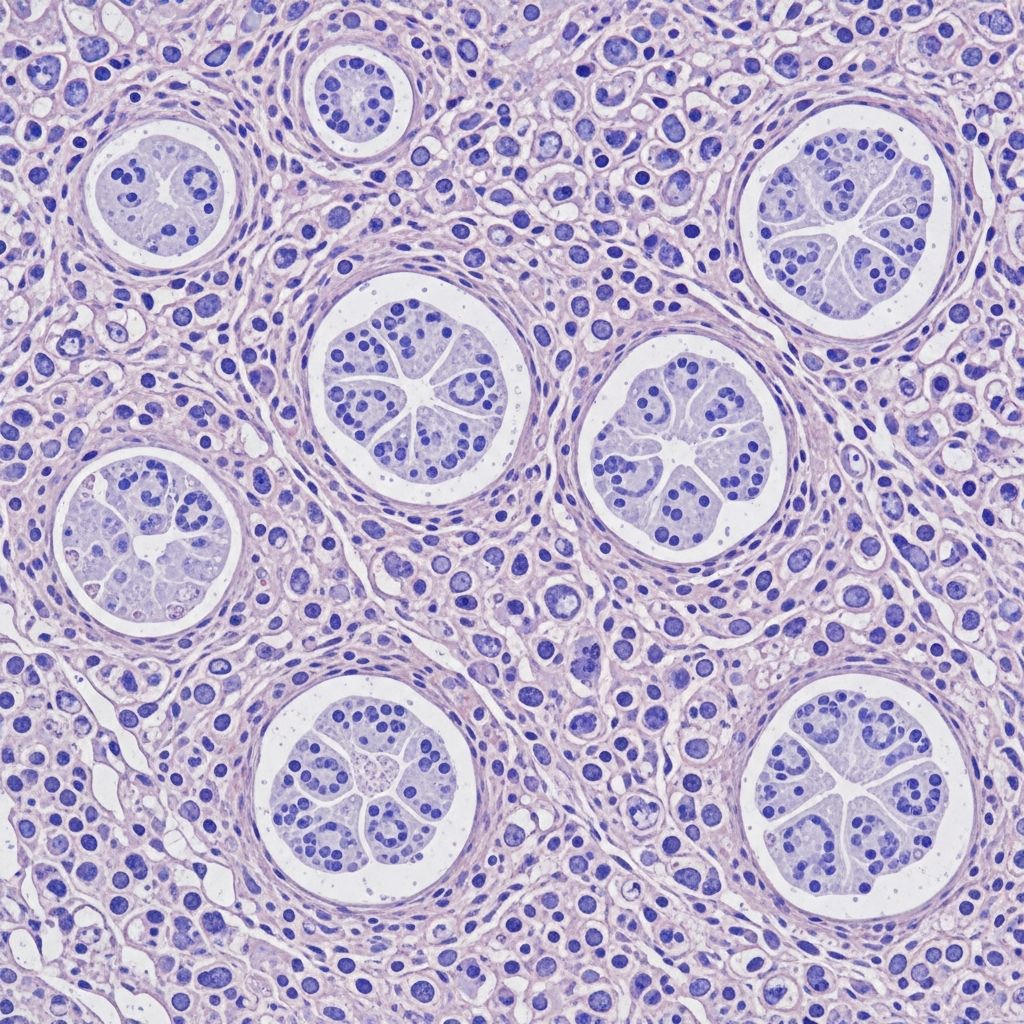
The dermis exhibits acute inflammation mixed with well-formed granulomas, often cased by fibrosis (pseudoepitheliomatous hyperplasia overlying). Giant cells engulf numerous yeast: large (10-60μm), thick-walled, with multiple buds resembling ‘pilot wheel’ or ‘Mickey Mouse’ (peripheral buds smaller than mother cell). Inflammation includes neutrophils, lymphocytes, plasma cells; suppuration in acute cases. Extracellular yeasts amid necrosis common. Special stains (GMS, PAS) highlight fungi; culture confirms.
Pulmonary pathology: granulomatous pneumonia evolving to fibrosis, emphysema. Mucosal: ulcerative stomatitis with fungal-rich exudate. CNS: meningoencephalitis with yeast-laden macrophages. Skin pleomorphism mimics leishmaniasis, TB.
- Low power: Granulomas with giant cells packed with fungi.
- High power: Multiple-budding yeasts diagnostic.
- Fibroplasia: Dense collagen surrounds granulomas.
Pathogenesis
Inhaled conidia adhere via adhesins, transform to yeasts, invade epithelium. Immune evasion via phase variation, intracellular survival in macrophages. Th1 response (IFN-γ, TNF-α) controls; Th2 skew favors dissemination. Virulence: phenotypic switching, metabolic adaptation, evasion of phagocytosis/apoptosis. Latency/reactivation evidenced by remote exposure cases. Host factors: male bias (androgen receptors on fungi?), HLA associations. Progression: primary pulmonary complex → dissemination or latency → reactivation.
Immune Response
Cell-mediated immunity critical: CD4+ T cells, macrophages form granulomas. Effective response contains infection; impaired (HIV, pregnancy) leads to acute form. Humoral: high IgG titers, but non-protective. Cytokines: IL-12, IFN-γ protective; IL-10, TGF-β suppressive. Skin test (paracoccidioidin) indicates exposure. Vaccine candidates: gp43 adhesin.
Related Stories



Complications
Chronic: pulmonary fibrosis → cor pulmonale, respiratory failure. Mucosal scarring impairs swallowing, speech. CNS: seizures, hydrocephalus. Secondary infections, Addison’s from adrenalitis. Cancer co-occurrence: shared sites (lungs, larynx).
Diagnosis
Clinical suspicion + histopathology (diagnostic yeasts), culture, serology (IDF, gp43 ELISA). PCR emerging. Differential: histoplasmosis, TB, cancer.
Frequently Asked Questions (FAQs)
Q: What causes paracoccidioidomycosis?
A: Inhalation of Paracoccidioides propagules from soil in Latin America.
Q: How is PCM diagnosed pathologically?
A: By ‘pilot wheel’ multiple-budding yeasts in granulomas on biopsy.
Q: What are the main clinical forms?
A: Acute/subacute (disseminated, juvenile) and chronic (pulmonary, adult).
Q: Is PCM contagious?
A: No, acquired environmentally, not person-to-person.
Q: Can PCM affect the brain?
A: Yes, up to 80% CNS involvement in some cases with neurological signs.
Conclusion
Understanding PCM pathology underscores the need for early biopsy, as characteristic yeasts confirm diagnosis amid mimics. Treatment with itraconazole/amphotericin B improves outcomes, but fibrosis persists. Surveillance in endemic expansions vital.
References
- Paracoccidioidomycosis in the 21st century: Challenges and opportunities — PLoS Negl Trop Dis. 2024-05-23. https://journals.plos.org/plosntds/article?id=10.1371/journal.pntd.0013819
- Paracoccidioidomycosis pathology — DermNet NZ. 2023. https://dermnetnz.org/topics/paracoccidioidomycosis-pathology
- Paracoccidioides-host Interaction: An Overview — Frontiers in Microbiology. 2015-12-22. https://www.frontiersin.org/journals/microbiology/articles/10.3389/fmicb.2015.01319/full
- Paracoccidioidomycosis — StatPearls, NCBI Bookshelf. 2023-07-17. https://www.ncbi.nlm.nih.gov/books/NBK563188/
- Coccidioidomycosis and paracoccidioidomycosis — Osmosis. 2024. https://www.osmosis.org/learn/Coccidioidomycosis_and_paracoccidioidomycosis
Similar Articles








Read full bio of Sneha Tete